wo weeks after ditching their Johns Hopkins University caps and gowns in the spring of 1976, Diane Reese and a college bike buddy pedaled from Baltimore to Washington for a few days of cycling and sightseeing. It was a free-spirited trip, the kind to take before starting the rest of your life—but for the brand-new grads, snapping photos by the Washington Monument and the National Mall was just the beginning.
The duo was destined for Yorktown, Virginia, and the mouth of the Chesapeake Bay. After that? A long ride west, all the way to the Oregon coast. Months earlier, an article and application in the back of Bicycling magazine had caught Reese’s eye. To commemorate America’s 200th birthday, a group of bicyclists were organizing a cross-country trek called “Bikecentennial.” By July 4, several hundred small groups, such as the one Reese and her friend joined in Yorktown, were bisecting the country—some going east to west and others vice versa.
The article, Reese remembers, touted a journey that would “be the experience of a lifetime,” a trip to “sharpen perceptions” and “restore faith in the vigor and worth of America.” Perhaps fitting for an event coming in the wake of the Vietnam War and Watergate, it also promised “perspiration,” “charley horses,” and “plain grueling anti-fun” in the inevitable face of wind, rain, and mountain ascents.
A bicycle commuter and weekend cyclist while in school, Reese told her parents that the Bikecentennial’s $685 fee would be a nice graduation gift. They obliged. Today, she can still recall the agony of a brutal Blue Ridge climb, a Missouri flood that swept away tents and soaked camping gear and clothes, and a crisis of confidence that struck just before a scheduled ferry ride over the Mississippi River. “That was the mental dividing line for me,” says Reese, who at that point had never ventured beyond the East Coast. “I said, ‘I can’t do this.’ ”
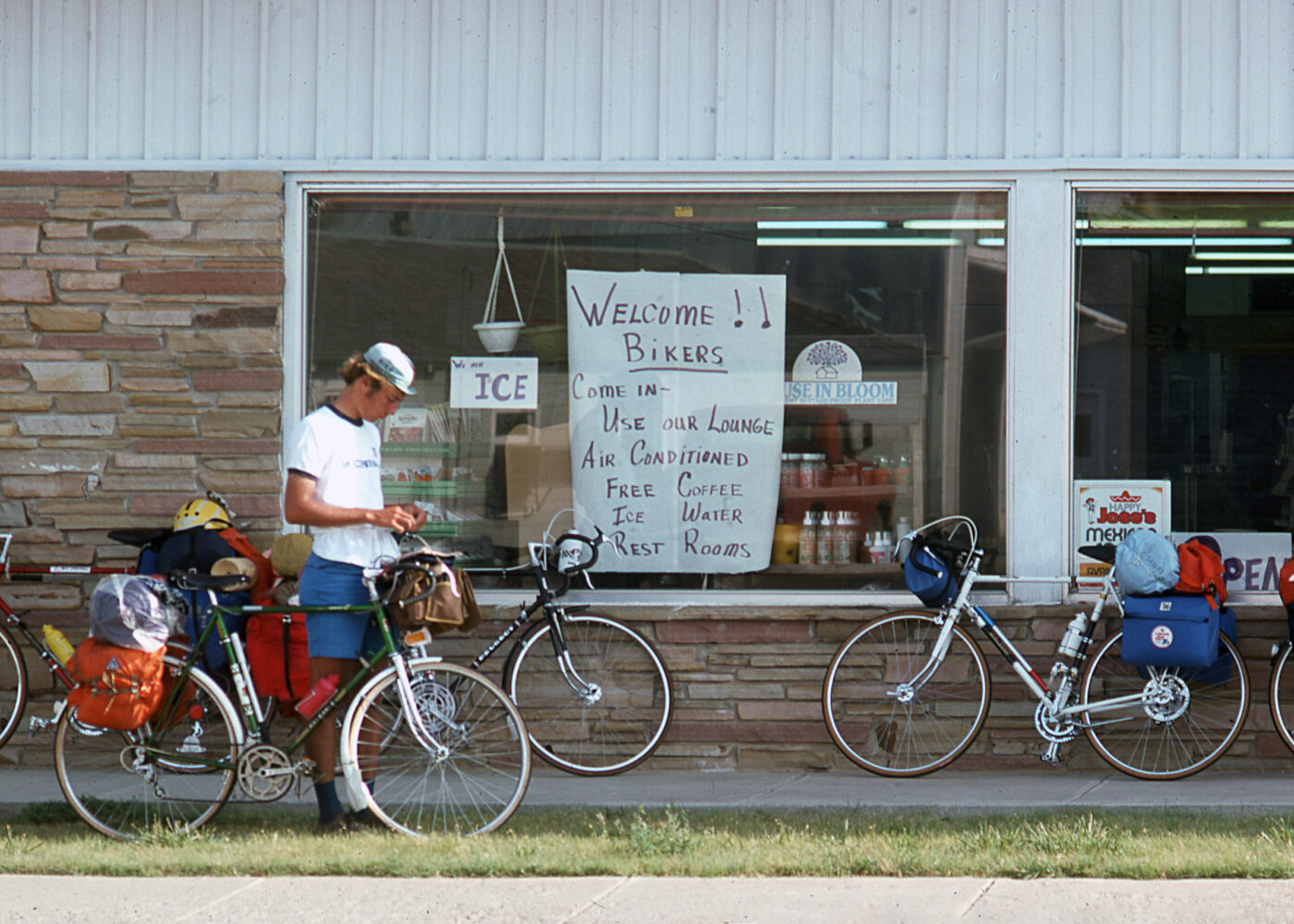
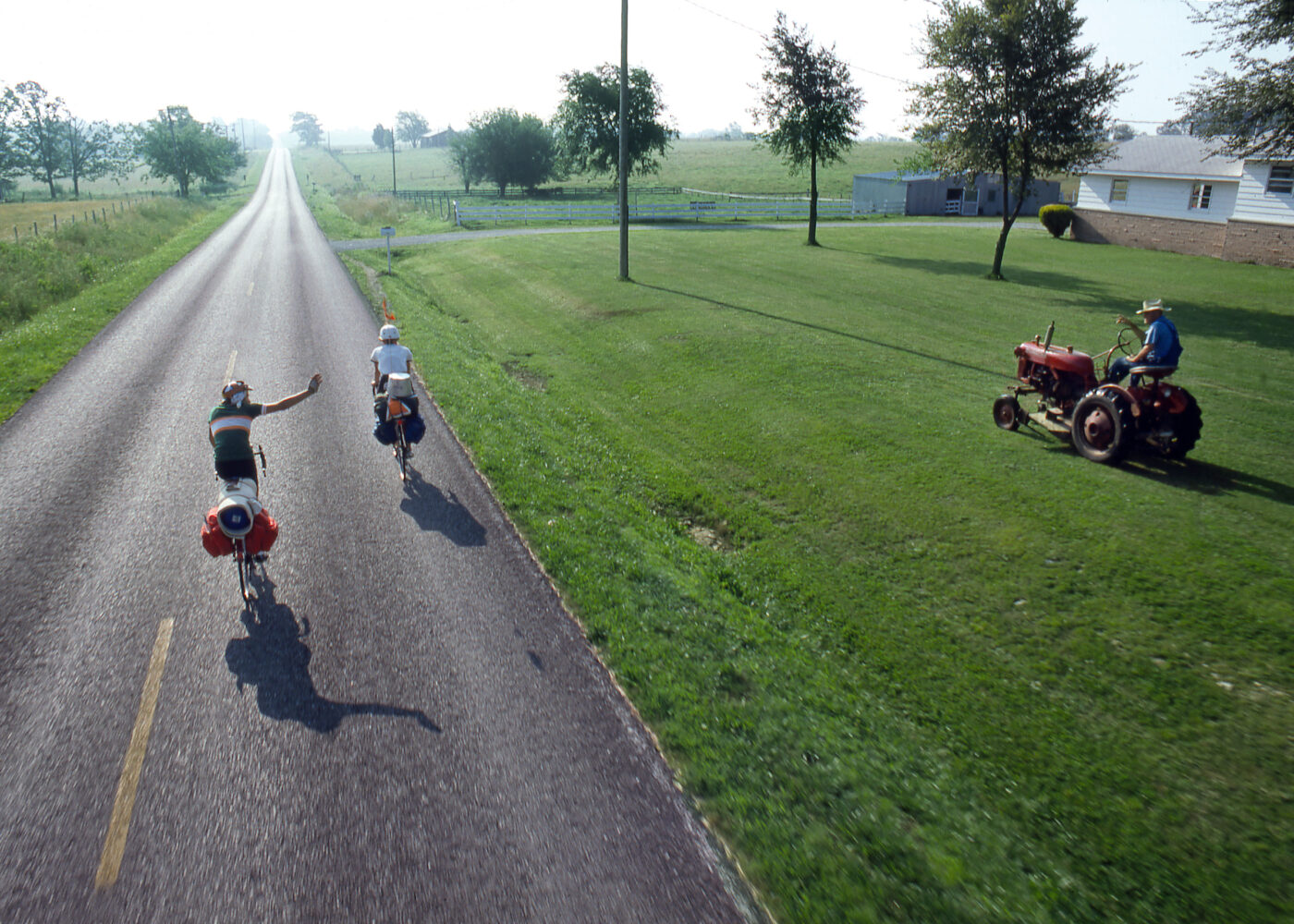
The other riders in her group were reassuring. You got this far. That was the hardest part. You can do it. And so Reese did. Along with some 4,100 others, she kept pedaling that summer, passing through places that somehow seemed to know when the cyclists were coming. Even in the tiniest towns, Reese recalls, there was always a sign outside a church. Come on in, bicyclists. Sit down, cool off. We have water. We have cookies inside. There were sign-in books as well, the better for riders to share who they were and where they were from. “It was so sweet,” Reese says. “Everybody was overwhelmingly kind and understanding and helpful when needed. Curious and fun, too.”
Over two-plus months that summer, Reese rode more than 4,000 miles. “Truly, I did not understand how freaking big this country is,” she says. “Intellectually, I did, but not emotionally. It’s not the same. I had studied geography and environmental engineering and saw landscapes that I never dreamed of.”
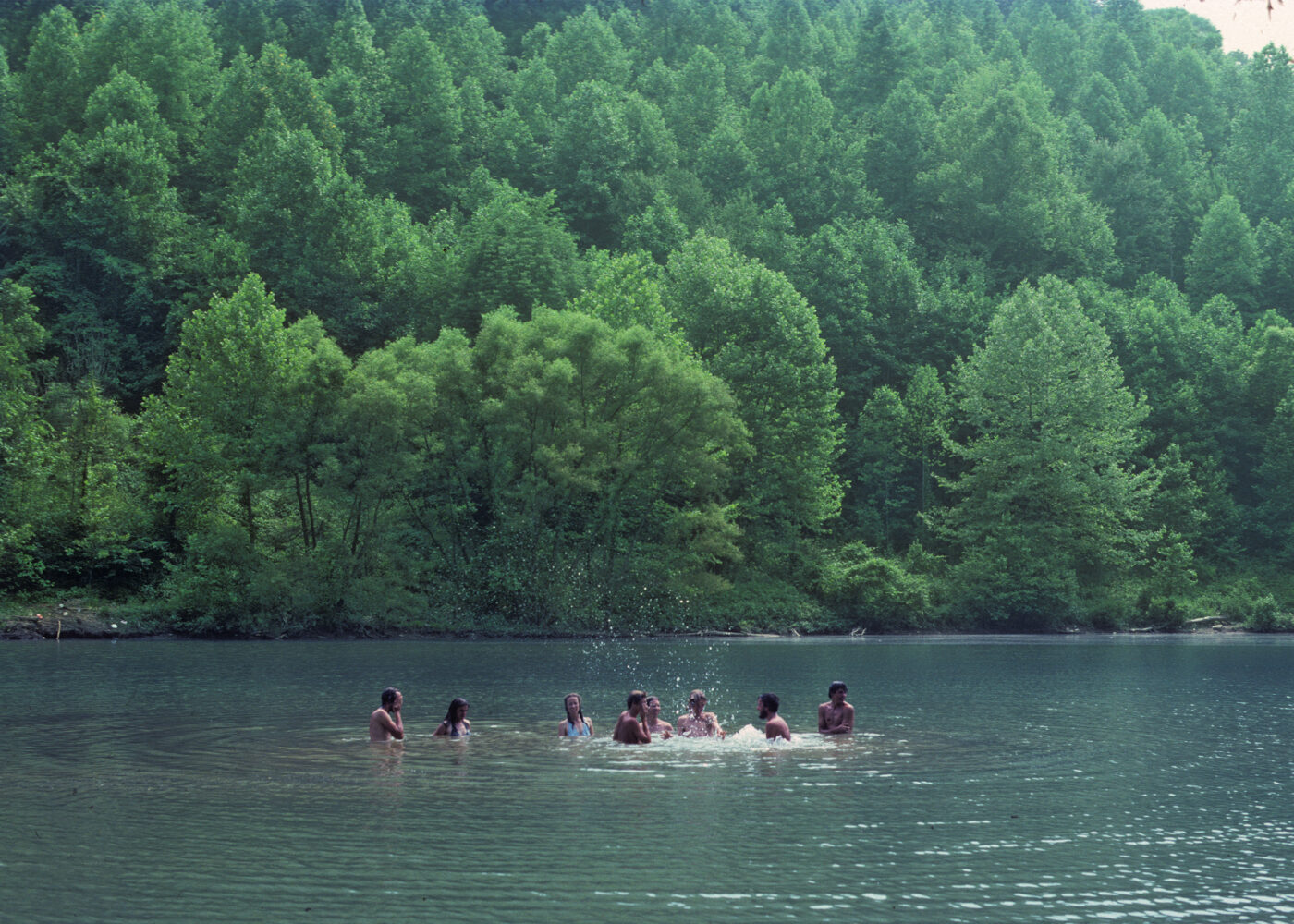
Along the way, Reese says, she “got a photograph of the bear that stole food off one of our bikes. I went skinny-dipping in a hot spring. When we got to Wyoming, there were places we rode where I actually said to myself, ‘This is the American West? This is what Mars probably looks like. What am I doing here? How did I get here?’ ”
An Idea for Its Time
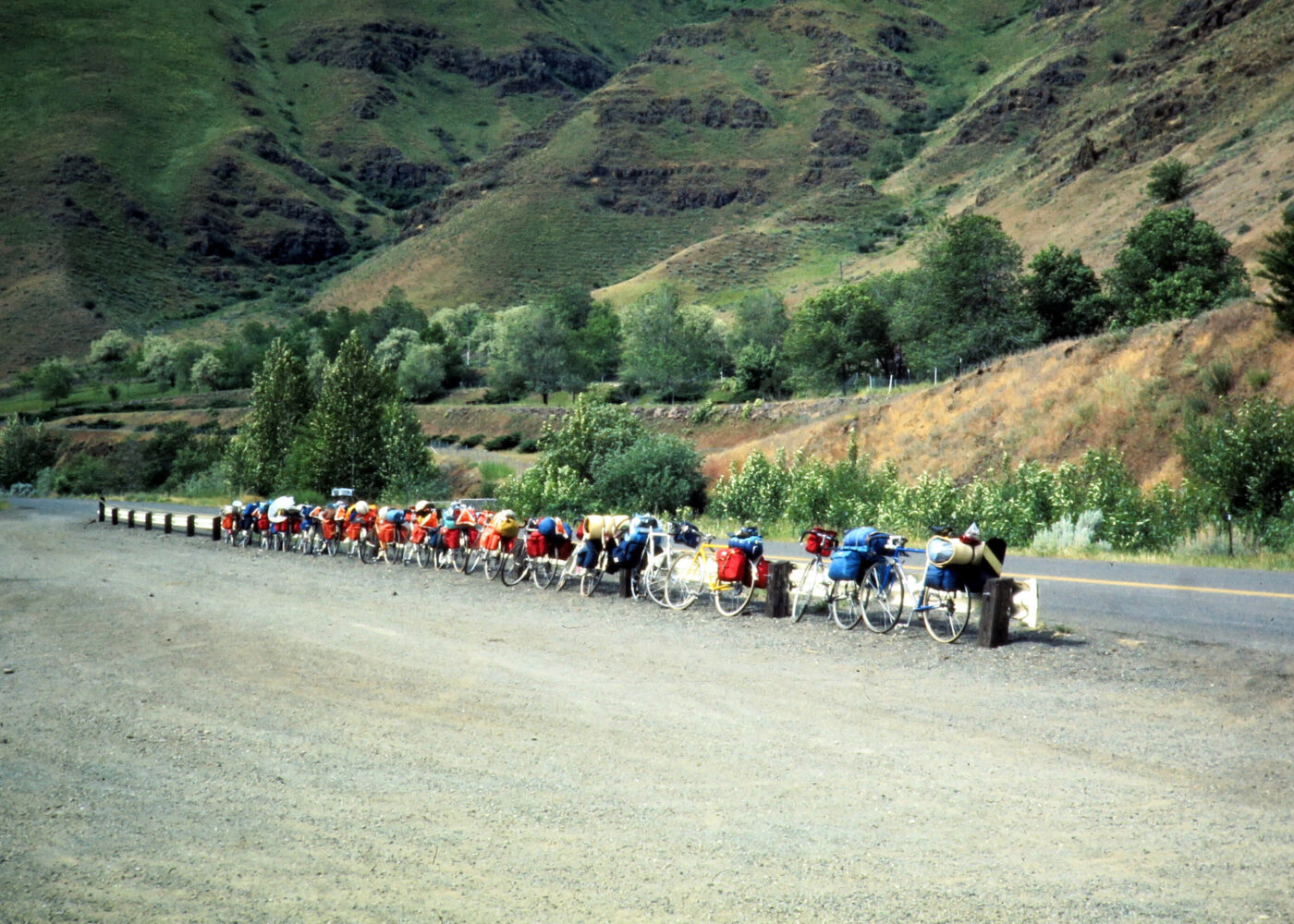
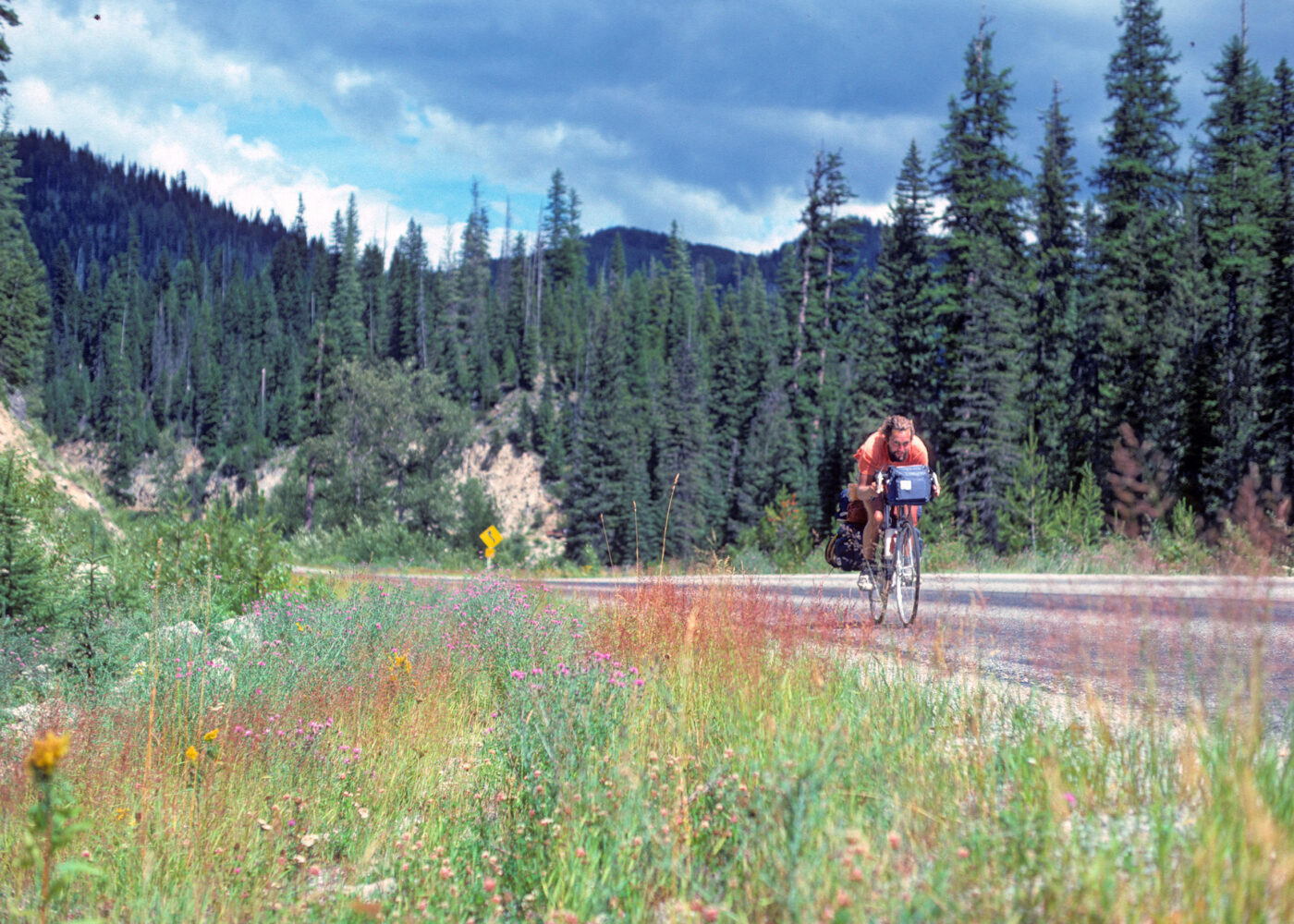
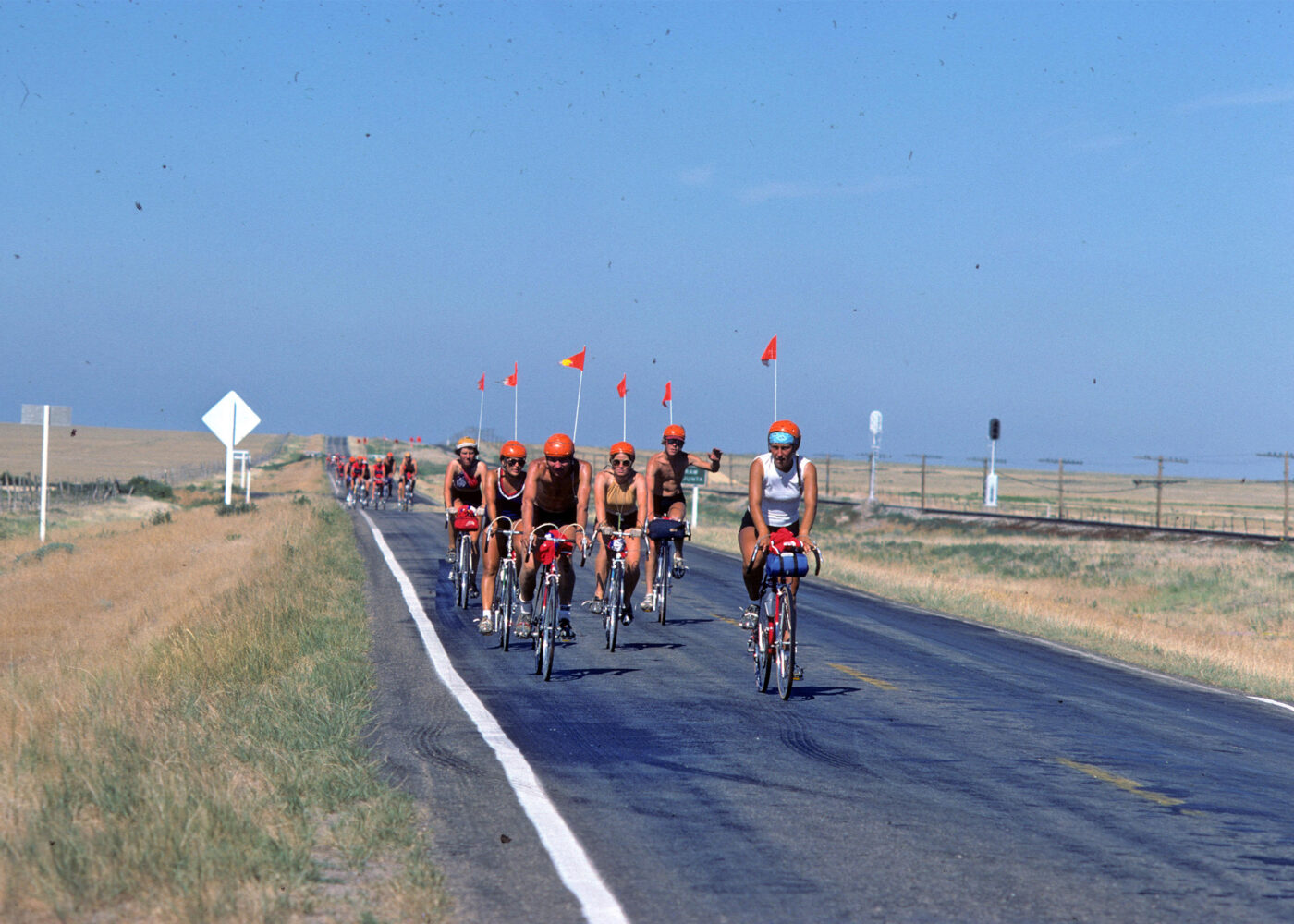
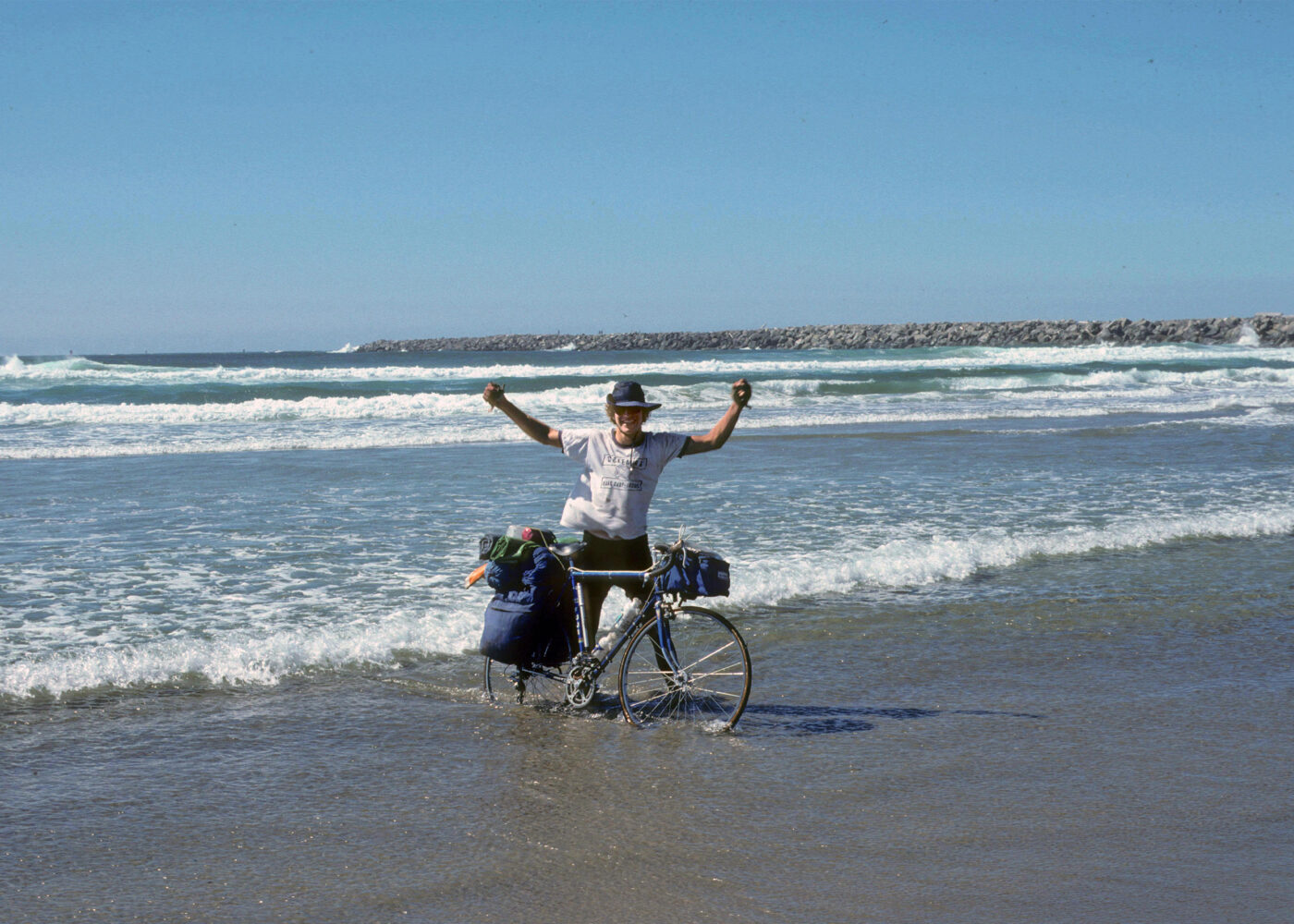
Four years before the Bikecentennial, Greg Siple had a vision of the future. Thousands of cyclists, a sea of people, starting at San Francisco’s Golden Gate Park and ending up in DC. There would be no starting gun, no real organization, just riders camping, cooking out, and relying on the kindness of strangers, all to commemorate the country’s 200th. “It would be like this crowd of locusts crossing America,” he says.
At the time, Greg; his wife, June; and their friends Dan and Lys Burden were riding from Anchorage, Alaska, to Tierra Del Fuego, Argentina. Greg had been a conscientious objector to Vietnam. Dan was a Navy veteran of the same war. June and Lys had been best friends since Girl Scouts. Calling their odyssey the “Hemistour Bicycling Expedition”—the full 18,272-mile trip was broken into parts and lasted from 1972 to 1975—the quartet sought to publicize what June says was the “unknown, unsung” sport of bicycling touring.
Over dinner one night in a Mexican village, Greg pitched his brainchild to the group. Later, while putting up tents, June checked her cyclometer. “I bend over my bike and, my God, it reads 1776.2,” she says. “The cyclometer had been put on in Los Angeles. I freaked out. And, I came up with the name: Bikecentennial.”
Arguably crazy and inarguably a bit shaggy, the idea matched its era. By 1976, the notion of an extravagant national birthday bash seemed discordant to many. The country had seen Nixon’s resignation, the fall of Saigon, and a Middle East oil embargo. Unemployment and inflation had both approached double digits. The federal government’s plans for a top-down blowout had already imploded twice—first when Nixon replaced President Johnson’s future-focused Bicentennial commission with one of his own and again when Nixon’s commission, already criticized for being corrupt and partisan, was scuttled after Watergate. (How bad did things get? At one point, Jesse Jackson had urged a Bicentennial boycott.)
What emerged instead was a smorgasbord of celebrations, delightfully scattered and strange. There was “200 Years and Just a Baby: A Tribute to America’s Bicentennial,” a Super Bowl halftime show starring Up With People. There was a procession of tall-masted sailing ships in Boston and New York City. There was a 35-ton cake in the shape of the United States in Baltimore, which wilted in humidity and thunderstorms and was devoured by Inner Harbor rats before Independence Day even arrived. There was a July 3 parade in DC featuring actor Telly Savalas, the star of TV’s Kojak, and attended by 500,000 people—but not President Ford, who was busy golfing. American business got in on the party, too, producing Bicentennial egg timers and auto loans, beer mugs and Barbie dolls. Some scoffed at the commercialization of the so-called “buy-centennial.” The makers of the Old Glory All-American novelty condom did nothing to beat those allegations.
When Greg Siple and his cycling companions reached Mexico City, he and Dan Burden made a flier to announce the Bikecentennial to friends and riders back in the US. Dan found a small office-supply shop, borrowed a typewriter, and composed the original copy. Greg, who had attended two years of art school, drew the graphics. Someone in the foursome—no one remembers who—added the tagline: “Two Wheels, Two Centuries.”
Today, something like the Bikecentennial would likely be attached to a greater social cause or staged in part as an act of political protest or resistance. But back then, Dan says, the point was simply the ride. The group was having the time of their lives and wanted to share the fun.
“The bicycle is this perfect tool for getting out in nature, for meeting people, and discovering the world around you,” Dan says. “It’s a learning machine.” But at the time, he adds, “almost no one rode bikes. Maybe 20 adults in central Ohio, where we grew up. Schwinn sponsored the TV show Captain Kangaroo, which gave away bicycles to kids—and that’s how bikes were viewed: for kids.
“We were living our dream [on the Alaska-to-Argentina ride], and we began dreaming up ‘How do we get more people into this?’ ”
Along for the Ride


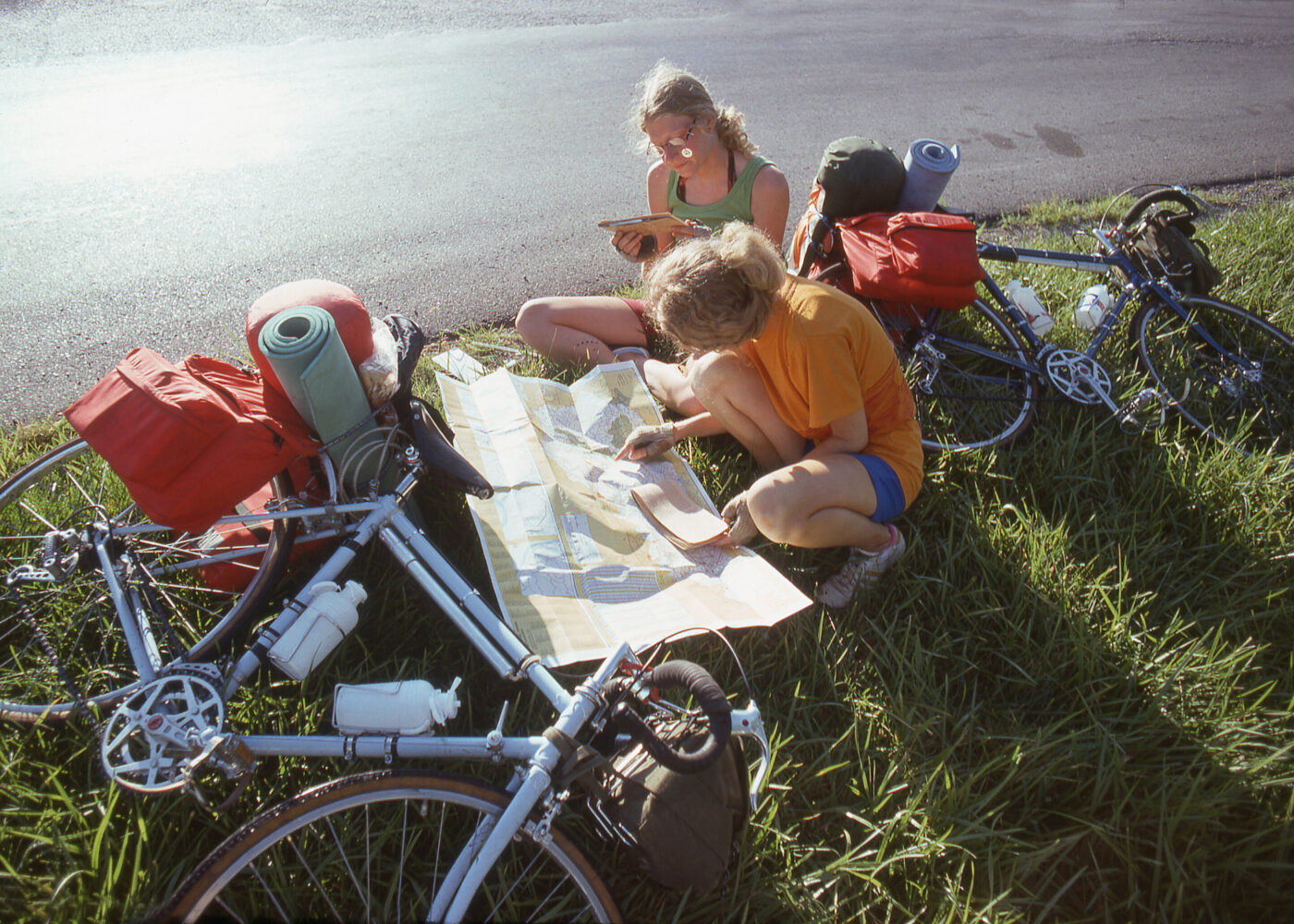
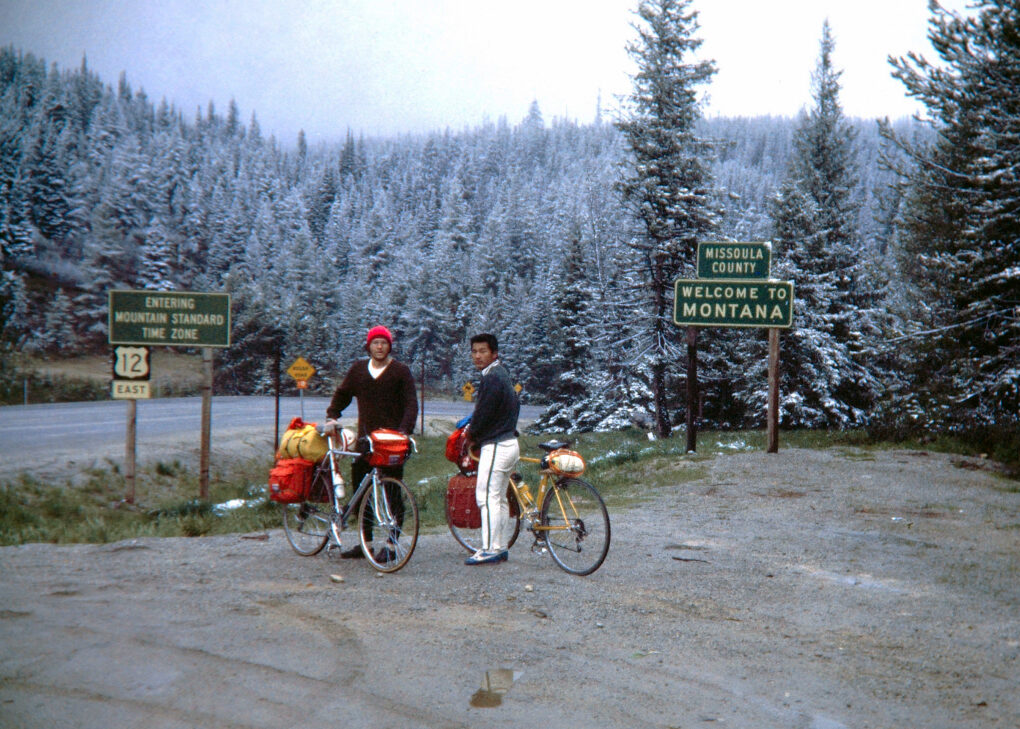
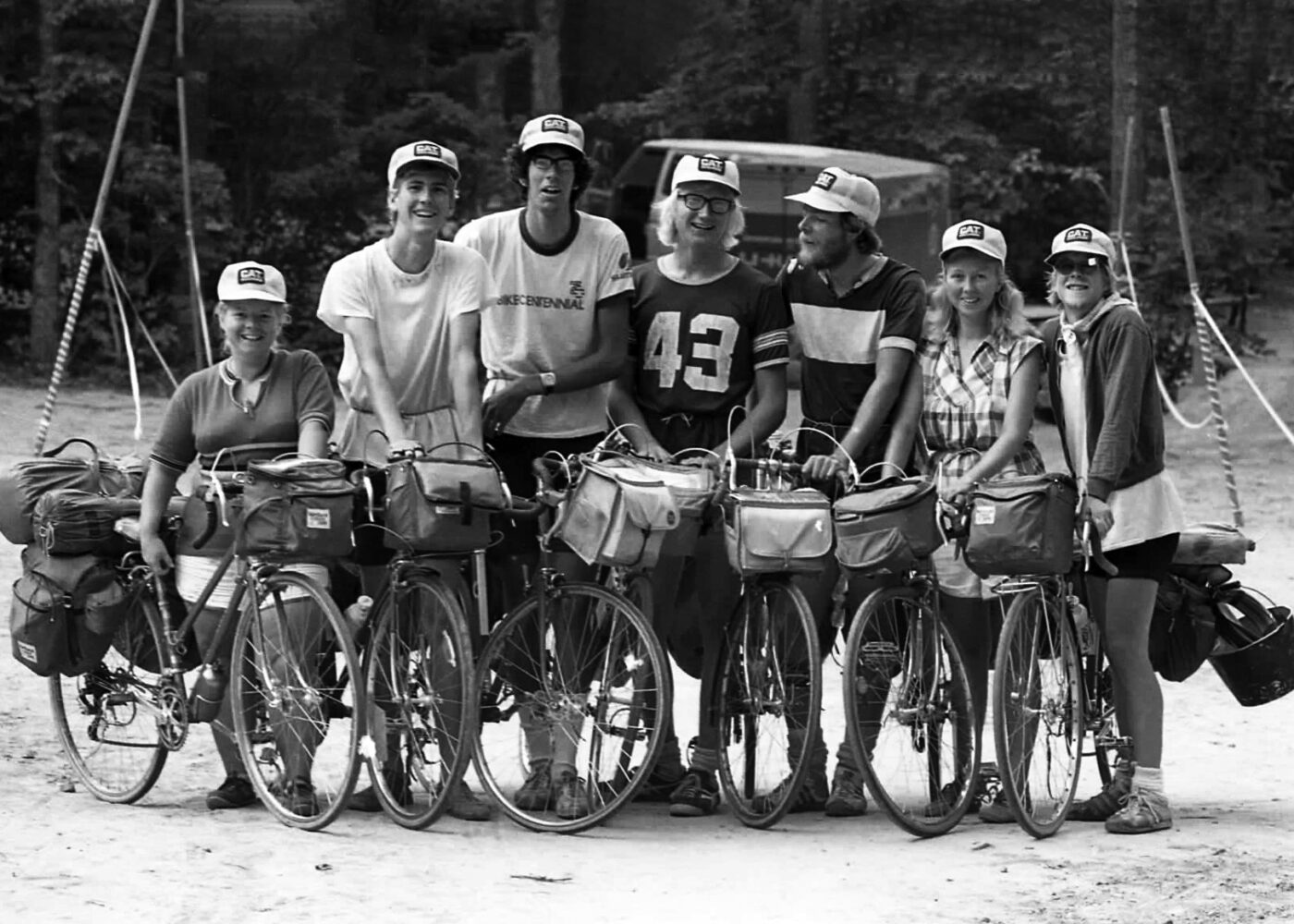
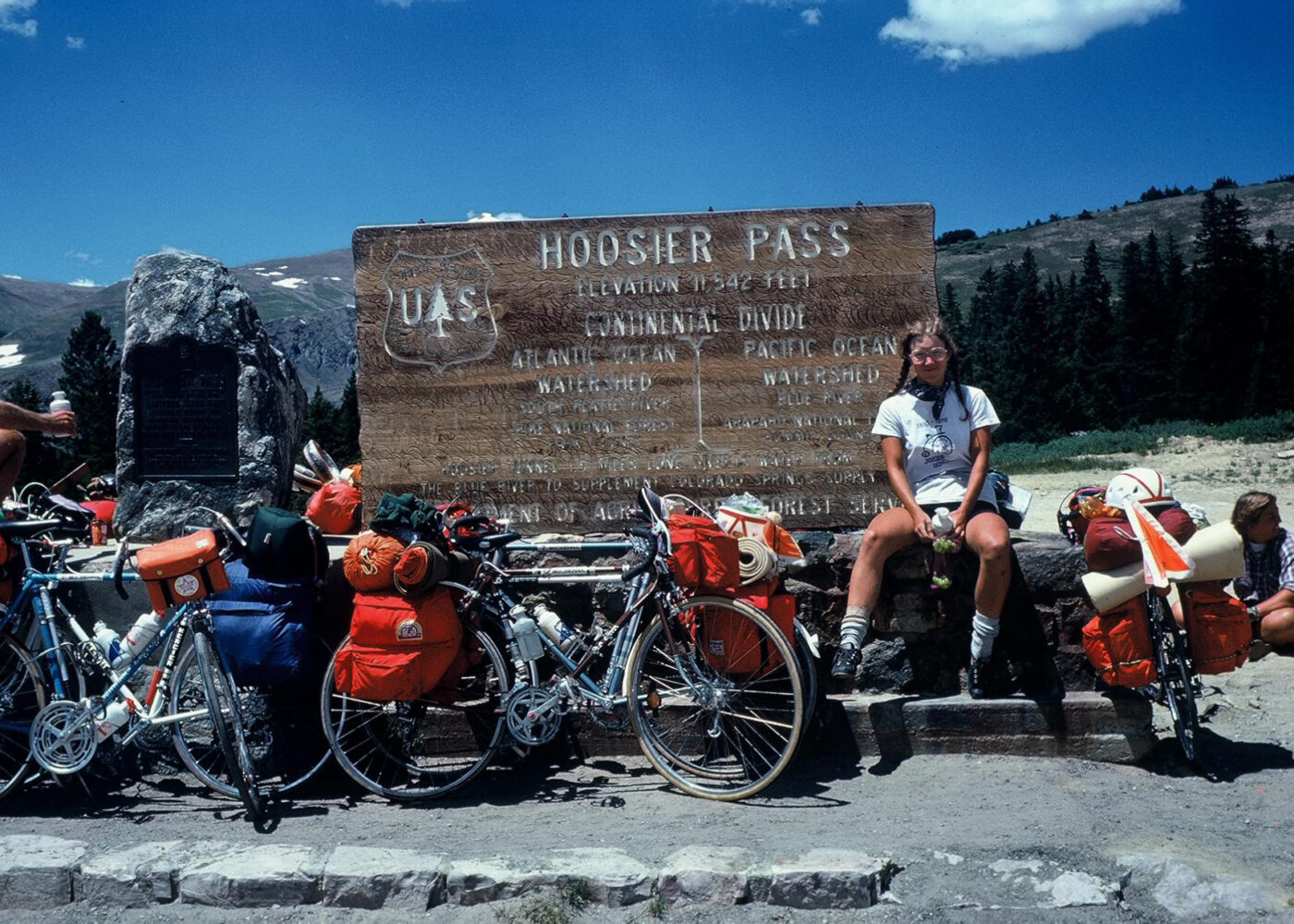
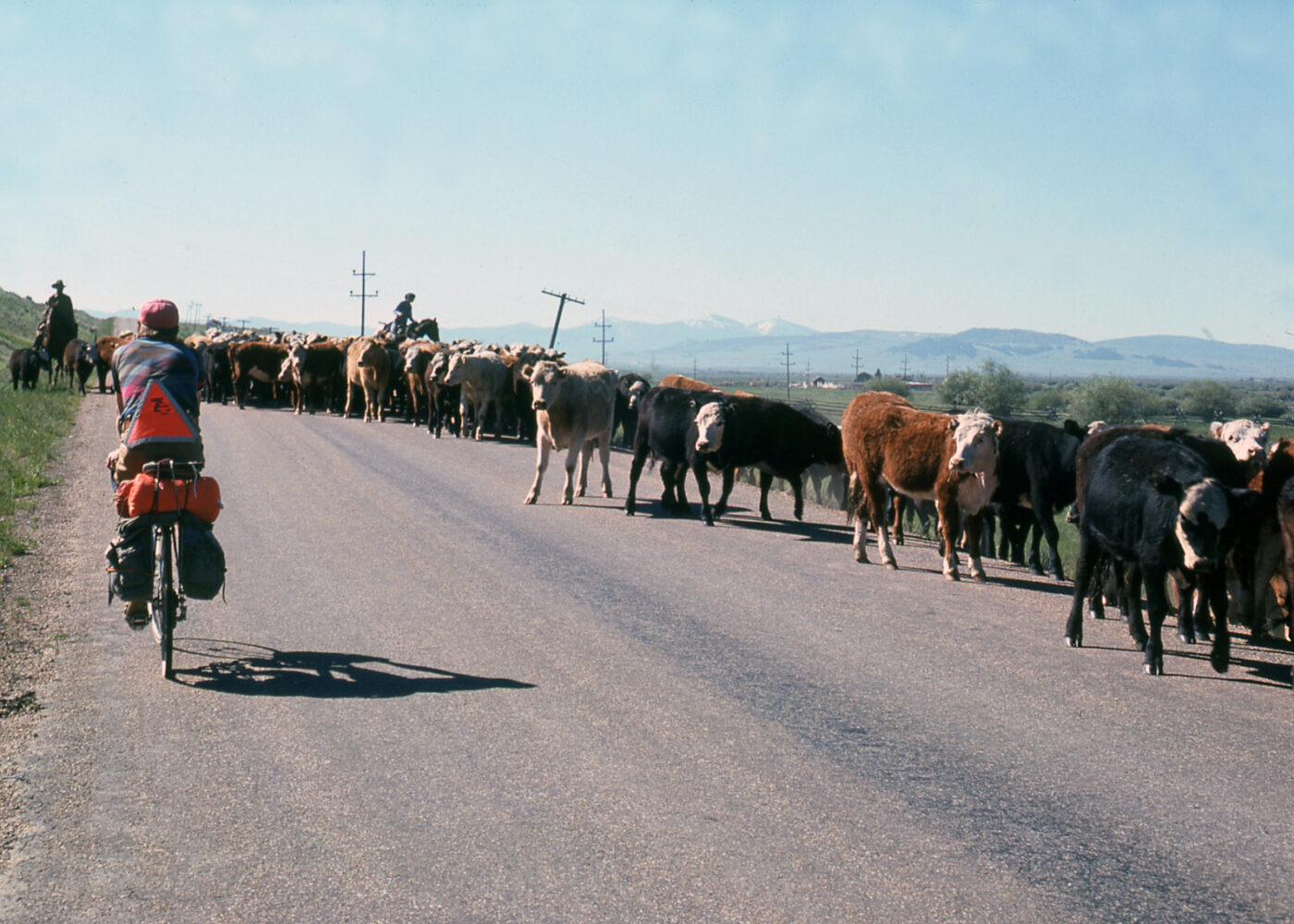
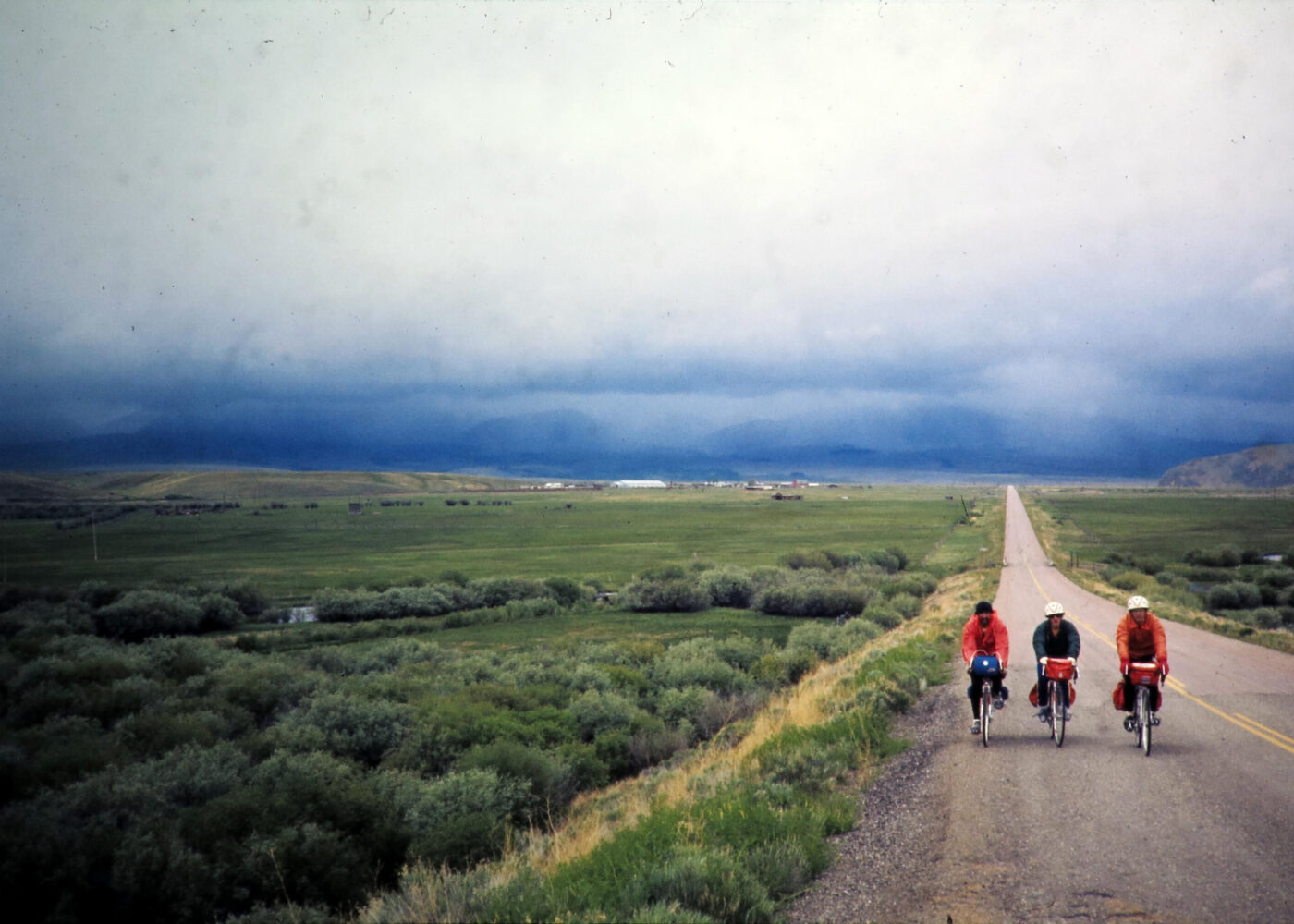
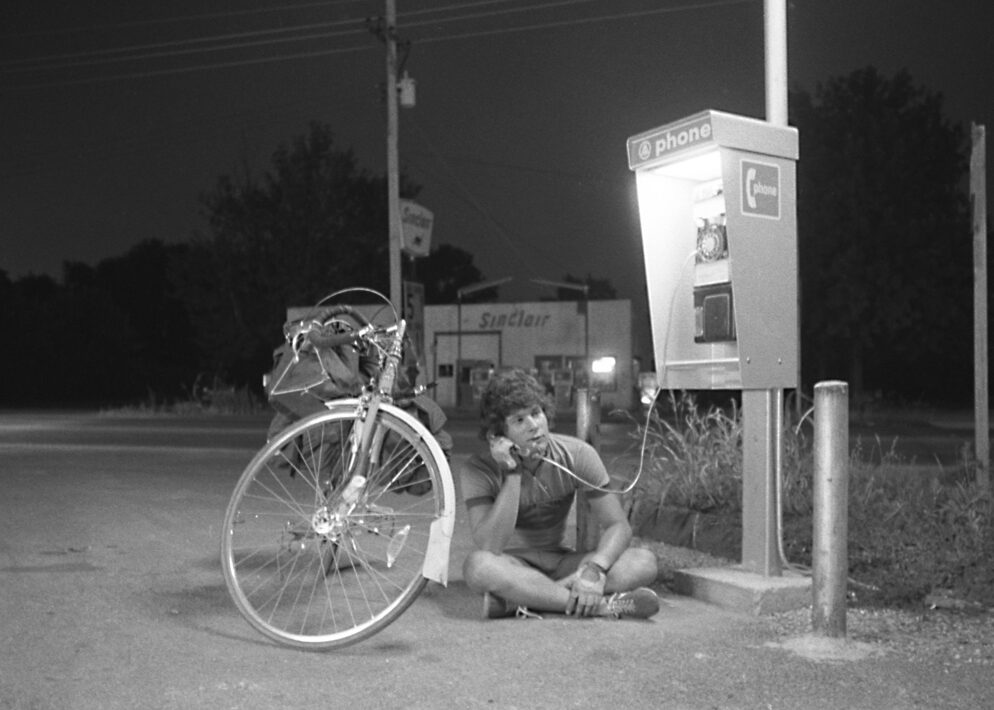
Tom McAllister, a native of Galax, Virginia, was just 17 when he boxed up his bicycle and flew to Oregon so he could ride his way home. Looking back, he’s not sure how he learned of the Bikecentennial. Maybe from Bicycling magazine, or Parade. Or maybe it was Sports Illustrated, which had sent a writer to Missoula, Montana—where Dan Burden had been accepted into grad school—to see if the event was legit or a scam.
By then, a concept that started with 100-some mailed fliers had grown into something bigger: an actual organization, with offices in Missoula, filled with phones and file cabinets and envelopes and stamps, all supported by staff working 12-to-14-hour days and funded, in part, by a $26,700 grant from the American Revolution Bicentennial Board. “Nobody was paid more than $300 a month,” Dan Burden says, recalling that most decisions were made democratically, with the whole team sitting in a circle and weighing in until they reached a consensus. “I mean, people were there because they wanted to do this. It was the thing that would start their life.”
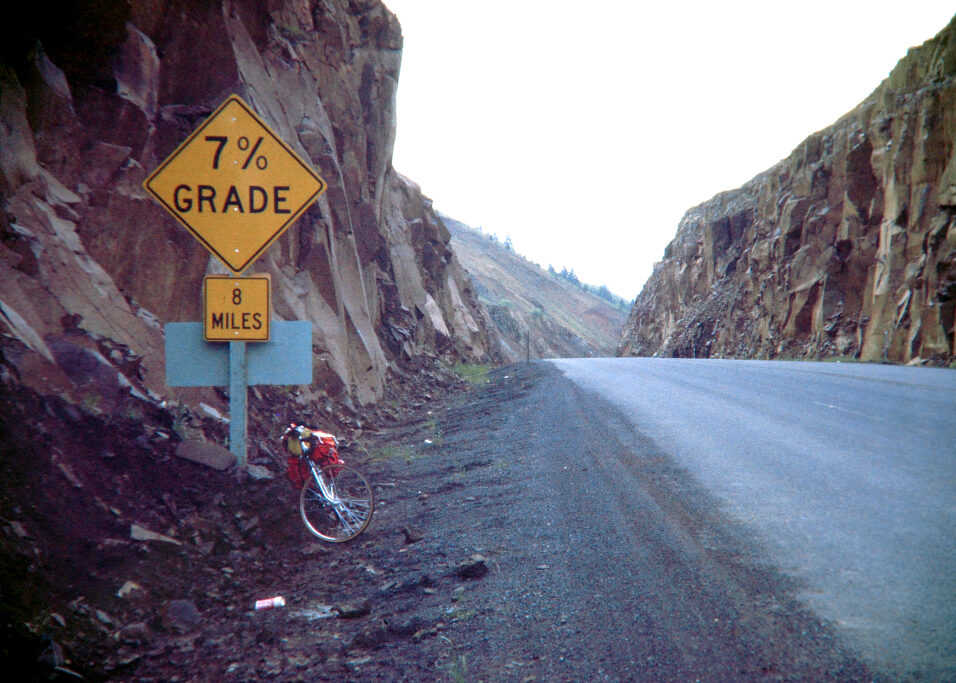
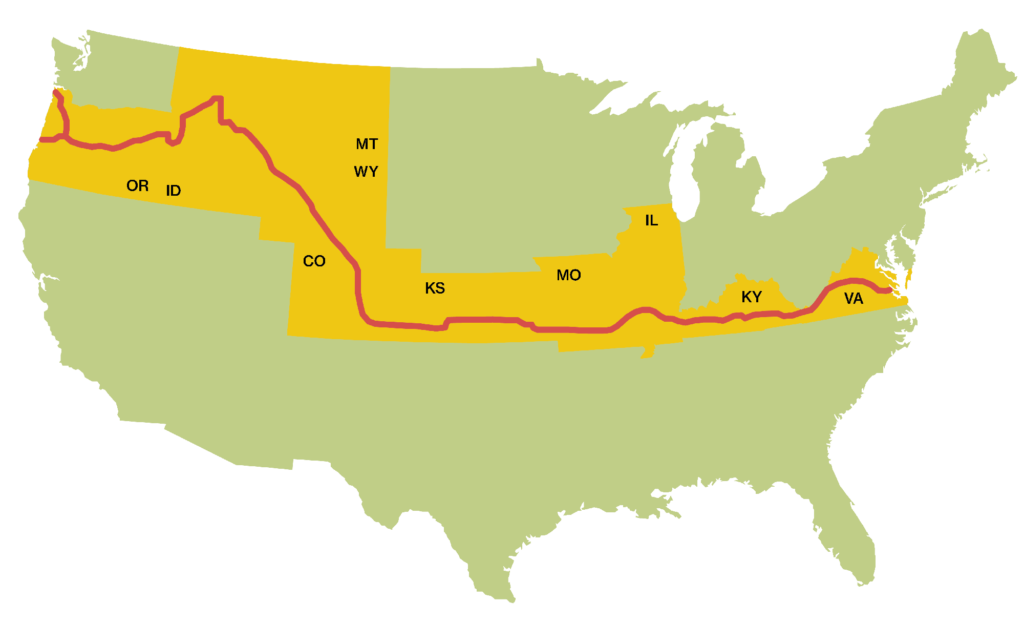
There also was an actual route, the TransAmerica Bicycle Trail, whose “76” road signs can still be found across the country. Safely crossing ten states, 112 counties, 22 national forests, and two national parks, it was largely designed by Lys Burden, who with a National Park Service ranger and friend had spent the fall of 1973 driving a Volkswagen bus between Yorktown, Virginia, and Missoula to scout parts of it. A Montana legislator had gotten Lys topographical maps from the United States Geological Service covering the entire country. Placing them alongside state maps, she used an orange marker to highlight points of interest—scenic, historical, cultural—and connected the dots. “Ninety percent was blue highways,” Lys says, using a term for rural roads.
Colorado’s Hoosier Pass became the linchpin. Positioned atop the Rocky Mountains’ meandering spine at 11,539 feet above sea level, the pass was roughly the route’s midpoint—and during the event, a photo next to its sign became a must-have portrait. For riders pedaling west to east, leaving cold temperatures and occasional snow behind, the ensuing stop in the high desert of Pueblo, Colorado, also provided an opportunity to box up winter cycling gear and mail it home. Dan Phelan, who took off the spring semester of his senior year at Towson State to train for the Bikecentennial, recalls sending back a wool sweater, wool leg warmers, and mittens. “Shoe covers?” he says. “We didn’t have those.”
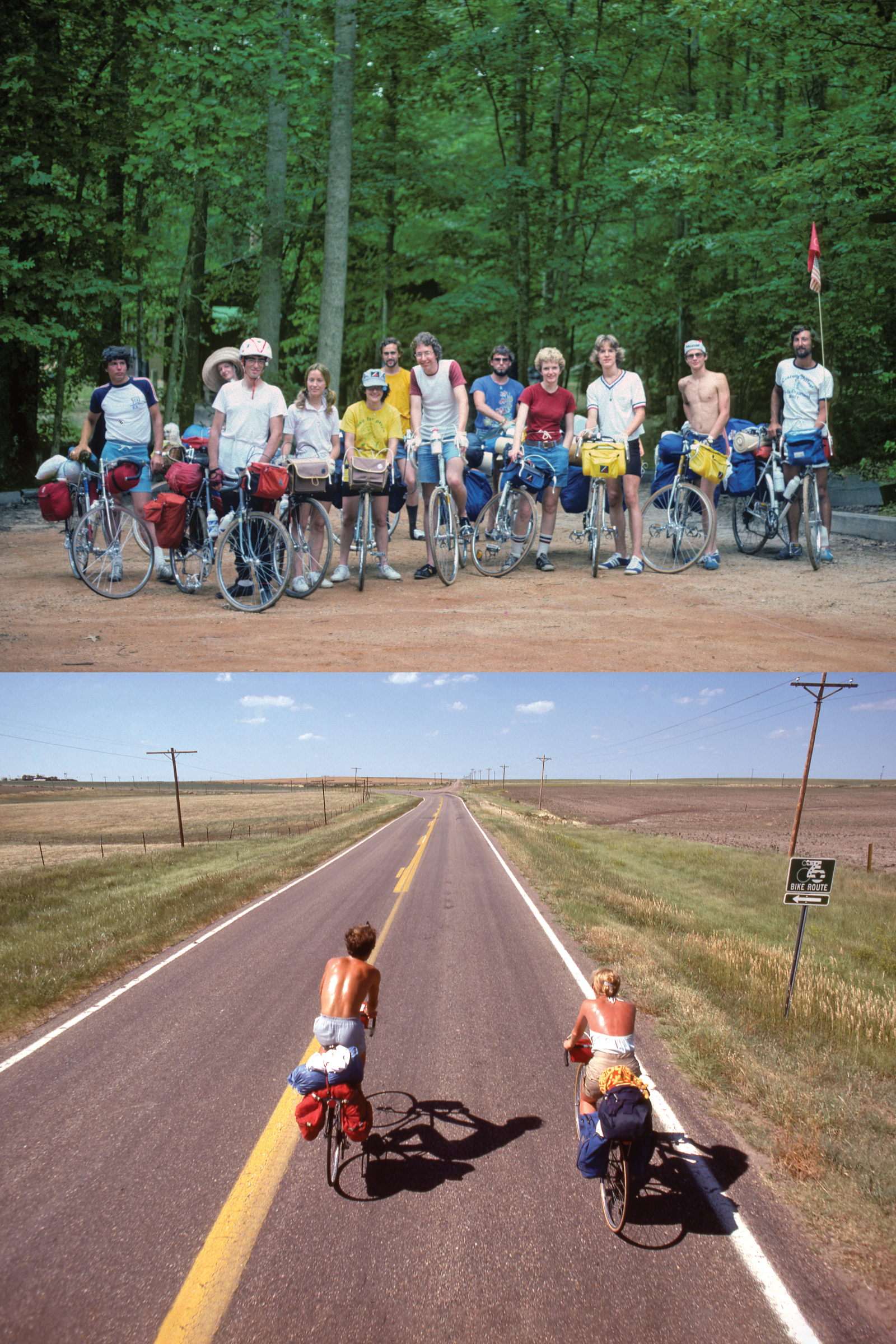
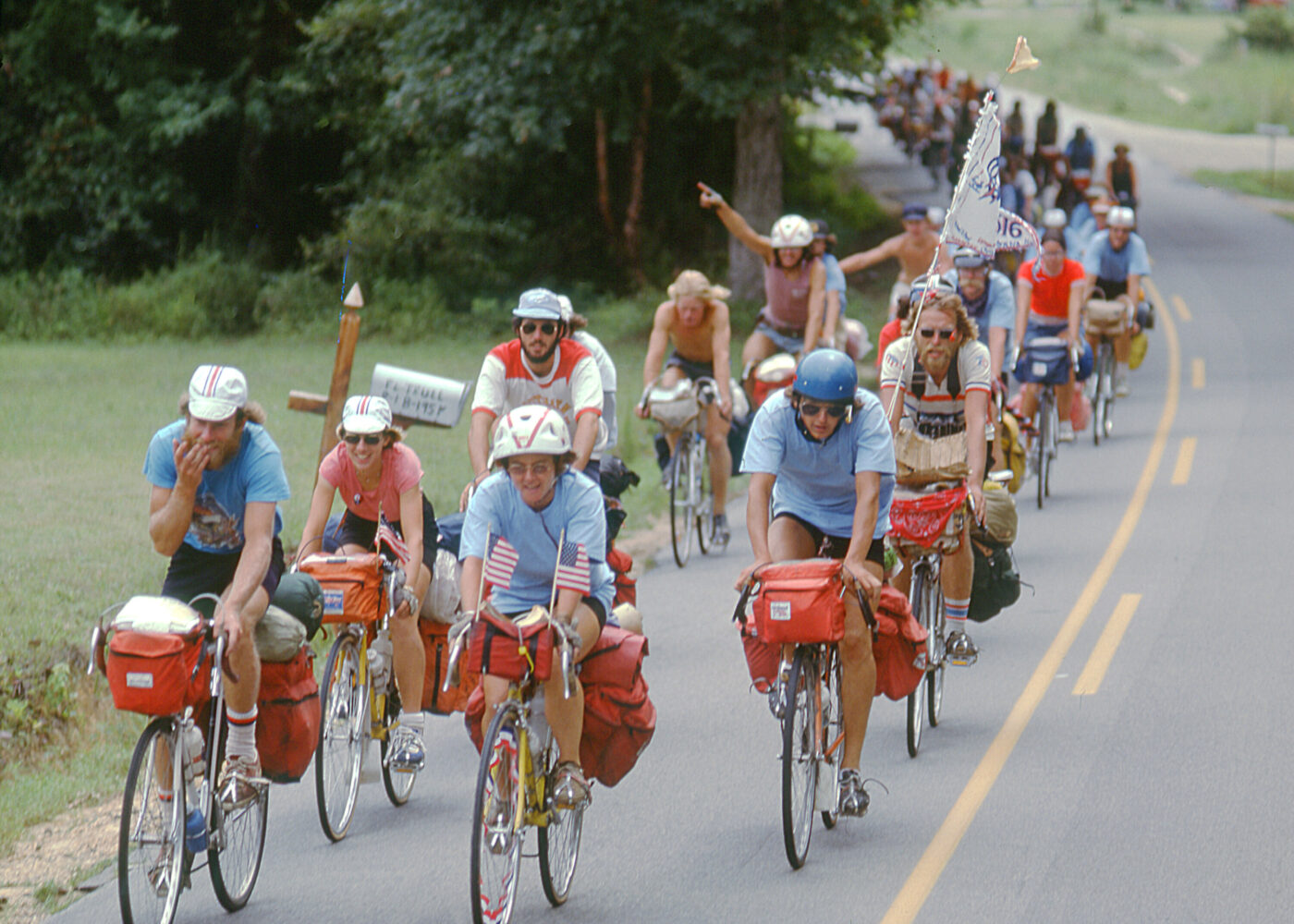
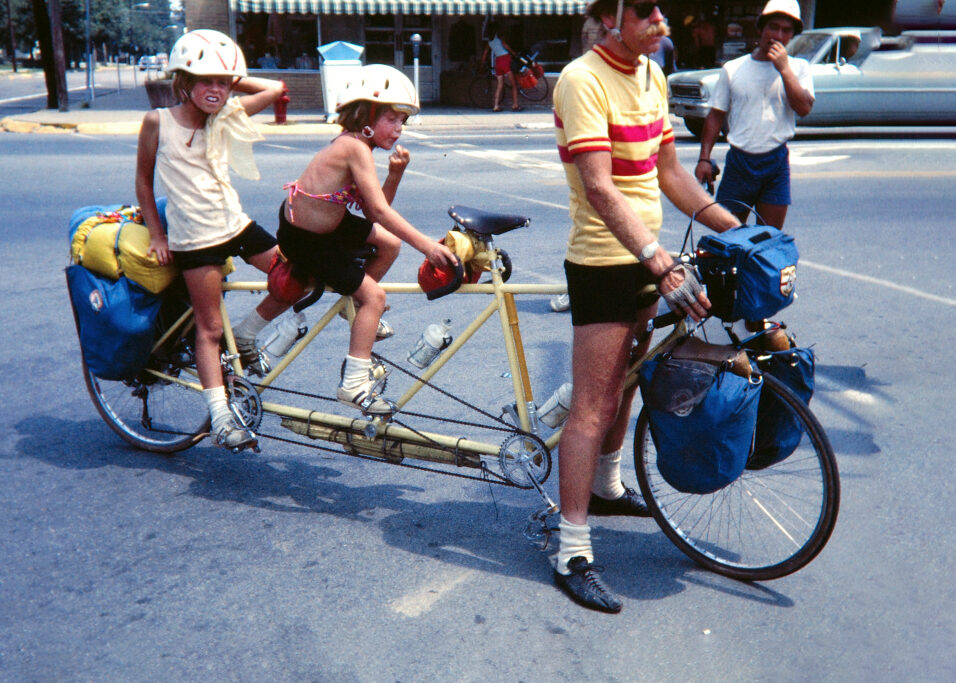
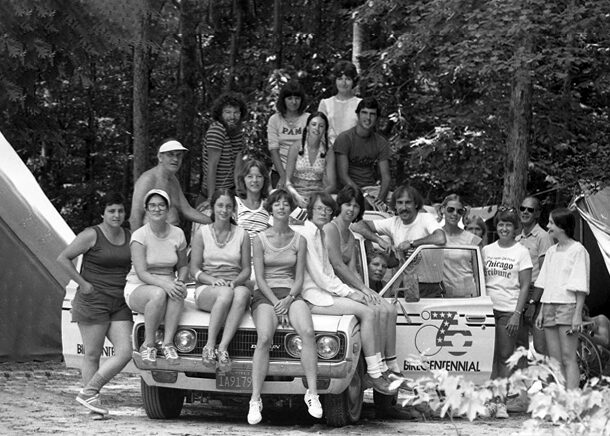
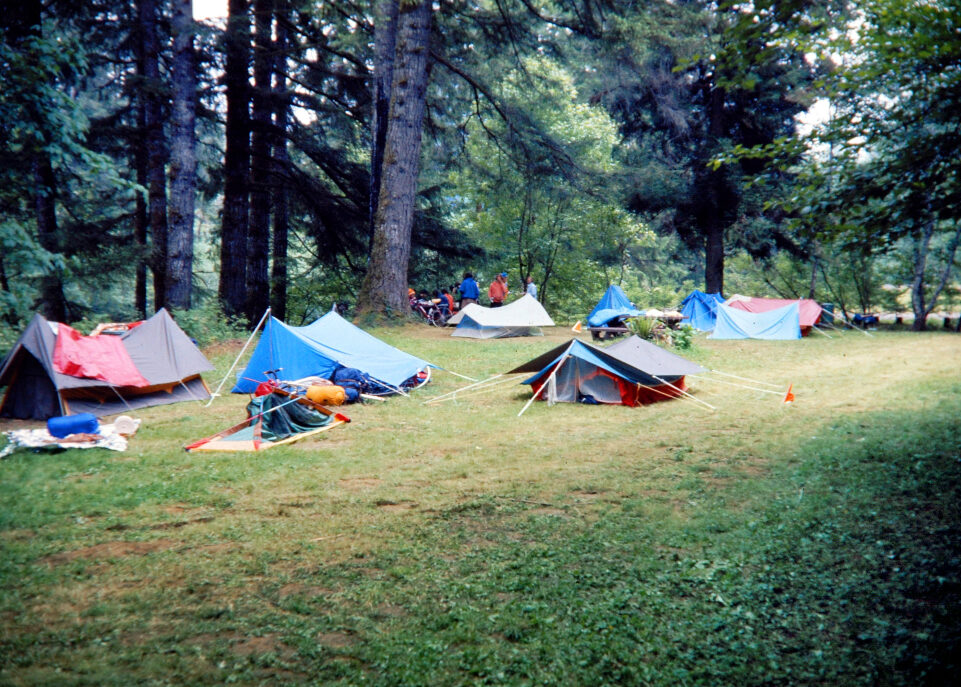
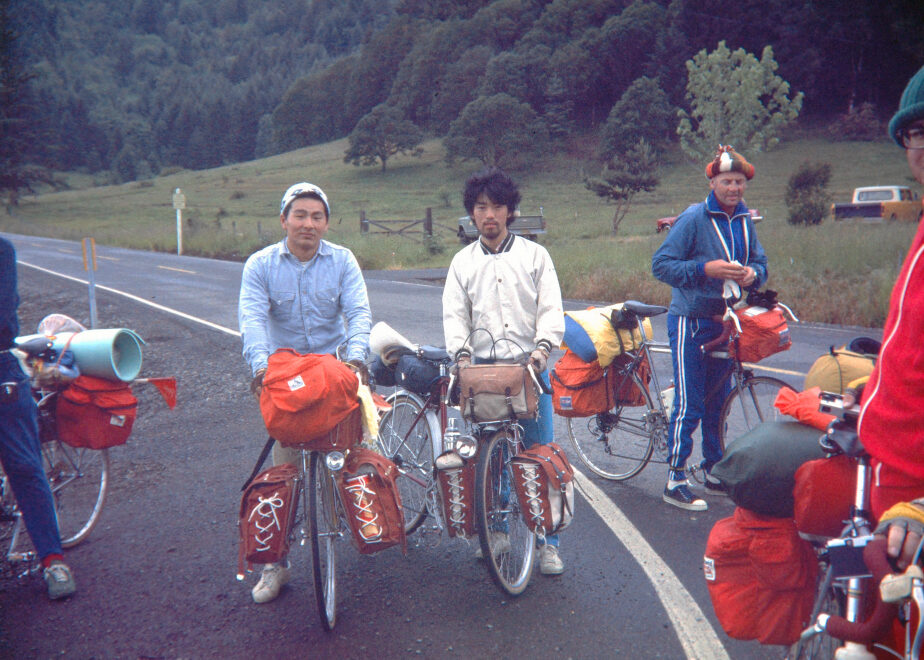
Some of the 4,100 Bikecentennial riders—or 76ers, as they became known—went from sea to shining sea: 4,218 miles over 82 days. Others stuck to smaller sections of the route. There were groups that camped the entire way and groups that “biked in,” crashing at churches, hostels, and high-school gymnasiums. Like the event’s founders, they were not, generally speaking, participating to make a political point. They were normal, everyday people who enjoyed riding their 15-speed touring bikes and who craved an adventure. They hailed from all 50 states and 16 other countries: teenagers, young adults, parents with kids on tandem bikes, even the occasional senior citizen. Nearly 300 of them were from the DC area.
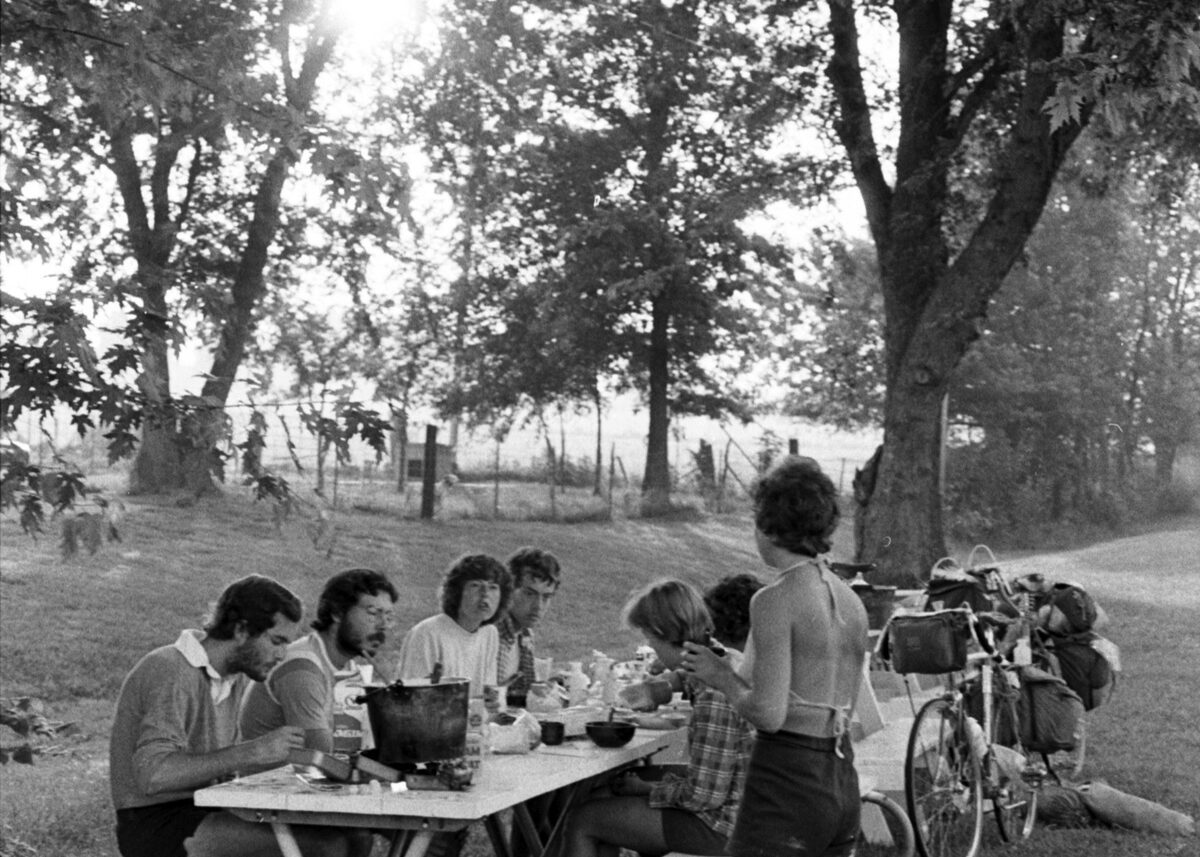
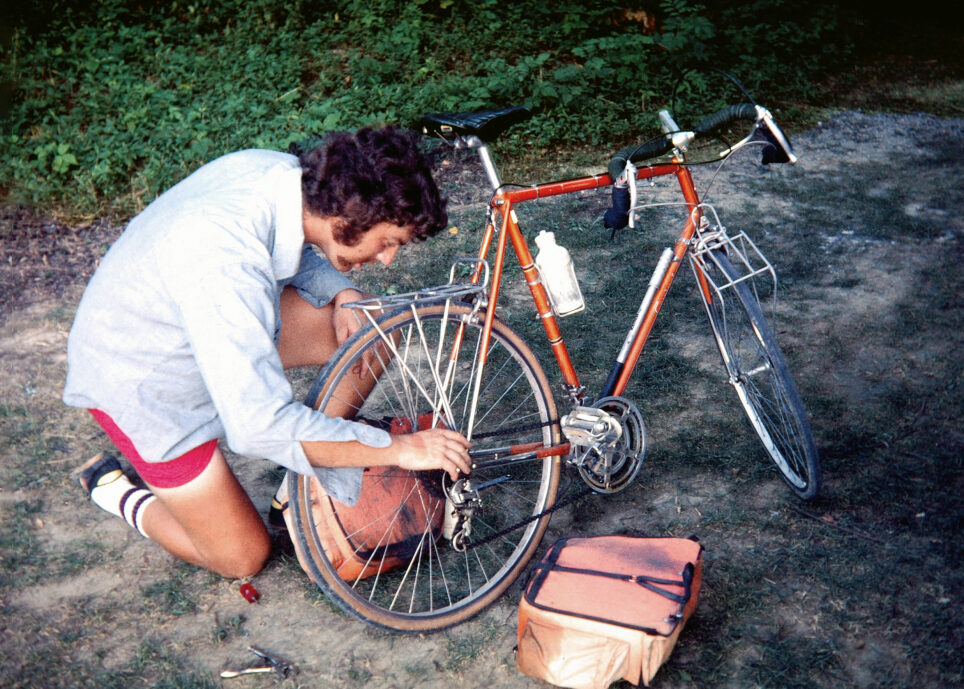
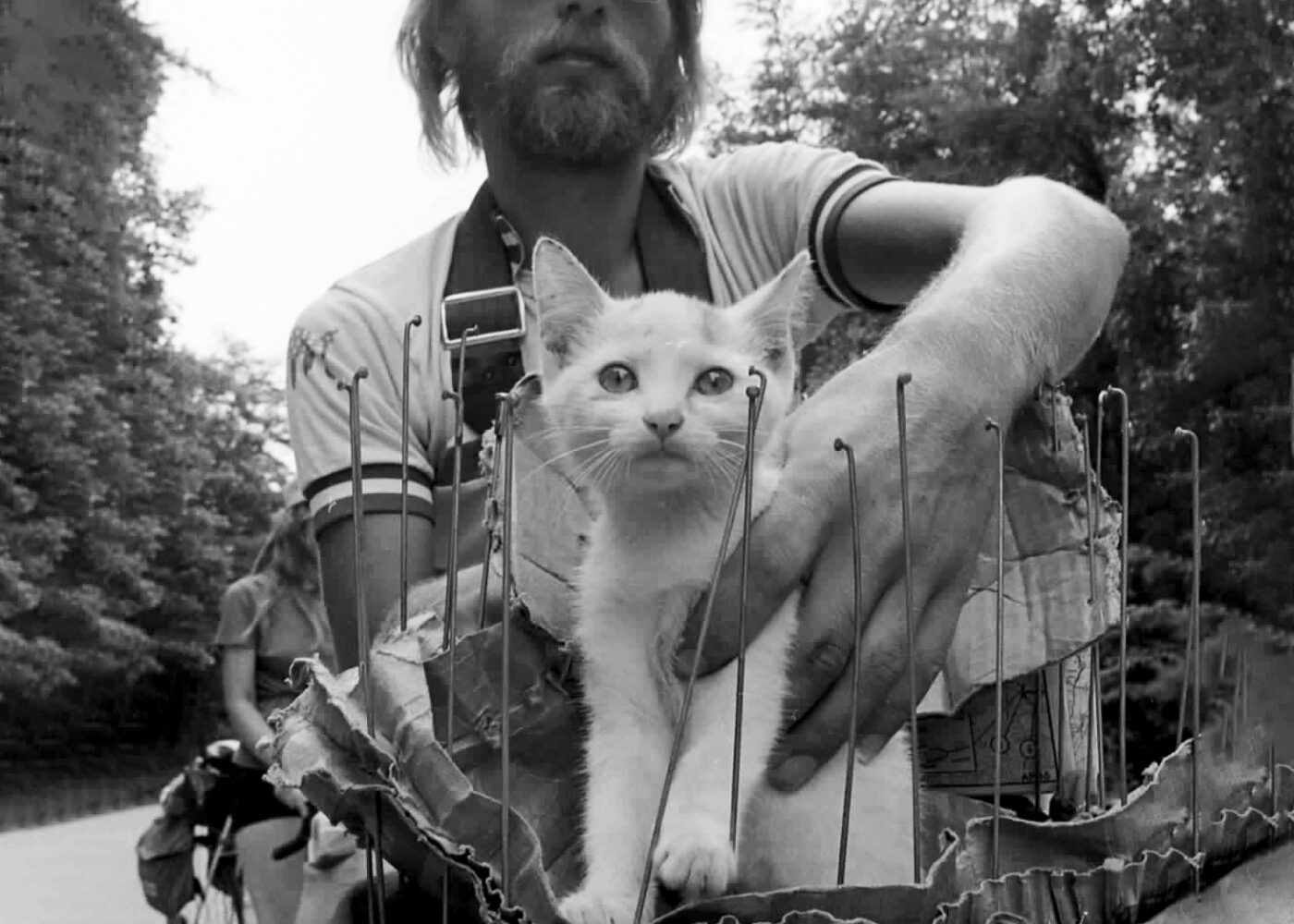
Because it was the 1970s, most riders wore cutoff jeans, sneakers, and cotton T-shirts. Bike shorts were almost unheard of. So were bike helmets—it was bandannas, tennis visors, cycling caps, or nothing at all atop lustrous layers of glorious, disco-era hair. Lots of beards, too. Riders didn’t sweat sunscreen. They didn’t snack on carb gels or Clif bars, instead eating peanut-butter sandwiches and cookies. (So, so many.) In the evenings, they shopped for groceries and cooked their own dinners. Their camping supplies were heavy, and their analog cameras and rolls of film only added to the bulk. Overall, the vibe was less Lance Armstrong than Lewis and Clark.
McAllister made the journey with a top-notch bike for the era, a custom job from Proteus Bikes in College Park, a frame-building pioneer that remains in business today. Though he wasn’t old enough to be a Bikecentennial ride leader—which paid a stipend of a couple hundred dollars—he was old enough to be an assistant leader. Over Thanksgiving break during his senior year of high school, he went to Ohio for training. That spring, his principal gave him permission to miss his final days of school and graduation.
Every state, McAllister says, had its own beauty, especially those in the American West. In Kansas, he recalls, “you’d be riding and see one of those towering grain silos off in the distance, and then it felt like it took forever to get there.” On July 4, his group stayed in Utica, Kansas, where they were invited to attend a celebration. “About half the town came,” McAllister recalls. “Everybody was curious about what we were doing.”
As for money? McAllister started the ride with $200 in traveler’s checks. Pretty soon, he says, “$100 was eaten up with mechanical repairs.” McAllister’s parents sent him another $100—and somehow, he says with a laugh, “I came home with $100, too. It’s interesting to look through my diaries and read, ‘I bought breakfast. Eggs, bacon, toast, juice, whatever else. Spent $1.50 today.’ ”
In retrospect, it’s not the stunning vistas or bad-weather days—rain and snow, mostly coming out of Oregon—that McAllister remembers best. It’s the people he met along the way, including riders in his own group, some of whom came from Australia, New Zealand, and the Netherlands. “Dealing with different personalities in a group, the highs and lows, it was an incredible experience,” he says.
Though the United States seemed to be mired in malaise, the people McAllister met across the country were generous and kind. While passing through Missoula, his bike suffered a loose bottom bracket. McAllister’s group pulled into the Braxton Bicycle Shop, run by a legendary, if eccentric, frame builder named Sam Braxton.
At the time, the shop was still more of a backyard family workshop—both his sons and his wife lent a hand—behind Braxton’s house. While Sam was working on McAllister’s bike, his wife, Shirley, appeared. “She says, ‘Hey guys, y’all like to eat some ice cream?’ ” McAllister says. “I’m 17, we’re all burning calories like crazy, and so she goes to the freezer and brings in quarts of ice cream for us to eat. We’re scoffing down all this ice cream the whole time her husband is working to get me and my bike back on the road. It was the highlight of the whole thing.”
Wheelin’ in the Years
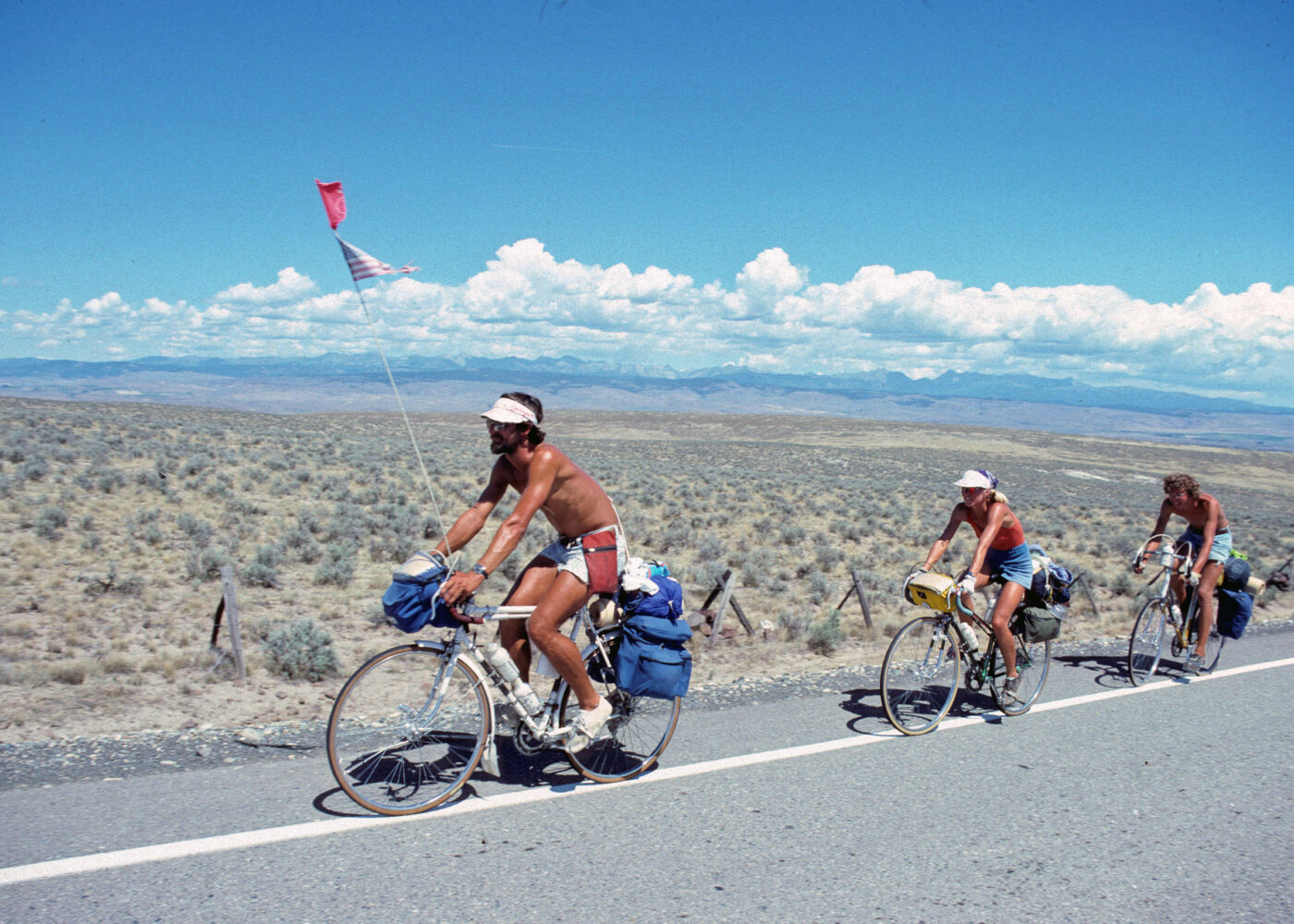

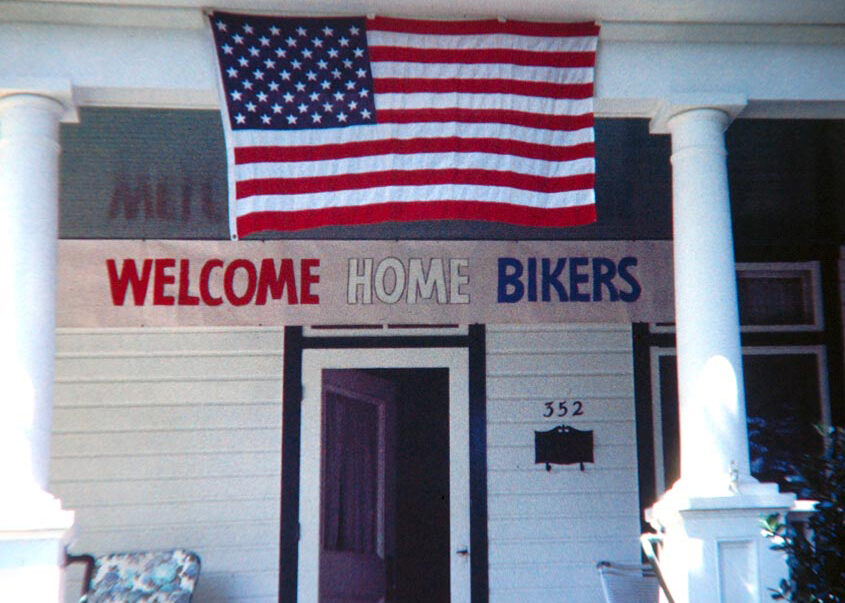
Bruce Burgess didn’t ride the entire Bikecentennial route. At the time, he was president of the Richmond Area Bicycling Association—but he also was 32, married with two children, and a partner in his architecture firm. Unable to spend two months–plus on the road, he joined a shorter group ride across Virginia, sharing a tandem bike with his wife. The two pedaled and camped and, on one occasion, showered by using a hose attached to a fountain in the center of a small town.
“We were grimy,” Burgess says now with a chuckle, “but you make do, and we did.”
Burgess also helped make one of the great Bikecentennial artifacts: a series of pocket-size regional guidebooks, which still can occasionally be found on eBay. Written by a young journalism-school graduate named Gary McFadden, the books include wonderfully quirky illustrated maps featuring site-specific wildlife—moose, yellow-bellied marmots, giant mosquitoes (yikes)—as well as flora, fossil beds, old cowboy trails, Native American passes, and Yellowstone geysers. There are 40 maps in all, each hand-drawn by Burgess.
“We were one of the bike clubs around the country that received a mailing from the Bikecentennial team, and I volunteered my services to find roads between Charlottesville and Yorktown,” Burgess says. “That’s how I got tied in.”
Fifty years later, the Bikecentennial’s legacy endures. In 1977, Dan Burden moved from Missoula to DC to start the Bicycle Federation of America, which evolved into a leading nonprofit dedicated to creating bicycle-friendly and walkable communities. Time magazine later named Burden one of the world’s “six most important” civic innovators. Meanwhile, Greg and June Siple remained in Montana, where Greg helped lead the nonprofit American Cycling Association for 40 years.
Renamed from the original Bikecentennial organization, the ACA has nearly 20,000 members, does advocacy work, and has produced detailed touring maps covering 50,000 miles of cycling routes across the US and beyond—including a Maine-to–Key West Atlantic-coast ride and a Great Divide mountain-biking route along the Rockies that starts in Canada and ends in Mexico. The ACA’s headquarters remains in Missoula, and the Siples, who live nearby, still hear from cyclists grateful for their work.
“I think the most patriotic thing a person can do is to ride across the United States as a citizen,” June Siple says. “Because it opens you up to all kinds of experiences, the hospitality that’s offered, the weather, the terrain, and you have that time for dreaming about who you want to be.
“Most of the riders in ’76 were young people. I know that careers were made in people’s minds just crossing the country, including people that have been working for the environment all this time. But all kinds of careers sprouted from that experience—the sense of self-confidence, that if you do something like that, you can do anything.”
Reese was one of those young people. A year after the Bikecentennial, she moved to Silver Spring and started pedaling to a job in Dupont Circle, covering the 15-mile round trip every day for years. The experience, she says, changed how she understands America, and herself: “I had never been west of my grandparents’ house in Pennsylvania. I had no idea that I was as resilient as I ended up being, how determined I could become. I learned how to put up with a lot of horrible uncomfortableness in order to reach a goal.”
For McAllister, now 67, the ride was a once-in-a-lifetime experience. In 2011, he found himself back in Missoula on business. In his spare time, he tracked down the Braxtons’ bike shop, by then a thriving business operating out of its own building. Sam Braxton, he learned, had passed away, but Shirley was still alive.
McAllister asked if Shirley happened to be in. A staffer pointed him to her office. “I walked back and I’m standing in the doorway and I knock,” McAllister says. “And she turns and says, ‘Hello, how can I help you?’ I smiled and said, ‘Mrs. Braxton, do you have any ice cream?’ ”
Shirley looked at McAllister. “She says, ‘You’re one of those guys, aren’t you?’ ” McAllister says. “She remembered bringing that ice cream out when we were there in Missoula in 1976. I still get emotional thinking about it. You know, the kindness of strangers.”
This article appears in the June 2026 issue of Washingtonian.