The Department of the Interior hosted a ribbon-cutting ceremony today to officially unveil all 13 Revolutionary War soldiers depicted in an exhibition at DC’s Freedom Plaza.
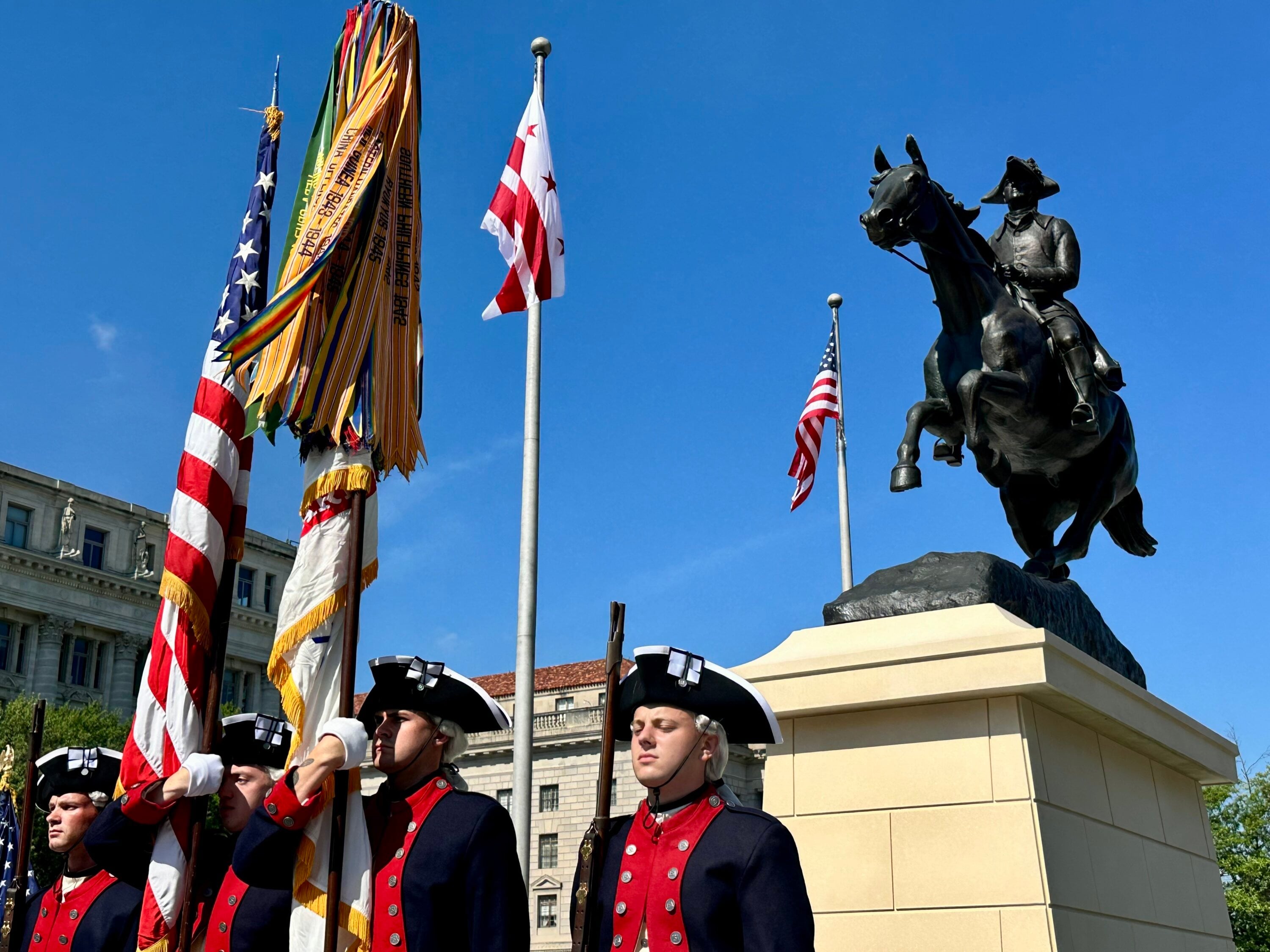
Earlier this summer, the Trump administration installed a statue of Revolutionary War soldier Caesar Rodney, best known for his horseback ride from Delaware to Philadelphia to cast his vote for the nation’s independence in July 1776. Rodney’s statue had previously been on display in Delaware, but was removed by the city of Wilmington amid Black Lives Matter protests in the summer of 2020 due to his ownership of hundreds of enslaved people. After news of the Rodney statue’s resurrection in Freedom Plaza drew criticism, the identities of the other dozen statues—part of an exhibition celebrating America’s 250th birthday—remained unclear.
The other 12 statues also depict Revolutionary War soldiers, including Samuel Whittemore, who at 78 years old faced British troops retreating from the Battles of Lexington and Concord; John Peter Gabriel Muhlenberg, a Lutheran minister-turned-soldier who was later elected to the first Congress; and Simon Knowles, who enlisted in the Continental Army at 15 years old.
The statues also include depictions of several formerly enslaved African Americans who served during the war, including James Armistead Lafayette, who served as a double agent and gathered intelligence for General George Washington; Jack Sisson, who joined a nighttime raid to capture a British General during the war; and Caesar Glover, who helped Washington cross the Delaware River.
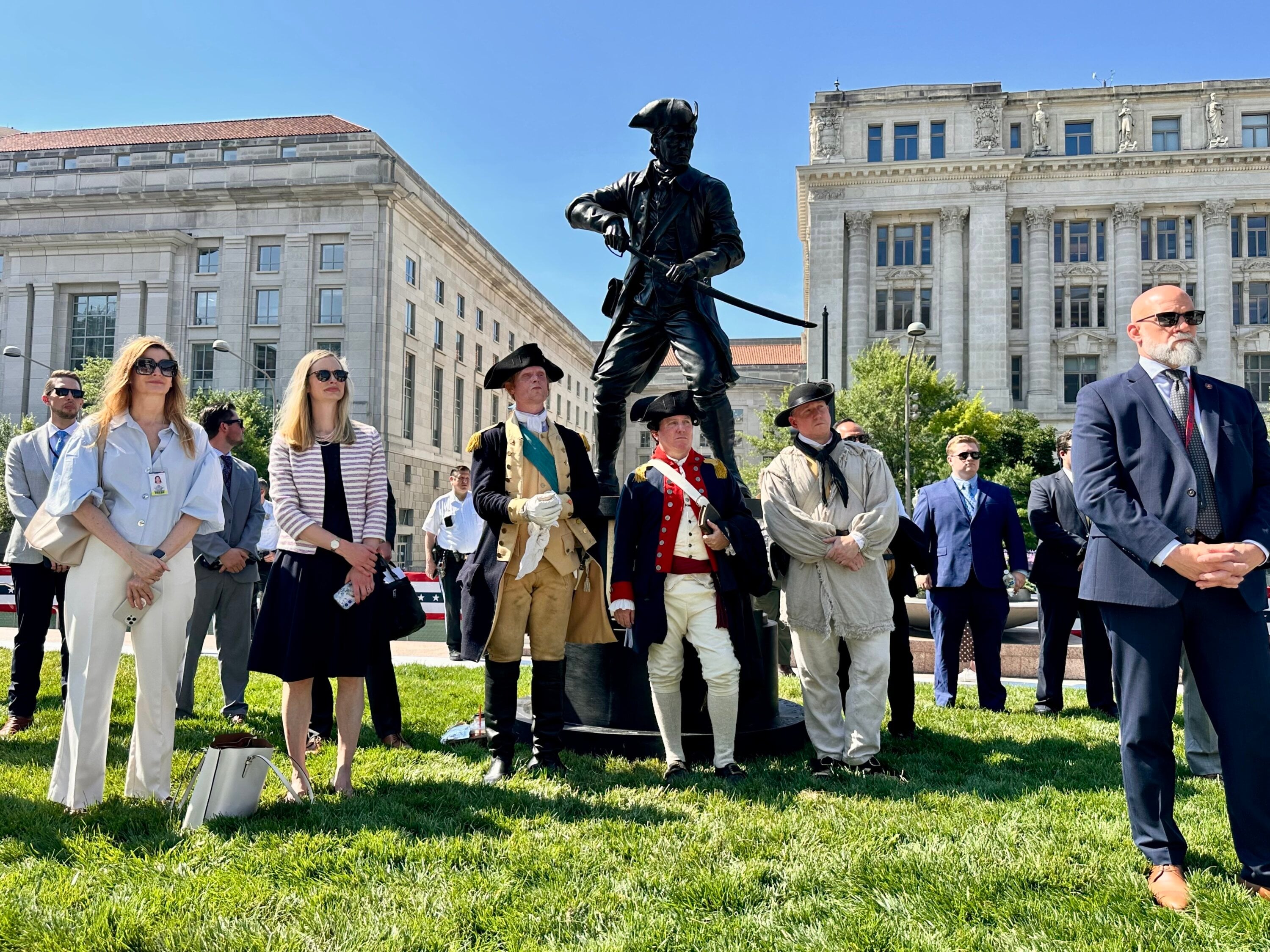
The exhibition also includes a statue of the “Spirit of Liberty” toward the center of the plaza, depicted as a woman holding a sword.
“The twelve soldiers represent the collective sacrifice of those who served during the Revolutionary War, reflecting the broad range of individuals who contributed to the nation’s founding,” a DOI spokesperson said in a statement in May. “Together, the installation will transform Freedom Plaza into a space of remembrance and reflection, inviting visitors to connect with the people and pivotal moments that shaped the early history of the United States.”
Secretary of the Interior Doug Burgum spoke at the event, which drew over 100 attendees, along with senior National Park Service leadership. Burgum started his remarks by expressing gratitude for President Donald Trump for dedicating resources to lead the “transformation” of the nation’s capital.
Burgum said Trump has made DC a place that reflects American values of democracy and liberty, and that the ordinary farmers and ministers-turned soldiers depicted in the plaza helped advance those ideals.
“I hope that those that visit this plaza will leave here with inspiration for the future, believing what those patriots believed,” Burgum said.
The ceremony included a performance from a fife and drum core, dressed in Revolutionary-style uniforms. The band played a rendition of the “Star Spangled Banner” during the ceremonial presentation of the colors, which the crowd sang along to.
Secretary of Agriculture Brooke Rollins said the plans for Freedom Plaza had begun in the first Trump administration. She also said in the past it seemed “hopeless” with the tearing down of statues and “erasing” of American history, seemingly referring to the removal of several Confederate statues nationwide amid Black Lives Matter protests in 2020. She said that hopeless feeling mirrored what Americans felt at the beginning of the Revolutionary War.
“This president and this extraordinary secretary of the interior, amongst a lot of other priorities, have in such a short time made Washington DC beautiful and great again,” Rollins said.
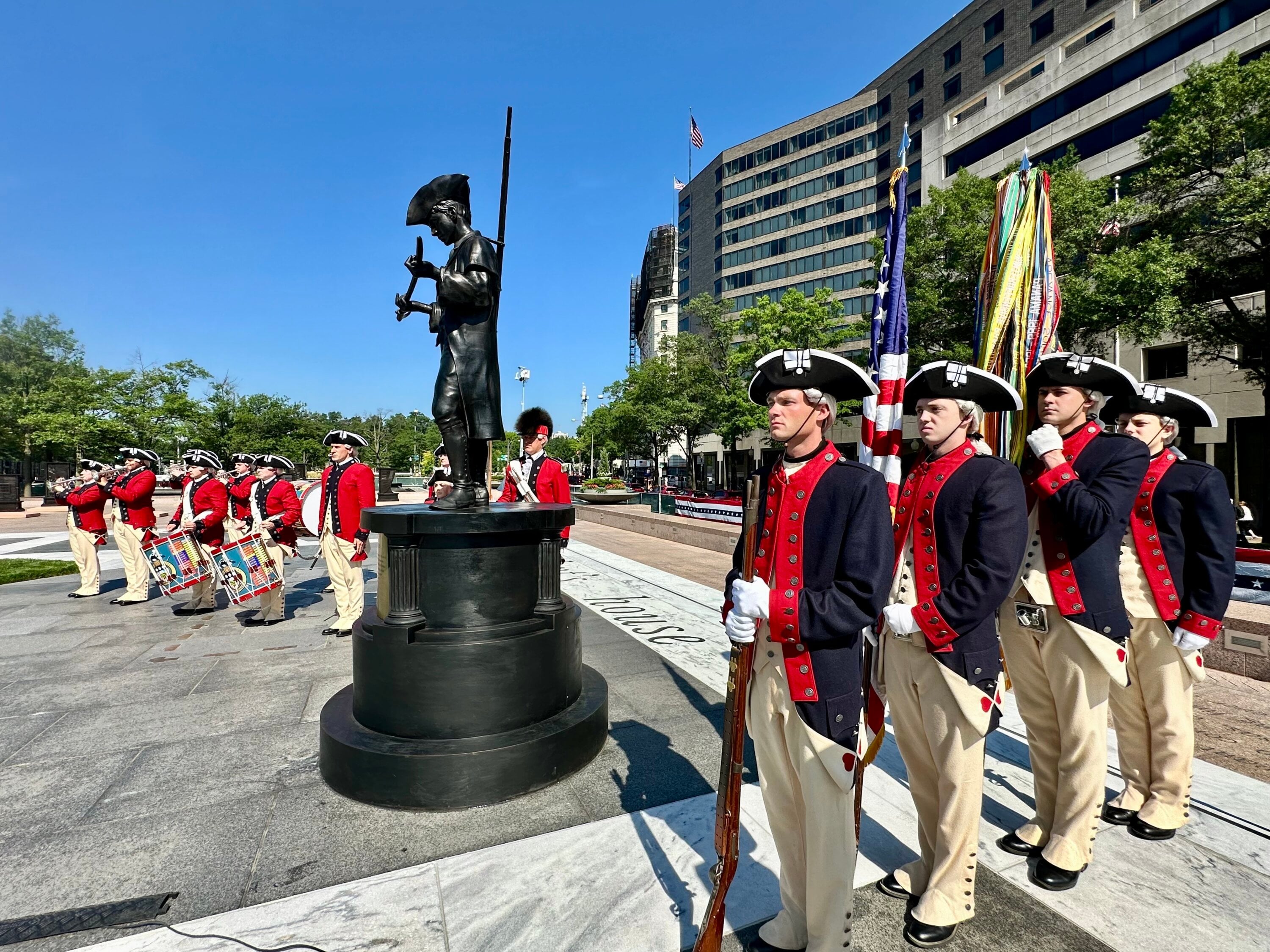
Kevin Griess, Superintendent of the National Mall and Memorial Parks, listed the names of the 12 soldiers that are depicted beside Rodney in the plaza, with each name receiving applause from the crowd.
“As we celebrate the 250th anniversary of American independence, this will serve as a public space for remembrance, gratitude, and pride in our country and this city,” Griess said.
The Trump administration renovated the plaza in preparation for this week’s celebrations of America’s 250th birthday. The initiative was completed as part of Trump’s Making D.C. Safe and Beautiful initiative, driven by a March 2025 executive order to rehabilitate the District’s infrastructure. So far, this has included renovating fountains across the city and creating a D.C. Safe and Beautiful Task Force aimed at reducing crime in the District—which includes the controversial deployment of National Guard troops into the city, which began ten months ago.
The administration has also worked to reinstall previously removed statues of controversial figures, like the statue of Confederate general Albert Pike that was removed in June 2020 but NPS reinstalled in Judiciary Square in October.
Freedom Plaza, located between 13th and 14th streets at Pennsylvania Avenue, NW, was completed in 1980 as “Western Plaza” and rededicated in 1988 to Martin Luther King Jr. and renamed “Freedom Plaza.”