late November, I spent several hours talking with a member of the DC National Guard. I’d met him at an event—one unrelated to the Army—and when I found out what he did, I had questions. Was he among the soldiers stationed on street corners since the summer? Did he think he was helping the city? Was the public getting in his face?
The National Guard presence in DC has struck many as partisan and menacing, like something that shouldn’t happen in the United States. This soldier actually seemed to agree. He sees the mission as bungled and immoral: a misuse of the troops and a waste of federal funds. He agreed to speak with me anonymously about what the deployment has been like.
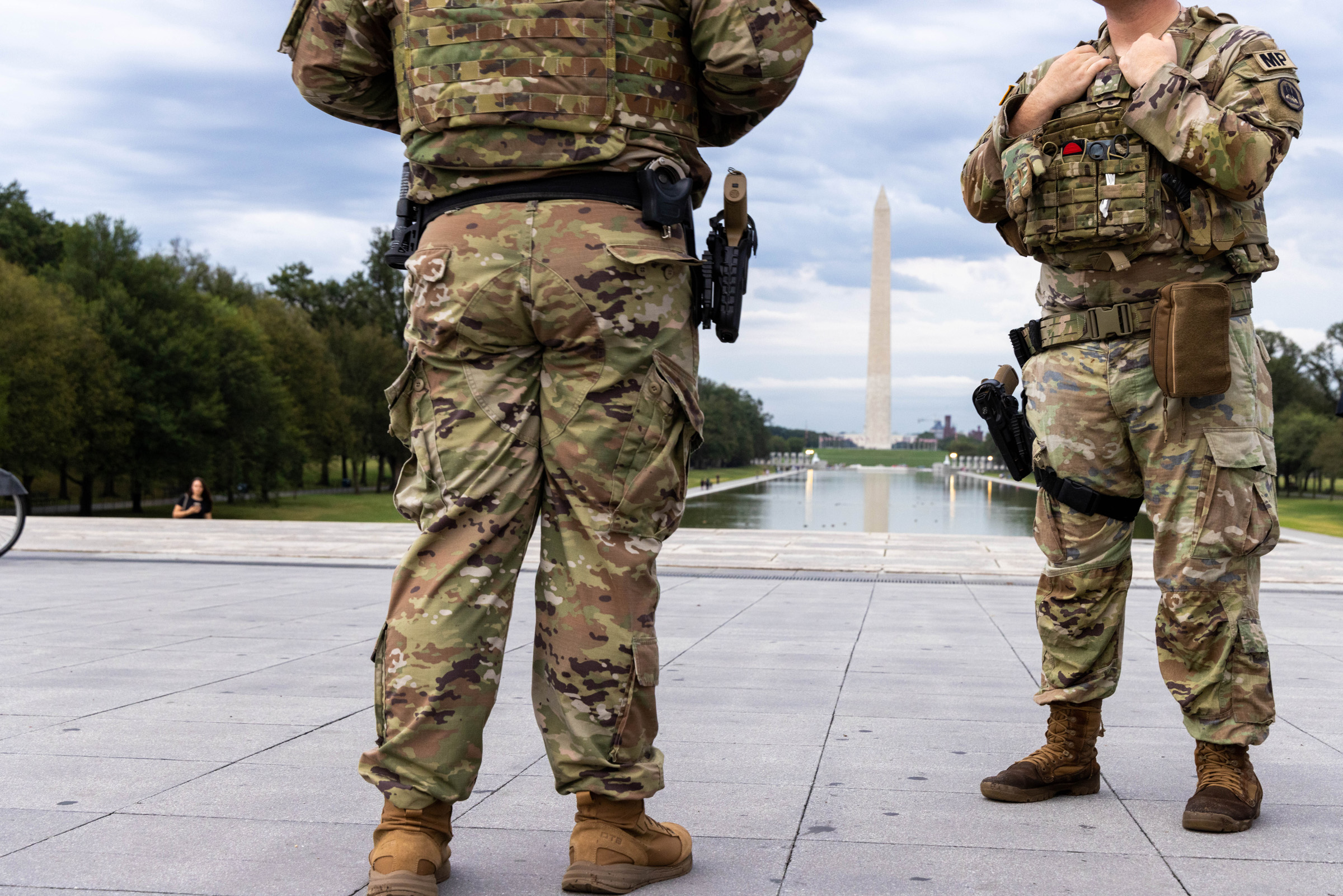
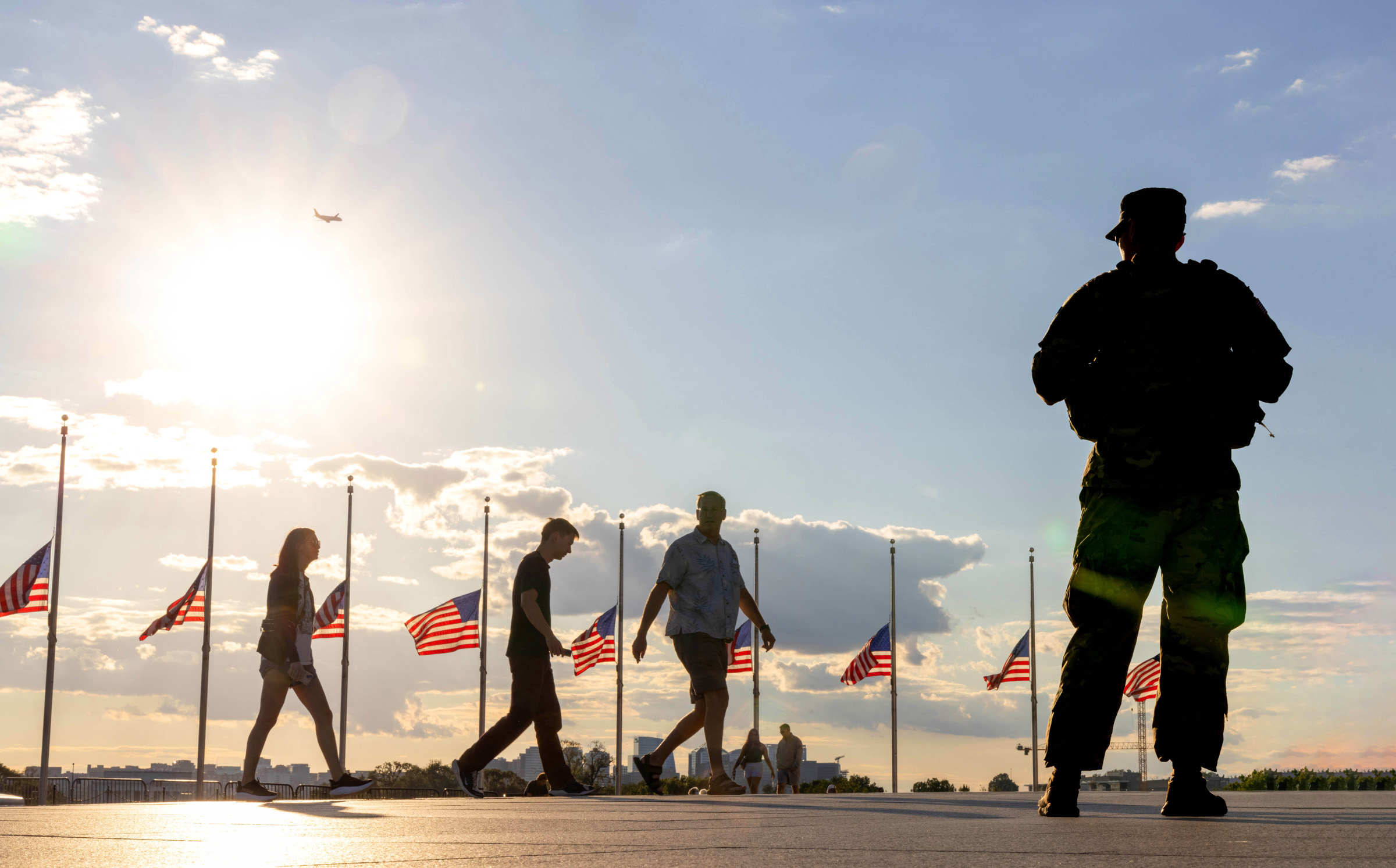
The DC Guard was activated in mid-August. At first, the soldier’s unit patrolled high-traffic areas like the monuments and the National Mall. It annoyed him. Members of the National Guard are reservists; to activate, they take leave from their civilian jobs and put their regular lives on hold. It’s generally for a specific purpose, such as responding to natural disasters or quelling civil unrest. But this mission struck the soldier as aimless. He felt demoralized, milling around in the baking sun, not doing very much at all, while passers-by called him a fascist and told him to go home.
He felt demoralized, milling around in the baking sun, not doing very much at all, while passers-by called him a fascist and told him to go home.
After about a week, his assignment changed. An array of federal agents had descended on the city for the law-enforcement surge, and they reported to a US Park Police facility in Anacostia. This soldier’s unit manned its gates, checking the IDs of anyone who arrived. He described it as a cushy gig. When nobody was at the gate, he would chat with members of his unit about their lives. “That’s all we did,” he said. Between their Army base pay and housing allowance, some soldiers earned more for this work than they did in their civilian jobs.
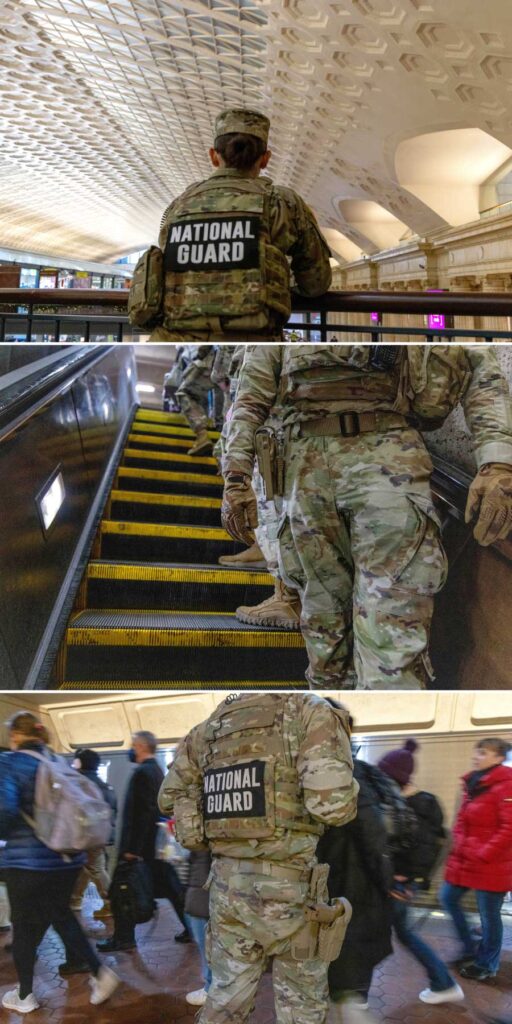
Meanwhile, members of the National Guard from other states had been dispatched to DC. Those troops, the soldier says, were given the more public-facing roles—like patrolling street corners and the Metro—where they were exposed to heckling and abuse. I asked how they spent their days. “Have you ever seen them do anything?” he replied. “They’re just standing there. They smile. They wave. They walk around and quote-unquote ‘patrol.’ ” The National Guard is not law enforcement, he stressed. Members generally can’t arrest or detain people, so there isn’t much that they’re authorized to do.
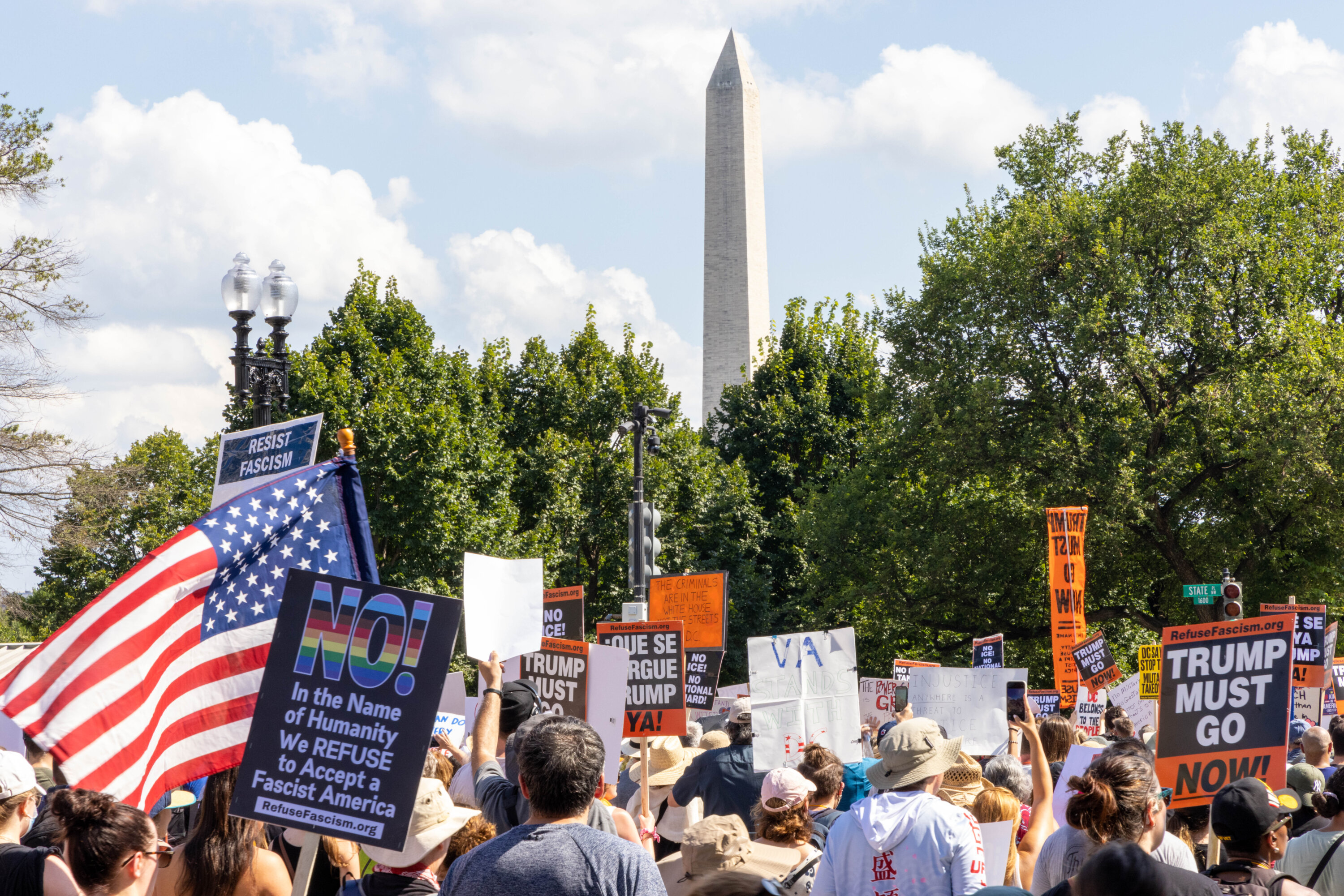
Officially, Trump’s “DC Safe and Beautiful Task Force” is about protecting the city from violence in the wake of several high-profile crimes. Some locals and tourists appreciate it. Some have thanked servicemembers on the streets. But to many, the military presence has looked like authoritarianism. The soldier said he’s never seen this level of animosity toward members of the Guard. Civilians are “yelling in our face, recording us, taking pictures of us, walking away looking scared.” He blames the President’s rhetoric, which he feels has pitted soldiers against the communities in which they live and serve.
Some locals and tourists appreciated the National Guard being here. But to many, the military presence has looked like authoritarianism.
Responding to a summary of the soldier’s opinions of this deployment, a spokesperson for the DC National Guard wrote that servicemembers “bring a wide range of perspectives to any mission, particularly one conducted in a highly visible and complex environment. The DC Safe and Beautiful mission was established to support District and federal partners through a whole-of-government approach focused on public safety, deterrence through presence, and community confidence—not to replace civilian law enforcement.” The statement also noted that guardsmen “perform a range of public safety support functions,” including “providing medical assistance, administering naloxone to reverse overdoses, reuniting lost minors with their families, deescalating violent incidents, and supporting law enforcement apprehensions.” The National Guard’s “enduring responsibility,” the statement says, “is to serve the American people—often in challenging circumstances—by strengthening public safety, reinforcing trust, and supporting democratic institutions at home.”
But the soldier does not believe that Safe and Beautiful has served those ends. To be clear, his dissent isn’t ideological. He trends Republican, and he voted third party for President in 2024. He simply thinks the mission doesn’t make sense. Local crime is a problem, he said, though not bad enough to justify bringing in federal troops. And he believes that it’s wrong—“objectively unnecessary and almost wicked”—to station armed soldiers on street corners as props in the deterrence of crime. “I love my country and I love the Army,” he said, “but this is not what I signed up to do.”
When the soldier was growing up, he idolized a relative who was a member of the National Guard. The work seemed admirable: helping in times of emergency, making the public feel safe. At the time the soldier joined, he was in an unfulfilling job that did not serve the public good, and he hoped to do something meaningful. In the National Guard, “we’re supposed to hand out pallets of food, or help sick people, or stack sandbags when there’s a flood,” the soldier explained—and in previous activations, that’s exactly what he did.
Safe and Beautiful, though, has felt pointless. “I neglected to mention this, partially out of shame,” he told me nearly two hours into our interview, “but every Wednesday, we picked up trash.” Officers would distribute supplies—plastic bags, gloves, grabber sticks—so the troops could collect candy wrappers and bottle caps. The public sometimes “laughed in our face,” he said. At quitting time, servicemembers would haul their bounty to a central point to be weighed so that leadership could crow about how many pounds of garbage they’d bagged.
“That was a low point for me, spiritually,” the soldier said. It wasn’t that trash pickup was beneath him: In the Army, he’s gladly cleaned bathrooms and mopped floors. Instead, he took issue with feeling condescended to by his superiors, who “never addressed how fucking ridiculous” this whole mission was or acknowledged that “we are in a bad situation and this should not be happening.” The DC National Guard’s aviation unit, of which he is a member, includes two medical evacuation companies, a fixed-wing company, and a security-and-support company. “Is this the best use of our tax dollars?” he said about his unit’s highly trained military pilots picking up trash.
I asked if there’s dissent within the DC Guard, whether some soldiers think that fighting crime might benefit the city. He bristled at the premise of my question. “But we’re not taking on crime,” he said. “That’s the crux of the issue: We’re not doing anything. We’re checking IDs at Park Police.” The soldier told me that there isn’t much sense among servicemembers “that we’re actually making anything better,” and as a consequence, morale has been low. He concedes that he has not spoken with all, or even most, of the approximately 825 activated DC guardsmen. But “the people I’ve personally interacted with feel, to a man, that this is a pointless endeavor.”
In the midst of this conversation, I noticed a notification on my laptop. “Can I just interrupt you for one second?” I broke in, unsure how to word what I needed to say. “I am so sorry to tell you this, but I just got a news alert that two members of the National Guard were shot in DC.”
Throughout his years in the Army, this soldier has met thousands of US servicemembers from many walks of life. The overwhelming majority, he’s found, share a call to service—they’re people who “want to make the country a better and safer place to be.” He thought about that when I first told him about the shooting.
Scanning the homepage of the New York Times, I informed him that the victims were West Virginians. (Both were initially reported killed, though one would survive.) For almost a minute, he was silent. Finally, he said, “Those poor kids just came to the city, and they didn’t want to be here. Now they’re not going home.”
I asked if he needed some time, if he wanted to talk another day. He didn’t.
“The whole thing is fucking senseless,” he said. “I gave up trying to understand it.”
Understand what, I asked.
“The purpose of why we’re out here. Why we’re in the streets.”
For much of our conversation, the soldier was incensed. He’s furious with the government for “parading the National Guard around to intimidate people,” sowing tension with the public while putting servicemembers at risk. And he resents being made the face of a politicized initiative, “something so controversial, so ham-fisted, that’s almost done out of malice or spite.” At one point, he paused to apologize, asking if I could understand him as he yelled.
To the soldier, the DC Guard is in a lose-lose situation, “where there’s no level of performance or nonperformance that’s going to be good for us.” Guardsmen either infuriate their community by following orders or suffer professional repercussions if they refuse. Meanwhile, counterproductive directives keep coming down. A couple weeks into the mission, for example, the Pentagon authorized arming the troops. The soldier opposed it. “We’re not supposed to look scary,” he said. Passing out guns could be bad for community relations, he thought, making the whole deployment more dangerous for everyone involved.
Given the stakes, the soldier is frustrated that “no one’s trying to lower the temperature in the room,” that “on all sides, it seems like we’re just amping up the rhetoric.” And the night of the shooting, the rhetoric did amp up: In a primetime address to the nation, the President raged at the refugee from Afghanistan who’s accused of the crime, described “foreigners” as a risk to the nation’s survival, and vowed to remove any immigrant who “does not belong here.” The following day, on Thanksgiving, the US froze immigration applications for Afghan nationals. It also announced a broader crackdown on immigration from 19 “countries of concern.”
The soldier didn’t watch the President’s speech. He didn’t hear Trump call the DC Safe and Beautiful Task Force “the most successful public-safety and national-security mission in the history of our nation’s capital” and then mobilize 500 additional troops. The previous week, a federal judge had ruled that the deployment was illegal. But an appeals court has since stayed that ruling, and the National Guard troops—around 2,500 of them now—are expected to remain in DC, at an estimated cost of $1.5 million per day.
About a month after the shooting, I spoke with the soldier again, and he told me that his unit has actually begun to stand down. Most members are still on active duty, but they’re no longer picking up trash or checking IDs. The soldier doesn’t know why. Troops from other states are still on the streets, but the DC Guard’s aviation unit has been “kind of sequestered at the airfield,” he said, flying and doing aircraft maintenance like normal. Morale has improved, and “the main reason is that we’re doing our actual jobs—our ‘warrior tasks,’ so to speak.”
“We’re getting spat at by the communities we serve. There shouldn’t be any us-versus-them mentality. We exist to serve the public.”
Nonetheless, he worries that the damage has been done, that the spate of politicized Guard activations under Trump—in DC, Los Angeles, Memphis, and New Orleans—could poison relations between soldiers and civilians long-term. It alarms him, he said, to be “in the position where we’re getting spat at by the communities we serve. There shouldn’t be any us-versus-them mentality. We exist to serve the public, and it’s our job to earn their support.”
At one point, I asked if the soldier participated in immigration raids. Emphatically, he told me no—that guardsmen aren’t authorized to do so, which the National Guard confirmed. But he was frustrated by the question itself. “It’s not that you’re uninformed,” he said, it’s “the failure of my leadership to explain to the public why we’re there,” that “we’re not jackbooted thugs who are stripping away your freedoms”—that actually, members of the DC Guard live around here, they’re federal workers and bus drivers and teachers and cops, and they provide security for inaugurations and help sick people get Covid swabs. “Obviously, if someone is trying to wrestle a weapon away from a cop, we’re probably going to intervene,” he said. “But we’re not arresting people or handcuffing them or whatever.”
With distance from his Safe and Beautiful duties, the soldier has lately felt enormous relief. On the mission, he’d noticed himself growing more and more frustrated, lashing out about ordinary things. Increasingly, he’d struggled to tolerate “the bullshit” associated with the deployment. It created an “internal schism” that he couldn’t abide. “When your actions go against your moral fiber,” he said, “it starts to erode who you are.”
Among the most demoralizing parts was going to work in uniform each day and watching civilians recoil, as though he was “the fascist arm of the regime” or “the boot on the neck of Washington, DC.” This has been the only time in his whole military career when he was ashamed to wear the uniform of the National Guard. “I want to be proud to tell people what I do,” he said, “and during this mission, I was not.”
late November, I spent several hours talking with a member of the DC National Guard. I’d met him at an event—one unrelated to the Army—and when I found out what he did, I had questions. Was he among the soldiers stationed on street corners since the summer? Did he think he was helping the city? Was the public getting in his face?
The National Guard presence in DC has struck many as partisan and menacing, like something that shouldn’t happen in the United States. This soldier actually seemed to agree. He sees the mission as bungled and immoral: a misuse of the troops and a waste of federal funds. He agreed to speak with me anonymously about what the deployment has been like.
The DC Guard was activated in mid-August. At first, the soldier’s unit patrolled high-traffic areas like the monuments and the National Mall. It annoyed him. Members of the National Guard are reservists; to activate, they take leave from their civilian jobs and put their regular lives on hold. It’s generally for a specific purpose, such as responding to natural disasters or quelling civil unrest. But this mission struck the soldier as aimless. He felt demoralized, milling around in the baking sun, not doing very much at all, while passers-by called him a fascist and told him to go home.
He felt demoralized, milling around in the baking sun, not doing very much at all, while passers-by called him a fascist and told him to go home.
After about a week, his assignment changed. An array of federal agents had descended on the city for the law-enforcement surge, and they reported to a US Park Police facility in Anacostia. This soldier’s unit manned its gates, checking the IDs of anyone who arrived. He described it as a cushy gig. When nobody was at the gate, he would chat with members of his unit about their lives. “That’s all we did,” he said. Between their Army base pay and housing allowance, some soldiers earned more for this work than they did in their civilian jobs.
Meanwhile, members of the National Guard from other states had been dispatched to DC. Those troops, the soldier says, were given the more public-facing roles—like patrolling street corners and the Metro—where they were exposed to heckling and abuse. I asked how they spent their days. “Have you ever seen them do anything?” he replied. “They’re just standing there. They smile. They wave. They walk around and quote-unquote ‘patrol.’ ” The National Guard is not law enforcement, he stressed. Members generally can’t arrest or detain people, so there isn’t much that they’re authorized to do.
Officially, Trump’s “DC Safe and Beautiful Task Force” is about protecting the city from violence in the wake of several high-profile crimes. Some locals and tourists appreciate it. Some have thanked servicemembers on the streets. But to many, the military presence has looked like authoritarianism. The soldier said he’s never seen this level of animosity toward members of the Guard. Civilians are “yelling in our face, recording us, taking pictures of us, walking away looking scared.” He blames the President’s rhetoric, which he feels has pitted soldiers against the communities in which they live and serve.
Some locals and tourists appreciated the National Guard being here. But to many, the military presence has looked like authoritarianism.
Responding to a summary of the soldier’s opinions of this deployment, a spokesperson for the DC National Guard wrote that servicemembers “bring a wide range of perspectives to any mission, particularly one conducted in a highly visible and complex environment. The DC Safe and Beautiful mission was established to support District and federal partners through a whole-of-government approach focused on public safety, deterrence through presence, and community confidence—not to replace civilian law enforcement.” The statement also noted that guardsmen “perform a range of public safety support functions,” including “providing medical assistance, administering naloxone to reverse overdoses, reuniting lost minors with their families, deescalating violent incidents, and supporting law enforcement apprehensions.” The National Guard’s “enduring responsibility,” the statement says, “is to serve the American people—often in challenging circumstances—by strengthening public safety, reinforcing trust, and supporting democratic institutions at home.”
But the soldier does not believe that Safe and Beautiful has served those ends. To be clear, his dissent isn’t ideological. He trends Republican, and he voted third party for President in 2024. He simply thinks the mission doesn’t make sense. Local crime is a problem, he said, though not bad enough to justify bringing in federal troops. And he believes that it’s wrong—“objectively unnecessary and almost wicked”—to station armed soldiers on street corners as props in the deterrence of crime. “I love my country and I love the Army,” he said, “but this is not what I signed up to do.”
When the soldier was growing up, he idolized a relative who was a member of the National Guard. The work seemed admirable: helping in times of emergency, making the public feel safe. At the time the soldier joined, he was in an unfulfilling job that did not serve the public good, and he hoped to do something meaningful. In the National Guard, “we’re supposed to hand out pallets of food, or help sick people, or stack sandbags when there’s a flood,” the soldier explained—and in previous activations, that’s exactly what he did.
Safe and Beautiful, though, has felt pointless. “I neglected to mention this, partially out of shame,” he told me nearly two hours into our interview, “but every Wednesday, we picked up trash.” Officers would distribute supplies—plastic bags, gloves, grabber sticks—so the troops could collect candy wrappers and bottle caps. The public sometimes “laughed in our face,” he said. At quitting time, servicemembers would haul their bounty to a central point to be weighed so that leadership could crow about how many pounds of garbage they’d bagged.
“That was a low point for me, spiritually,” the soldier said. It wasn’t that trash pickup was beneath him: In the Army, he’s gladly cleaned bathrooms and mopped floors. Instead, he took issue with feeling condescended to by his superiors, who “never addressed how fucking ridiculous” this whole mission was or acknowledged that “we are in a bad situation and this should not be happening.” The DC National Guard’s aviation unit, of which he is a member, includes two medical evacuation companies, a fixed-wing company, and a security-and-support company. “Is this the best use of our tax dollars?” he said about his unit’s highly trained military pilots picking up trash.
I asked if there’s dissent within the DC Guard, whether some soldiers think that fighting crime might benefit the city. He bristled at the premise of my question. “But we’re not taking on crime,” he said. “That’s the crux of the issue: We’re not doing anything. We’re checking IDs at Park Police.” The soldier told me that there isn’t much sense among servicemembers “that we’re actually making anything better,” and as a consequence, morale has been low. He concedes that he has not spoken with all, or even most, of the approximately 825 activated DC guardsmen. But “the people I’ve personally interacted with feel, to a man, that this is a pointless endeavor.”
In the midst of this conversation, I noticed a notification on my laptop. “Can I just interrupt you for one second?” I broke in, unsure how to word what I needed to say. “I am so sorry to tell you this, but I just got a news alert that two members of the National Guard were shot in DC.”
Throughout his years in the Army, this soldier has met thousands of US servicemembers from many walks of life. The overwhelming majority, he’s found, share a call to service—they’re people who “want to make the country a better and safer place to be.” He thought about that when I first told him about the shooting.
Scanning the homepage of the New York Times, I informed him that the victims were West Virginians. (Both were initially reported killed, though one would survive.) For almost a minute, he was silent. Finally, he said, “Those poor kids just came to the city, and they didn’t want to be here. Now they’re not going home.”
I asked if he needed some time, if he wanted to talk another day. He didn’t.
“The whole thing is fucking senseless,” he said. “I gave up trying to understand it.”
Understand what, I asked.
“The purpose of why we’re out here. Why we’re in the streets.”
For much of our conversation, the soldier was incensed. He’s furious with the government for “parading the National Guard around to intimidate people,” sowing tension with the public while putting servicemembers at risk. And he resents being made the face of a politicized initiative, “something so controversial, so ham-fisted, that’s almost done out of malice or spite.” At one point, he paused to apologize, asking if I could understand him as he yelled.
To the soldier, the DC Guard is in a lose-lose situation, “where there’s no level of performance or nonperformance that’s going to be good for us.” Guardsmen either infuriate their community by following orders or suffer professional repercussions if they refuse. Meanwhile, counterproductive directives keep coming down. A couple weeks into the mission, for example, the Pentagon authorized arming the troops. The soldier opposed it. “We’re not supposed to look scary,” he said. Passing out guns could be bad for community relations, he thought, making the whole deployment more dangerous for everyone involved.
Given the stakes, the soldier is frustrated that “no one’s trying to lower the temperature in the room,” that “on all sides, it seems like we’re just amping up the rhetoric.” And the night of the shooting, the rhetoric did amp up: In a primetime address to the nation, the President raged at the refugee from Afghanistan who’s accused of the crime, described “foreigners” as a risk to the nation’s survival, and vowed to remove any immigrant who “does not belong here.” The following day, on Thanksgiving, the US froze immigration applications for Afghan nationals. It also announced a broader crackdown on immigration from 19 “countries of concern.”
The soldier didn’t watch the President’s speech. He didn’t hear Trump call the DC Safe and Beautiful Task Force “the most successful public-safety and national-security mission in the history of our nation’s capital” and then mobilize 500 additional troops. The previous week, a federal judge had ruled that the deployment was illegal. But an appeals court has since stayed that ruling, and the National Guard troops—around 2,500 of them now—are expected to remain in DC, at an estimated cost of $1.5 million per day.
About a month after the shooting, I spoke with the soldier again, and he told me that his unit has actually begun to stand down. Most members are still on active duty, but they’re no longer picking up trash or checking IDs. The soldier doesn’t know why. Troops from other states are still on the streets, but the DC Guard’s aviation unit has been “kind of sequestered at the airfield,” he said, flying and doing aircraft maintenance like normal. Morale has improved, and “the main reason is that we’re doing our actual jobs—our ‘warrior tasks,’ so to speak.”
“We’re getting spat at by the communities we serve. There shouldn’t be any us-versus-them mentality. We exist to serve the public.”
Nonetheless, he worries that the damage has been done, that the spate of politicized Guard activations under Trump—in DC, Los Angeles, Memphis, and New Orleans—could poison relations between soldiers and civilians long-term. It alarms him, he said, to be “in the position where we’re getting spat at by the communities we serve. There shouldn’t be any us-versus-them mentality. We exist to serve the public, and it’s our job to earn their support.”
At one point, I asked if the soldier participated in immigration raids. Emphatically, he told me no—that guardsmen aren’t authorized to do so, which the National Guard confirmed. But he was frustrated by the question itself. “It’s not that you’re uninformed,” he said, it’s “the failure of my leadership to explain to the public why we’re there,” that “we’re not jackbooted thugs who are stripping away your freedoms”—that actually, members of the DC Guard live around here, they’re federal workers and bus drivers and teachers and cops, and they provide security for inaugurations and help sick people get Covid swabs. “Obviously, if someone is trying to wrestle a weapon away from a cop, we’re probably going to intervene,” he said. “But we’re not arresting people or handcuffing them or whatever.”
With distance from his Safe and Beautiful duties, the soldier has lately felt enormous relief. On the mission, he’d noticed himself growing more and more frustrated, lashing out about ordinary things. Increasingly, he’d struggled to tolerate “the bullshit” associated with the deployment. It created an “internal schism” that he couldn’t abide. “When your actions go against your moral fiber,” he said, “it starts to erode who you are.”
Among the most demoralizing parts was going to work in uniform each day and watching civilians recoil, as though he was “the fascist arm of the regime” or “the boot on the neck of Washington, DC.” This has been the only time in his whole military career when he was ashamed to wear the uniform of the National Guard. “I want to be proud to tell people what I do,” he said, “and during this mission, I was not.”
This article appears in the February 2026 issue of Washingtonian.