For as long as the powers that be have bigfooted their constituents, We the People have fought back with protest art—defiant songs, dissenting posters, mocking sculptures, a full spectrum of creatively insubordinate statements, all communicating a public refusal to sit down, shut up, and get with the program.
Here in Washington, our proximity to the federal government makes protest art something like a birthright. We see it pasted on walls on the way to work, hear it ringing out when marchers move through our streets. After a local man chucked a footlong hoagie at a federal agent during the Trump administration’s recent DC police takeover, it wasn’t surprising to see Banksy-style images celebrating the moment pop up everywhere—not in the city of Black Lives Matter Plaza, the “pussy hats” of the 2017 Women’s March, and the AIDS Memorial Quilt unfurling across the National Mall.
Sometimes irreverent, always indignant, protest art embodies our fundamental right to free expression. For those in charge, it also acts as a reminder: The first job of rulers is to serve. Otherwise, expect to see and hear about it.
A Quick History
-
1894
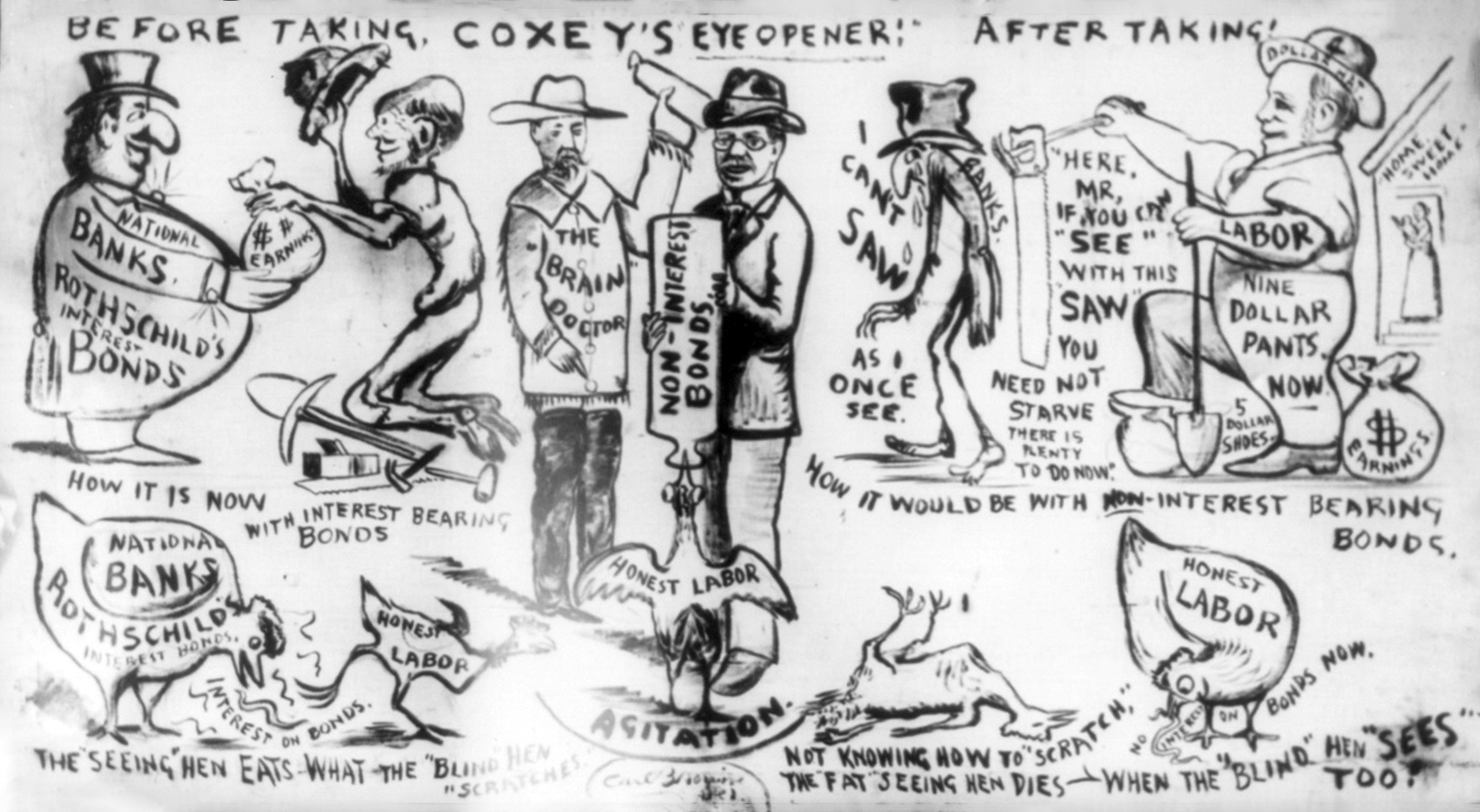
Photograph courtesy of Library of Congress. Drawn by journalist Carl Browne, this cartoon expresses support for “Coxey’s Army”—a group of unemployed workers from across the country, led by Ohio businessman Jacob Coxey, who were demanding a federal jobs plan and are believed to be the first-ever marchers to come from elsewhere to protest in DC.
-
1916
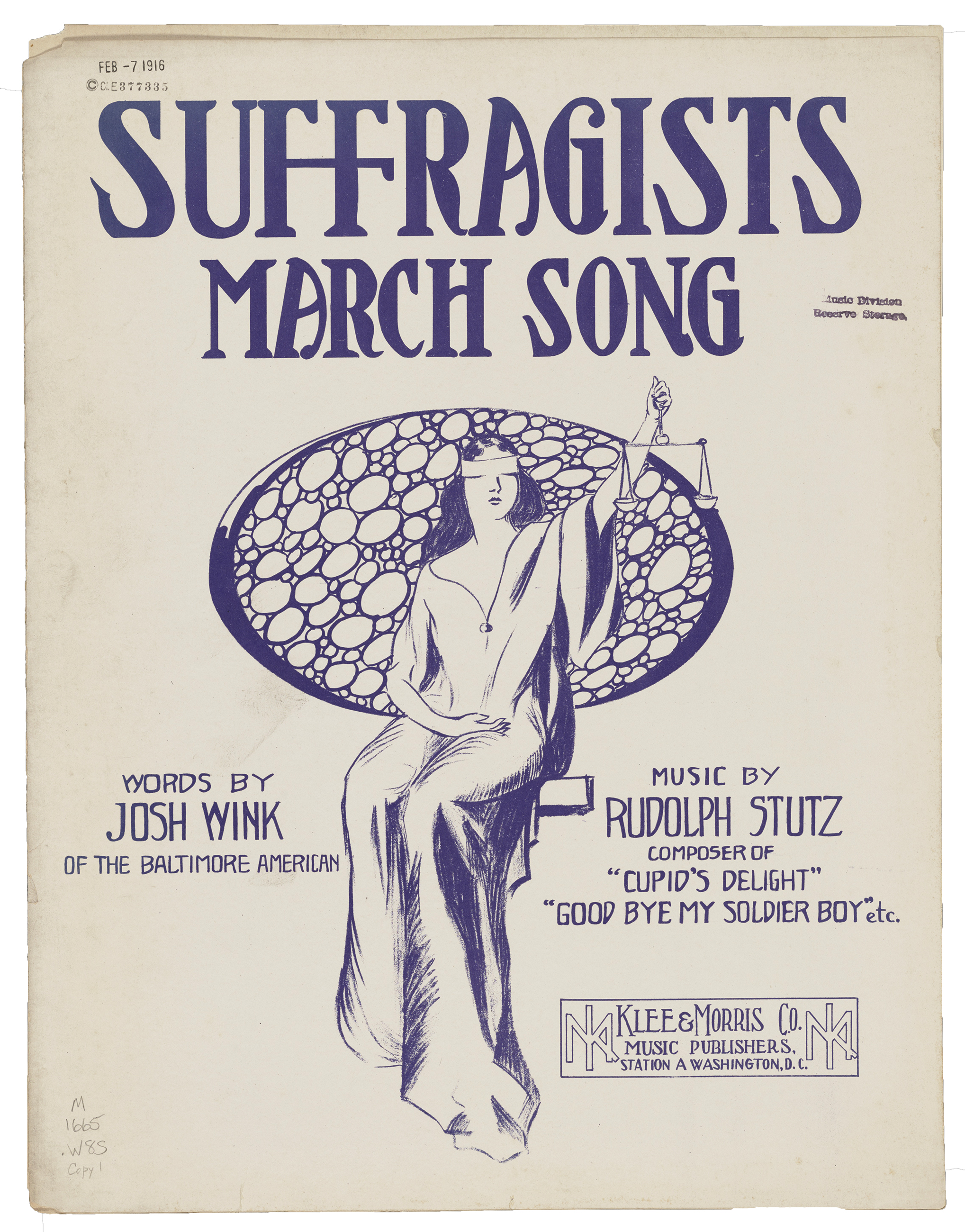
Photograph courtesy of Library of Congress. The “Suffragists March Song” is published in DC, joining dozens of similar tunes sung and played at rallies and other events. “We stand for justice and for right, we stand for that protection of the law against the might,” go some of the lyrics.
-
1939
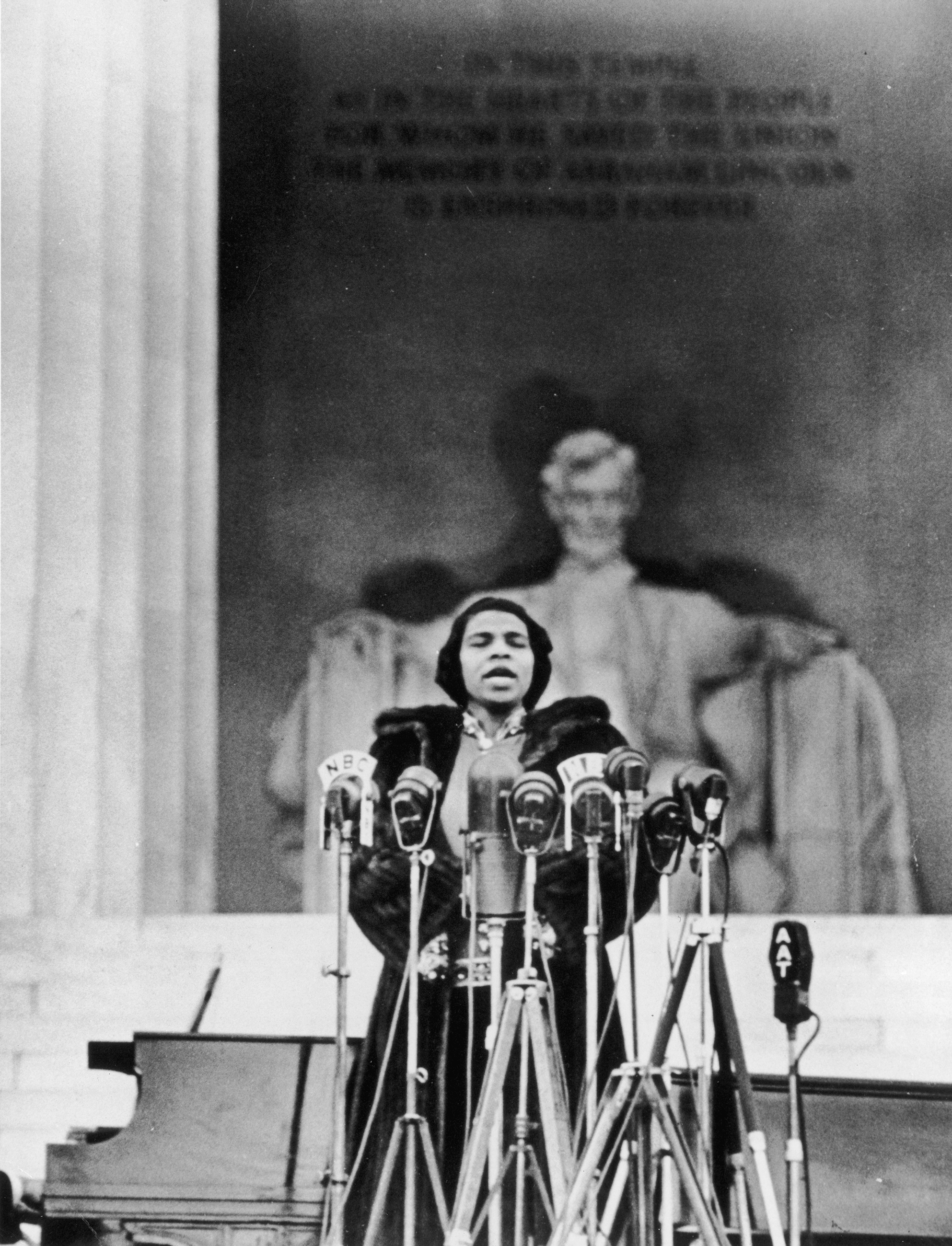
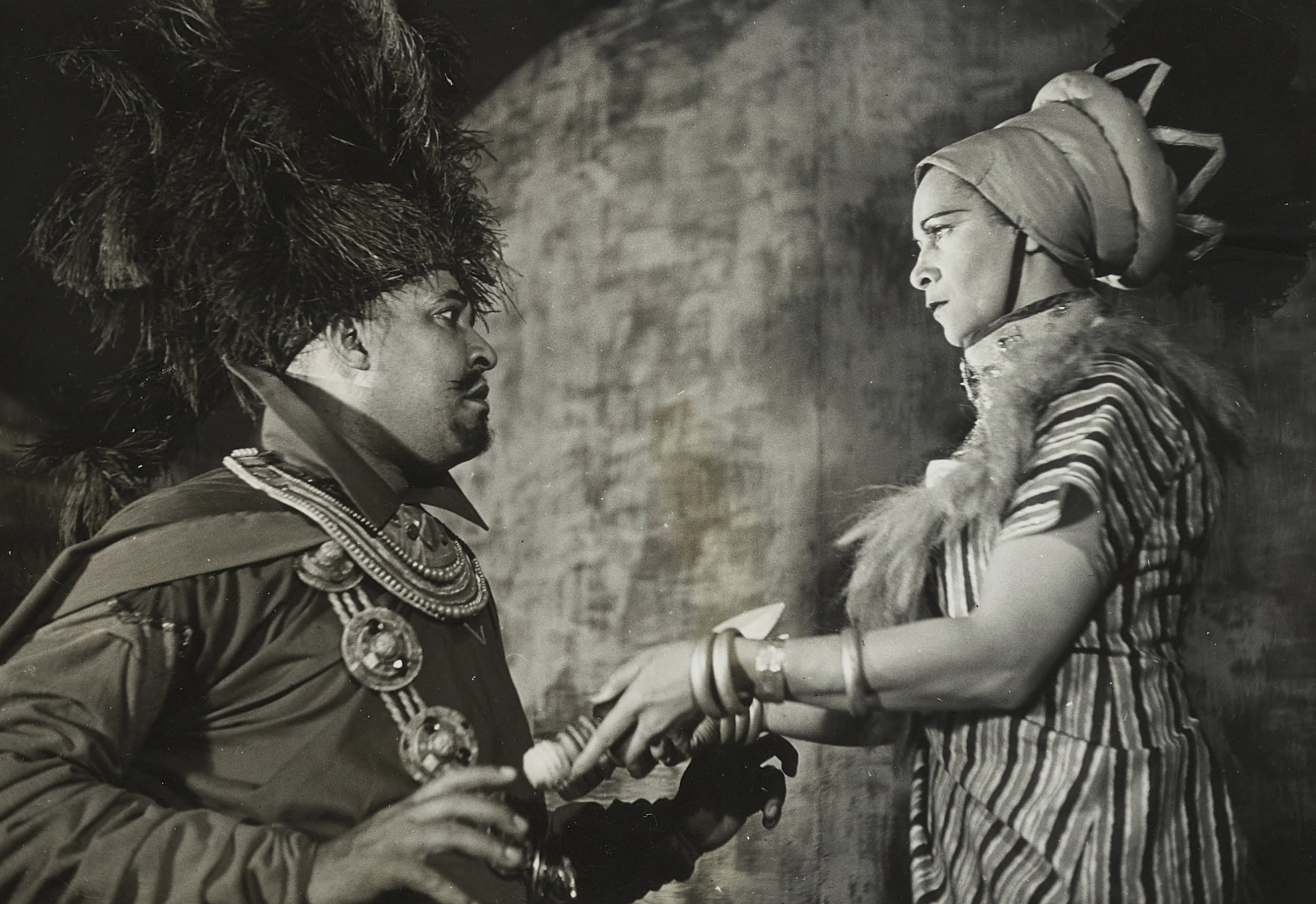
Photograph by Hulton Archive/Getty Images. Black opera singer Marian Anderson performs at the Lincoln Memorial after the Daughters of the American Revolution refuses to allow her to sing in Constitution Hall because of her race. Opening with “My Country, ’Tis of Thee,” she changes “of thee I sing” to “of thee we sing.” Years after the concert, she explains her decision: “We cannot live alone.”
-
1957
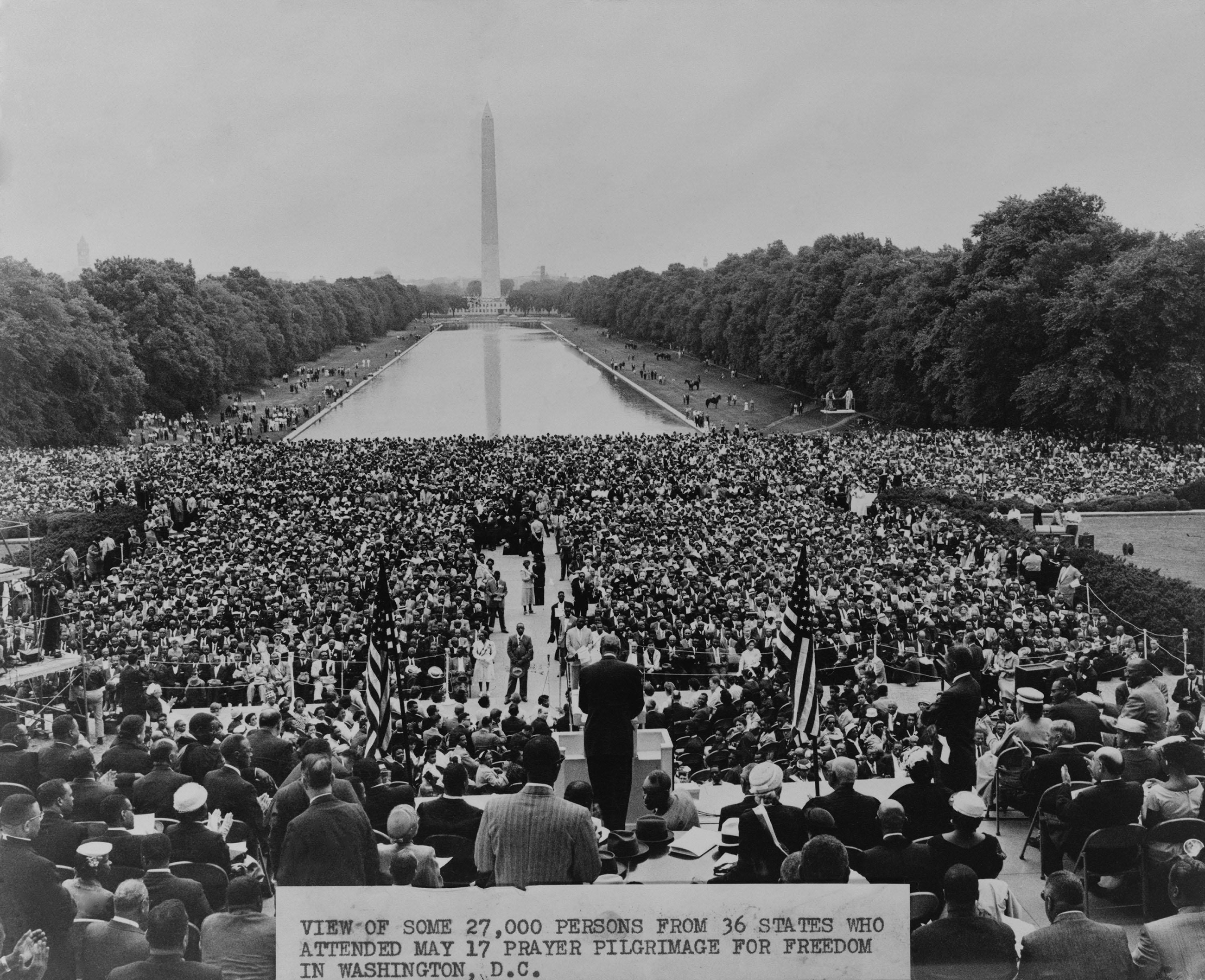
Photograph by Everett Collection Historical/Alamy. The Prayer Pilgrimage for Freedom at the Lincoln Memorial features prayers, speeches, and songs to commemorate the third anniversary of the Brown v. Board of Education ruling and to urge the federal government to desegregate Southern schools.
-
1971
To generate energy for DC’s mass Vietnam War protests, the Mayday Tribe hosts a two-day rock concert in West Potomac Park that includes the Beach Boys, Elephant’s Memory, and Phil Ochs.
-
1987
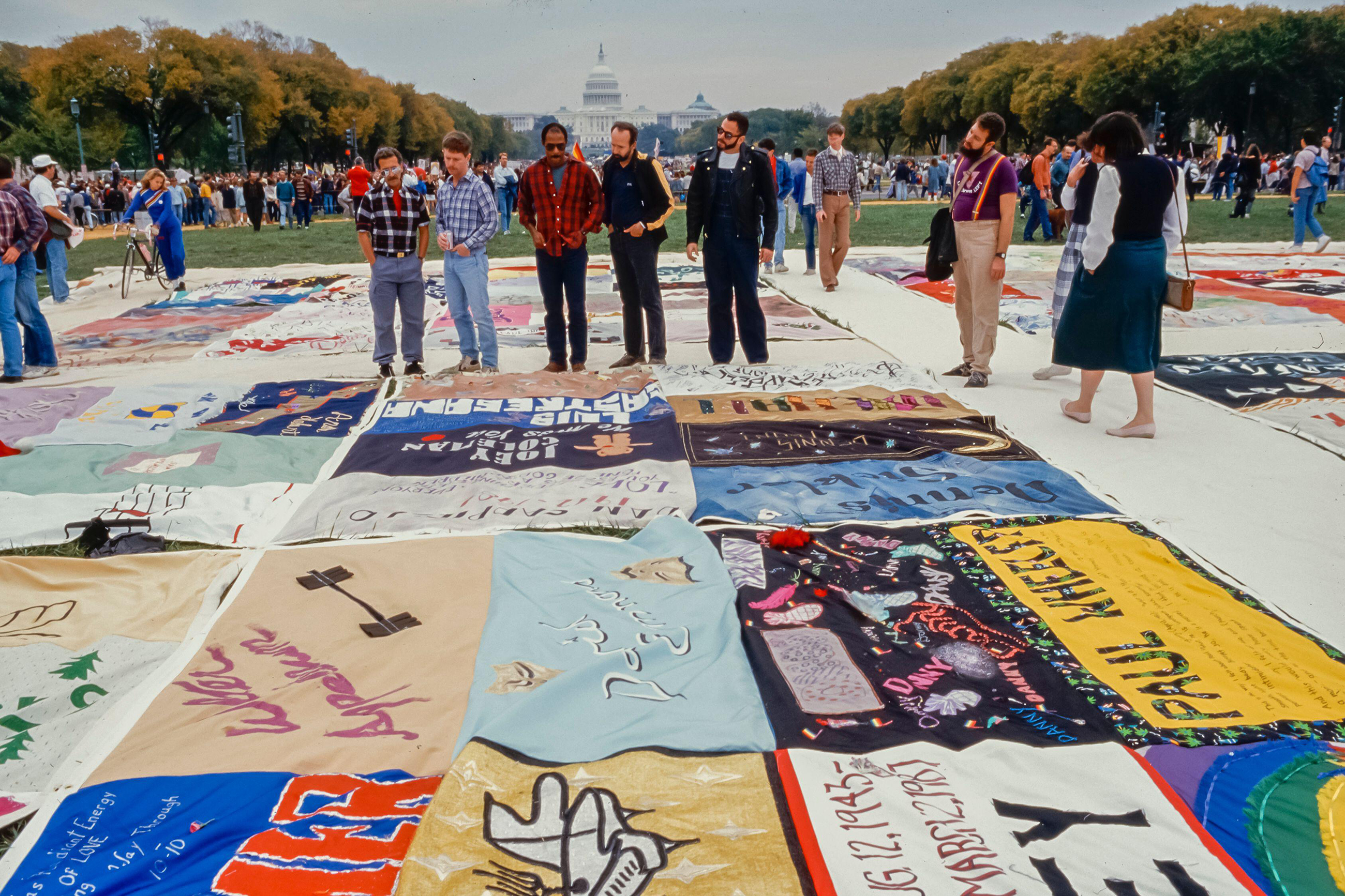
Photograph by Directphoto Collection/Alamy. The AIDS Memorial Quilt is displayed for the first time ever on the National Mall, with each of its 1,920 handcrafted rectangles representing someone who died from the disease. When the quilt returns to DC in 1988, it encompasses 8,288 panels—and in 1996, its 40,000 panels take up the entire Mall.
-
1991
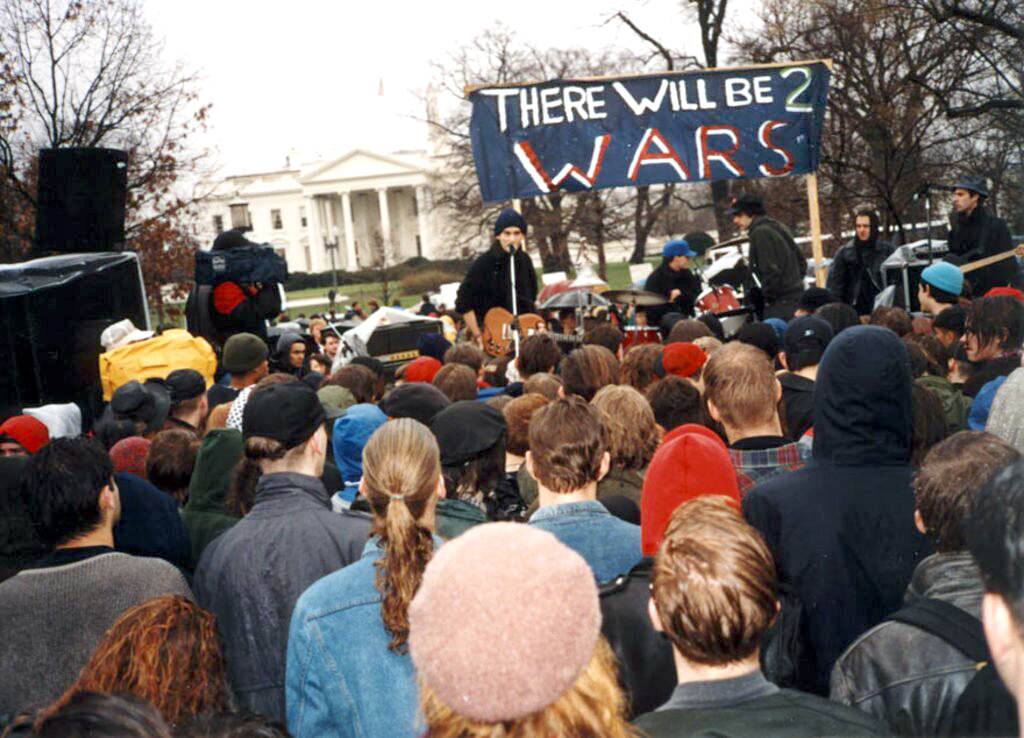
DC punk band Fugazi plays a protest show outside the White House, objecting to the Gulf War, then in its sixth month. Above the makeshift stage is a sign reading there will be 2 wars.
-
2007
Iraq War veterans act out Operation First Casualty, a series of performances, starting in DC, in which veterans wearing fatigues scream at civilian actors, zip-tying them and stuffing bags over their heads. The group aims to show that war’s first casualty is the truth about the US occupation.
-
2014
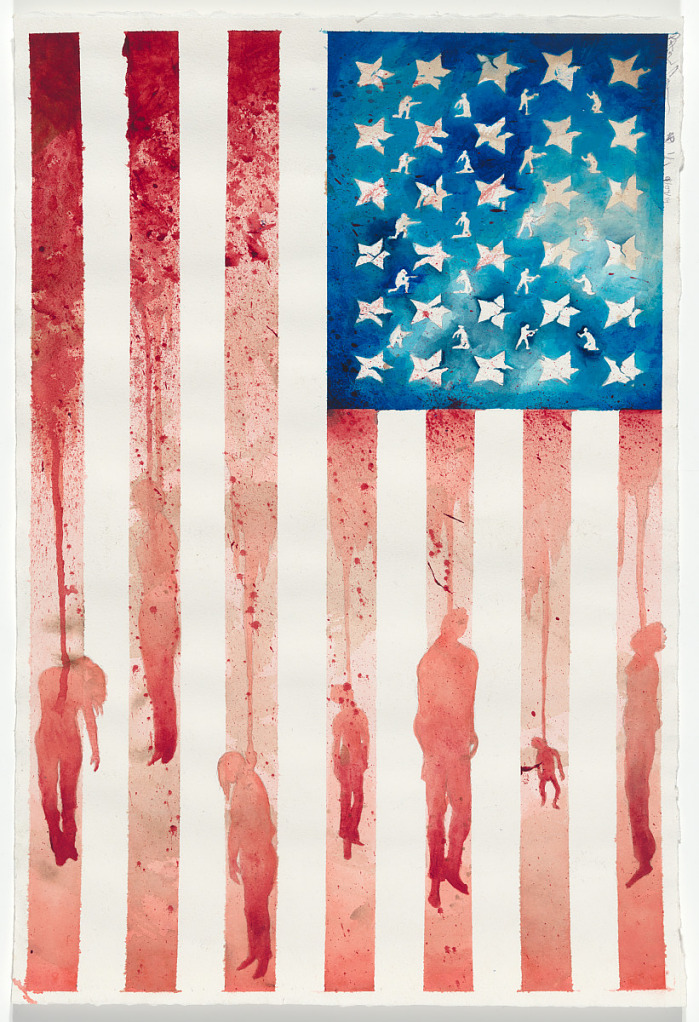
Photograph © Patrick Campbell Art and Illustration/Collection of National Museum of African American History & Culture. DC native Patrick Campbell paints “New Age of Slavery” after the New York police officer who killed Eric Garner is not indicted. The painting, which depicts the shadows of people lynched and hanging within the stripes of the American flag, later goes viral on social media and is now part of the National Museum of African American History & Culture’s collection.
-
2020

Photograph by Evy Mages. Over the course of a single week—starting on Juneteenth—MuralsDC installs 51 murals and photographs around DC promoting statehood, racial justice, and more.
-
2022
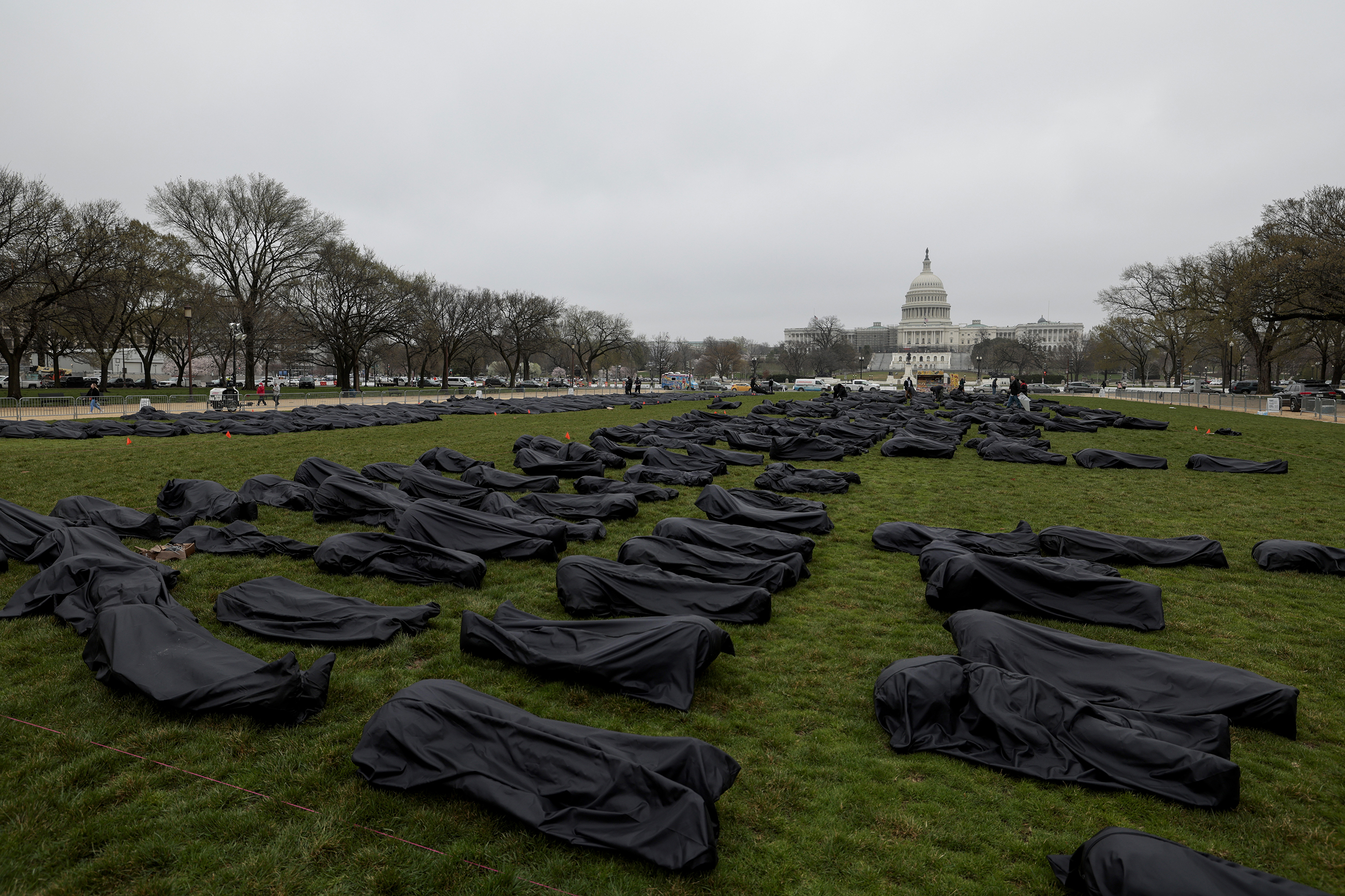
Photograph by Anna Moneymaker/Getty Images. March for Our Lives places more than 1,100 child-size body bags on the Mall, arranged to spell out “Thoughts and Prayers.” Each bag represents 150 people killed by guns since a 2018 mass shooting at a high school in Parkland, Florida, killed 17 and injured another 17.
-
2025
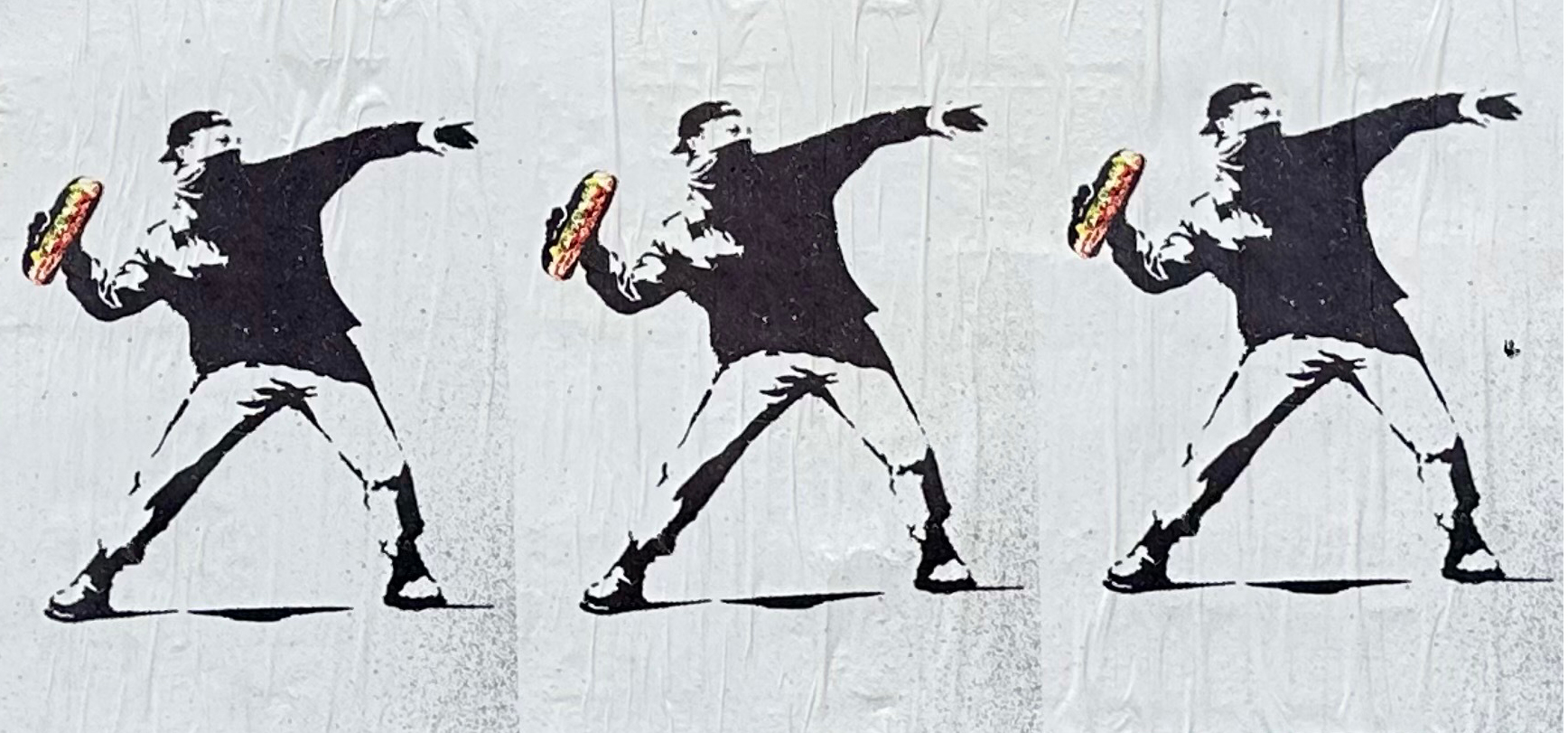
Photograph by Evy Mages. Sean Dunn throws a Subway sandwich at a federal agent after President Trump’s deployment of federal law enforcement and National Guard troops to the city. His act inspires a Banksy-esque wheat pasting all over the District.
Seen on the Street
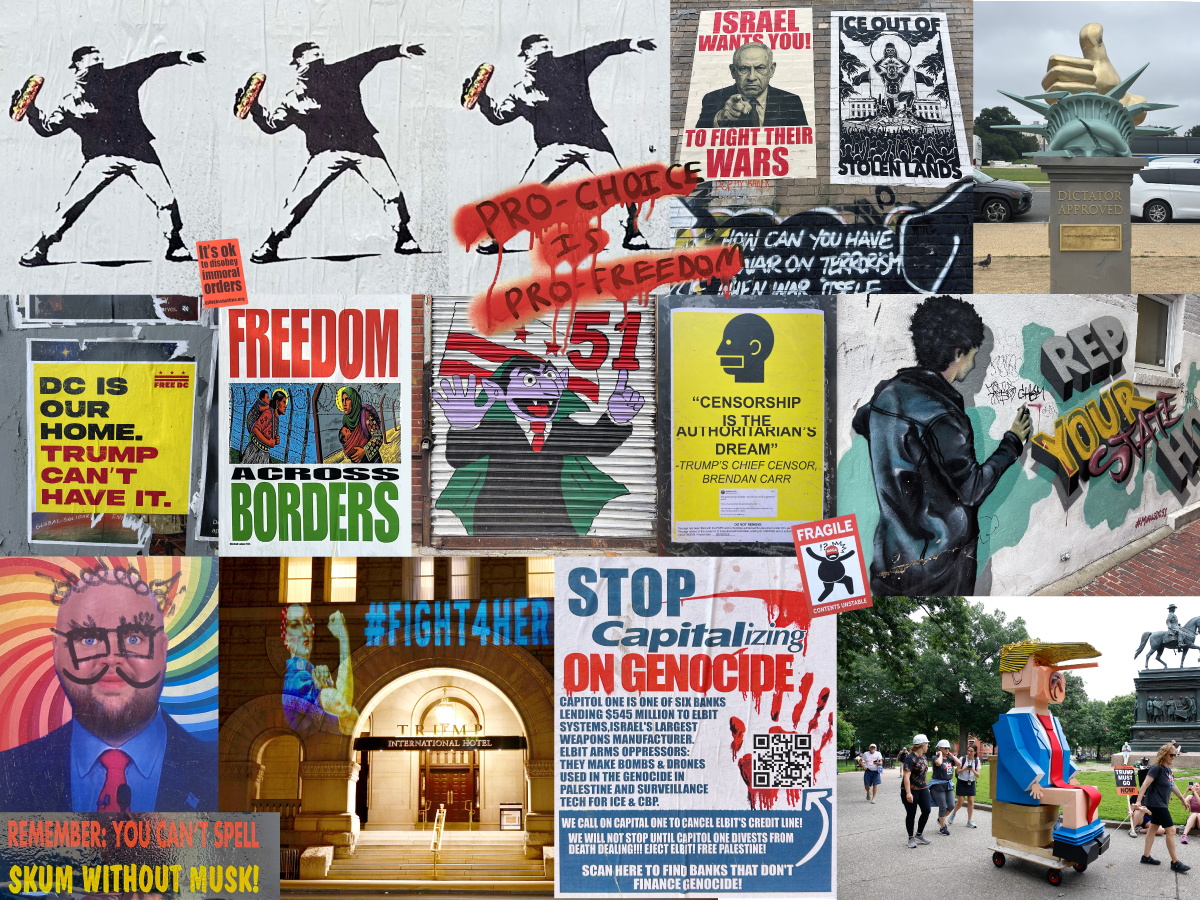
Spend even a few hours out and about in DC and you’re bound to come across them: wheat pastings warning of climate collapse, spray-painted slogans supporting trans rights, crude stickers cracking cruder jokes about the President (and, perhaps, his alleged pals). Depending on your politics, you might chuckle or roll your eyes—either way, you’re bound to have a reaction. Washington’s most powerful residents have them, too: Earlier this summer, the White House dismissed an anti-Trump statue displayed on the National Mall as both “ugly” and “so-called ‘art.’ ” Depicting a giant gold thumbs-up crushing the cracked head and crown of the Statue of Liberty, the statue served its purpose—getting under someone’s skin.
Marching Music
Following mass layoffs of federal workers, a band formed to “shout back” with their instruments
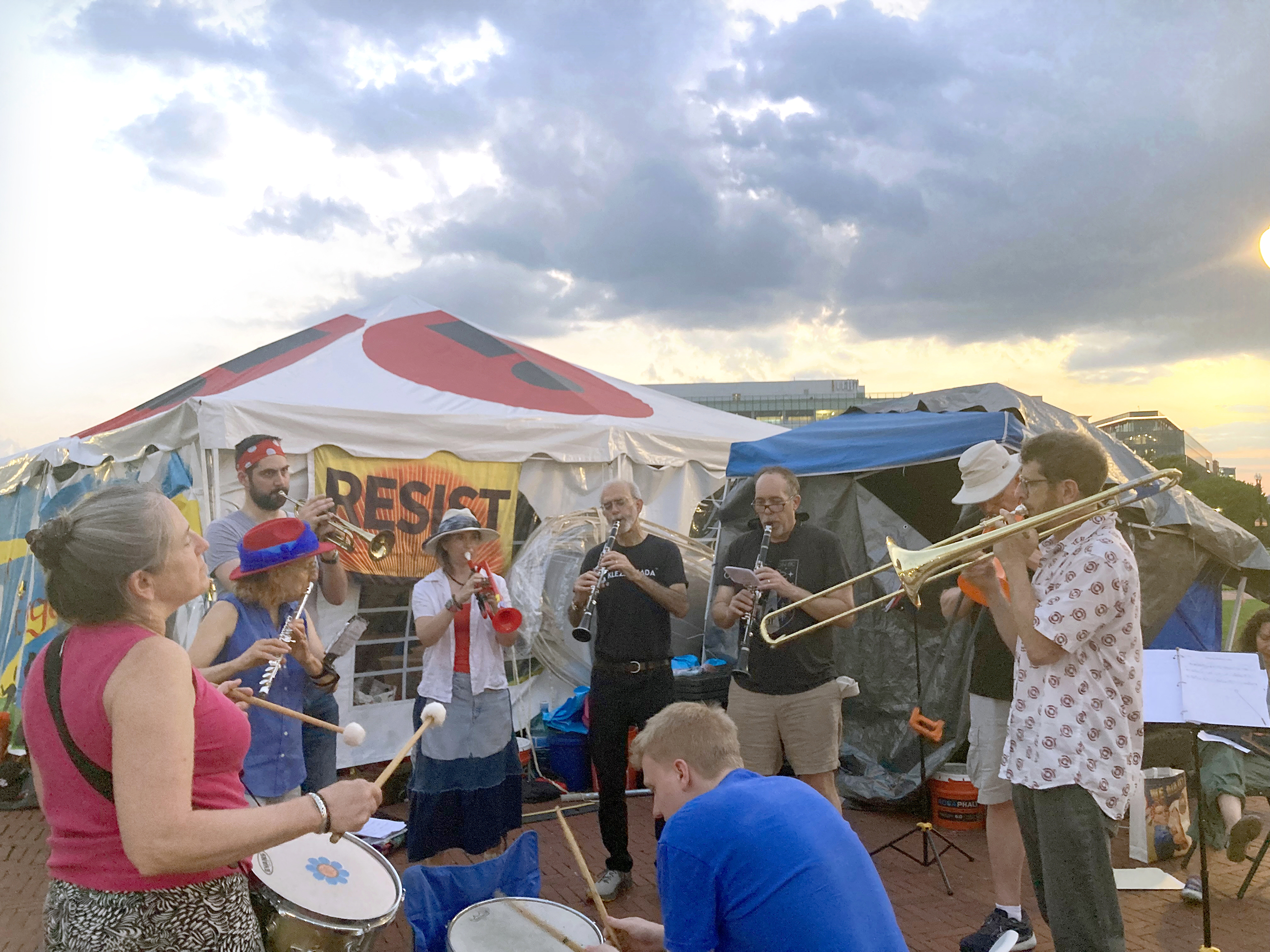
Standing on the National Mall during the “Hands Off!” demonstration against the Trump administration in early April, the DC Activist Street Band began playing “This Land Is Your Land.” Other protesters started singing along. With the Washington Monument looming above, Vanessa Zanin, a trumpeter, spun in a circle to take in the crowd all around her. She couldn’t see any grass. “Everybody was there for the same purpose,” Zanin says. “And it was so inspiring.”
This was the first public performance for the group, which was founded by another musician, named Michael. (Concerned about privacy, he asked to be identified by his first name only.) Enamored with videos of marching bands at protests, Michael had been mulling over the idea of creating one for a couple of years. Last summer, he gathered a small group of musicians to play at a demonstration against Israeli prime minister Benjamin Netanyahu—and this spring, as mass layoffs of federal workers reverberated through the region, he began seriously recruiting.
Anyone can join the group, which has roughly 40 members. (Typically, about 15 will play at a protest.) A clarinet player is a retired DOJ employee. A trombonist is a military veteran. Zanin is a former schoolteacher. Some members have previous experience in competitive high-school bands. Others are new to marching. One recent addition, a drummer, had never touched a mallet before joining up. What they all have in common is a love of playing and a desire, as Zanin says, to “shout back with my instrument.”
Performing at street protests is different from, say, a prep football game’s halftime. Zanin uses a red plastic trumpet because it’s lighter and easier to carry, and she straps ice packs to her neck to combat heat. Some of the saxophonists eschew cases, wrapping their instruments in old towels and carrying them in backpacks. Rather than use sheet music, one trumpeter clips his phone to the lyre fastened to his instrument.
In addition to “This Land Is Your Land,” the band plays a number of other Woody Guthrie songs. Among the most popular? “All You Fascists Bound to Lose.” “It kind of went from becoming sort of a relic to something that’s suddenly relevant,” Michael says. “It just has a joyous, kind of almost taunting overtone to it.” Other favorites include the New Orleans Mardi Gras song “Iko Iko” and a number of union anthems, such as Ralph Chaplin’s “Solidarity Forever.”
Acting as a live soundtrack, the band tries to keep demonstrators pumped up—and match its music to the moment. Occasionally, that means levity: When the Secret Service herded the band and other May Day marchers out of Lafayette Park, someone had the idea to play a version of the Salt-N-Pepa song “Push It,” arranged for a band. “We’re trying to make you go express yourself, express your opposition, and express your resistance, and at the same time you don’t have to dread that you’re going to this morose space,” Michael says. “Because people always want to have fun.”
Bringing the Funk
Thanks to Long Live GoGo, DC’s homegrown sound can be heard at protests all over the city

In the second week of the Trump administration’s August takeover of local police, the political and musical advocacy group Long Live GoGo brought go-go bands to a rally protesting federal encroachment on local autonomy. Nine days later, group founder and local artist Justin “Yaddiya” Johnson and other community leaders led a march from the intersection of 14th and U streets to the Washington Monument—culminating in a concert held in front of armed National Guard troops.
“My community is under attack, people that look like me are under attack,” Johnson says. “These things that we’re doing are helping to decrease the level of fear, to increase the spirit of the city and the culture, and have people feeling a sense of normalcy and empowerment.”
Founded in 2017, Long Live GoGo first gained prominence in 2019. That April, a resident of a luxury apartment in Shaw complained about a nearby store’s decades-long tradition of playing go-go music on its outdoor speakers. Nightly demonstrations began in response, and the social-media hashtag #Don’tMuteDC went viral—voicing joyful support for DC’s homegrown subgenre of funk, created by Black musicians and a symbol of the city’s Black culture. Soon, the store resumed playing go-go. A month later, Johnson produced a protest concert that came to be known as “Moechella,” which drew thousands to the corner of 14th and U.
The DC Council subsequently introduced legislation to make go-go the city’s official music. Following floor debate, a go-go group, the Black Passion Band, performed in the Wilson Building. Mayor Muriel Bowser signed the bill into law in February 2020. During that summer’s Black Lives Matter protests, Johnson’s group once again brought music and people to the streets, this time from atop a mobile go-go truck. Long Live GoGo continued protesting that fall with a series of “wakeup calls,” appearing outside the homes of lawmakers such as Kentucky Republican senator Mitch McConnell as early as 7 AM to blast music.
Since then, the group has organized events, workshops, and protests about DC statehood, gun violence, the school-to-prison pipeline, and other issues. “We’re able to have conversations with new audiences, or folks that may not have been engaged politically, by meeting them with the go-go music,” says Long Live GoGo executive director Kelsye Adams. Today, the group is at the forefront of protecting home rule—and again using music to deliver its message.
“This is not my first time taking to the streets,” Johnson says. “I just want to kind of get people out of that fearful place and help them understand that the culture is still alive. And just also be like a catalyst to spark the uprising.”
Painting a Statement
A Chinatown mural celebrates resilience—but gentrification may have the last word
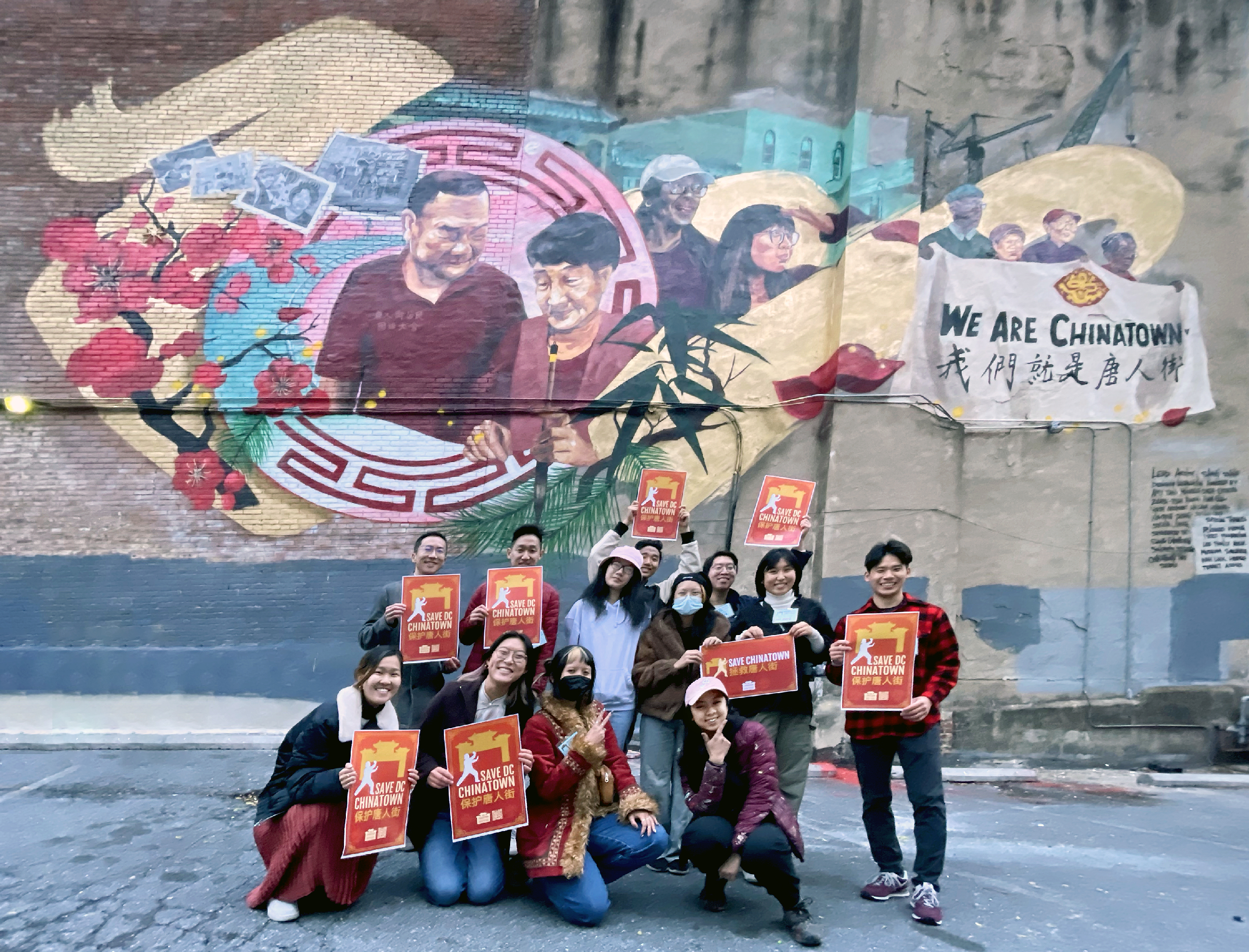
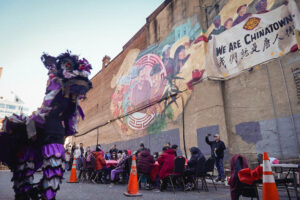
From organizing tenants to crashing the ribbon-cutting of a Fuddruckers, artist Shani Shih has been protesting Chinatown’s gentrification for a long time. Her mural “We Are Chinatown” reflects that activism. Depicting a lion dance and the iconic, now-closed restaurant Tai-Tung, the 60-by-20-foot artwork is a reminder of the people and culture displaced by luxury developments: Once home to a thriving Chinese community, the neighborhood had just 361 Chinese residents in 2020. “With each building that is bought, flipped, and sold, the people who existed in that space can no longer remain,” Shih says.
Unveiled in November of last year, the mural also features plum blossoms, bamboo, and pine, known as the “three friends of winter” for their ability to thrive in cold weather. Signifying community resilience and longevity, their symbolic power will be temporary: Developers have since broken ground next door on a mixed-use retail and apartment building. As the new structure rises, street views of “We Are Chinatown” will eventually be obscured. Still, Shih says the mural will have served its purpose, showing that “we have a community here that’s fighting.”
Going Big
Here’s how artist Shani Shih created “We Are Chinatown”

Planning
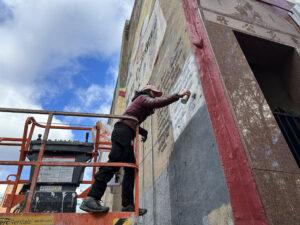
The mural’s theme came from listening to locals. Shih gathered historical images, took reference photos, and arranged the composition with input from Chinatown Art Studio, a place for young artists that she founded in 2018.
Painting
Studio members painted black-and-white photos on loose mural paper, which Shih adhered to the side of a building owned by the Lee Family Association, a local group formed in the early 1920s to support DC’s Chinese community. To complete the mural, Shih estimates she used 75 cans of spray paint and 12 gallons of paint.
Presenting
The mural’s unveiling, Shih says, brought together “Chinatown past and present” for a lion dance, food, and speakers. She later learned that some of the young artists who had worked on the mural wrote about the experience in their college applications.
“You Can’t Erase It”
The birth and death of Black Lives Matter Plaza

In the summer of 2020, DC mayor Muriel Bowser commissioned local artists to paint the words “Black Lives Matter” in giant yellow letters across a two-block section of 16th Street outside the White House. Replicated around the globe, the street mural became a permanent fixture—until, in response to federal pressure, Bowser had it removed earlier this year. Artist Keyonna Jones reflects on the creation and destruction of one of DC’s best-known pieces of protest art:
“They wanted us to come out and paint the words ‘Black Lives Matter’ on the strip in front of the White House, right by the church where Trump had done his [gesture] with the Bible. We had to show up at night. It had been raining cats and dogs. When I got there, they had DPW [Department of Public Works] trucks pushing excess water out of the street. There were paint rollers and brushes and only, like, one or two buckets of paint.
“We started putting paint down. That’s when I realized, ‘Oh, this is huge. This is a big deal.’ They had to bring more paint, and we had to re-color the letters B and L because the paint they brought was completely different. Towards 4 o’clock, 5 o’clock in the morning, you saw camera crews starting to pop up and getting pictures. People are starting to head to work and ask us questions, like ‘Are we supposed to be out here? Is this illegal?’ When the day actually broke, people walking to work and going to the train were asking could they help us.
“We didn’t know the mayor was going to rename [the area]. We had no clue about anything. She did the press conference, and they asked all of us to come up to the podium. That’s when history hit. The next 24 to 48 hours, it started replicating all over the world.
“When we got the notice that Trump wanted it removed, I don’t even know if I was really surprised. It didn’t make me angry, mostly because of how I identify. I’m a Black, queer, Muslim woman, right? That puts me in a lot of intersections where history has tried to erase who I am. Even if [Trump] is calling for an erasure, that means something had to have happened. It’s already in the history books, written down. You can’t erase it.
“[The plaza] ignited my passion for art and reminded me of my purpose behind art. I really feel that art is a healing tool. It shakes up rooms. It starts conversations that need to be had. It’s for everybody. Just because letters aren’t on the ground, it does not mean that Black lives don’t matter, right?”
This article appears in the November 2025 issue of Washingtonian.