DC’s streatery era may be over in much of the city, but the dream is still alive in Mount Pleasant.
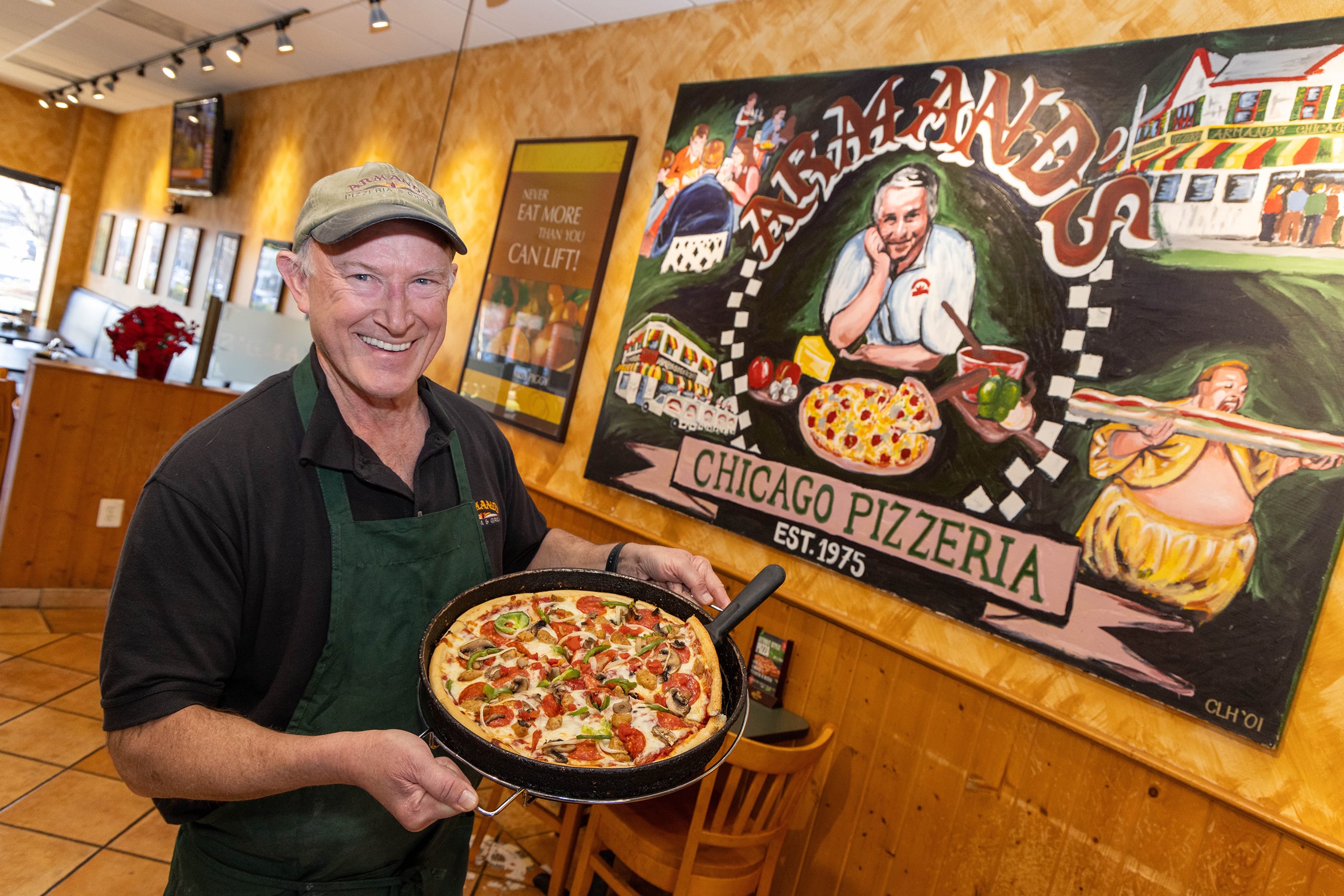
La Tejana threw a farewell party for its streatery in March. The South Texas-style breakfast taco shop’s owners, Ana-Maria Jaramillo and Gus May, had determined that the $20,000-plus price tag for permitting, construction, and fees for a legal streatery would be prohibitive.
May and Jaramillo made no effort to get politicians involved. But some politicians clearly saw an issue—streatery restrictions—that they could use to hit the Bowser administration. The Ward 1 council candidates showed up. So did mayoral hopeful Janeese Lewis George, who then posted a social media video with May and Jaramillo. The progressive candidate, who is running on cutting red tape for small businesses, lamented the complex permitting process and told the owners “we want to bring back streateries.”
May said he thinks Lewis George and other candidates have an alternate vision for streateries in DC. “What that vision is,” he says, “I can’t say exactly.”
But one hopeful possibility for the future is already underway on the block: La Tejana and a few of its neighbors—Ellē, Joia Burger, and Marx Cafe among them—are raising money through District Bridges, their neighborhood “Main Street” group, to fund three shared streateries on their block that would meet permitting requirements.
“Out of all the streateries in DC that I know of, I think our block was used the most,” says Nick Pimentel, the owner of Ellē. But all of the block’s restaurants had to remove their streateries this spring.
Their goal is to raise $60,000 for the structures; thus far, neighbors have given a little over $12,000.
Some neighborhoods wouldn’t be able to pool their resources like this, says Mitra Moin, Mount Pleasant’s Main Street manager, but the restaurateurs of the 3200 block of Mt. Pleasant Street are unusually friendly. “They’re all very united,” she says.
The permit Moin submitted to the District Department of Transportation has been tentatively approved.
There is one similar success so far: Georgetown’s well-resourced business improvement district scored a collective block permit for M Street and Wisconsin Avenue.
The streatery scene began as a pandemic-era free-for-all. DDOT granted something close to a blank check to restaurants to build out the structures and use parking spots for free as a lifeline to remain open. Since the Bowser administration’s contentious efforts to reverse engineer regulation for the structures began last year, the sheds have become a political football.
These days, since stricter regulation passed that encouraged open-air streateries and levied public space fees, the reality on the ground is a patchwork. Of the more than 140 streateries that existed at the end of 2025, just 83 have applied for permits under the city’s new program, and 52 have already been removed by the city. Many others were voluntarily disassembled by their owners earlier in the year, after the new streatery rules were announced.
Despite La Tejana’s front-and-center role in the debate, losing their streatery hasn’t affected their bottom line all that much, May says.
“We do everything to go, so the streatery was kind of like a bonus,” he says. “But it was a community space.”
Their neighbors, Marx Cafe, have struggled much more. Owner Daniel Quiroz says he has normally hired two or three seasonal employees every spring as the weather improves and streatery business heats up.
But the loss of their streatery in February—36 seats compared to 45 seats indoors—has meant a reduction in sales of 25 to 30 percent. This year, Quiroz says, he skipped hiring the summer employees. He’s hopeful that the Main Street joint project will work.
“We are trying,” Quiroz says. “We’re definitely trying to get it back.”

Ike Allen covers politics, food, culture, and transportation in DC and writes the monthly Hidden Eats column for the magazine. He grew up in DC.