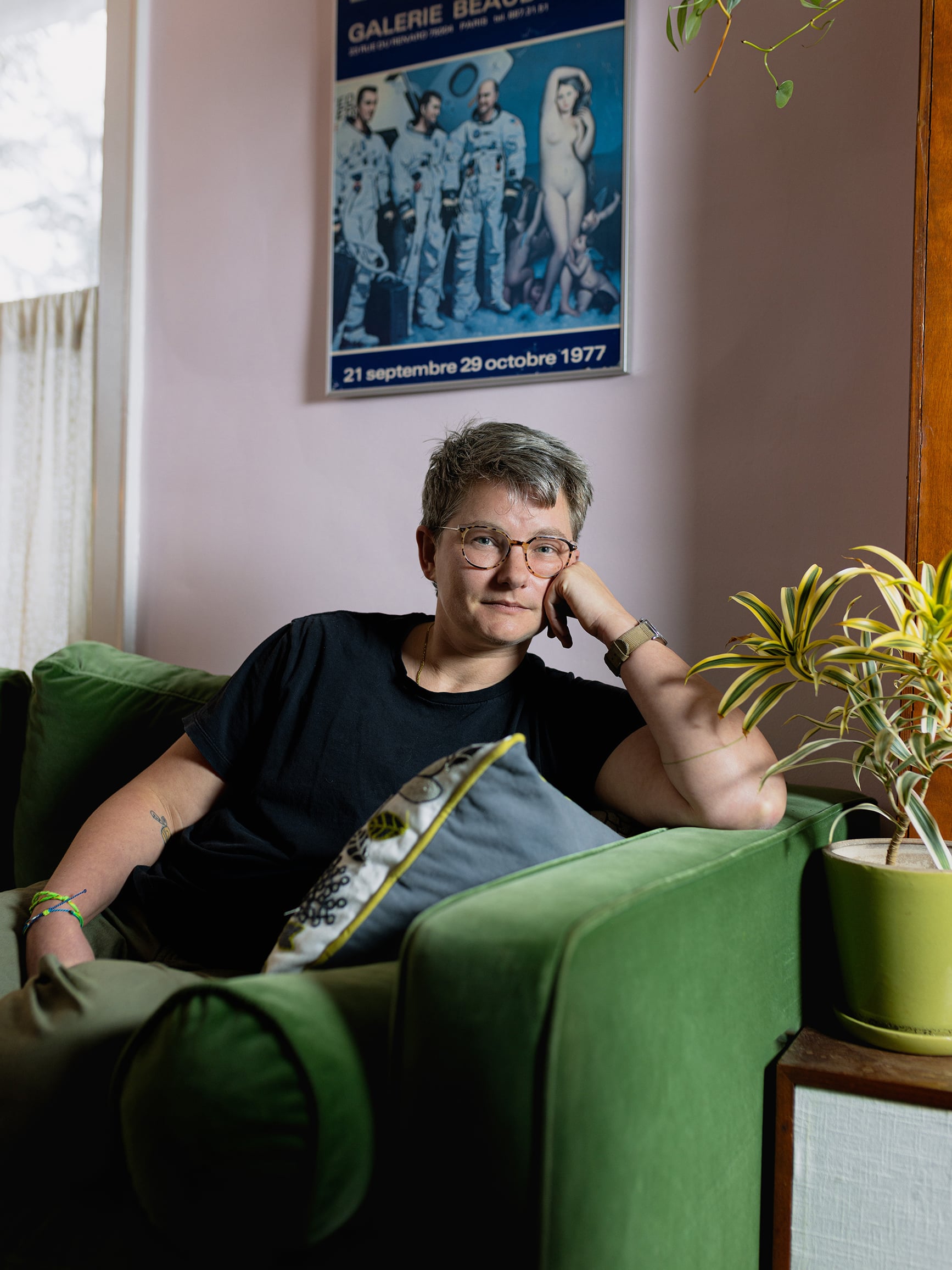
On Thursday evening, an exhausted Sarah McBride sank into a pale yellow armchair in her Congressional office. It had been a long week, and she still had to drive two hours home to Delaware—but first, she’d agreed to watch the new Queer Eye, the tenth and final season of the hit Netflix makeover show, which is set in DC. On a wall-mounted TV—which typically shows a live feed of the House floor—we scrolled through the episodes and landed on one about a local tour guide. “I love to give tours,” McBride told me as two of her staff members laughed. In unison, they all intoned the phrase “tour guide McBride.”
I wanted to watch with McBride because A) she seemed game to answer some questions about which members of Congress need makeovers, and B) the show’s premise resonates with her political style. In early seasons, the Fab Five—the show’s crew of five charismatic gay men—would trundle around red states extending extraordinary kindness to folks who’d not had a lot of experience with people like them, basically propagandizing their own humanity while gently bettering participants’ lives. The show caught flack for it. Some believed it wasn’t moral or strategic to engage with anyone MAGA-adjacent. McBride disagrees. A freshman Democrat from Delaware—and the first out-trans member of Congress—she’s long been a proponent of “a politics of grace,” of meeting differences with kindness and curiosity and giving people space to grow.
We didn’t discuss it, but that day McBride had quietly scored a victory: an enormous spending package had just passed the House stripped of dozens of anti-trans provisions, including a ban on federal funding for gender affirming care and threats to punish schools for supporting trans students. Alongside some colleagues, she’d successfully lobbied against those riders, whipping votes from various members who think quite differently than she does—including Republicans with whom she’d arduously built relationships over the past year. As we watched Queer Eye, I learned that the Congresswoman snorts when she laughs, does not prefer tomatoes on her sandwiches, and loves reality TV. Afterwards, we chatted for a while. Our conversation, edited and condensed, is below.
Are you a big watcher of Queer Eye?
I grew up on the original Queer Eye. It was some of the first mainstream queer representation that I remember seeing on TV, so I love it. And I really like the reboot. The original one was like gay representation that happens to be a self-help reality show, whereas this one actually feels like a self-help reality show that happens to have gay folks. I think that’s an encapsulation of the evolution of the country on gay rights over the last 20 years.
Sometimes, the Fab Five give makeovers to people who aren’t so comfortable with queer people. How do you think about the politics of that?
I’ve always appreciated that approach to changemaking. A lot of times right now, we view being in conversation with people who aren’t where we want them to be as some form of selling out. But what’s great is that the cast has these big personalities. They’re unapologetically themselves. To be unapologetically themselves and still be in conversation with people who maybe think or vote very differently than they do, or live and love very differently than they do, I think is such a powerful reflection of the fact that you don’t have to dim your light to still be in relationship with other people. Being proximate to folks while still bringing your whole self is quite the opposite of selling out.
Do you have a favorite member of the Fab Five?
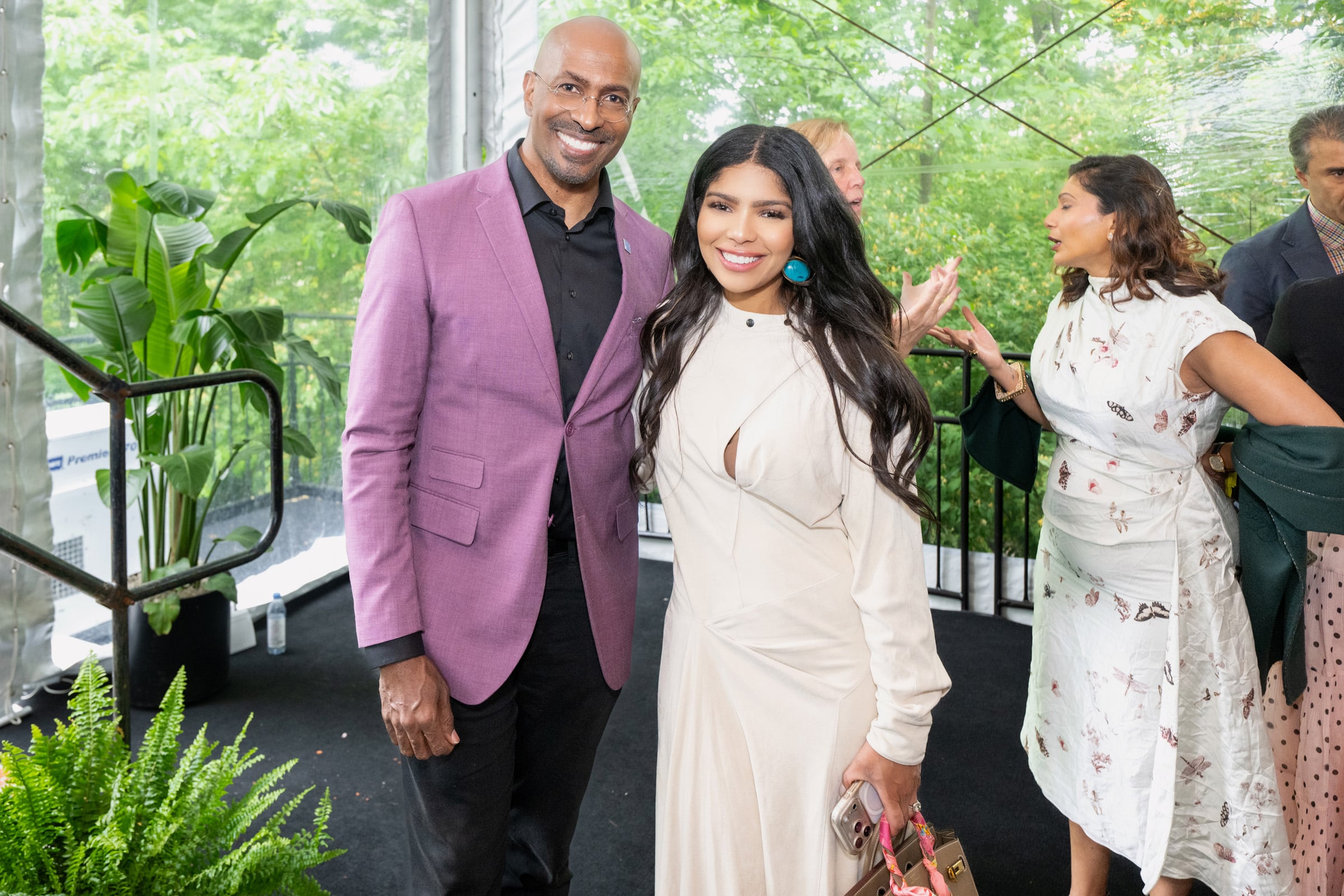
Oh, JVN. He is a genuinely nice person. I’ve met him twice. Behind the scenes, he’s exactly what he’s like on the show. Usually celebrities are nice but they don’t bring the same energy. He brings the energy. And there’s a humor and a joy to him that I wish all of us allowed ourselves to tap a little bit more in ourselves.
If you got a Queer Eye makeover, what would be the most urgent areas to address?
I would need more clothing. I have a lot of—what was the word Tan used for stuff in your closet that you need to throw out? I’m really guilty of buying stuff online and then not returning it when I don’t like it. And I think they would push me to be braver in what I wear, too: more patterns, more colors. Also, I would probably need some help organizing. My condo in Delaware is, like, fine, but it’s not the most well-organized. I could use some help with clutter in my bedroom and in my closets. My closets are very cluttered, which feels right and apt. [“They’re scary,” one of McBride’s staffers stage whispered. “You could, like, lose your life in the closets.” McBride called this a “gross exaggeration” with mock offense.]
Tan France just told the Washington Post that during his time in DC, he found the corporate wear to be “very 2010.” Do you agree?
Yeah, I think that’s really right. I definitely think DC is perpetually 10 years in the past. [She gestures frantically at her staff.] Not you guys, not you guys.
How would the Fab Five fix Congressional offices?
Definitely some of the offices could use a little zhuzh up. Some color. Before, it was just all black leather in here. That’s how most offices are: dark, austere, militaristic furniture. But they have a warehouse of furniture you can bring into your office. It’s limited—they don’t have the most diverse set of options—but it’s definitely better than the default, which is depressing.
If you could nominate one colleague in Congress for a Queer Eye makeover, who would you pick?
Mike Johnson, solely so I could watch an episode of Mike Johnson squirming around five gay men.
One criticism of Queer Eye is that LGBTQ people shouldn’t have to be the ones bringing skeptics into the fold. How do you think about that?
I mean, yeah, sure. But the world is the world, and if we aren’t going to be the ones that do it, then who will? We can’t just sit around and hope other people will do things. That doesn’t mean every single LGBTQ person has to bear the full weight of education, the full responsibility of being visible. But I think that’s a perfect example of the discourse just destroying any capacity to do things, because on the one hand, we say you need to center the voices of the people who are most impacted. And then we say the voices of people most impacted shouldn’t have to say anything. So it’s like, okay, then you’re either going to have a completely empty sphere of silence—or if not silence, it leaves the public discourse to the opposition. And I think that’s actually what’s happened in the last couple of years: We sort of discoursed our way into ceding ground in the public square to those on the right. That’s in part, I think, because we self-policed our voices into silence.
There’s some discontent about the Fab Five lacking a trans member. Do you share that?
I’m always happy to see more trans representation, but I’m fine with what they have. No particular show or piece of art is going to be able to encapsulate all diversity in it.
If Karamo did a group therapy session with the Democratic caucus, what do you think might come up?
Ha! Our need to not overthink, our need to find our confidence. And I think across this place, there are some people who need to explore what motivates them for attention.
What about in the Republican caucus?
I mean, that is the single largest group of repressed individuals that I’ve ever seen in my life. There are a lot of folks there who are burying a lot of parts of who they are. And I don’t just mean their sexual orientation or gender identity—I mean just any sense of joy and wonder. There’s some folks in there that maybe have a little freak flag that they have repressed for a long time. I think the number one thing that I would recommend for my Republican colleagues is some therapy.
What are you leaving Queer Eye thinking about?
Let’s just fund [makeovers] for everyone. I feel like not just our politics, but our world, would be a lot better if we allowed ourselves—with humor and joy and love—to help one another become better versions of ourselves.