-
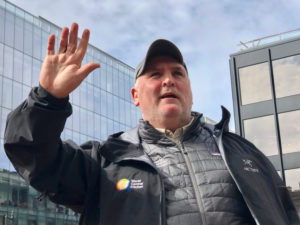
Andrés, José
Austin Grill alums Ann Cashion and Rob Wilder imported the future mega-chef from San Diego in 1993 to run their Penn Quarter Spanish spot, Jaleo.

-
Barnes, Marc
Nightclub impresario who realized there was a lot of money to be made from well-heeled Black patrons, first as an independent promoter, then as owner of Republic Gardens. Dream, Love, and the Park at Fourteenth followed.
-
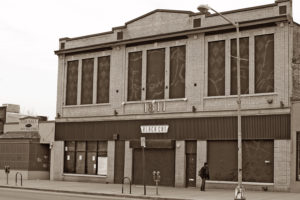
Black Cat
The 14th Street indie-rock venue (with some backing from investor Dave Grohl) opened on September 11, 1993, with a show by 9353.
-
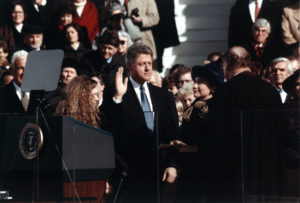
Boomers, ascendant
Bill Clinton was the first boomer in chief—and the capital is still not quite over the generation’s preoccupations.
-
Cafe Milano
The ancestral home of Playbook’s “SPOTTED” opened in Georgetown in 1992.
-
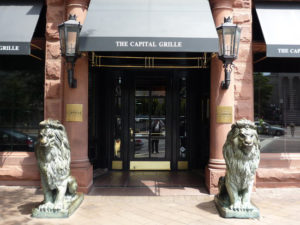
Capital Grille, the
Another of the first bipartisan see-and-be-seen spots, it was a magnet for power-dining lobbyists and pols following its mid-’90s opening in the shadow of the Capitol.
-
Clarendon as a nightspot
The dowdy Arlington neighborhood became a magnet for indie-rockers, then bros of both sexes as watering holes such as Galaxy Hut, Strange-ways, and Bardo Rodeo opened.
-
Curry, Wayne
Elected Prince George’s county executive in 1994, he was the first African American in that job, and his tenure coincided with the jurisdiction’s transformation from a rural white area to a prosperous Black-majority county.
-
DC Control Board
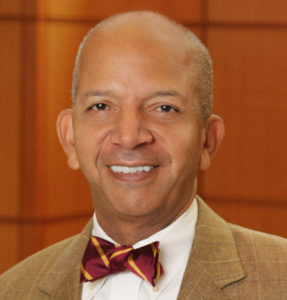
Marion Barry’s 1994 return to power in the District coincided with the rise of Newt Gingrich’s GOP on the Hill. When the city needed a federal bailout, the combination led to the feds demanding unprecedented changes in how DC governed itself. Locals howled at the indignity, but the federal meddling—which lured a crop of technocrats into city government and introduced legal changes that made Washington a much more inviting place for the rich—hastened the city’s comeback, as well as a gentrification that still shapes it. By 1998, voters would elevate one of those technocrats, Tony Williams (pictured), to the mayor’s office.
-
DC United
The soccer team began playing at RFK in 1996.
-
Drudge, Matt
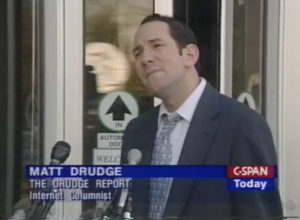
The Takoma Park native’s eponymous website scooped Newsweek on an exclusive it had decided to hold: White-water prosecutor Kenneth Starr investigating a possible affair between President Clinton and Monica Lewinsky. The Drudge effect on mainstream media narratives may be debatable, but Drudge himself is (so far) forever.
-
Dulles and AOL
At a time when complaints about Big Tech often involved busy signals, America Online instantly became Loudoun County’s second-largest employer when its headquarters opened in June 1996. Other tech firms set up in the Virginia exurbs as well. Steakhouses followed. Perennially anxious about being labeled a mere government town, locals were inordinately proud when the Palm opened in Tysons and a twice-daily “Nerd Bird” nonstop linked Dulles to San Jose. In the very first month of the new century, AOL’s purchase of Time Warner felt like the ultimate triumph. Dragged down by the ill-advised merger and broader changes in broadband, it didn’t last.
-
“Full Ginsburg,” the
William H. Ginsburg lasted only five months as Monica Lewinsky’s attorney, but he astounded Official Washington by appearing on five Sunday shows in one day—a feat still referred to by this name.
-
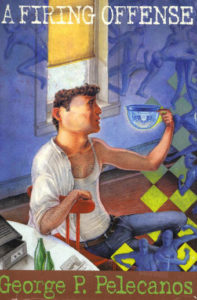
George Pelecanos’s literary career
America met DC-retail-executive-turned-detective Nick Stefanos in 1992’s A Firing Offense.
-
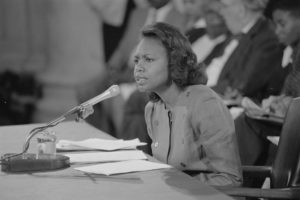
Hill, Anita
You can trace #MeToo’s roots to the aftermath of her testimony before an all-male Senate panel—headed by Joe Biden—about her allegations of harassment by Supreme Court nominee Clarence Thomas. The law professor Hill was grilled as if her behavior were in question, and her concerns were swept aside. Later that year, Congress added sexual-harassment provisions to federal civil-rights law that made it easier to sue.
-
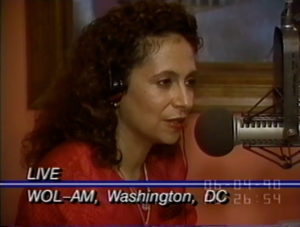
Hughes, Cathy
Radio One went public in 1999 as Hughes’s once-local broadcasting company became a national Black-media powerhouse.
-
Kavanaugh, Brett
1992: Georgetown Prep’s most famous alum gets fellowship with US solicitor general Kenneth Starr . . . . 1993: Clerks for Supreme Court Justice Anthony Kennedy . . . . 1994: Joins Starr in the Office of Independent Counsel, which took over the investigation of a failed Clinton real-estate deal and somehow eventually looped in the suicide of Clinton aide Vince Foster, “Travelgate,” and the Lewinsky affair . . . . 1997: Does his first hitch as partner at Kirkland & Ellis . . . . 1998: Is an author of the so-called Starr Report, which Congress then uses as a road map for Clinton’s impeachment.
-
Latino DC
People had moved from Central America to DC in great numbers since the unsettled ’80s (the Census count containing Hispanics tripled between 1980 and 1990), but they remained largely out of greater Washington’s view until a DC cop shot a Salvador-an man during an arrest on May 5, 1991. The subsequent uprising led to police reforms, including the hiring of Spanish-speaking officers, and wider recognition of this growing immigrant community.
-
MCI Center
Much of downtown was still bombed out and desolate when officials re-named F Street, Northwest, “Fun Street” for the opening of the new pro hockey and basketball venue (now Capital One Arena). Barry Manilow sang; owner Abe Pollin said he was “walking on air.” Restaurants and bars followed the spectators, and suddenly the idea of a vibrant, booming cityscape wasn’t completely nuts.
-
NoMa
A new name for the Northeast DC triangle bounded by North Capitol Street and Massachusetts and New York avenues began to catch on in the late ’90s.
-
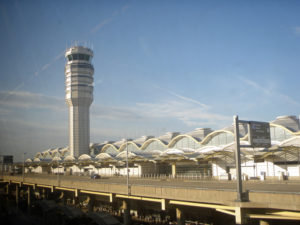
Reagan National
In 1998, Congress renamed Washington’s most convenient airport for a President famous for firing air-traffic controllers.
-
Revolution, Republican
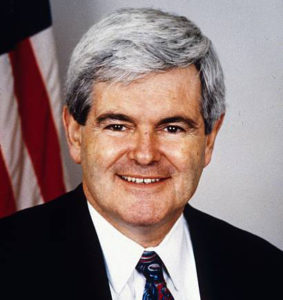
The GOP thundered back into power in the ’94 midterms toting its “Contract With America,” and as Newt Gingrich rose to House speaker, a new, scabrous era of politics ensued, with Republicans driving varied investigations into the Clinton administration, aided in no small part by the President’s personal life. The chummy existence of Capitol Hill lifers was no more.
-
Riot Grrrl
Washington’s indie-rock and punk scenes burst into national view in the ’90s, but neither was immune to the sexism that pervaded rock music. The Riot Grrrl movement, loosely headquartered in DC and Washington state, used zines, record labels, and bands like Bikini Kill and Bratmobile to carve out a welcoming space for women and to inspire some men to shut the hell up and listen.
-
Security, beefed-up
Pennsylvania Avenue closed to cars in front of the White House after the 1995 Oklahoma City bombing, and Jersey barriers began to sprout all over town.
-
Swing-State Virginia, roots of
The state’s population began to balloon in the ’90s, a trend that would later turn Fairfax as blue-hued as the nearby people’s republics of Arlington and Alexandria. The biggest demographic changes came to Loudoun County, whose population nearly doubled between 1990 and 2000—and many new arrivals were immigrants.
-
U Street Metro stop, birth of
Construction on the Green Line finally ended in May 1991, freeing business owners from flooding, barricaded streets, and evacuations when crews hit gas lines. The new Metro station stoked interest in a neighborhood that had once been a hub of African American entertainment but had yet to recover from the 1968 riots, kick-starting a renaissance—but also gentrification.
-
Washington Mystics
Our WNBA team’s first season was in 1998.
-
Washington Redskins futility
After a near-perfect ’91 season under coach Joe Gibbs, the team beat the Buffalo Bills on January 26, 1992—its last trip to the Super Bowl for the next 29 years and counting.
-
Washington Wizards
So long, Bullets. NBA owner Abe Pollin ditched the name in 1997.
-
West Wing, The
Aaron Sorkin’s verbose NBC drama about a Democratic President who didn’t have an affair with an intern debuted in fall 1999–just in time to become a home for people who wanted to imagine there wasn’t a Republican administration installed by the Supreme Court.



Photograph of Andrés by Evy Mages.
Photographs of Clinton and Hill courtesy of Library of Congress.
Photograph of Black Cat by Intangible Arts/Flickr.
Photograph of Drudge and Hughes courtesy of C-Span.
Photograph of airport by Bob Simmons/Flickr.
Photograph of White House by Leonora Enking/Flickr.
Photograph of Wizards by Akanie/flickr.
Photograph of MCI Center by Charlene Trapp/flickr.
Photograph of Metro by Joseph Barillari/Wikimedia Commons.
This article appears in the December 2021 issue of Washingtonian.