
After National Zoo director Brandie Smith handed in the first draft of her new book, In the Company of Pandas: My Life With the World’s Favorite Bear, her editor had an unexpected reaction.
Wow. There’s a lot of sex in this.
“Well, yeah!” Smith says with a laugh. “This is not a children’s book. I’m a nerd—a panda nerd and a science nerd. I wanted people to find the joy in pandas, and the joy in the science.”
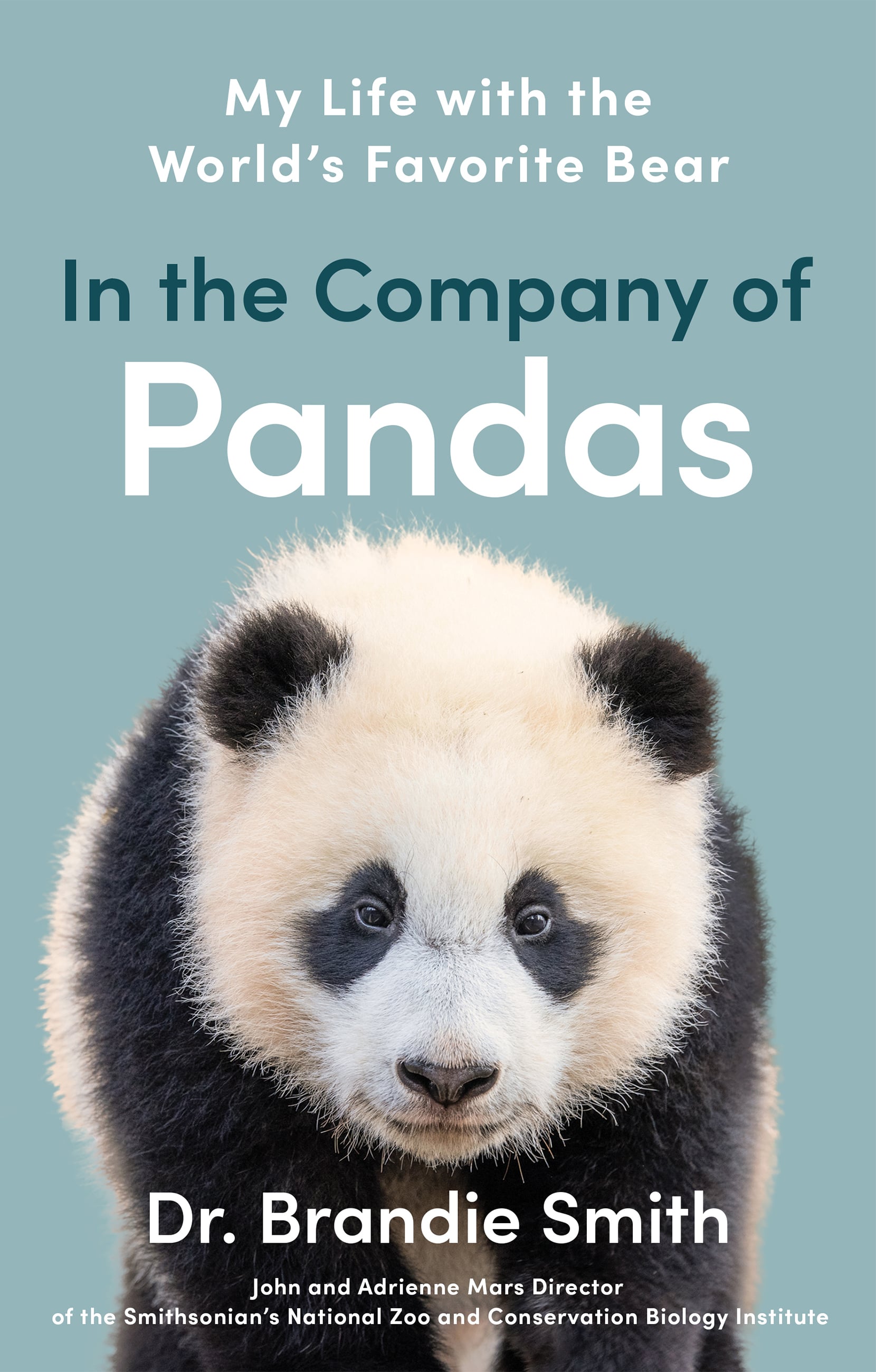
During her nearly two decades at the National Zoo—some of that span as its giant-panda curator—Smith has spent an awful lot of time thinking about the institution’s signature animals: their individual personalities and quirks, what they need to survive and thrive, the soft diplomacy of bringing them to and from China, what makes them so popular and beloved, and, yes, how they get it on. (Or, in many cases, fail to do that, despite their keepers’ best and sometimes comic efforts: In panda conservation, job number one is making more pandas.) “I always get the sex questions,” Smith says. “What’s wrong with pandas? Why can’t they have sex?”
Under Smith, the zoo’s panda program has experienced scientific success—fostering closer cooperation between its researchers and keepers to help its bears bring four healthy cubs into the world—while spreading joy to millions of visitors and online Panda Cam watchers. With her book—sales of which will support panda conservation—Smith wanted to answer all the questions she gets asked, and also help readers “see pandas through my eyes.”
“There’s a lot out there about giant pandas, but it’s impersonal,” Smith says. “I want people to hear about what it’s like to hold a baby panda in your hands or pull a panda from a tree or get to know a panda up close. There’s so much emotion in the work, and the whole world is watching.”
A self-described small-town girl who grew up in rural Pennsylvania, Smith abandoned medical-school plans to become a zookeeper. She milked rhinos, wrestled bonteboks (South African antelopes with impressive, lyre-shaped horns), and eventually found her way to the National Zoo, a dream job, she says, that she never dreamed of having. Smith didn’t plan to write a book about pandas, either—but now, after typing the pages in her bedroom on weekends, she has only one regret: “I wish I had more time. I still have so many more stories.”

Coming to America—and Washington
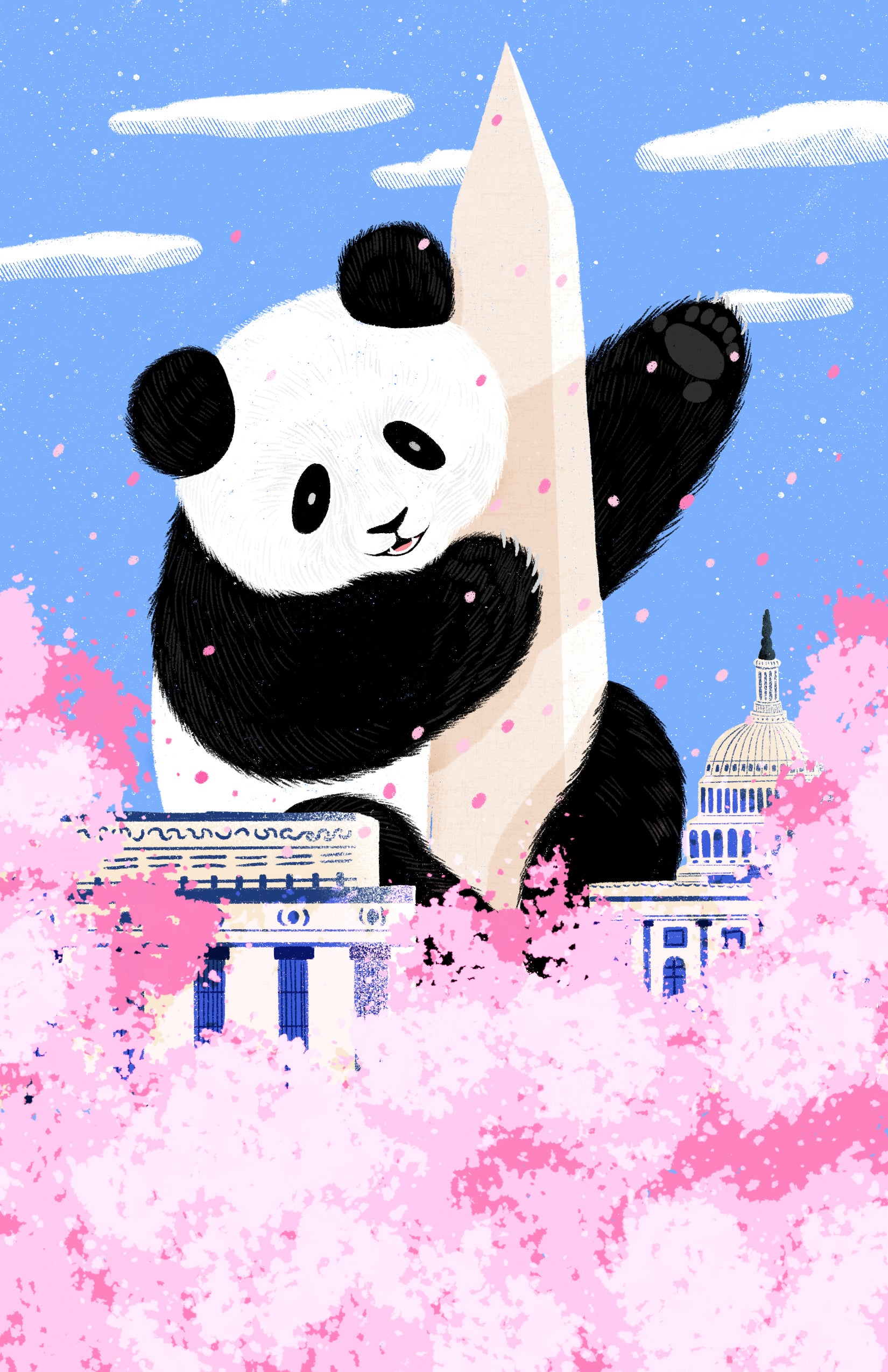
Outside of their native habitat in southwest China, giant pandas were more rumor than reality for much of history. That changed in 1869, when a French missionary shipped a panda pelt and skeleton to a Paris museum, kick-starting an ongoing global fascination that ultimately led to the animals finding a home at the National Zoo.
1929 | On the Hunt
President Theodore Roosevelt’s sons Kermit and Ted III shoot and kill a sleepy panda in the mountains of Sichuan Province. Its taxidermied remains are later displayed at Chicago’s Field Museum, the first panda exhibit in the US.
1936 | Bringing Back “Baby”
Seven months after her adventurer husband dies of throat cancer in Shanghai on a stalled-out mission to capture an adult panda, Ruth Harkness departs for China with a baby bottle, determined to capture a cub. She succeeds. Nursing the female cub with the bottle and dried milk and nicknaming her “Baby,” Harkness returns to the US via steamship. Her customs paperwork declares, “One dog, $20.00.”
1937 | Panda-monium
Harkness and Baby—now named Su Lin—become overnight stars, a feel-good antidote to the ongoing Great Depression, drawing crowds from San Francisco to New York. Universal Studios later releases a series of cartoons featuring a mischievous cub named Andy Pandy, while Harkness sells Su Lin to an Illinois zoo for $9,000, then uses that money to return to China and bring a second cub, Mei Mei, back to the United States.
1954–1972 | Giant Drought
Other pandas find their way to American zoos, including two gifted by the wife of Chinese Nationalist leader Chiang Kai-shek in 1941. Following China’s Communist turn in 1949, relations with the US turn frosty. The last panda in an American zoo dies in 1953.
1972 | Panda Diplomacy
During President Nixon’s historic visit to China, First Lady Pat Nixon tells Chinese premier Zhou Enlai she loves pandas. Replies Zhou: “I’ll give you some.” America’s biggest zoos jockey for Ling-Ling and Hsing-Hsing, who draw roughly 75,000 visitors on the weekend of their National Zoo debut.
Meet the Pandas
At the National Zoo, keepers don’t manage pandas as a group. They care for the bears as individuals, each with its own personality. Here, a who’s who of the zoo’s past and present pandas—and their unique quirks.
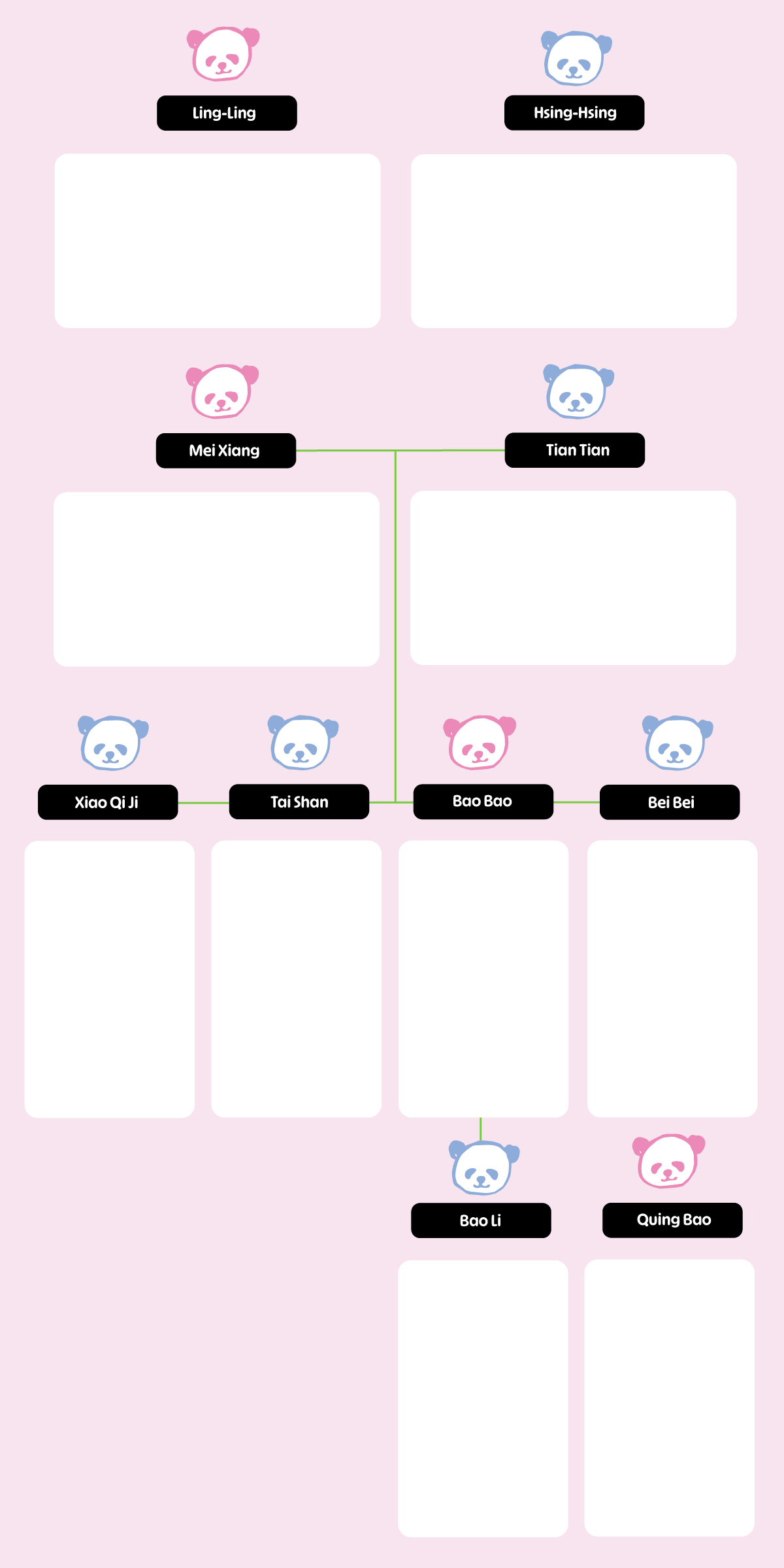
Arrived at zoo: 1972.
Died at zoo: 1992.
Name means “cute little girl.”
A clown and a charmer, she engaged onlookers through the enclosure glass, wearing her food dish like a hat and rearranging bamboo pots as if redecorating.
Arrived at zoo: 1972.
Died at zoo: 1999.
Name means “bright star.”
An enthusiastic eater, he was polite and laid-back—tolerant of noises and crowds and content to lounge in full view of visitors.
Arrived at zoo: 2000.
Returned to China: 2023.
Name means “beautiful fragrance.”
A fan of rubbing medical-exam ultrasound gel over her ears and head, she was a protective and highly competent mother, showering her cubs with affection and attention.
Arrived at zoo: 2000.
Returned to China: 2023.
Name means “more and more.”
Serene and gentle—zoo vets likened his medical appointment to spa visits—he enjoyed anointing himself with keeper-provided scents, including peppermint and pumpkin spice.
Arrived at zoo: 2005.
Moved to China: 2010.
Name means “peaceful mountain.”
The first cub born to Mei Xiang and Tian Tian and the first to survive at the zoo, he loved affection, sidling up to the mesh between pandas and keepers to get back scratches.
Arrived at zoo: 2013.
Moved to China: 2017.
Name means “treasure” or “precious.”
Unlike her brother, Tai Shan, she was an introvert, more interested in exploring her environment than in receiving attention. Later mothered three cubs in China, including current zoo resident Bao Li.
Arrived at zoo: 2015.
Moved to China: 2019.
Name means “treasure” or “precious.”
Likened by keepers to a Lab puppy, he loved flipping objects, rolling barrels into pools, and creating his own games. His first snowfall, says a keeper, “was like watching a kid discover recess.”
Arrived at zoo: 2020.
Moved to China: 2023.
Name means “little miracle.”
Conceived and born during the pandemic to a 22-year-old Mei Xiang, he was a problem solver, always looking for the safest route and rarely losing his footing when climbing up and down trees.
Arrived at zoo: 2021.
Moved to China: 2024.
Name means “energetic treasure.”
The son of Bao Bao and grandson of Mei Xiang and Tian Tian, he’s an extrovert like his uncle, Tai Shan, bleating to his keepers with greeting calls and often approaching the front of his habitat to engage with visitors.
Arrived at zoo: 2021.
Moved to China: 2024.
Name means “green treasure.”
Described by Smith as “Miss Independent,” she enjoys climbing trees but dislikes routine—if she’s spent too much time in one part of her habitat, she’ll hang out by the door to an adjacent enclosure and stare until keepers get the hint

Arrived at zoo: 1972.
Died at zoo: 1992.
Name means “cute little girl.”
A clown and a charmer, she engaged onlookers through the enclosure glass, wearing her food dish like a hat and rearranging bamboo pots as if redecorating.
Arrived at zoo: 1972.
Died at zoo: 1999.
Name means “bright star.”
An enthusiastic eater, he was polite and laid-back—tolerant of noises and crowds and content to lounge in full view of visitors.
Arrived at zoo: 2000.
Returned to China: 2023.
Name means “beautiful fragrance.”
A fan of rubbing medical-exam ultrasound gel over her ears and head, she was a protective and highly competent mother, showering her cubs with affection and attention.
Arrived at zoo: 2000.
Returned to China: 2023.
Name means “more and more.”
Serene and gentle—zoo vets likened his medical appointment to spa visits—he enjoyed anointing himself with keeper-provided scents, including peppermint and pumpkin spice.
Arrived at zoo: 2005.
Moved to China: 2010.
Name means “peaceful mountain.”
The first cub born to Mei Xiang and Tian Tian and the first to survive at the zoo, he loved affection, sidling up to the mesh between pandas and keepers to get back scratches.
Arrived at zoo: 2013.
Moved to China: 2017.
Name means “treasure” or “precious.”
Unlike her brother, Tai Shan, she was an introvert, more interested in exploring her environment than in receiving attention. Later mothered three cubs in China, including current zoo resident Bao Li.
Arrived at zoo: 2015.
Moved to China: 2019.
Name means “treasure” or “precious.”
Likened by keepers to a Lab puppy, he loved flipping objects, rolling barrels into pools, and creating his own games. His first snowfall, says a keeper, “was like watching a kid discover recess.”
Arrived at zoo: 2020.
Moved to China: 2023.
Name means “little miracle.”
Conceived and born during the pandemic to a 22-year-old Mei Xiang, he was a problem solver, always looking for the safest route and rarely losing his footing when climbing up and down trees.
Arrived at zoo: 2021.
Moved to China: 2024.
Name means “energetic treasure.”
The son of Bao Bao and grandson of Mei Xiang and Tian Tian, he’s an extrovert like his uncle, Tai Shan, bleating to his keepers with greeting calls and often approaching the front of his habitat to engage with visitors.
Arrived at zoo: 2021.
Moved to China: 2024.
Name means “green treasure.”
Described by Smith as “Miss Independent,” she enjoys climbing trees but dislikes routine—if she’s spent too much time in one part of her habitat, she’ll hang out by the door to an adjacent enclosure and stare until keepers get the hint.
Why Are Pandas So Cute?
It’s no accident that people go gaga for pandas. “We’re biologically programmed to love them,” Smith says. “We can’t help ourselves.” The reason? Research has found that humans are predisposed to feel affectionate and nurturing toward infant-like physical traits—the kinds found in babies, but also in puppies, kittens, and pandas. Here are four ways the bears invoke a sense of awww.

Large Heads With Full Cheeks
Because pandas eat mostly bamboo—one of the toughest plants—their jaw muscles are enormous. Wrapping around the sides of their faces and attaching to a pronounced, bony ridge along the top of their skulls, these muscles create a thick band encircling the head . . . and a pleasingly curved, plush-looking shape.
Big Forward-Facing Eyes
By themselves, panda eyes are small and dark, optimized for depth perception in dense and dimly lit forests. Surrounding those eyes, however, are bold black patches of fur, a panda signature that creates an optical illusion of adorably oversize peepers. Interestingly enough, scientists speculate that the patches may reduce glare and help the animals see better in snowy environments—think football players wearing eyeblack—while also deterring potential predators by making them feel as if they’re being watched.
Small Noses and Mouths
While pandas have an exceptionally keen sense of smell—used to navigate, evaluate bamboo, and communicate with one another—they have surprisingly small button noses, more like those of human infants than dogs. Inside their noses, however, are complex, convoluted nasal passages packed with scent receptors, which send signals to brains possessing large regions devoted to processing and analyzing odors.
Short, Thick Limbs With Soft, Rounded Body Proportions
Pandas can move surprisingly fast when agitated—about 25 miles an hour in short bursts—but mostly they’re built for climbing, sitting, and eating. Their physiques are perfect for long hours of reclining against a tree stump, methodically moving through pile after pile of bamboo, maybe even taking a nap between bites.
The Bear Essentials
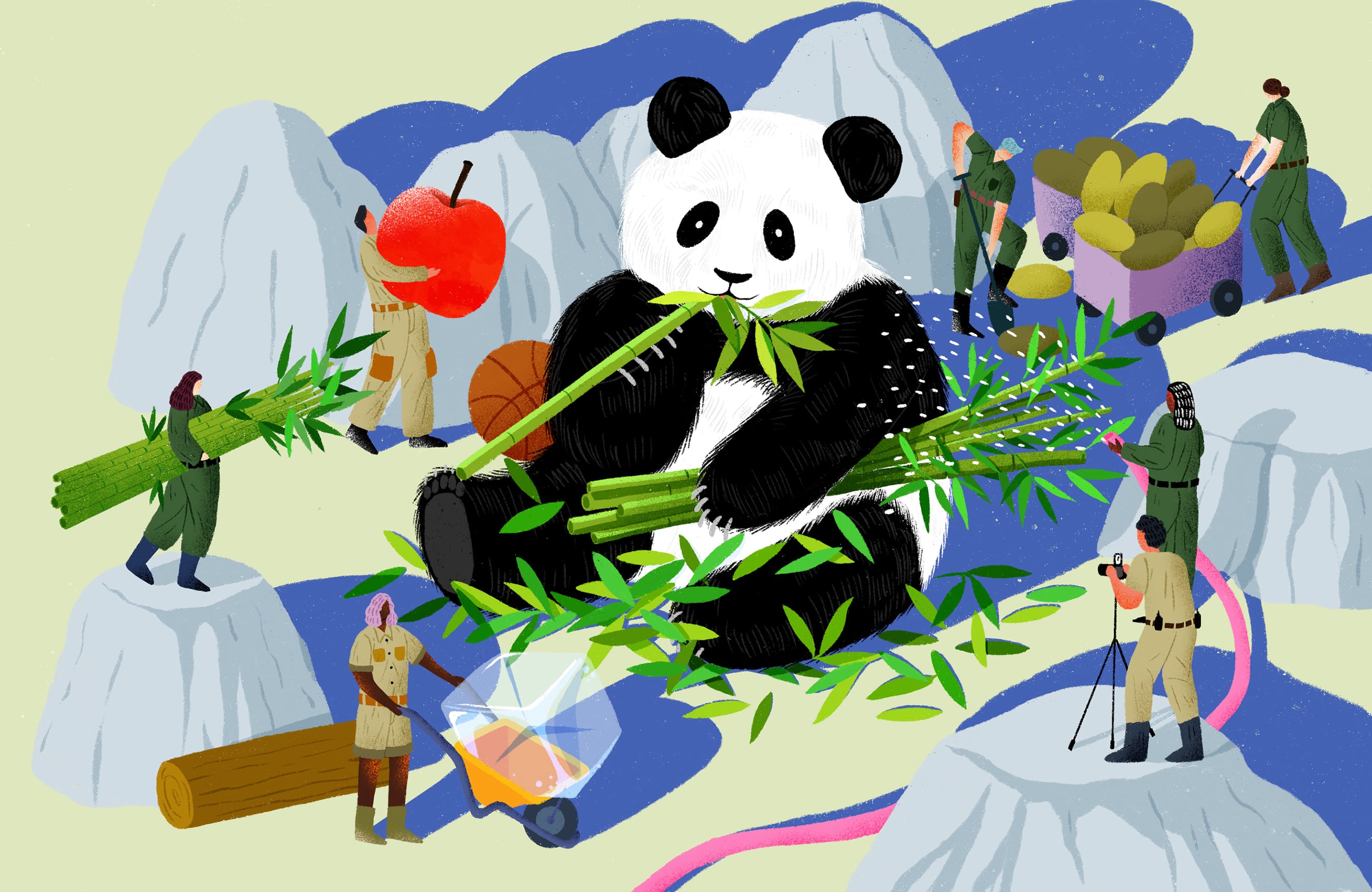
After Bao Li and Qing Bao arrived in 2024, the National Zoo had a problem: The newcomers didn’t like the biscuits that keepers served as snacks. To accommodate the bears’ palates, the zoo created homemade “panda bread,” a mixture of eggs, oil, vitamins, minerals, and various flours, all steamed for an hour.
During an event at the panda habitat, Smith found herself showing the new bread to philanthropist David Rubenstein, the habitat’s namesake donor. He asked what it tasted like. Smith didn’t know, so she took a bite. “Like dry whole-grain bread,” she said. “It could maybe use a little more salt.”
Smith then offered Rubenstein a piece. Before she could rescind her offer— I’ve just fed panda food to one of the Smithsonian’s most generous benefactors, she thought. What if something goes wrong? —he took a bite and offered his verdict: “Maybe a little butter, too.”
When it comes to keeping pandas happy and healthy, details matter. Here, a closer look at how the zoo does it:
Bamboo-zled
The zoo’s panda keepers often joke that they should be called bamboo keepers because they spend most of their time collecting and offering variations of the plant—about 100 pounds of fresh bamboo per day per bear. Why so much? In part because pandas hardly eat anything else. About 95 percent of their diet is bamboo, and they get sick if they don’t ingest it. It’s also because bamboo is anything but a superfood, low in calories, protein, and fat.
Pandas are picky about the kinds of bamboo they eat, too. They’ll munch on one species of the plant in the morning and refuse it later in the day, or vice versa. They also eat different parts of the plant at different times of the year: bamboo shoots (low fiber, moister) in the spring, stalks (higher fiber and carbs) in the winter, and leaves (greater protein and fat) in the summer.
Every morning, the zoo receives hundreds of pounds of fresh bamboo, stored in a special building where the plants are cooled, misted, and tracked by cut date and species. The bamboo is harvested from nearly 70 sites in the area, trucked in on the back of a pickup whose flatbed measures about ten feet long, eight feet wide, and five feet deep. The zoo’s commissary team does the cutting and collection, which happens no matter the weather. Smith herself has been out a few times to help—the first time she chopped the plant, she says, her hip hurt so badly the next morning, she thought she’d thrown it out of joint. Smith called her doctor but, out of embarrassment, never told anyone at the office. “They’ll find out when they see the book,” she says with a laugh.
All that effort has a payoff. “There’s nothing more charming than watching a panda eat,” Smith says. “They eat with such relish!”
Creature Comforts
During DC’s sweltering summers, keepers crank up the AC and provide 100-pound ice “cakes”—splashed with fruit juice and filled with sugarcane stalks—to help beat the heat. Pandas also get lots of mental stimulation: tubs of water to splash in, pots of planted bamboo for foraging, trees and wooden structures to climb, and toys to play with. Keepers hide treats like apples and carrots in puzzle feeders to stimulate problem-solving abilities: How the pandas go about getting to their prizes often reflects their personalities. “Mei Xiang would take her time, find all the holes, methodically get each of the treats out, treat it like a puzzle,” Smith says. “Tian Tian would just shake [the feeders] until stuff would fall out. He treated it like a piñata.”
When keepers have to interact with pandas up close, they use what they call a “training cage,” which Smith writes is more like a “reverse shark cage”: pandas inside, keepers outside working safely through metal bars. These sessions are voluntary for the pandas, as the training cage has a door leading back to their enclosure that they can walk in and out of at any time. To entice the bears and reward requested behaviors, keepers give them diluted apple juice and water tinged with honey—the equivalent, Smith writes, of offering a child a lollipop at the doctor’s office.
About Panda Poop . . .
Zookeeping can be a smelly job. Carnivore excrement, Smith says, “is so stinky. Animals that eat fish are even worse. Gorilla poop smells a lot like human poop—not a good association!” As grass eaters, Smith says, pandas produce waste that’s far less, um, olfactorily unsettling. “They digest things so quickly, so what comes out is a lot like what goes in. It looks like compact piles of leaves.” And the smell? Smith likens it to freshly mowed grass or green tea leaves. “Honestly,” she writes, “I think it could be marketed as a trendy candle scent.”

The Panda Show
One of the zoo’s most popular features is an online Giant Panda Cam that allows anyone with a web browser to watch a live feed of the pandas daily from 7 am to 7 pm Eastern time. To check it out, visit nationalzoo.si.edu/webcams/panda-cam.
“Your Job Is to Get the Panda Pregnant”
When Smith first interviewed to become the National Zoo’s giant-panda curator, she was told in no uncertain terms, “Your job is to get the panda pregnant.” Decades of conservation work have moved the species from “endangered” to “vulnerable” status—but there are still only 2,500 or so pandas worldwide, which means the top priority for keepers is making more. That isn’t easy: It took the zoo almost 35 years to produce a panda cub, Tai Shan, who survived infancy, and former director Ted Reed used to lament the zoo’s panda “sex problem,” once calling it a “defeat for machismo; an utter humiliation for all zoo males.” Here’s how the magic happens—and why it can be so tricky.
Getting in the Mood
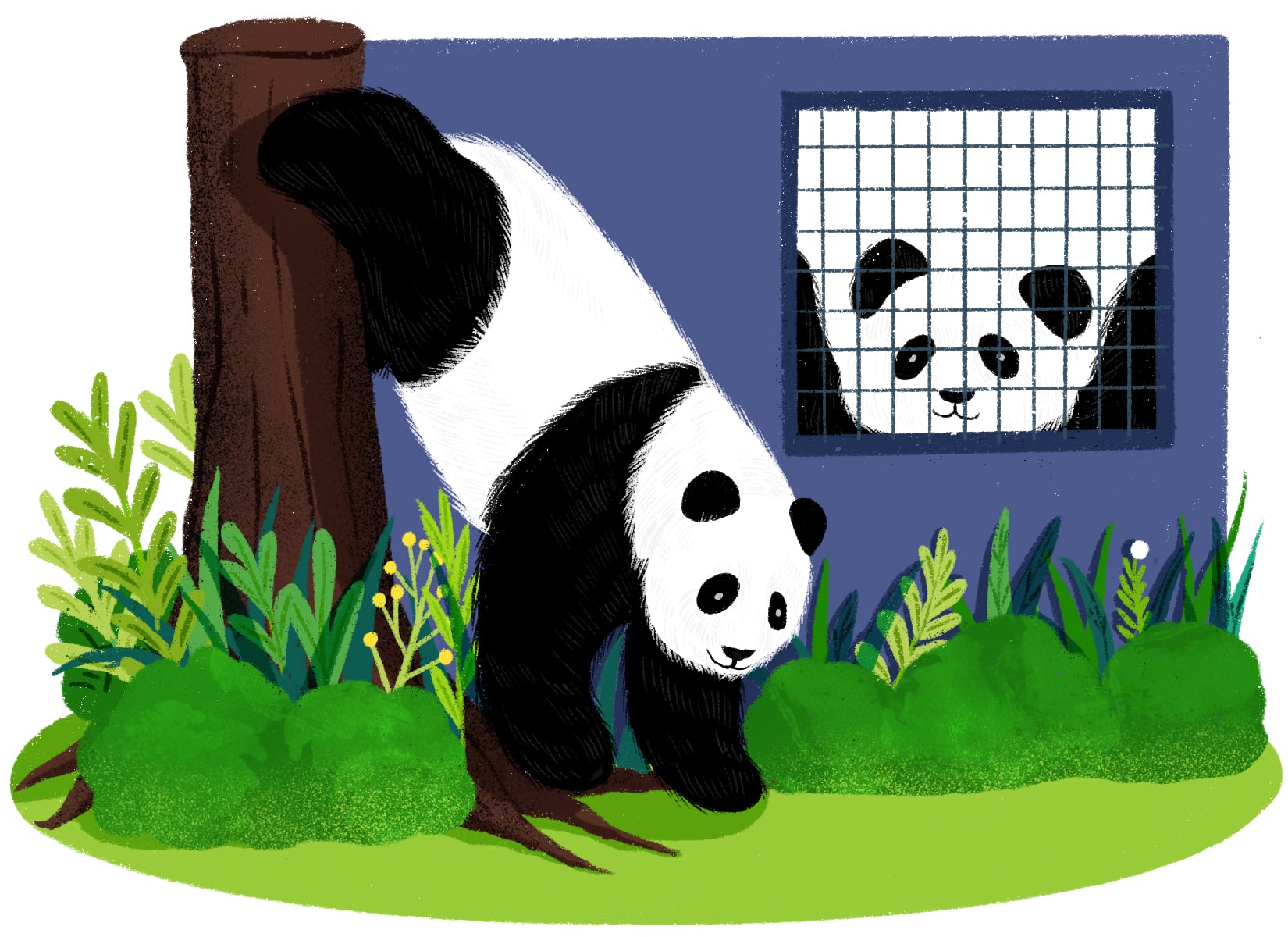
Pandas have a small annual window for conceiving: While male pandas are in rut—that is, ready to breed—for six to seven months, females are in estrus for a few days. During this time, pandas who otherwise treat each other with indifference from their separate enclosures touch, sniff, and chirp at each other through the mesh barriers dividing them, and male pandas do something called “urine-hopping”—essentially, advertising their readiness to mate by spraying hormone-laden pee all over the place. (Tian Tian used to whiz while doing a handstand, which keepers believed was to make himself seem taller and more attractive to Mei Xiang, the equivalent of a five-foot-nine guy on Hinge claiming to be six feet tall.) When the pandas make it clear that it’s go time, keepers open the enclosure doors so they can be together.
Doing It
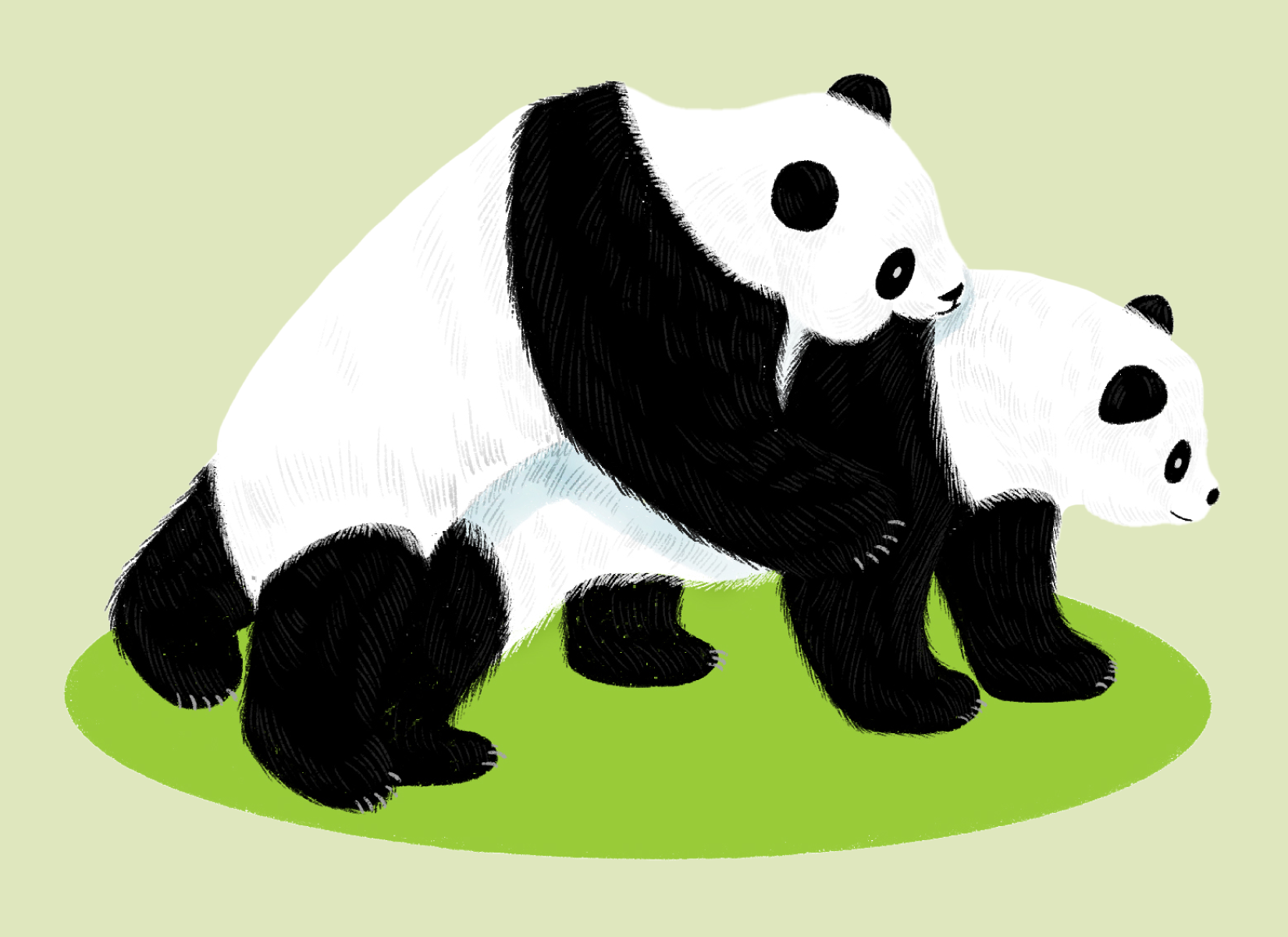
President Nixon once told a reporter that pandas “don’t know how to mate.” He wasn’t entirely wrong—Smith says that pandas born and raised in captivity don’t always know how to “just do it.” In 1981, the zoo brought male panda Chia Chia over from the London Zoo to mate with Ling-Ling. The bears fought instead, and keepers now keep CO2 canisters and hoses on standby in case they have to break up similar love disconnections. Meanwhile, Smith writes, Mei Xiang and Tian Tian had the will but not the skill: Rather than position herself in a necessary yoga-like downward-dog pose, Mei Xian pancaked on the ground, leaving a confused and frustrated Tian Tian to step on her until, “thwarted, he appeared to ejaculate on her fur.” Mission not accomplished.
Artificial Insemination
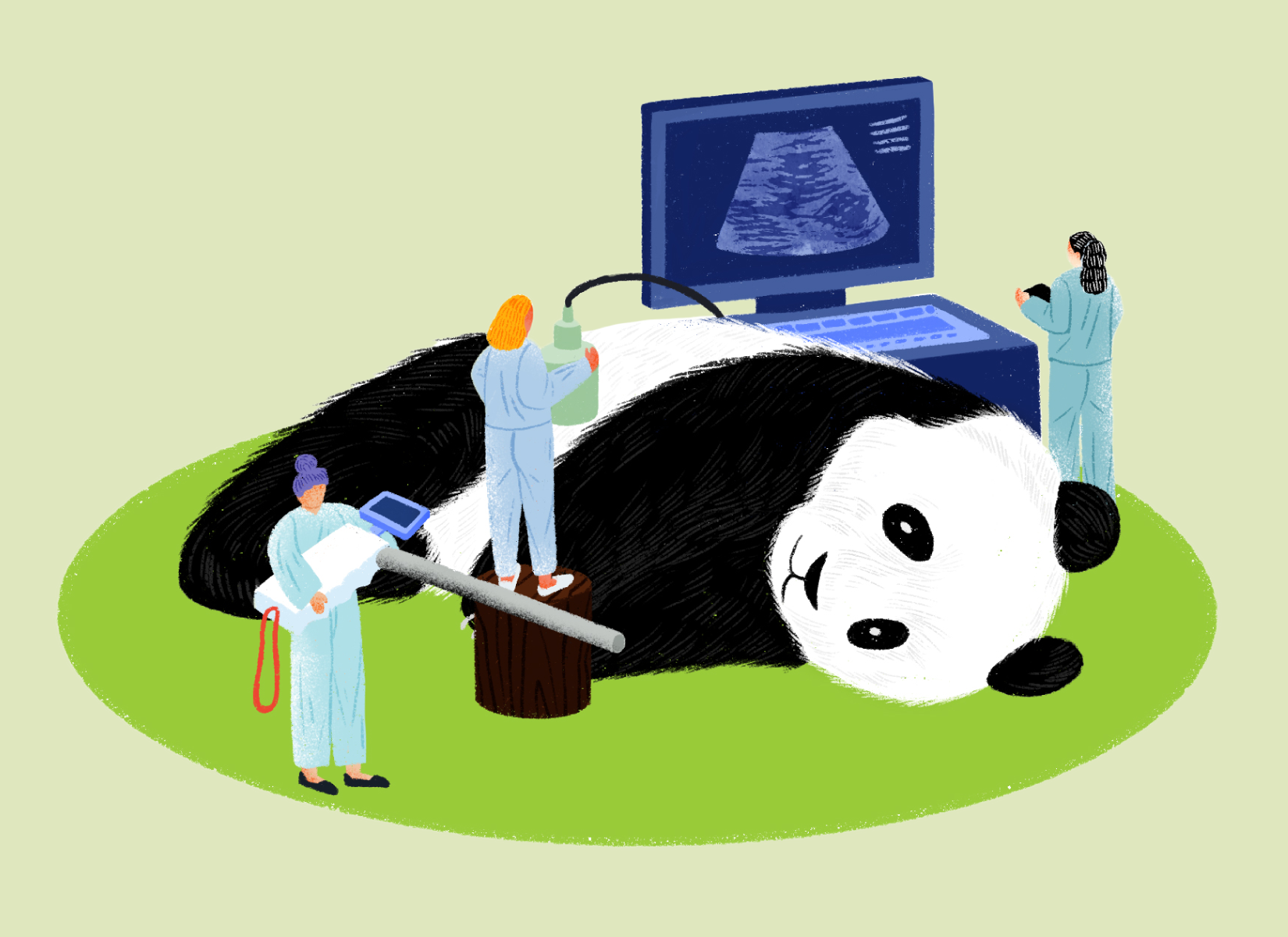
Smith says zookeepers spend enormous amounts of time trying to teach or trick pandas into assuming the correct procreation positions—Tian Tian once had a workout regimen of what amounted to reverse squats, while Mei Xiang learned to lift her hindquarters when tapped above her tail with a stick of bamboo. Ultimately, artificial insemination has worked much better, producing all of the zoo’s surviving cubs. Keepers collect semen from anesthetized males, then inseminate females during peak estrus. Monitoring estrus requires urinalysis, often handled by a lab in Front Royal, about an hour from the zoo. Keepers and lab techs, Smith writes, conduct halfway-point handoffs at a Starbucks in Haymarket: “I’ve always imagined customers sitting there, sipping their lattes, never knowing that the exhausted-looking woman sitting nearby had a cooler full of panda pee under the table.”
Pregnancy
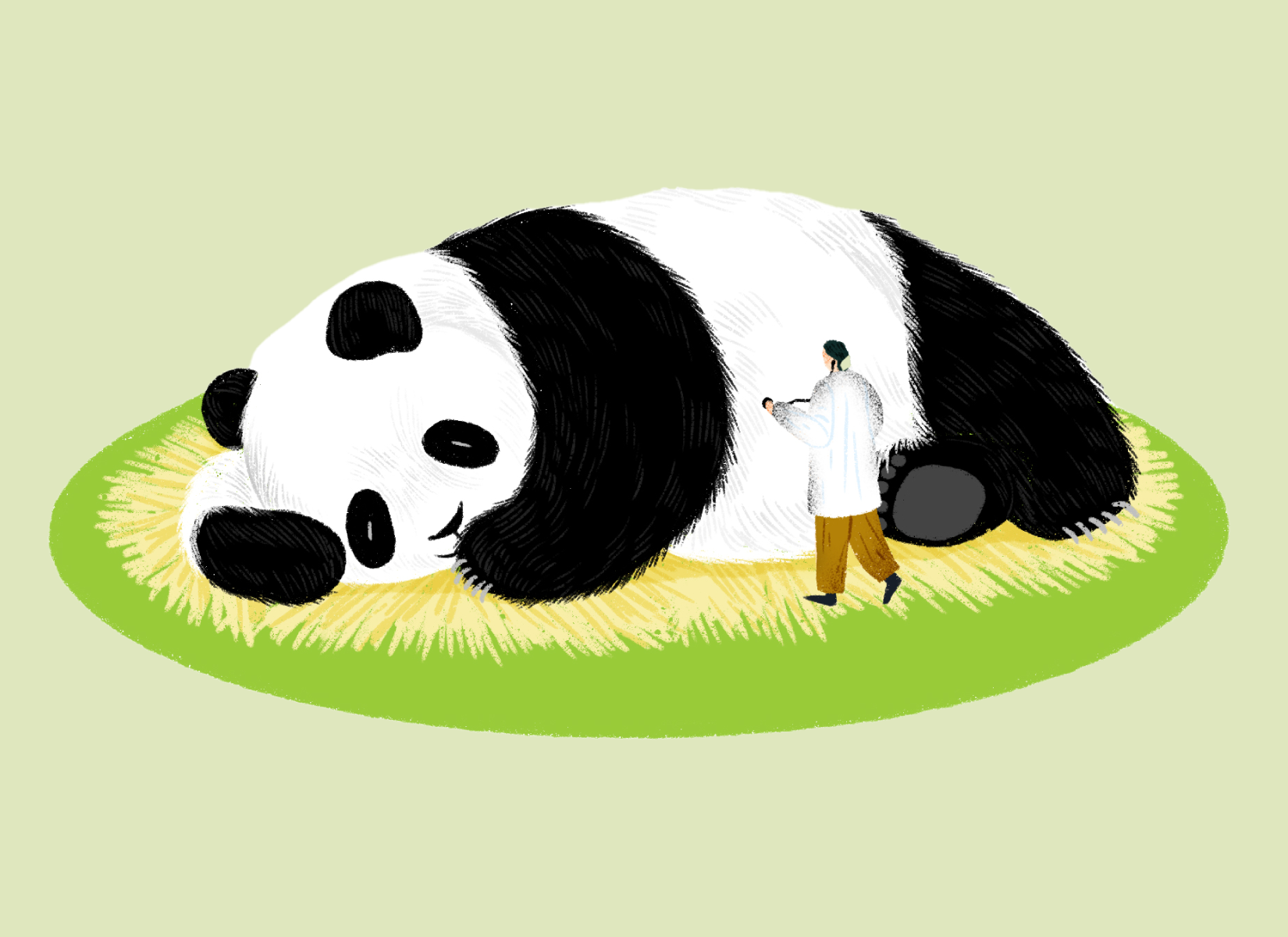
Pandas are part of a small group of mammals whose fertilized eggs don’t implant right away—meaning it can take months before keepers can tell if they’re pregnant. Once that occurs, their hormones and behaviors change. Mei Xiang slowed down, spent more time indoors, and began cradling small objects such as toys against her chest. Eventually, she built a bamboo nest in her den, piece by piece, which got so big that it blocked the camera that keepers used to monitor her.
Birth and Postpartum
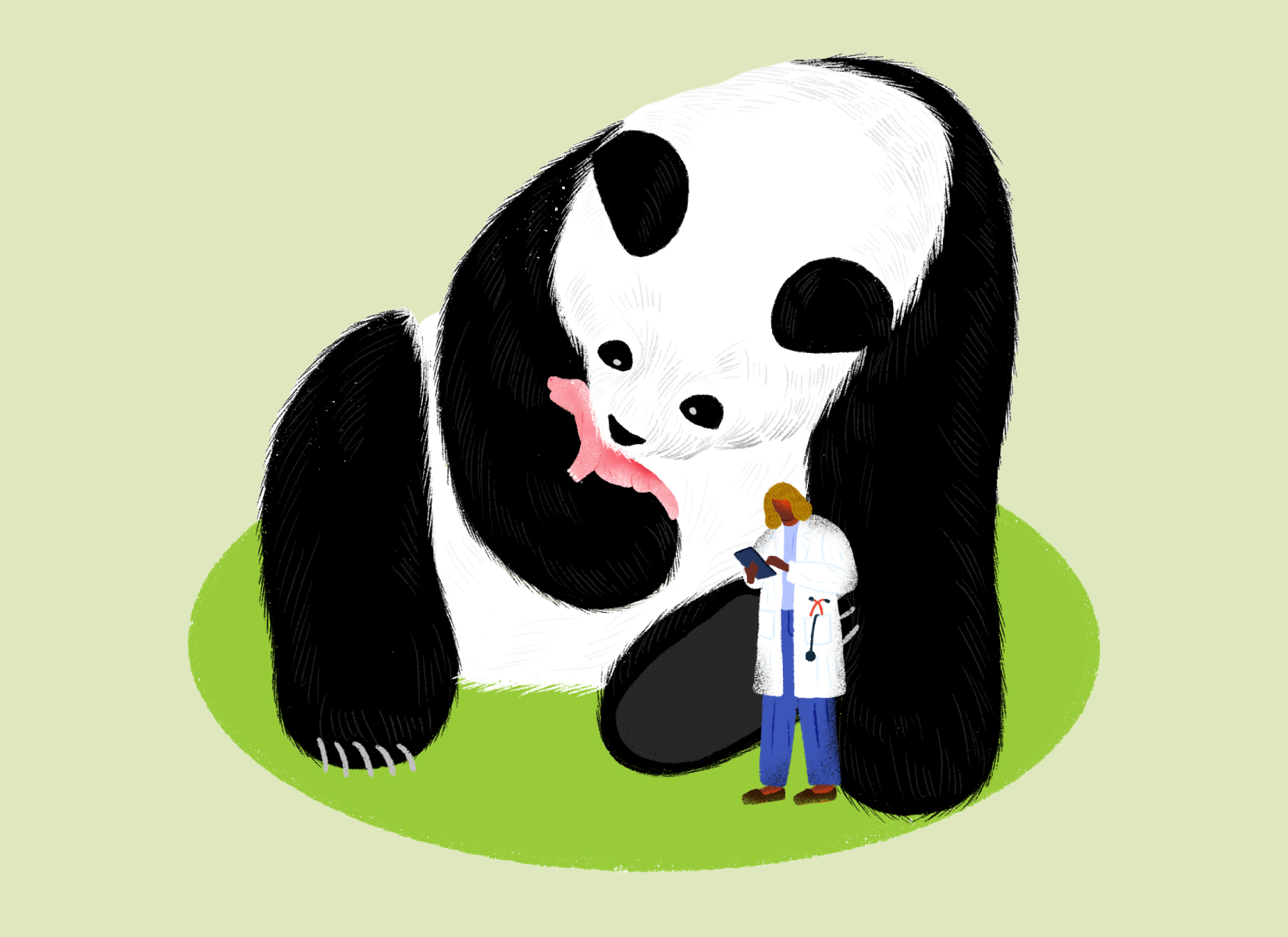
At birth, Smith writes, a panda cub looks “a little like a naked mole rat”: tiny, pink, blind, furless, and totally dependent on Mom for survival. Bao Bao weighed just 137 grams, less than an iPhone without a case. (Among all placental mammals, pandas produce the smallest newborns relative to their mother’s size. At 240 pounds, Mei Xiang was about 800 times heavier than Bao Bao, while a human mother weighs maybe 20 times more than her baby.) Giving health checkups to cubs is fraught work—Smith describes it as “Step 1: Sneak into the den of a large bear. Step 2: Gently reach be-tween the bars surrounding the nest, under [the mother’s] arms, and across her belly. Step 3: Grab the cub and pull it out. And do all that faster than a protective mother’s teeth or claws could react”—made more difficult by the fact that, as Smith puts it, “wow, those little bears can scream.”
Saying Goodbye
As part of the National Zoo’s agreements with its conservation partners in China, pandas brought here are returned when they reach old age, while cubs born in the US are sent over by age four. Perhaps surprisingly, departures aren’t especially tough on the bears, who tend to be remarkably calm in their custom-built travel crates throughout their approximately 19-hour flight to China.
Humans are another story. After Mei Xiang, Tian Tian, and their cub Xiao Qi Ji left for a Chinese nature preserve in late 2023, Smith took a solo walk through the zoo’s panda enclosure. “It was so quiet and empty,” she says. “I burst into tears.”
It’s common for zoo staff to develop attachments to pandas in their care—but during the year-plus of preparations for sendoff, Smith says, they’re too busy to get mushy. It takes time to acclimate pandas to their travel crates; training sessions featuring lots of treats do the trick. There’s also a massive amount of paperwork, as moving one of the world’s most protected animals across the globe requires many, many permits.
On moving day, the pandas enter their steel-and-plexiglass crates, which are moved by forklift onto trucks that carry them to Dulles Airport. For the keepers and others who accompany the crates until the convoy hits the road, this is the real goodbye. “Most will never see these animals again,” Smith writes. “Tears are shed.” One keeper and a veterinarian join the pandas on the plane, both to give the bears a familiar face and to have someone on hand who can detect any subtle changes in behavior that might indicate distress. Upon landing, they say their own farewells as Chinese ground crews take over.
Back in Washington, Smith says, there are feelings of loss—and accomplishment: “This is our definition of success. We’re in the business of saving species, and excited that we’ve added more pandas to the world. My sadness doesn’t last long. You still have pandas here, and there’s still work to do.”
This article appears in the December 2026 issue of Washingtonian.


