Look for the T-shirt. I’d received that instruction about a week before, from Chris Costello, a 27-year-old with an easy gaze—a fact I hadn’t yet discovered because we hadn’t yet met.
Costello is one of the directors of Dudes in the District, a local group that’s been around since 2024 and organizes events for, well, dudes. Think movie nights. Gatherings at Nationals games. A rotating restaurant club. Monthly happy hours. I discovered them through a quick Google search and set my sights on a happy hour at the end of July. I’d like to tell you I went strictly as a journalist, the better to deliver the story you’re reading.
But, really, I’d been dealing for a while with a weird sense of unease.
More than half of all Americans say they feel lonely often or some of the time, and more than one-fifth of adults say they always feel socially isolated.
I work from home alone, a lot, which comes with being a freelance writer. Blessed are the moments when I travel on assignment and experience what journalism legend H.L. Mencken famously described as the “life of kings,” parachuting into places I never would have seen otherwise and chatting up true characters: Montana ranchers who hunt dinosaur fossils, competitive lumberjacks in West Virginia, men and women learning to fix Rolex watches at a school in Dallas. But these encounters are fleeting—good for a quick contact high, long faded by the time my byline appears on a story. Most days, I’m cocooned in the quiet of my office in Silver Spring, fingers on the keyboard, the occasional email or phone call my only contact with the outside world.
This left me feeling isolated in a way I couldn’t shake. Thing is, I’m lucky. I have a wonderful, loving wife. I come from a large and entertaining family, rich in character, jokes, and unabashed opinions. (My mother is 100 percent Italian. If you know, you know.) My wife and I have two good friends we travel with every year. I have a bona fide best friend, too, a buddy in Pennsylvania I’ve known since freshman year of college—even now, despite being in our late thirties, we still manage to get together every year for a long weekend of just hanging out, a couple guys being dudes, assisted by a fridge amply stocked with Miller High Life.
But around Washington? I don’t really have any friends, at least not any I’ve made on my own. Slowly, a sense of social disconnection had wormed its way into my life. It turns out this isn’t unusual: More than half of all Americans say they feel lonely often or some of the time, and an analysis of US Census data led the product-research firm Chamber of Commerce to name DC the “loneliest city in America” in 2023 and 2024.
Still, it bothered me. How had this happened? What could I do about it? Searching for answers, I found myself strolling along 14th Street on the last Wednesday of July, headed for Aslin Beer Company. Walking into the outdoor beer garden, I saw groups of people—strangers—assembled at picnic tables. Then I spotted it: a white T-shirt with a dudes in the district logo.
“Chris?” I asked the lone guy sitting at a table in the back.
“No. I’m Will,” he replied.
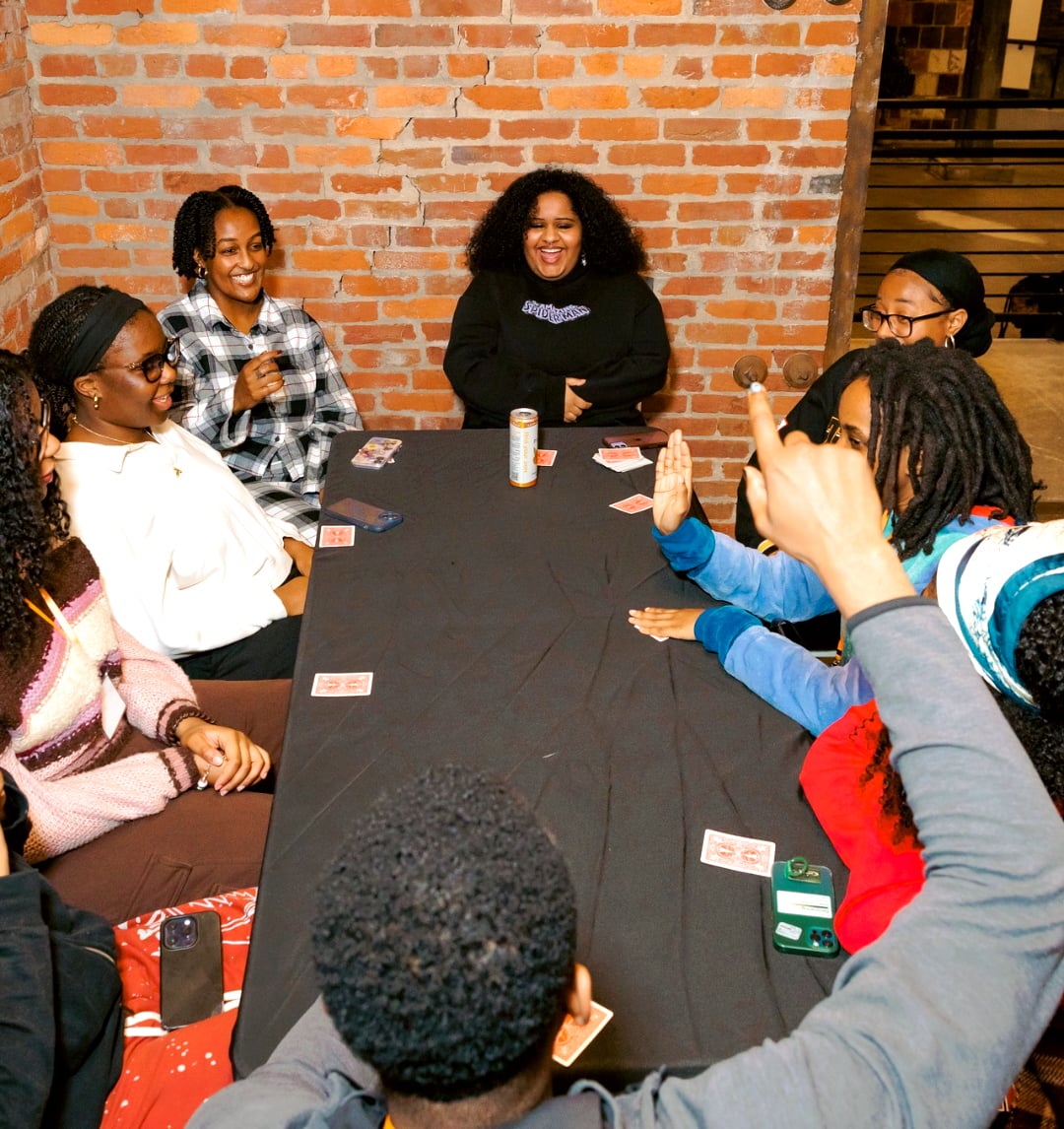
That’s how it started. Two guys chatting over beers turned into six, then 12, then pretty soon there were two dozen of us standing around trading handshakes and stories. For the first time in a long time, I felt like a kid on the playground, where you can simply bump into someone and become friends. Eventually, I met Costello, who summed up why we were all here.
“It’s very easy to isolate, to do your own thing and just be a bit of a loner,” he said. “But this group kind of forces that out of you.”
Alone, Together
A lot of us are doing our own things—to a fault. That 50-plus percent of Americans who feel lonely some of the time? They’re arguably drowning in meaningful human contact compared with the more than one-fifth of adults who say they always feel socially isolated.
Everywhere you look, you see signs of our Great Disconnection: declining participation in faith communities, increasingly fragmented civic organizations, less neighborhood engagement. We’re all bowling alone, to borrow the argot of political scientist Robert Putnam—even if we’re not actually bowling. According to the American Time Use Survey, the average person spends about five and a half hours a day by themselves. The latest census data shows that about 38 million Americans live alone. Generation Z, in particular, is acutely alone: According to the federal government’s American Time Use Survey, a tenth of people between 23 and 29 have no face-to-face interactions with anyone on a daily basis.
Some studies suggest the mortality impact of social disconnection is similar to smoking up to 15 cigarettes a day.
Smaller families. Fewer marriages. Feeling overworked and overwhelmed. A decline of so-called “third places” for socializing. A culture that venerates rugged individualism. Streaming and scrolling on our damn phones. All of these are likely culprits in atomizing society. Enforced separation during the pandemic made already lonely Americans feel even more distant. But the causes of all this remoteness may not matter as much as how it affects us—which is to say, very badly. “This isn’t some mushy issue,” says Andrew MacPherson, chair of the Foundation for Social Connection Action Network, a DC nonprofit that advocates for federal policy to address loneliness. “This is a really serious issue that affects our health.”
Research has connected social isolation to greater risk of cardiovascular disease and stroke; depression and anxiety; dementia; and even premature death. Some studies indicate that loneliness has just as negative an impact on our mortality as smoking 15 cigarettes a day.
Three years ago, then–surgeon general Vivek Murthy declared loneliness to be a national public-health epidemic. In an 82-page report, Murthy marshaled evidence showing that loneliness accelerates cognitive decline in older Americans, that the share of US teens online “almost constantly” has doubled over the last ten years, that only one in six Americans feel connected to their local communities. He followed up with an opinion piece in the New York Times recounting his own difficulties with loneliness—how during his first stint in the job, under President Obama, he became so preoccupied with work that he neglected his friendships, only to feel isolated and ashamed to reach out to others after his tenure ended.
On a friend’s advice, Murthy began calling old buddies, apologizing for not being in touch and expressing genuine curiosity about how they were doing. “Not only was I blessed to have friends who welcomed me back,” he says, “but I came to realize that many of them were also struggling with a sense of loneliness and isolation.” Since leaving government, he’s started the Together Project, a nonprofit working to further social-connection research and build a deeper sense of community.
“It’s one of the great challenges facing our generation,” Murthy says of loneliness. “And I think it will be a drain on future generations if we’re not able to figure out how to create a more connected society.”
Disconnected in the District
My job is all about talking to people, which is something I’ve always enjoyed. I can make conversation in an elevator. I don’t mind if you start talking to me at the bar in the airport terminal—hell, I’ll buy you a drink.
In Washington, though, I was lost.
When I lived in Baltimore, the same city where I attended college, I knew others who had stuck around after graduation. When I moved to Philadelphia a few years later, I had my future wife and a network of friends from high school and work. But when my wife and I subsequently relocated to the DC suburbs for her teaching job—well, things were different.
Our area is famously transient, a place where the cyclical nature of politics and power has some people perpetually coming and going, in with one election and out with another. When the Chamber of Commerce ranked DC as America’s loneliest city, it did so by looking at the percentage of one-person households: 48.6 percent, tops in the nation, and greater than Chicago, Los Angeles, and New York. (For the percentage of men living alone, the District ranked number three, behind St. Louis and Cleveland. For the percentage of women, it ranked second, behind Alexandria.)
I wasn’t living by myself when I arrived in Washington. But I was 27 and working for myself, by myself. All the opportunities I’d once had to easily meet up with friends were gone. No more quick texts or short walks to the neighborhood dive bar. No more phone calls to people who lived close by.
This came as a bit of a surprise. I wanted to make new friends here, but I had no idea how to go about it. For adults, this is a distressingly common experience. “I think a lot of people rely on this assumption they had when they were kids, that it’ll just happen for me, and realize that it doesn’t,” says Marisa Franco, a psychologist and professor at the University of Maryland.
Franco studies platonic relationships—in fact, she wrote the book Platonic, which explores how people can form lasting friendships. “In adulthood, you have to make an effort,” she says. “You have to go to places where you can connect with people.” Franco calls this “mere exposure.” Put yourself in social situations around new people and it’s more likely you’ll find new pals. “That’s what friendship requires,” she says. “It’s not just some sort of magic.”
Point taken—except for all the ways modern adult life stymies that kind of exposure. It takes time to tend to kids, work, errands, chores. My lawn isn’t going to mow itself. No one’s building that shed but me. And I won’t have money for either if I don’t write this article.
Still, I tried to make the magic happen. Beginning in 2025, I hosted the occasional Scotch night at my house but suspended it indefinitely after the last three this year went unattended. The bottles I’d purchased didn’t go to waste, but I was the only one drinking them. (I’ve since been assured by invitees that their no-shows weren’t because I’m disliked. I’m not the only person with a busy adult life.)
And even if my ill-fated gatherings had been a little less so, there’s no guarantee that exposure alone would have produced actual connection. After all, it’s not enough to be physically present with others—we need to be mentally there, too. And that can be hard, especially in the smartphone era. Who doesn’t have a habit of checking their feed, their inbox, their texts? Thinking about work or sports or picking up the kids? Answering one last email because we’re always available as long as there’s wi-fi?
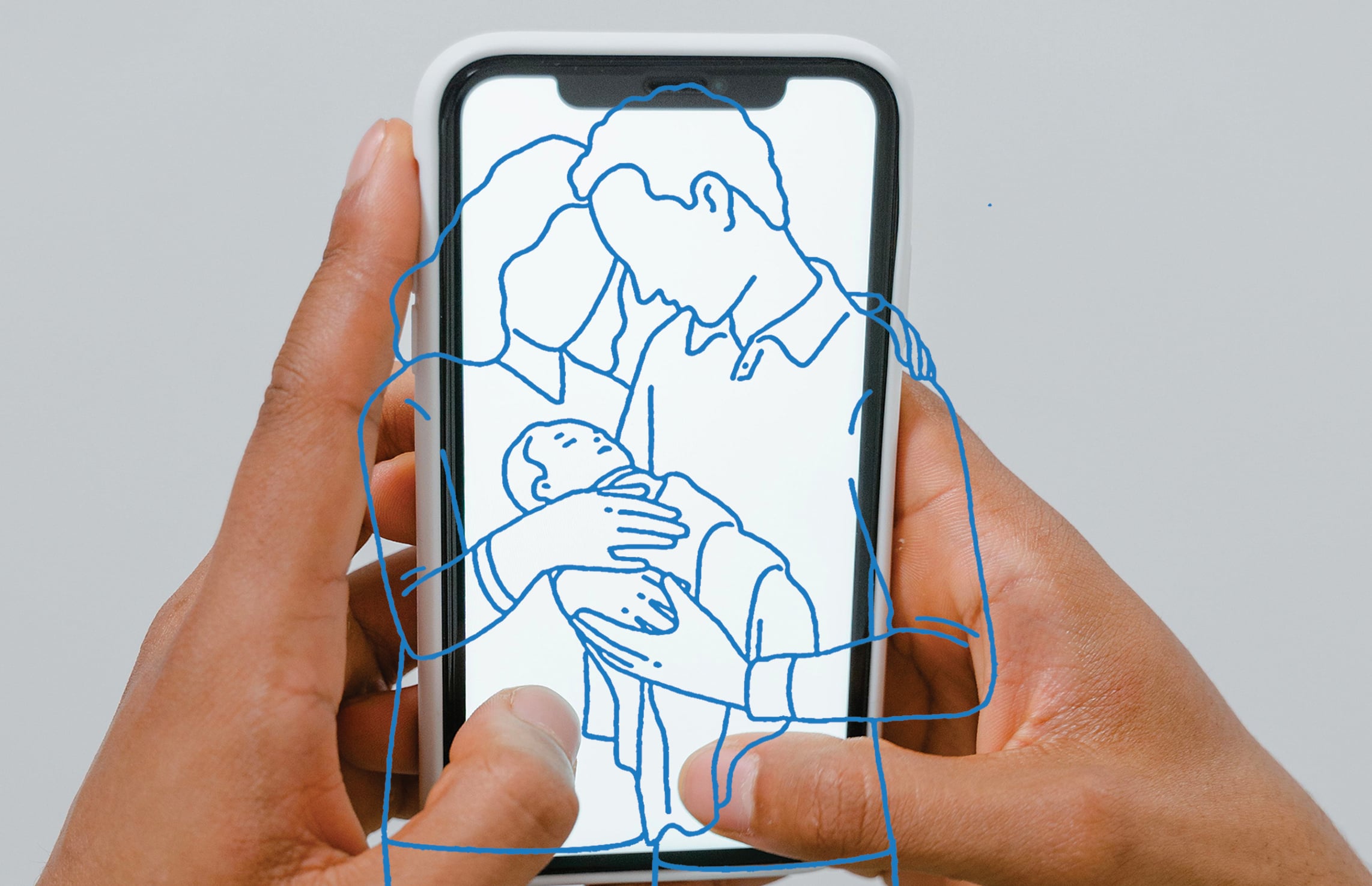
Murthy has struggled with being perpetually plugged in. He first realized something was amiss after he and his wife had their first child. “We were doing the nighttime routine—dinner, bath, all of that,” he recalls. “And in the midst of that, my hand stuck in my pocket, I pull out my phone.”
Murthy’s wife asked him if he really needed to be looking at his device. “I felt ashamed, actually,” he says. “I’m literally just refreshing my inbox to see if there’s anything new. And that mindless checking of our phone . . . that’s something I certainly experienced and that I still have to manage to this day.”
Franco, the Maryland professor who studies friendship, has a term for this kind of behavior: “covert avoidance.” It helps explain how we can feel alone even when we’re in the same room with others. Now, Murthy says, he carves out “sacred spaces” where he forgets about the phone. At dinnertime, all family members have to put their devices away.
And that’s not the only way we can be unwitting architects of our own isolation. Franco says our brains are “really designed for safety—to not make us risk harm.” That’s a good thing if it helps you avoid dark alleys late at night. But it’s not so helpful if it’s shielding you from people out of fear of rejection. Subconsciously, Franco says, the human mind develops lots of excuses to keep others at emotional arm’s length.
One of these is something psychologists call “the liking gap.” All the time, people underestimate how well liked they are, even by complete strangers. (According to Franco, nine times out of ten, someone we don’t know will talk to us—and even enjoy the experience.) This can make it hard to connect. So can that classic DC question, the one heard at dinners and cocktail parties and even on first dates, the one that can leave you feeling as sized up as a car on a sales lot: So what do you do for work?
“I think people come here and they are very ambitious,” says Joshua Cogan, a 50-year-old photographer who’s spent the bulk of his professional life in DC. “But with ambition, we start to objectify ourselves and we objectify each other. We see each other as means to an end a lot of times.”
I reached out to Cogan because he’s the founder of Journeymen, a nonprofit that began as a meditation group in the city and has since grown into a national organization that seeks to bring together groups of men on retreats, adventures, and monthly online calls. Like the guys of Dudes in the District, participants are looking for community and belonging, friendships that transcend online life. “I think the more we become avatars to each other, the less human we become,” Cogan told me. “There is something to be said about really just being in physical form with each other. We got to see each other, dude.”
We got to see each other. Turning that over in my head, I realized Cogan was correct in more ways than one. To overcome social isolation, we literally have to see each other. But we also need to feel emotionally seen. Meet up, yes. But also form and strengthen meaningful bonds. That kind of connection, I realized, was what I’d been missing. To find it, I’d have to reach out.
Lost and Found
When I met Costello at my first Dudes in the District happy hour, I discovered we had much in common. Like me, he had moved from Philadelphia to DC for work—and like me, he felt an unwanted Fortress of Solitude growing around him. “I found myself just sitting in my apartment all day and not knowing what to do outside of that,” he told me. “Honestly, I think this group was what I needed.”
For his first event, Costello and about ten others went to a movie theater in Chinatown to watch Deadpool & Wolverine. “Usually, you don’t get nervous going to something like that,” he says. “But I was like, ‘Oh, man, who are these people? These guys could be super weird.’ ” That’s not how the night went. Everyone, he says, was “super cool” and “really nice.” There’s a simple charm to just going to the movies with friends, and the group still has a few photos they took from the event—shared on Discord so people can more easily attach names to faces.
“People would be huddled in little groups,sharing phone numbers, sharing Instagrams. These connections that you can make are definitely life-changing.”
If a group of bros checking out the first R-rated movie officially set in the Marvel Cinematic Universe sounds like an extremely male way of addressing the loneliness epidemic, maybe it’s because said epidemic has some particularly male elements. According to a report from the American Institute for Boys and Men, men are more likely than women to report feelings of disconnection or thinking they’re “not meaningfully part of any group [or] community”—and also tend to find fellowship by engaging in group activities. “Men will more often get into conversation when they’re shoulder-to-shoulder doing something,” Murthy says. “And these places where men can gather and share space with each other, be honest with each other about what they’re going through, and support each other—I think that’s absolutely vital.”
Of course, women are looking to connect, too—in fact, Dudes in the District is some-thing of an offshoot of City Girls DC, a group Abigail Smith Judstra started in 2022. Judstra began by hosting walking groups. At the first one, eight women met up with her at the National Mall. By the third, there were 130 walkers.
“After the walks, people would be huddled in little groups, sharing phone numbers, sharing Instagrams,” Judstra says. “These connections that you can make are definitely life-changing, and I’ve experienced that directly.” She isn’t exaggerating: Through the group, Judstra met one friend who helped her find a job in healthcare policy and another, now one of her best friends, who officiated her 2023 wedding.
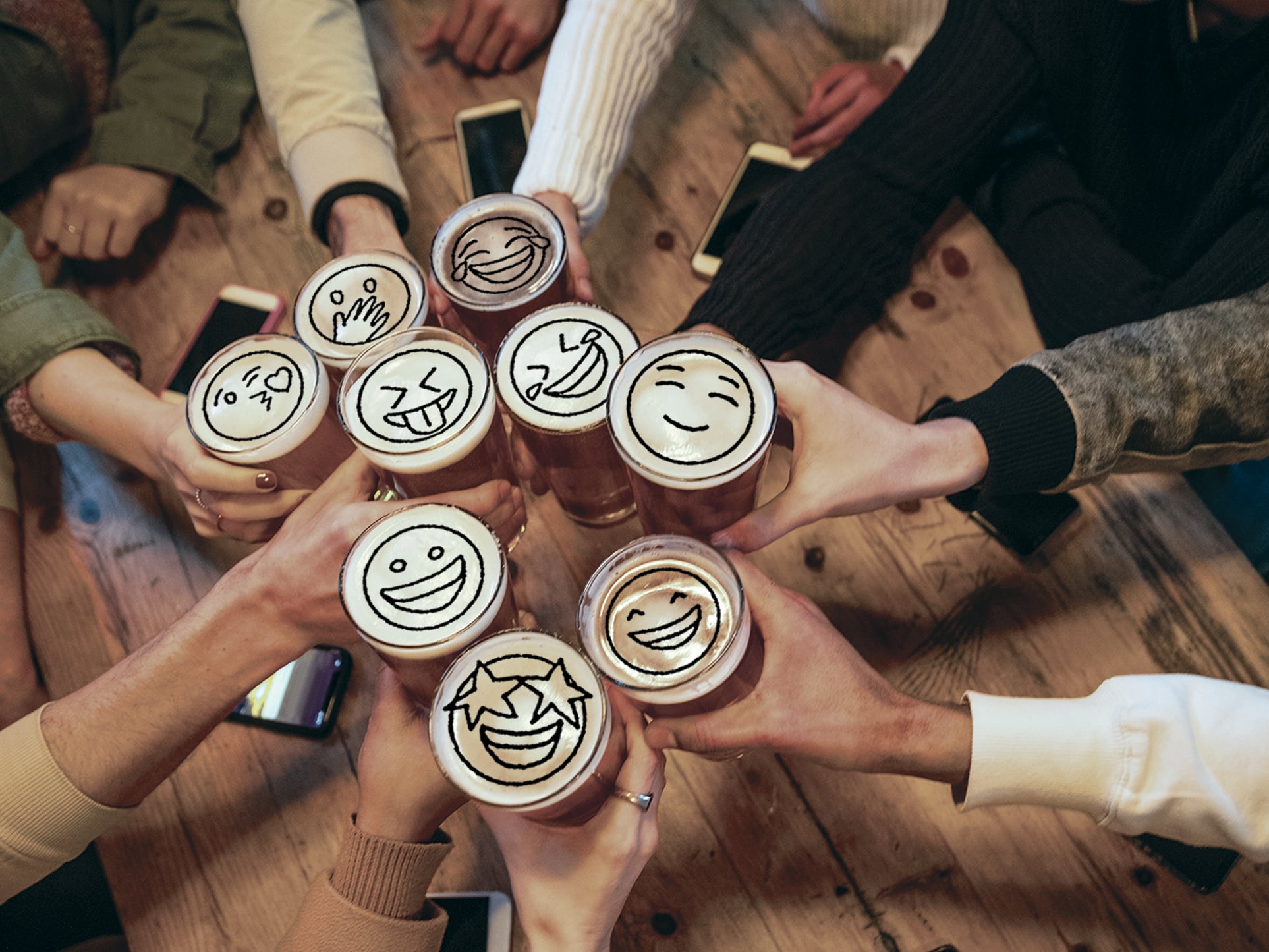
Dudes in the District formed after a few of the City Girls suggested that their boyfriends start a group. Today, the group’s Discord channel has about 1,500 registered members. Sadly, that number hints at the extent of our loneliness problem—but on the other hand, it all but guarantees that if you show up at an outing, you won’t be drinking Scotch alone. Arriving for my first happy hour, I was initially a bit nervous. I felt the fear that comes with meeting strangers, wondering how you might be perceived or judged or valued. But it was easy to fall into the rhythm of the evening. Everyone was friendly, whether they knew each other or were meeting for the first time. Before long, I was just another dude, bantering away about basketball star LeBron James choosing to join the Philadelphia 76ers, a move that may (or may not) finally end my beloved Sixers’ annual practice of ripping my still-beating heart from my chest.
I was energized. This felt good. About two weeks later, I went to another meetup—this time at Kingfisher on 14th Street, for Tuesday-night trivia. Mistiming my Metro ride, I got there almost a full hour early. Fortunately, three dudes were already there. One of them was wearing the group’s T-shirt, which features a drawing of the Capitol building and dudes in the district on the back. On the front is the phrase let’s change that, a nod to what the group is trying to do for loneliness.
By 8 pm, there were 18 District Dudes in the bar, enough for three six-man teams. Our squad huddled in a corner tackling questions. One of my teammates, Christian, answered eight of nine correctly during the music round. Another, Jake, seemed to be auditioning for Jeopardy! My contribution was more modest: I knew that “pistachios” was the answer to a question about food brand names, surely making the Jesuits behind my expensive education proud. In the end, we were no match for the winning team, who called themselves the Fantastic 4Skins. I’m not sure how the Jesuits would feel about that.
The next morning, as I sat down at my desk with a cup of coffee and began another solitary workday, I thought back on the outing. It was just trivia. But I had talked to strangers, been fully in the moment with the guys around me, used my phone to register our trivia answers instead of checking my email. I had fun, dude. We had fun. Logging onto the Discord channel to see what events were coming up next, I remembered something Costello had said to me a few weeks earlier: People could be cooped up all day, working, all by themselves, not getting out to socialize. “So what do you do after work?” he asked me. “You got to find your own little community.”
The Loneliness Test
The UCLA Loneliness Scale can be a useful first step toward determining if you have a problem with social isolation

Are you lonely? A short test might reveal the answer. The UCLA Loneliness Scale was developed in the 1970s to measure social isolation. Revised over time for greater clarity and reliability, it asks 20 questions related to how often people feel disconnected from others. Among them:
➥ How often do you feel alone?
➥ How often do you feel that your interests and ideas are not shared by those around you?
➥ How often do you feel that your relationships with others are not meaningful?
➥ How often do you feel that people are around you but not with you?
For each question, test takers are asked to choose one of four answers, each with a corresponding point value: never (1), rarely (2), sometimes (3), and often (4). The test is scored by adding up the points for all the answers. A score between 20 and 34 is considered to indicate a low level of loneliness, while higher scores are considered to indicate increasingly greater levels.
The UCLA scale and similar measures are far from perfect: They rely on self-reporting, and someone who scores high because they feel lonely on a certain day or during a particular month may not feel the same the next month or year.
Still, studies have shown that people with high scores on the UCLA scale have worse friendships and romantic relationships than people with lower scores, and the test can serve as a useful preliminary screening tool. Some medical organizations use a shortened form of it for that purpose, posing just three questions: How often do you feel that you lack companionship? How often do you feel left out? How often do you feel isolated from others? By itself, the UCLA scale can’t determine whether you have a serious problem with social disconnection. But it can offer an important hint.
You can take the UCLA test for free at psytests.org/ipl/uclaen.html.
The Loneliest Numbers
Facts and figures of social disconnection
48.6%
Percentage of one-person households in DC in 2024, the highest of any US city
Source: Chamber of Commerce analysis of US Census data
A closer look at the decline of social connection in the US between 2003 and 2020:
Time spent alone each month: +24 hours
Time spent engaging with friends each month: -24 hours
Time spent engaging with household family: -5 hours
Time spent engaging with non-household family: -6.5 hours
Time spent socially engaged with others: -10 hours
Source: US Surgeon General’s Report on Loneliness and Isolation
22%
Percentage of US adults who say they often or always feel lonely, left out, or isolated, or that they lack companionship
Source: KFF International Survey of Loneliness and Social Isolation
49%
Percentage of Americans in 2021 who reported having three or fewer close friends
Source: US Surgeon General’s Report on Loneliness and Isolation
A 2024 national survey asked Americans to identify some of the leading causes of loneliness in their lives:
73%
Technology
60%
Mental-health challenges
50%
Remote/hybrid work
66%
Insufficient family time
58%
Society is too individualistic
62%
Overworked/too busy or tired
50%
No religious or spiritual life
Source: Harvard Graduate School of Education
Research suggests that loneliness and social isolation increase the risk of:
➾ Heart attack and stroke
➾ High blood pressure
➾ Diabetes
➾ Infectious disease
➾ Dementia
➾ Depression, anxiety, and suicidality
Source: US Surgeon General’s Report on Loneliness and Isolation
37,000,000
Number of Americans living alone in 2024
Source: US Census Bureau
This article appears in the October 2026 issue of Washingtonian.