Washington is now an epicenter of the AI boom, with billions of dollars being poured into rapidly developing the technology and a federal government that can’t come to a consensus on whether to embrace or contain it.
More companies are moving past novelty chatbots and instead building “agentic” AI systems that can interpret data and make decisions on their own. Among them is a company founded by one of this year’s Tech Titans, Varun Sivaram: Emerald AI automatically slows down AI workloads to relieve power grids during periods of stress.
The government has become an enthusiastic customer of technology that can help agencies automate routine tasks. Last summer, the Pentagon awarded $200 million each to xAI, OpenAI, and Google to build autonomous AI systems that can work with classified information without constant human direction.
Silicon Valley venture capitalists continue to have an outsize influence on Washington’s approach to AI, leading the Trump administration to favor fewer restrictions overall. Office of Science and Technology Policy director Michael Kratsios, a former adviser to Palantir cofounder Peter Thiel, and angel investor David Sacks both lead the President’s Council of Advisors on Science and Technology. In March, the White House released the National Policy Framework for Artificial Intelligence, calling for Congress to preempt what it views as burdensome state laws and avoid creating a new rule-making body for the tech.
Meanwhile, Congress has made progress fighting other issues that AI has exacerbated, such as deepfake pornography and children’s online exploitation. Senator Chris Coons, a Delaware Democrat, introduced the NO FAKES Act, which passed the Senate Judiciary Committee in June, to allow people to sue over unauthorized use of their likeness.
Our region continues to be an incubator of innovative solutions for issues facing the country. Martine Rothblatt’s United Therapeutics is seeking to end the organ shortage with gene-edited pig hearts and kidneys. Robert Link, with eWaste Warriors, teaches non-tech-savvy people how to repair and refurbish their old devices instead of letting them go to a landfill. Maryland governor Wes Moore plans to tackle child poverty, housing access, and other societal challenges with a new innovation lab.
Travis LeBlanc, who helps tech companies navigate regulatory and legal issues at the law firm Cooley, says Washington is no longer just where tech companies come to lobby but somewhere to scale and grow.
“It’s becoming a place where product design, risk management, and regulatory strategy happen in parallel, not in sequence,” he told us.
Here are this year’s 250 Tech Titans.
The Starters
Entrepreneurs, founders, and early-stage CEOs
Reggie Aggarwal, Chuck Ghoorah, and David Quattrone
Cvent
CEO and Founder (Aggarwal), Cofounder and President of Worldwide Sales and Marketing (Ghoorah), and Cofounder and Chief Technology Officer (Quattrone)
Aggarwal and his team believe that as AI floods the world with synthetic content, face-to-face interactions will become businesses’ most powerful tool for earning customer trust. Over the next three years, Cvent plans to invest $1 billion to develop Cvent IQ, its AI engine designed to help organizers plan, market, and manage events.
Randy Altschuler
Xometry
Cofounder and Executive Chairman
One of the largest publicly traded companies in the area, Altschuler’s AI-powered marketplace is making it easier for businesses—including General Electric and BMW—to procure materials from manufacturers, eliminating the guesswork of pricing and lead times for custom parts. This spring, Xometry struck a partnership with Siemens that includes a $50 million investment in the platform.
Josh Araujo
Forterra
CEO
A top provider of autonomous-vehicle systems for the Defense Department, Araujo’s Clarksburg company is a key supplier of vehicles for Ukraine in its war against Russia and also closed a $238 million funding round to increase production.
Kirsten Brecht Baker
Jeenius
Cofounder and CEO
Baker has repositioned Jeenius (formerly Jeenie) to address a $200 billion gap in AI development: Many leading models are trained largely on English-language, Western-centric content, limiting how well they serve other languages and cultures. Through a network of more than 20,000 linguists worldwide, Jeenius licenses multilingual conversational data to AI labs and model developers, helping them build systems that work for more people.
Kiran Bhatraju
Arcadia
Founder and CEO
While working on Capitol Hill, Bhatraju saw how America’s fragmented energy market made it hard for consumers to access clean power. He started Arcadia to help companies and consumers understand their energy use, adopt cleaner energy, and reduce carbon emissions. More than ten years later, customers such as Ford and Burberry use the energy-intelligence platform to manage nearly $100 billion in utility costs.
Jennifer Bisceglie
Interos
Founder and Executive Vice Chair
Bisceglie’s Interos saves more than 100 private- and public-sector clients $3 trillion annually against potential disruptions to the supply chain. In January, the unicorn raised $20 million to expand and refine its monitoring platform that helps clients prepare for risks.
Bryson Bort
Scythe
Founder and CEO
Bort’s threat-emulation software uses “purple teaming,” or simulating both offensive and defensive strategies, to find weaknesses and strengthen an organization’s cyberdefenses. Its latest iteration automatically converts threat intelligence into attack simulations in just minutes—a process that previously took days.
Thomas P. Bossert
Trinity Cyber
Cofounder and President
A onetime homeland-security adviser, Bossert challenges the cybersecurity industry’s reactive model with his firm’s “Full Content Inspection” technology, which removes malicious content from internet traffic in real time before an attack can succeed—a method that prevented more than 2.3 million exploit attempts in the first half of the year alone, according to a company report.
Michael Chasen
Class
Cofounder and CEO
Chasen is trying to solve one of online learning’s most persistent problems: helping instructors determine whether the people behind muted microphones and blank screens are actually paying attention. That doesn’t include just school-age students but also adults in workforce-training programs: A 2026 survey found that only 21 percent of employers consider live virtual trainings highly successful, underscoring a new market for Class’s engagement tracking, breakout-room monitoring, and post-session analytics.
Matthew Desch
Iridium Communications
CEO
In June, Desch struck a deal for Iridium to be acquired by California-based Rocket Lab. The merger will combine Iridium’s global sat-ellite network and Rocket Lab’s launch and satellite-manufacturing capabilities, making the company a stronger competitor against SpaceX’s Starlink operations.
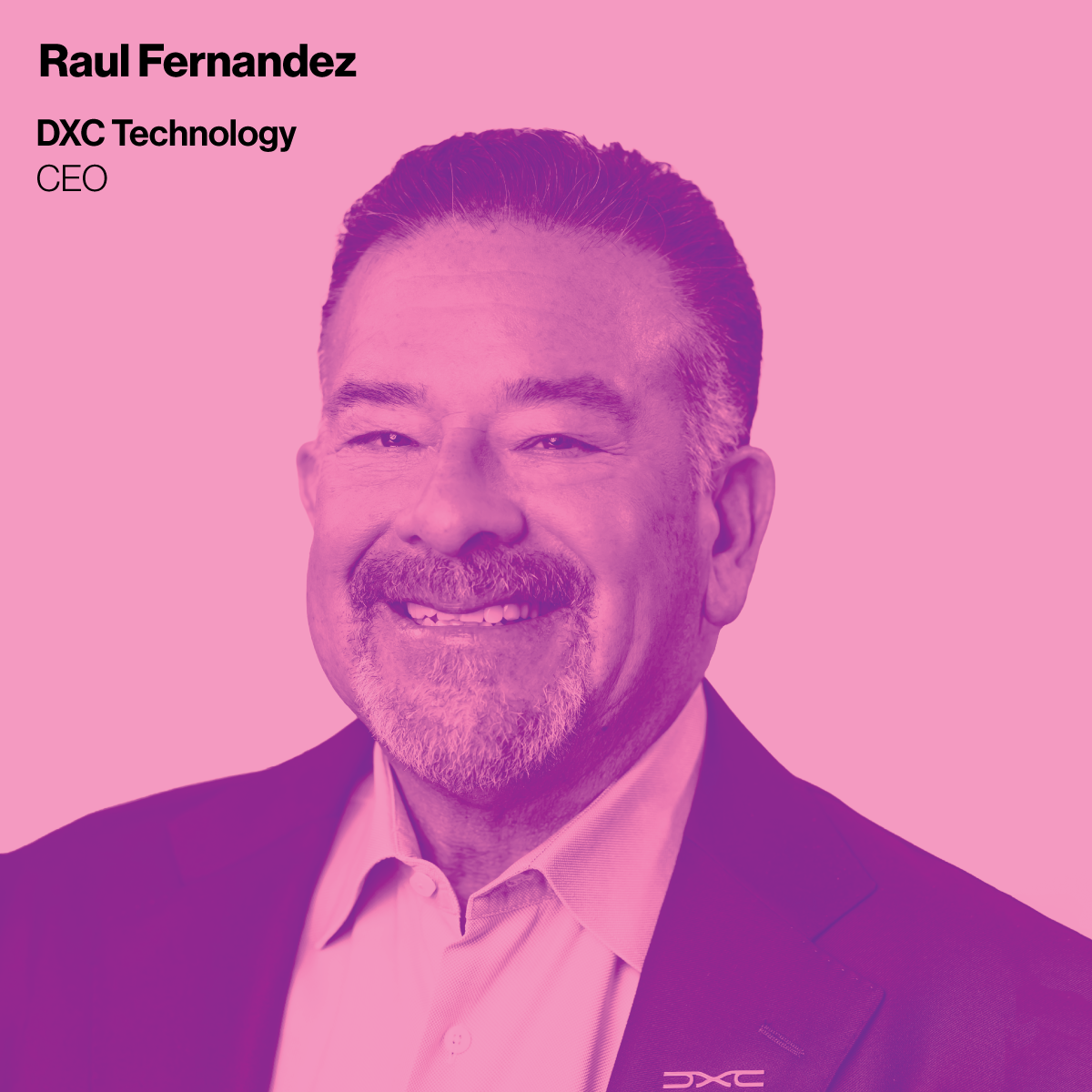
Raul Fernandez
DXC Technology
CEO
Besides being a vice chairman of Monumental Sports & Entertainment, Fernandez helms the public tech consulting firm that provides software and IT services to private and public institutions across the globe, including Anthropic and the US Army. One major deal of late: developing software for Ferrari’s new supercar, the F80.

Alix Guerrier
DonorsChoose
CEO
Guerrier’s DonorsChoose puts funds from everyday donors directly into teachers’ hands, helping them get materials they need for their classrooms. With educators at 90 percent of US public schools posting projects on the site, he has a unique insight on their priorities: A growing number of teachers are requesting AI-enabled tools for students with disabilities and those learning English.
Blake Hall
ID.me
Founder and CEO
Nearly 60 percent of US adults have a digital identity wallet through ID.me, letting them sign in across websites without re-verifying their identity each time. The company recently raised $340 million, pushing its valuation past $2 billion as it works toward its goal of giving every American a secure digital identity. Now ID.me is partnering with Servos and ServiceNow to modernize identity verification for Medicaid and SNAP.
Michael Huppe
SoundExchange
President and CEO
As intellectual-property law struggles to keep pace with the proliferation of AI-generated music, Huppe fights for artists and others who own the rights to music to be fairly compensated for use of their recordings. Under his leadership, SoundExchange’s platform has become a global standard for tracking usage and collecting royalties, dis-tributing nearly $1 billion to creators this past year and extending its reach abroad through a partnership with a new, first-of-its-kind rights organization in the United Arab Emirates.
Josh Kamdjou
Sublime Security
Founder and CEO
Kamdjou spent ten years in offensive cybersecurity at the Pentagon, where phishing proved the fastest way into any network. His Sublime platform is the tool that would have stopped him, automatically detecting and preventing email attacks using systems tailor-made to each organization’s needs. Spotify and Lockheed Martin are big names on its clientele roster.
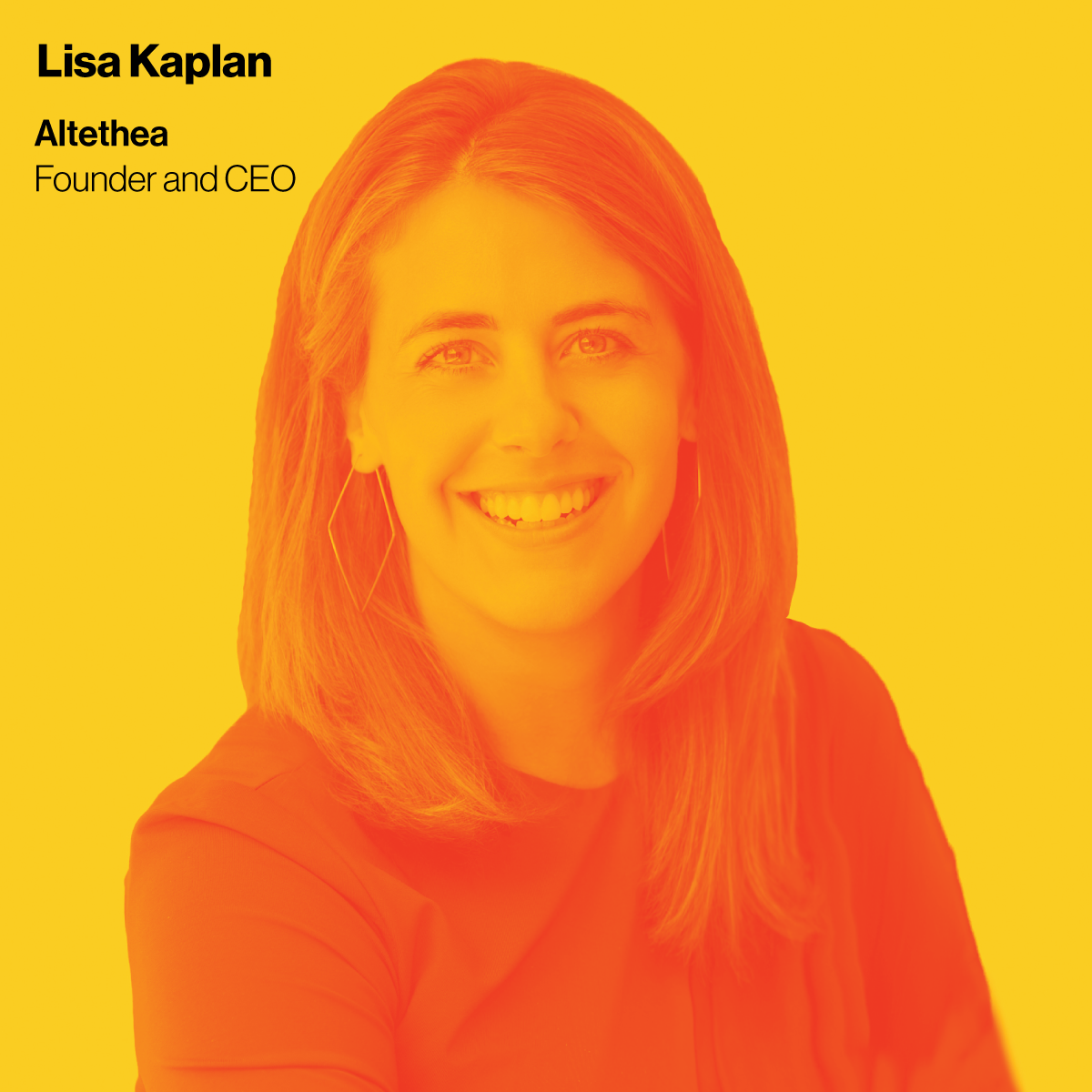
Lisa Kaplan
Alethea
Founder and CEO
An expert on political disinformation and information warfare, Kaplan uses Alethea’s Artemis threat-hunting platform to uncover co-ordinated influence operations, including an AI-generated propaganda campaign on TikTok de-signed to promote Iran’s military strength. The company recently introduced takedown agents to the platform that identify and remove malicious content before it can spread at scale.
Robert M. Lee
Dragos
Cofounder and CEO
This summer, Lee struck a major deal, giving Accenture a majority stake in Dragos. The Hanover, Maryland, company will also absorb two other cybersecurity firms, turning it into an all-in-one defense system for the physical infrastructure that keeps the world running.
TJ Leonard
Storyblocks
CEO
Leonard sees AI not as a replacement to human creativity but as a tool for enhancing it. Storyblocks’ new AI-powered voiceover and editing tools are designed to give creators more control over their work, he says, while its library of more than 6 million photos, videos, and audio clips remains entirely human-made.
Ray Martinez
Everfi
CEO
Martinez is turning Everfi’s no-cost digital lessons into a bridge between banks and low-income communities, helping both teens and adults learn personal-finance skills, such as reducing debt or saving for retirement, while giving institutions data showing where their money went and whom it helped.
Dave Merkel
Expel
Cofounder and CEO
Merkel has put good customer service at the center of Expel’s cybersecurity services, an approach that has earned his firm more than a billion dollars. On its blog, threat-intelligence analysts investigate malware threats and explain how businesses can protect themselves.
Ben Miller
Fundrise
Cofounder and CEO
For nearly 15 years, Miller has worked to give everyday investors access to the same assets traditionally reserved for the ultrawealthy. His online investment platform has since invested in more than $7 billion worth of real estate and now manages $2.87 billion in equity for 385,000-plus investors. His latest launch, RealAI, applies that mission to real-estate intelligence.
Haroon Mokhtarzada
Rocket Money
CEO and Chairman
With more than 10 million users, Mokhtarzada’s award-winning company remains a top personal-finance app that has saved customers over $2.5 billion through bill negotiations and subscription cancellations.
Ramu Potarazu
Lynk
CEO and Chairman
Fewer than 5 percent of low-income countries have access to 5G coverage, and Lynk is working on getting them connected. In a handful of island nations, its network of low-orbit satellites enable intermittent basic messaging and alert services and, soon, access to Whatsapp and other mobile apps. An even more ambitious goal: providing global continuous service by next year.
Vijay Ravindran
Floreo
Founder and CEO
Ravindran is working toward turning Floreo from a promising virtual-reality learning tool into a clinically proven autism and ADHD therapy—one that doctors could prescribe and Medicaid programs could help families afford. If authorized, the platform would be one of the first FDA-approved digital therapies addressing social and communication challenges associated with autism, such as being unable to interpret social cues and having difficulty navigating unsafe situations.
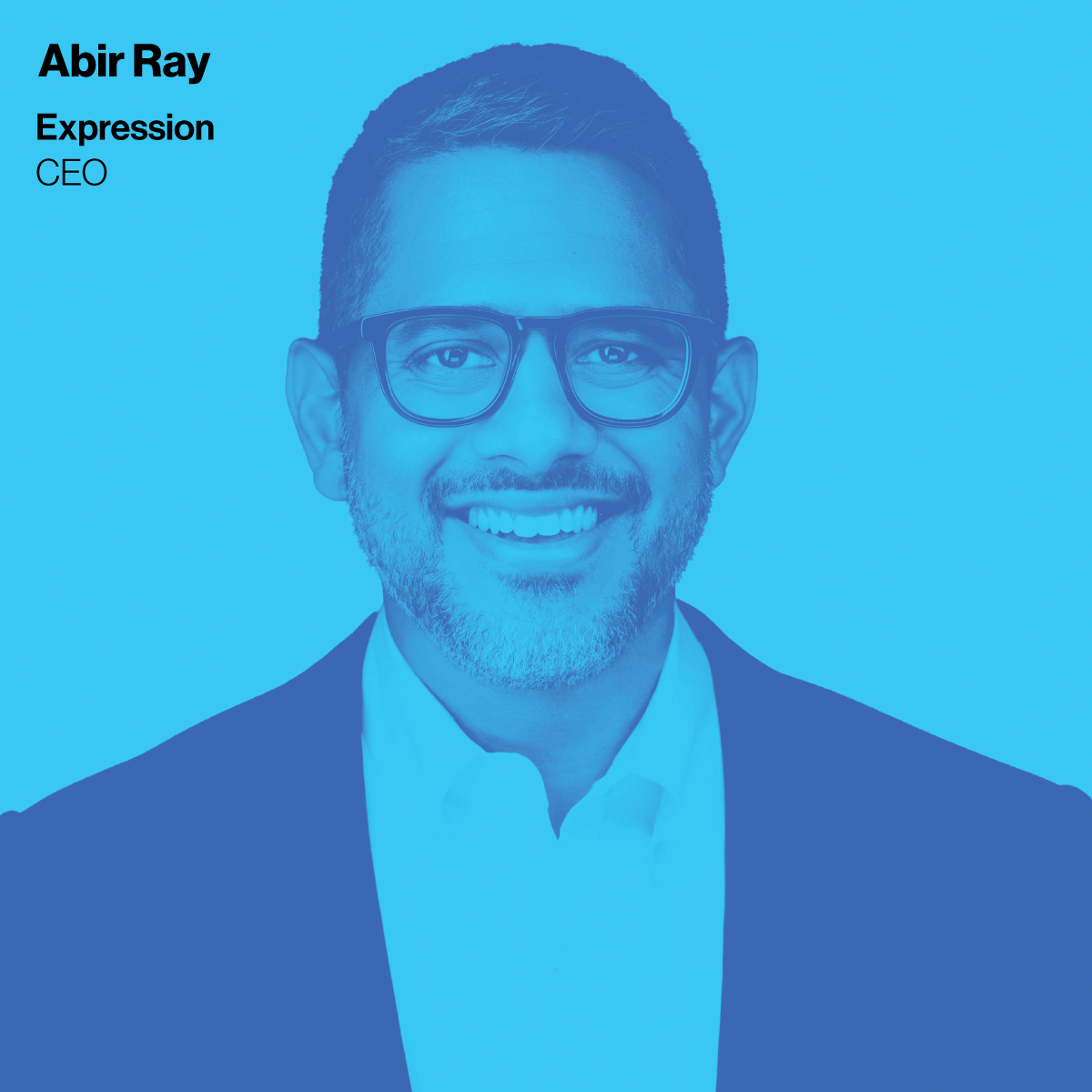
Abir Ray
Expression
CEO
In its latest effort to help the military manage electromagnetic spectrum—the radio frequencies used by radars and satellites—Expression is deploying “high-assurance” AI agents on sensitive national-security missions. The systems automate time-consuming routine tasks while allowing government analysts to review their work and intervene when necessary, which Ray says reduces some counterintelligence work from weeks to hours.
Martine Rothblatt
United Therapeutics
Founder, Chairperson, and CEO
Rothblatt is moving her decades-long quest to end the organ-donor shortage closer to reality. Since late last year, United Therapeutics has launched the world’s first clinical trial of gene-edited pig-kidney and -heart transplants while developing a device that can salvage rejected lungs.
Rick Rudman
Curbio
Cofounder and CEO
A serial entrepreneur, Rudman went through a lot of hurdles to renovate his home and vowed to prevent the same thing from happening to others. His Potomac-based Curbio handles repairs and staging while sellers sit back and watch the progress unfold through an app.
John Serafini
HawkEye 360
CEO and Founder
Serafini’s geospatial-analytics company went public in May, debuting at a $3.15 billion valuation and underscoring investors’ growing appetite for defense companies. HawkEye—which operates a fleet of more than 30 satellites that collect radio-frequency signals and turn them into intelligence about maritime activity, difficult-to-monitor regions, and sources of GPS interference—aims to become a central hub for signals intelligence.
Husein Sharaf
Cloudforce
CEO and Founder
Sharaf’s nebulaONE platform gives universities and other organizations—now more than 3 million users—secure access to leading AI models while keeping their data private and costs low. In January, Cloudforce secured $10 million from Owl Ventures and Microsoft to expand the platform into the healthcare, education, and public sectors worldwide.
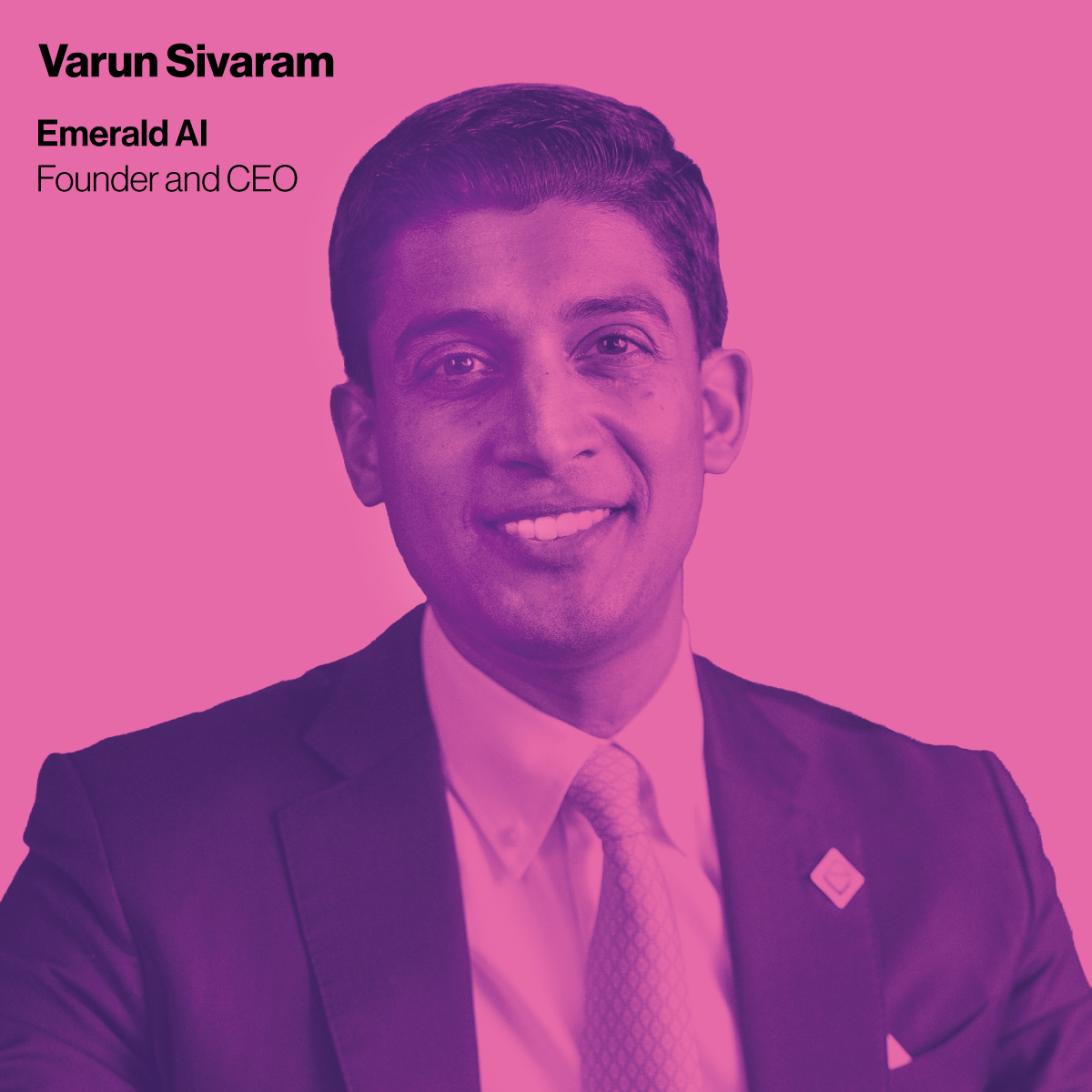
Varun Sivaram
Emerald AI
Founder and CEO
As the US power grid struggles to meet the demands of data centers, Sivaram is offering a potential solution. His Nvidia-backed platform pauses or redirects AI workloads to other parts of local power grids during periods of stress. Emerald AI is also working with Nvidia and top power companies to develop AI facilities that can adapt to the grid’s needs.
Matt Theurer and Lauren Stack
HyperSpectral
Cofounder, President, and CEO (Theurer) and Cofounder and COO (Stack)
Theurer and Stack’s AI-powered spectroscopy platform can detect pathogens and contaminants in food-processing and healthcare facilities in just minutes, a feat that used to take days. Last fall, HyperSpectral received $7 million in funding to double its workforce.
Steve Trundle
Alarm.com
President and CEO
Trundle continues to expand Alarm.com’s $2.75 billion secu-rity platform with new tech designed to keep homes and businesses safe. This summer, Alarm.com stepped into the fire-safety market with its first fire-communication device for commercial properties, which sends users real-time alerts.
Rick Wagner
Agile Defense
CEO
Agile Defense won three contracts worth at least $247 million to modernize the Pentagon and the DOJ, including embedding engineers with military units so troops can learn to use and build AI tools for live missions.
Trenor Williams
Socially Determined
Founder and CEO
A former family physician, Williams taps data on social determinants—such as housing and food access—to give healthcare providers and insurers a fuller picture of their patients’ health. Because states resumed annual Medicaid eligibility checks, more than 18 million people have been disenrolled. This year, Socially Determined released a model that identifies eligible beneficiaries who face barriers to renewing their coverage.
Will Wilson
Antithesis
Cofounder and CEO
Wilson spotted a pain point in many tech companies: constant bugs that slowed down production for months. His Vienna-based Antithesis stress-tests software with simulated system crashes, network failures, and unusual user behavior to uncover hard-to-find bugs before they cause problems. In December, the company closed a $105 million funding round.
Alex Wirth
Quorum
Cofounder and CEO
Wirth’s Quorum is an omni-tool for public-affairs pros at nonprofits and large corporations alike, offering users real-time legislation tracking, PAC management, and ad-campaign deployment. In July, the platform secured an investment from the Chevy Chase firm Enlightenment Capital to develop more AI tools.
John B. Wood
Telos
CEO and Chairman
Wood is putting his Xacta platform to work on one of the government’s most tedious jobs—documenting that its intelligence, surveillance, and reconnaissance systems com-ply with security standards. This spring, federal agencies got the okay to use Xacta with highly sensitive information, while the Air Force adopted the technology for its global intelligence operations.
Official DC
Appointees, electeds, and government officials
Brendan Carr
Federal Communications Commission
Chairman
Carr has rapidly marshaled the FCC’s powers to further the Trump administration’s goals, launching investigations into companies such as ABC for perceived liberal bias. He also lifted a longstanding restriction on merger size this year to allow the creation of the nation’s largest broadcaster, with politically conservative Nexstar absorbing smaller rival Tegna.
Chris Coons
US Senate
Coons, a Democrat and the senior senator from Delaware, introduced the “NO FAKES Act,” which passed the Senate Judiciary Committee in June. It would create new protections against AI-enabled replicas and deepfakes and allow people to sue over the unauthorized use of their likeness.
Andrew Ferguson
Federal Trade Commission
Chairman
Ferguson has brought a major shift to the FTC, pulling back on his predecessor’s focus on Big Tech antitrust enforcement while taking aim at deceptive business practices. Ferguson’s FTC has also prominently supported Trump-administration political priorities, such as probing a California-based diversity, equity and inclusion (DEI) consultancy and digital-advertising standards that allegedly disadvantaged conservative viewpoints.
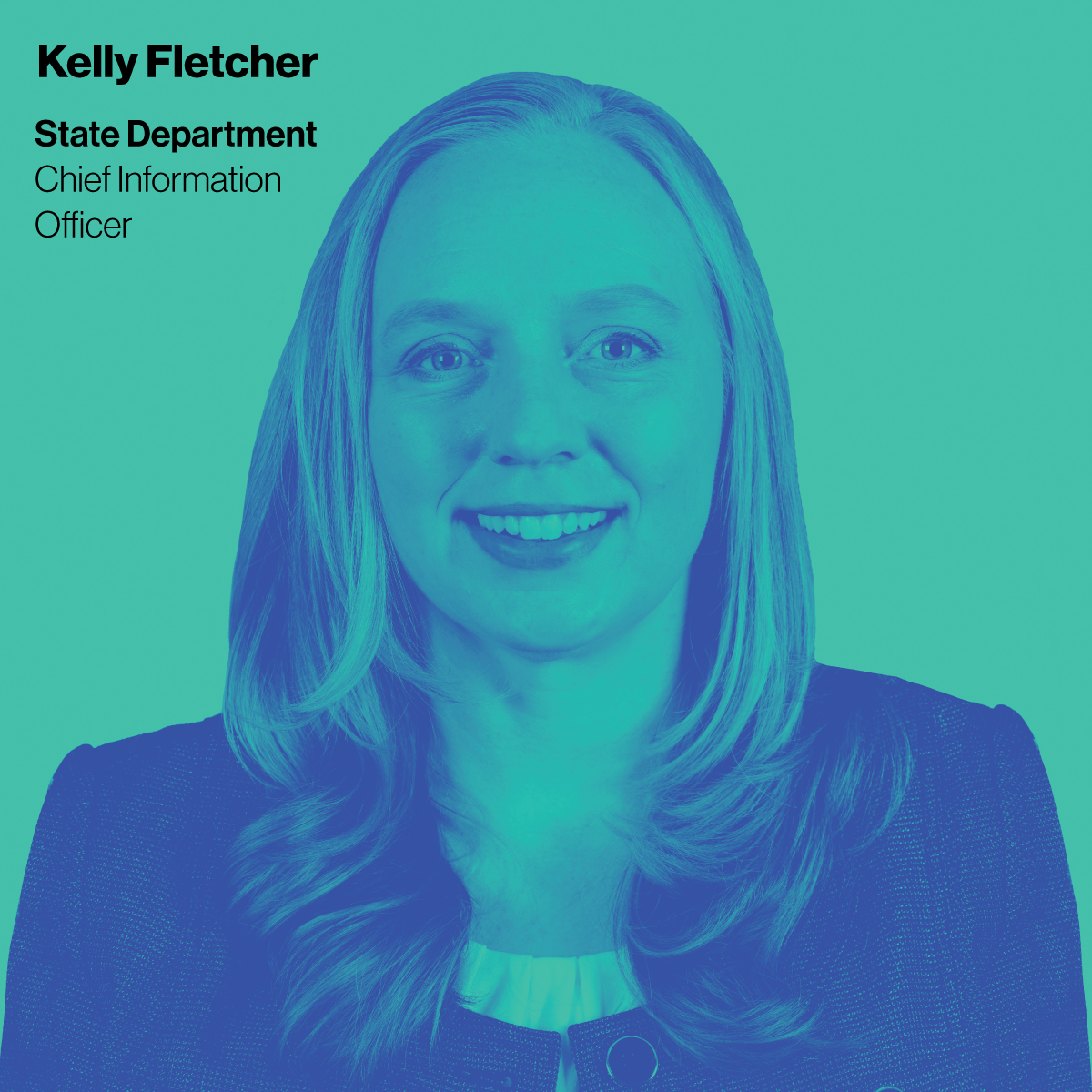
Kelly Fletcher
State Department
Chief Information Officer
Under Fletcher’s leadership, the State Department has been experimenting with AI tools, including agentic AI for administrative support and generative AI for rapid translation. Before taking on the State Department role in 2022, Fletcher spent much of her career in IT positions at the Department of Defense.
Bill Frauenhofer
Commerce Department
Executive Director for Semiconductor Investment and Innovation
Frauenhofer, formerly Morgan Stanley’s head of West Coast technology investment banking, has taken on executive leadership of the CHIPS Act, overseeing more than $50 billion of government funding to onshore semiconductor manufacturing. His office has since made a string of investments, including in upstream rare-earth suppliers and a project for IBM to build the first US quantum-chip foundry.
Darío Gil
Department of Energy
Undersecretary for Science
Gil oversees the nation’s largest federal sponsor for basic research in the physical sciences and has been active in the past year, including launching the Genesis Mission, which seeks to apply AI and quantum computing to double the productivity of American science and engineering within a decade. Previously, when he was a vice president of research at IBM, his team developed the world’s first cloud-accessible quantum computer.

Anna Gomez
Federal Communications Commission
Commissioner
Gomez, the only Democrat among three FCC commissioners this year, has taken on a nontraditional and influential role in pushing for companies to reject her own agency’s requests and demands. Her public letter in May to Disney CEO Josh D’Amaro, in which she encouraged the company to use legal tools to fight the FCC’s control over its broadcasts, made headlines.
Paul Kihn
District of Columbia
Deputy Mayor for Education
Kihn worked with local economic-development leaders to launch TalentCapital.ai, a tool that connects employment seekers to open jobs, in an effort to harness agentic AI’s powers to ease the impact of mass federal layoffs. His team has also set up MOST.DC.gov, a family portal aggregating out-of-school-time offerings, and a city data platform to analyze factors affecting young people’s wage potential.
Michael Kratsios
White House
Science Adviser to the President and Director, Office of Science and Technology Policy
The former chief of staff to Palantir cofounder Peter Thiel has put the White House’s focus on cutting red tape for AI and other emerging technologies, releasing a national AI framework and a quantum-computing executive order while welcoming input from Silicon Valley executives. He was previously chief technology officer for Trump’s first term and a managing director of Scale AI.
Scott Kupor
Office of Personnel Management
Director
As head of the federal government’s HR department, Kupor is spearheading the Trump administration’s Tech Force program, which is placing about 1,000 early-career technologists across federal agencies. The engineers will be working on “high impact” technological initiatives, including AI implementation and data modernization.
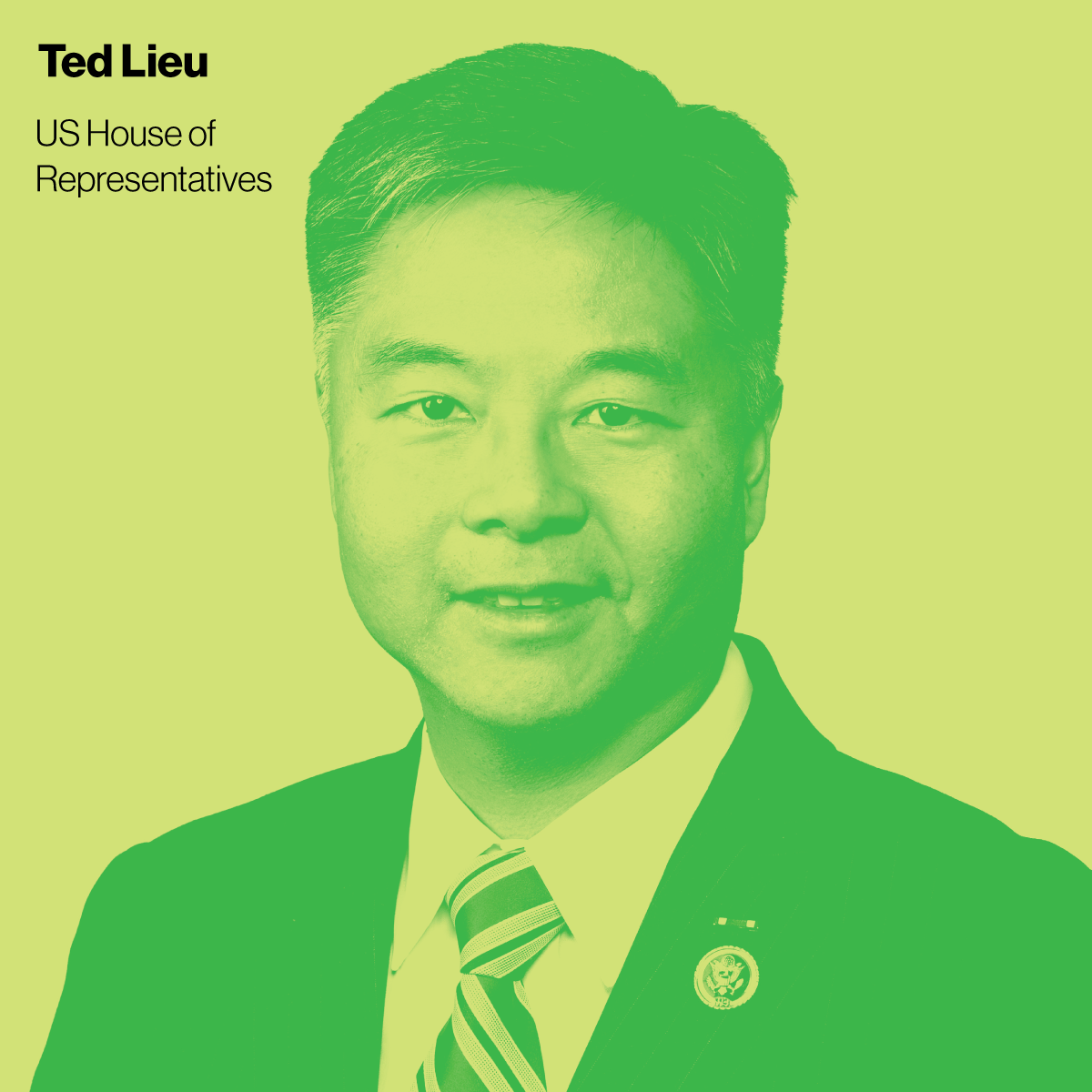
Ted Lieu and Jay Obernolte
US House of Representatives
In April, the two California congressmen introduced the American Leadership in AI Act, which brings together many of the recommendations they developed as heads of the Bipartisan Artificial Intelligence Task Force. The legislation would strengthen the US capacity to measure and evaluate AI, support the build-out of research infrastructure, and expand AI education.
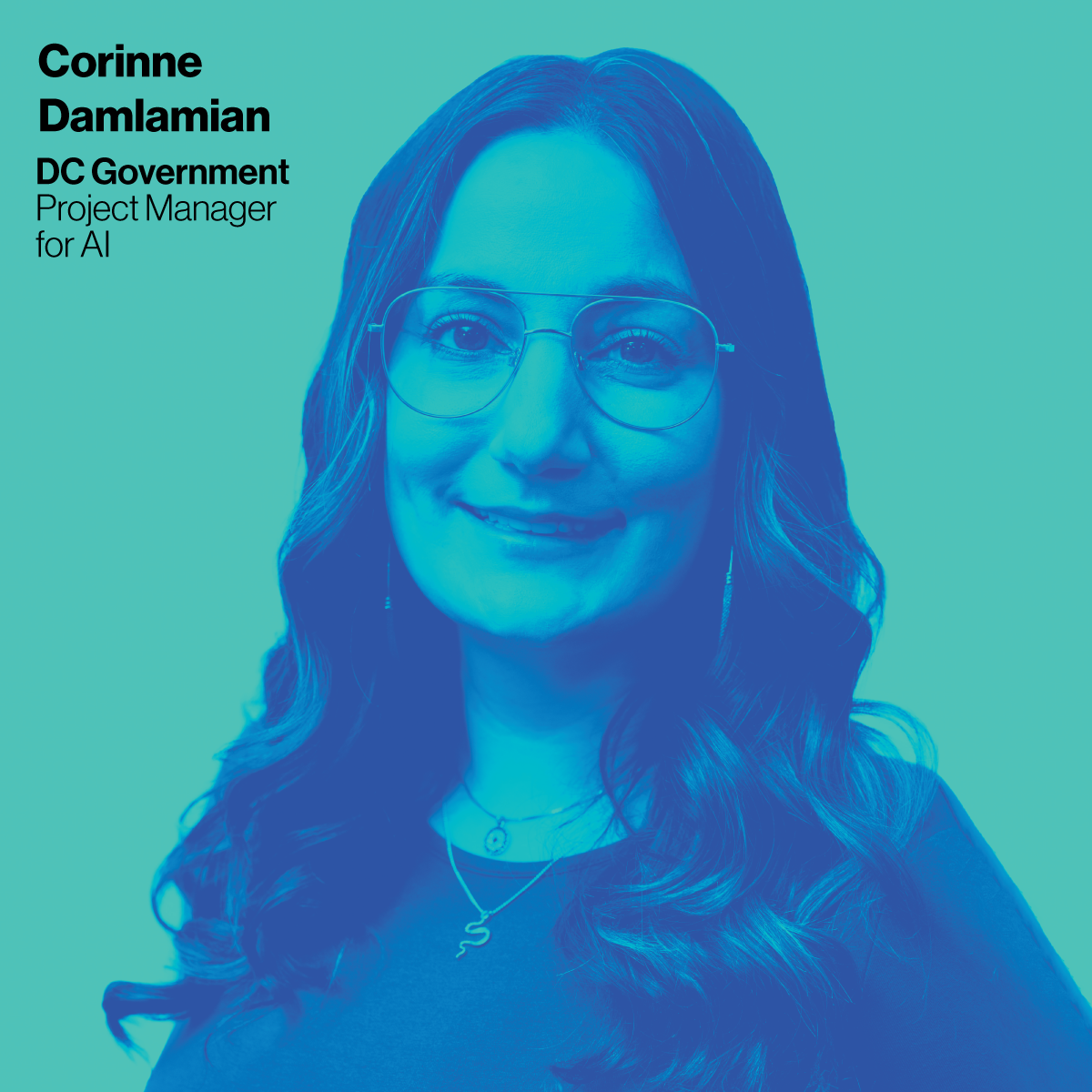
Stephen N. Miller and Corinne Damlamian
District of Columbia
Chief Technology Officer (Miller) and Project Manager for AI (Damlamian)
Miller leads DC’s Artificial Intelligence Task Force, which is guiding the city’s efforts to implement AI in ways that are ethical, safe, and efficient. The District became the first major city to require responsible AI training for government workers earlier this year. Damlamian, on his team, is working to formulate and implement these new training programs.
Wes Moore and Katie Savage
State of Maryland
Governor (Moore) and Secretary, Department of Information Technology (Savage)
The Maryland governor is pursuing an economic strategy focused on “lighthouse” industries like quantum computing, life sciences, and aerospace. He is also seeking to make the Discovery District at College Park a leading quantum-research hub and launched the Maryland AI Innovation Lab in May. Savage, who previously helped develop the Defense Department’s Covid pandemic response, has been upgrading the state’s cybersecurity protections for the agentic-AI era.
Arvind Raman and Craig Burkhardt
Department of Commerce
Undersecretary for Standards and Technology and Director, NIST (Raman), and Deputy Undersecretary for Standards and Technology and Deputy Director, NIST (Burkhardt)
Raman, a former engineering dean at Purdue, took over as head of NIST in June as it seeks to help accelerate the national rollout of AI technologies. He takes the reins from Burkhardt, the former acting NIST head, who launched an AI manufacturing center for the institute in December.
Buddy Rizer
Loudoun County Department of Economic Development
Executive Director
Rizer is nicknamed the “Godfather of Data Center Alley” for transforming Loudoun into the world’s number-one data-center market. The industry has created some 15,000 jobs and put Loudoun County on the high-tech map, though the 53 million square feet of permitted data centers has drawn recent pro-test from some residents for its pollution and electricity usage.
Mike Rounds and Martin Heinrich
US Senate
Chairs, Artificial Intelligence Caucus
Rounds (R-SD) and Heinrich (D-NM) chair this bipartisan Senate group working to develop policy that balances the risks and rewards of AI to support the US economy. Earlier this year, they introduced the CREATE AI Act, which would set up national AI computational-research resources that could be used by researchers and students across the nation.
General Joshua M. Rudd
National Security Agency/Central Security Service
Director and Commander, US Cyber Command
Rudd, who was confirmed for the powerful dual role in March, told Congress that investing in AI tools to outflank adversaries would be a priority for him, with an aim of agile cooperation across the government, private sector, and global partners. He was previously a Special Forces officer and deputy commander for US Indo-Pacific Command.
David Sacks
Co-Chair
President’s Council of Advisors on Science and Technology
Sacks, the prominent venture capitalist, made his mark in the first year of Trump’s second term as the White House’s AI czar, pushing policies favorable for AI investment and US technological exports. He shifted full-time to the advisory role in March as PCAST co-chair, leading a small group of tech executives in bringing suggestions to Trump.
Cameron Stanley
Pentagon
Chief Digital and Artificial Intelligence Officer
Stanley took the helm of the Pentagon’s AI efforts in January as the Trump administration has been pushing the department to accelerate its adoption of AI, despite public debate about safeguards surrounding the powerful new tools. He previously led the US military’s machine-learning Project Maven initiative and most recently worked on national-security issues at Amazon Web Services.
Mark Warner
US Senate
Mark Warner, senior senator from Virginia, proposed in July a roadmap for dozens of pieces of legislation to curb AI’s harms while ensuring US competitiveness. Among them were measures to address child safety, energy usage, and deepfakes. Warner has urged Congress to move quickly to keep up with the technology’s advancement.
Stephen Winchell
Defense Advanced Research Projects Agency
Director
Winchell, who previously oversaw AI and automation projects at the Pentagon, has been pushing DARPA to work with the private sector to more rapidly commercialize the agency’s high-risk moonshot R&D work. Under Winchell’s leadership, DARPA is studying futuristic technical problems like how to harness and capture an asteroid or how to accurately navigate in the region between Earth and the moon.
Ron Wyden
US Senate
The senior senator from Oregon since 1996, Wyden has for years led efforts in the Senate to increase transparency surrounding federal surveillance and wiretapping activities. In the past year, the Democrat has warned that the Trump administration is using surveillance powers in expansive ways to conduct warrantless searches of political opponents, and he cosponsored a bill that would ban ICE and CBP from using facial-recognition technologies.
Money Folks
VCs, investors, and bankers
Jenny Abramson
Rethink Impact
Founder and Managing Partner
Abramson writes multimillion-dollar checks to female and nonbinary tech execs who are working to solve issues in health, climate, and education. The latest additions to her portfolio: Seven Starling, a maternal-mental-health app, and Nectir, which builds personalized AI assistants for educators.
Dan Barker, Dahna Goldstein, and Kate Goodall
Halcyon
President and CEO, Halcyon (Barker) and Managing Partners, Halcyon Venture Partners (Goldstein and Goodall)
While Barker is bringing the impact-driven accelerator to more cities around the US and the Caribbean, Goldstein and Goodall are backing companies working to dis-mantle structural inequities. That includes DenZen, an insurance-tech platform that covers housing payments if a tenant loses their job, and Suyana, which monitors weather conditions with satellite data and sends automatic payouts to businesses and farmers without the lengthy claims process.
Joe Benevento, Tom Weithman, and Jennifer O’Daniel
Virginia Innovation Partnership Corporation
President and CEO (Benevento), Chief Investment Officer and Vice President, Investment (Weithman), and Senior Investment Director (O’Daniel)
Since the state-backed accelerator’s creation five years ago, the amount of venture-capital investment in Virginia startups has nearly doubled, reaching $2.9 billion in 2025, according to a National Venture Capital Association report. Of course, VIPC wants more: A collaboration with the state’s six research universities aims to double the number of startups coming out of the schools.
Jason Booma, Evan DeCorte, Jim Fleming, Patrick Hendy, Monish Kundra, and John Siegel
Columbia Capital
Partners
Booma and his partners have built Columbia Capital into such a force in digital infrastructure that Austin-based Digital Reality, one of the world’s largest data-center companies, is paying three-fourths of a billion dollars to ac-quire its $9 billion investment firm and gain an edge in the AI infrastructure boom. The deal is expected to close later this year.

Phil Bronner and Phil Herget
Ardent Venture Partners
Cofounder and Managing Partner (Bronner) and Cofounder and General Partner (Herget)
Longtime investors Bronner and Herget are doubling down on AI—particularly software that automates work usually done by humans—and are backing companies with tools that do everything from forecasting geopolitical events to generating recipes based on photos of food.
Steve Case, Ted Leonsis, Tige Savage, Todd Klein, and David Hall
Revolution
Chairman and CEO (Case), Cofounder and Partner, Revolution Growth (Leonsis), Managing Partner, Revolution Ventures (Savage), Managing Partner, Revolution Growth (Klein), and Managing Partner, Rise of the Rest Seed Fund (Hall)
More than 20 years ago, Case and Leonsis started Revolution with the belief that innovation isn’t confined to Silicon Valley. A recent surge of investments in DC-area startups and more than $2 billion raised by the operation’s 200-plus portfolio companies show the duo wasn’t wrong.
Michael Clarke, Michael Graninger, and Barron Martin Jr.
Sands Capital
Managing Partners
Sands invests at every level of a company’s growth—even after it has become massively successful. (Legora and Anthropic are a couple examples.) In March, it closed a $1.1 billion fund focused on tech companies in fintech, e-commerce, AI, and cloud-native software.
Thanasis Delistathis and John Burke
PROOF
Cofounders and Managing Partners
This Reston firm invests in “hypergrowth” companies, or those making exponential profit. The latest hits in their massive portfolio: the military-workflow software Onebrief and Hydra Host, which connects independent data centers with businesses needing high-performance computing.
Lawson DeVries, Steve Fredrick, and Julia Taxin
Grotech Ventures
Managing General Partner (DeVries), General Partner (Fredrick), and Venture Partner (Taxin)
The Owing Mills trio are using Grotech’s $310 million fund to back a new wave of practical-AI companies. Instead of flashy consumer chatbots, their 40-plus portfolio consists of business-to-business software that helps retain customers, manage data, automate tasks, and defend computer systems.
Monica Brand Engel and Jonathan Whittle
Quona Capital
Cofounders and Managing Partners
Seasoned investors Engel and Whittle are backing fintech companies with a mission to increase access to financial services across Latin America, Africa, India, and Southeast Asia. Their portfolio—which includes the Brazilian asset-backed lender Creditas and the Indian agri-platform Arya.ag—generated $3 billion in revenue last year.
Mina Faltas
Washington Harbour Partners
Founder and Chief Investment Officer
Faltas built his Arlington firm around the idea that DC has an edge that NYC and San Francisco lack—he’s deploying nearly $6 billion across cybersecurity and enterprise-software companies that are selling tech to the federal government. So far, he hasn’t been wrong: OpenAI and Anduril are just two of Washington Harbour’s successful investments.
Mark Frantz and Kevin Robbins
Blue Delta Capital Partners
Cofounders and Managing Partners
Frantz and Robbins write multimillion-dollar checks to companies that sell technology to the federal government, such as those that defend against cyberattacks and hostile drones. And unlike other investors, Blue Delta doesn’t seek out ownership, so founders don’t have to surrender control.
David Grain, Ted Manvitz, Jenny Kashdan, and Michael McKenzie
Grain Management
CEO and Founder (Grain), Managing Director and Head of Investments (Manvitz), Managing Director and Co-head of US Investments (Kashdan), and Managing Director (McKenzie)
Coming up on 20 years, Grain’s team remains set on keeping the world connected. Of late, that means putting its $12 billion to work in the infrastructure needed to meet the demands of AI—including data centers, cooling systems, and fiber networks.
Dayna Grayson and Rachel Holt
Construct Capital
Cofounders and General Partners
Grayson and Holt got ahead of the game by writing checks for startups advancing tech in what they call “foundational” industries—manufacturing, logistics, defense, and energy—before other investors caught on. They now manage $750 million across three funds, with portfolio companies such as Hadrian already landing Navy contracts.
Carter Griffin and Jon Seeber
Updata Partners
General Partners
Griffin and Seeber’s Updata Partners remains a silent powerhouse in the business-to-business software scene, closing a massive $875 million funding round that brought the cash under its management to more than $2.6 billion. Another recent win for their portfolio: The Chicago cloud-management platform Nerdio achieved unicorn status last spring.
Ron Gula and Cyndi Gula
Gula Tech Adventures
President (Ron) and Managing Partner (Cyndi)
Tenable vets Ron and Cyndi Gula have poured more than $200 million of their own money into startups working to strengthen our country’s cyberspace while helping nonprofits assess and improve their cyberdefenses.
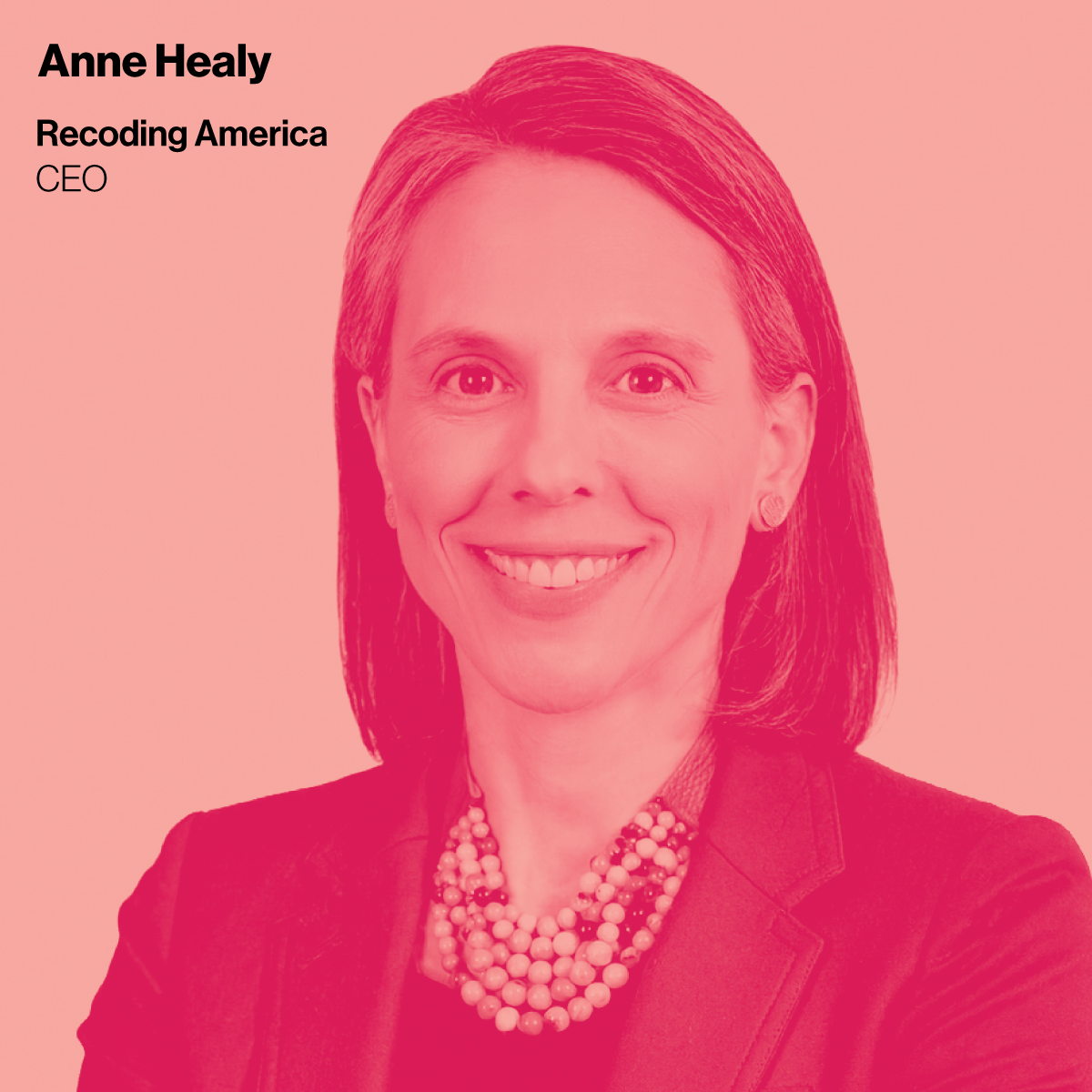
Anne Healy and Jennifer Pahlka
Recoding America
CEO (Healy) and Senior Adviser and Board Chair (Pahlka)
After DOGE’s indiscriminate approach to cutting the federal government, Healy, a former US AID official, and Pahlka, former deputy chief technology officer under Obama, are taking a different approach to government reform. They have an ambitious goal to spend $120 million over six years to rebuild how the government hires employees, buys technology, and delivers services at the local, state, and federal levels.
Jim Hunt, Daniel Hanks, and Steve Smoot
Lavrock Ventures
General Partner (Hunt) and Managing Partners (Hanks and Smoot)
The Lavrock trio has raised $125 million for their third and largest fund to back the new defense-industrial base, investing in companies that can turn machines such as long-range precision weapons and hypersonic missiles into affordable, mass-produced systems.
Jack Kerrigan, Richard Moxley, Steve Pann, Mark Spoto, and Peggy Styer
Razor’s Edge Ventures
Cofounders and Managing Partners
This billion-dollar Reston firm led by former national-security execs is putting $560 million to work building the next generation of defense companies with an emphasis on AI-powered warfare such as autonomous maritime defense systems and advanced sensors.
Troy A. LeMaile-Stovall, Tammi Thomas, and Jack Miner
TEDCO
CEO (LeMaile-Stovall), President (Thomas), and Chief Investment Officer (Miner)
TEDCO—short for the Maryland Technology Development Corporation—has become the hub of technological innovation in the state, investing millions in local early-stage startups and providing business assistance to entrepreneurs. The investments are paying off, too. In 2023 alone, their portfolio companies generated $2.7 billion in economic activity in Maryland.
Mike Lincoln
Cooley
Vice Chair
Lincoln has spent nearly three decades building Cooley’s presence in the region as it has become the go-to law firm for East Coast startups looking to secure acquisitions and millions in funding. Recently, he led the team advising Armadin, an AI-native cybersecurity company, on a record-breaking $189.9 million funding round.
Nigel Morris
QED Investors
Cofounder and Managing Partner
Morris, who shook up the banking world with Capital One, predicts AI agents will be the next movers in fintech by independently managing business operations and moving money—taking care of tedious tasks that humans do. Portfolio companies working in this area: Meow, which allows AI agents to open business accounts and issue virtual cards, and Catena Labs, which is building an AI-focused financial institution.

Nasir Qadree
Zeal Capital Partners
Founder and Managing Partner
Qadree’s firm seeks out founders who don’t fit the traditional mold— a young male computer science graduate with Silicon Valley dreams. Instead, he’s focusing on startups across fintech, health, and the future of learning and work that aim to change society for good, not just turn a profit.
Fredrick D. Schaufeld and Anthony Nader
SWaN & Legend Venture Partners
Cofounders and Partners
Schaufeld and Nader are well-known investors in the consumer-technology space, with their hands in some of the region’s most recognizable startups, including Cava and Framebridge. Their bets on what consumers want, buy, or do has paid off: Four portfolio companies have gone public, and seven others have been acquired.
Michael Steed, Mark Maloney, Ed Albrigo, and Christopher Steed
Paladin Capital Group
Founder and Managing Partner (Michael), Cofounder, Managing Director, and Chief Compliance Officer (Maloney), COO (Albrigo), and Chief Investment Officer and Managing Director (Christopher)
Paladin has its sights set on a $300 million fund, expected to close by the end of the year, that will back technology designed to make AI safer and more reliable—such as tools that monitor autonomous agents, repair cyberdamage, and detect fraud.
Michael Sutton
Runtime Ventures
Cofounder and General Partner
With two decades as a cybersecurity operator under his belt, Sutton knows what it takes for a cybersecurity startup to thrive. Runtime Ventures backs early-stage companies, providing both money and mentorship through a $32 million fund. In just a year, two of its portfolio companies have already been acquired.
Devin Talbott
Enlightenment Capital
Founder and CEO
Talbott is using Enlightenment’s $825 million to expand government-tech companies beyond traditional defense contractors. Recent examples are fellow Tech Titan Alex Wirth’s Quorum and Ridge-line, which merged with another company to create a larger platform that protects sensitive government personnel, data, and facilities.
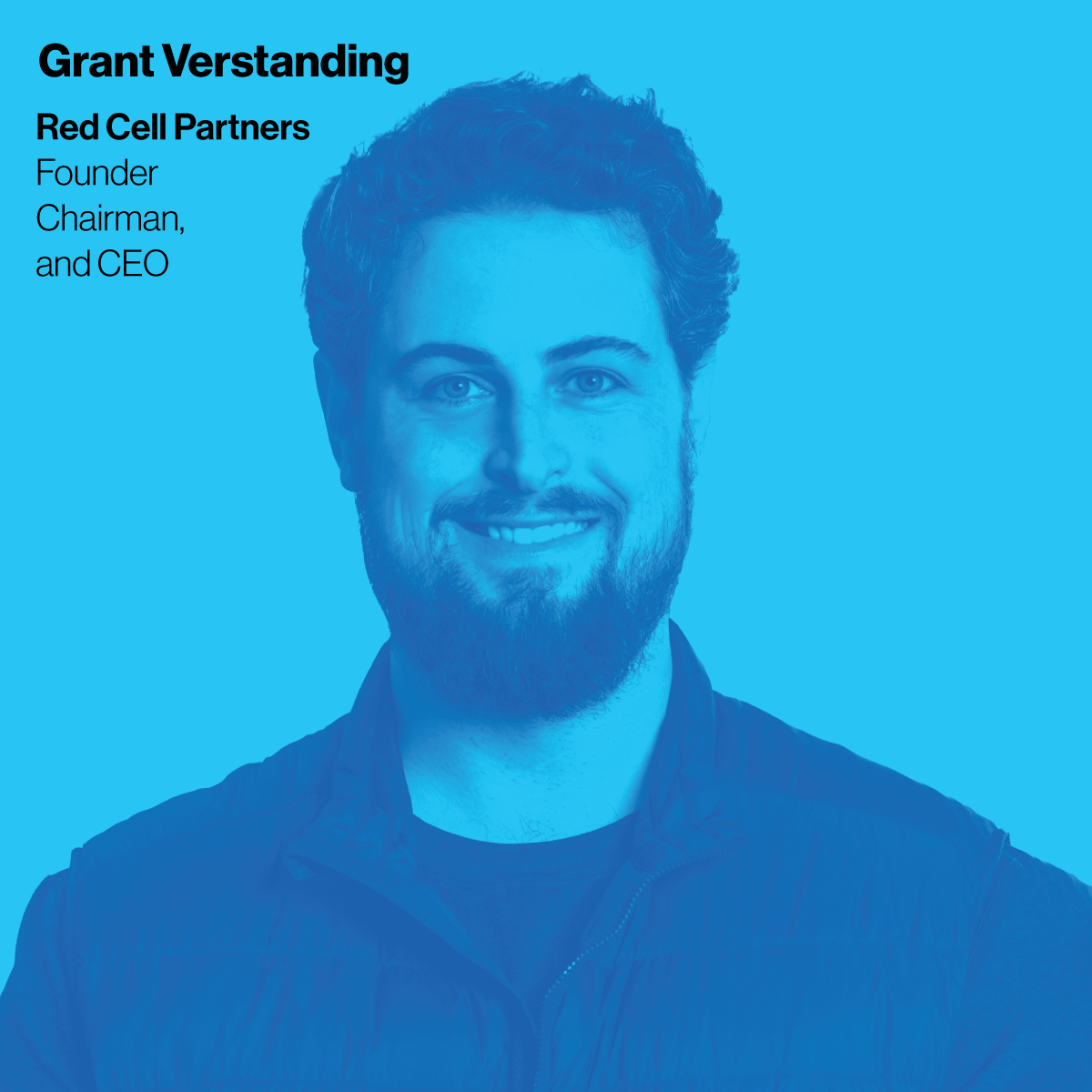
Grant Verstandig
Red Cell Partners
Founder, Chairman, and CEO
Serial entrepreneur Verstandig is turning Red Cell into a factory for companies tackling the less glamorous problems in healthcare and national security—from automating hospital paperwork to managing power usage for data centers. Some big news: In July, he got former Virginia governor Glenn Youngkin onboard as a partner.
Policy People
Advocates and lobbyists for the tech sector
Stewart Barber and Bruce Andrews
Nvidia
Senior Director, Government Affairs (Barber), and Chief External Affairs Officer (Andrews)
Barber and a small team have rapidly built out Nvidia’s Washington presence as the company’s AI chips have catapulted Nvidia into one of the world’s most valuable companies and into the policymaking limelight. Barber, who served in Trump’s first administration on international initiatives and worked on government affairs at the Semiconductor Industry Association, leads Nvidia’s White House and congressional engagement. Andrews, a former deputy Commerce Secretary and chief government-affairs officer at Intel, joined in June to lead the company’s global external outreach.
Karan Bhatia, John Connell, and Anne Wall
Global Head, Government Affairs and Public Policy (Bhatia), Vice President, Government Affairs and Public Policy for the US and Canada (Connell), and Head, US Federal Government Affairs and Public Policy (Wall)
Google’s public-policy team has been lobbying the Trump administration hard for a policy U-turn after the internet giant became a central target of the Biden administration’s anti-monopoly investigations. Bhatia, a former deputy US trade representative, Connell, who was chief of staff for Senator Todd Young, and Wall, who worked for the Obama White House, have been arguing that Google can be a better AI partner to the federal government if it’s not overly fettered by regulatory constraints.
Stoney Burke and Ryan Dattilo
Aquia Group
Founder and CEO (Burke) and Partner (Dattilo)
Burke, a former top lobbyist for Amazon Web Services, founded the Aquia Group as a policy-and-communications advisory, landing customers such as Anthropic and AWS. Dattilo, an Aquia partner, launched the Agentic Futures Initiative last fall, a new lobbying group for the fast-emerging agentic-AI industry.
James Burnham
SpaceXAI
General Counsel
Burnham joined Elon Musk’s fast-growing AI company in November, following a stint as general counsel for the Department of Government Efficiency, the Trump administration’s cost-cutting initiative. Under his direction, SpaceXAI has been building a “strike force” of lawyers for protecting the company’s interests and “defending free speech around the world,” and he recently gained the administration’s backing in an environmental case filed by the NAACP.
Kara Calvert
Coinbase
Vice President, US Policy
Calvert has helped shape federal policy for the fast-moving cryptocurrency industry over the past five years as head lobbyist for the cryptocurrency exchange Coinbase. The company has been lobbying on the Clarity Act, a cryptocurrency regulatory framework.
Teresa Carlson and Brian Peters
Anthropic
Global Head of Public Sector (Carlson) and Head of North America Government Affairs (Peters)
The fast-growing AI company tapped Carlson—a public-sector strategy veteran of Microsoft, AWS, and General Catalyst—in July to help navigate its contentious relationship with the Trump administration. Anthropic sued the Pentagon for retaliation earlier this year after the company criticized the military’s rejection of its requested AI guardrails. She joins Peters, a former Stripe lobbyist, who has been putting forward Anthropic’s vision for AI governance since joining the company last year.
Jay Chittooran
Stack Infrastructure
Senior Vice President, Public Affairs
Chittooran leads public engagement for Stack Infrastructure, the Denver data center company that’s building large-scale computing infrastructure around the world. He previously led Samsung’s US government relations during the critical juncture when the South Korean tech giant was negotiating its multibillion-dollar investments in Texas.
Peter Cleveland
TSMC
Senior Vice President
Cleveland helped negotiate the Taiwanese chip-maker’s mammoth $265 billion US manufacturing investment pledge, which marks the largest single foreign direct investment in US history. TSMC has become a recent focus of US policy as a key supplier of AI chips for Silicon Valley companies such as Apple and Nvidia.
Robin Colwell
Intel
Senior Vice President, Global Government Affairs
Colwell, who joined Intel in January and previously worked on economic policy at the White House, leads government relations for the tech giant at a critical moment as the Trump administration has taken a keen interest in its turnaround by acquiring a major portion of the company’s stock. Intel was the largest recipient of federal subsidies under the CHIPS and Science Act, with US policymakers considering it key to national security.
Dante Disparte and Ashley Scott
Circle
Chief Strategy Officer and Head, Global Policy and Operations (Disparte), and Senior Director, Global Policy and Government Affairs (Scott)
At Circle, the first publicly traded stablecoin issuer in the US, Disparte had advocated for the GENIUS Act, which put a regulatory framework for payment stablecoins into place when it was signed into law last year. It has since been pushing for follow-on legislation through the Clarity Act, which would more broadly regulate cryptocurrencies. Scott, formerly Lime’s head of global public policy, has been evangelizing cryptocurrency to regulators around the world.
Jeff Dressler
SoftBank Group International
Managing Partner and Head of Global Government Affairs
Dressler has guided the massive Japanese multinational investment company through the rapidly changing Washington policy environment, including helping negotiate its role in the Trump administration’s Stargate AI infrastructure project alongside OpenAI and Oracle.
Mat Dunn
SpaceX
Vice President, Government Affairs
Dunn heads up government affairs for Elon Musk’s spacefaring company, which has taken on an increasingly key role in the US government’s blueprints for space exploration, satellite communications, and defense. He was previously legislative director for the National Marine Manufacturers Association and has chaired committees at the Aerospace Industries Association and Commercial Spaceflight Federation.
Kathleen Grillo
Verizon
Senior Vice President, Public Policy and Government Affairs
Grillo, who leads a Verizon team of 200-plus lawyers, lobbyists, and policy experts, has been working on issues including spectrum policy, AI, data-privacy regulation, and broadband access and deployment. She has been a top advocate for extension of the Affordable Connectivity Program.
Mike Harney
IBM
Vice President, Government and Regulatory Affairs
After spending much of his career in government, Harney joined IBM as its chief Washington representative last year as the advanced computing company has made big investments in cutting-edge quantum research. IBM announced a deal in May with the Department of Commerce to build the nation’s first quantum-chip foundry. Harney previously was chief of staff for Commerce Secretary Gina Raimondo and for Senator Mark Warner.
Fred Humphries
Microsoft
Corporate Vice President, US Government Affairs
Humphries has shaped Microsoft’s federal-government-policy strategy for nearly two decades, tackling issues like cloud computing, privacy, trade, and racial equity. In the past year, he has lobbied on issues including AI and data-center energy costs.
Brian Huseman and Steve Hartell
Amazon
Vice President, Public Policy and Community Engagement (Huseman), and Vice President, US Public Policy (Hartell)
Huseman and Hartell, who have each worked on Amazon’s public policy for well over a decade, are now steering the company’s approach as it seeks federal support for its fledgling multibillion-dollar satellite venture and its AI research. An FTC monopoly case against Amazon is still hanging in the balance and is scheduled to go to trial next year.
Michael Kennedy
Intuit
Senior Vice President and Chief Corporate Affairs Officer
Kennedy leads policy work for Intuit, which is behind the tax-preparation service TurboTax, the accounting software QuickBooks, and the email-marketing platform Mailchimp. Intuit has been lobbying the Trump administration on topics like tax-filing regulations.
Caroline Kitchens
TikTok USDS Joint Venture
Head of Public Policy Third Party Engagement
Kitchens spearheads outreach to public policy stakeholders outside government for TikTok’s new US venture as it seeks to prove that its structure can keep data secure and that its algorithms won’t be influenced from abroad. She comes to TikTok from the think-tank world, having worked for the American Enterprise Institute and R Street Institute.
Daniel Kroese
Palo Alto Networks
Vice President, Public Policy and Government Affairs
Kroese has been advocating for US government agencies to rapidly adopt new advanced AI tools in their cybersecurity systems as AI dramatically shrinks the amount of time it takes a malicious actor to design a cyberattack. Kroese previously worked at the Cybersecurity and Infrastructure Security Agency and as staff for the House Homeland Security Committee.
Joseph Larson and Chan Park
OpenAI
Vice President and Head of Government (Larson) and Head of US and Canada Policy and Partnerships (Park)
A former Anduril executive, Larson steers OpenAI’s federal contracts at a critical juncture as the US government seeks to adopt AI capabilities rapidly. Park has been shaping the company’s lobbying approach and runs OpenAI’s new DC office with Larson. OpenAI has deepened its government partnerships over the past year, including offering ChatGPT Enterprise to each federal agency for $1 for a year.
Travis LeBlanc
Cooley
Partner and Co-Chair, Global Cyber/Data/Privacy Practice
LeBlanc co-chairs Cooley’s cyber, data, and privacy practice, with clients including Google, Roblox, LG, Zoom, and TikTok. He has led major cybersecurity investigations, tracking down hackers from Ukraine, Australia, and North Korea.
Luther Lowe
Y Combinator
Head of Public Policy
Lowe, a longtime prominent champion of “little tech,” has been advocating for the interests of startups in federal AI, competition, and immigration policy this year as he builds out Y Combinator’s policy footprint in Washington. Formerly at Yelp, Lowe has advocated for years for stricter antitrust enforcement on Big Tech giants to create room for more startup experimentation.
Dina Powell McCormick, Joel Kaplan, Kevin Martin, and Brian Rice
Meta
President and Vice Chairman (McCormick), Chief Global Affairs Officer (Kaplan), Vice President, Global Public Policy (Martin), and Vice President, Public Policy (Rice)
McCormick, who was deputy national-security advisor in the first Trump administration and a former Goldman Sachs partner, brings political firepower to Meta as it seeks federal support for its AI development and awaits the outcome of an FTC antitrust lawsuit in an appeals court. The team also includes Kaplan, a former Republican adviser and Marine Corps officer; Martin, who was FCC chairman during George W. Bush’s presidency; and Rice, a former Verizon vice president.
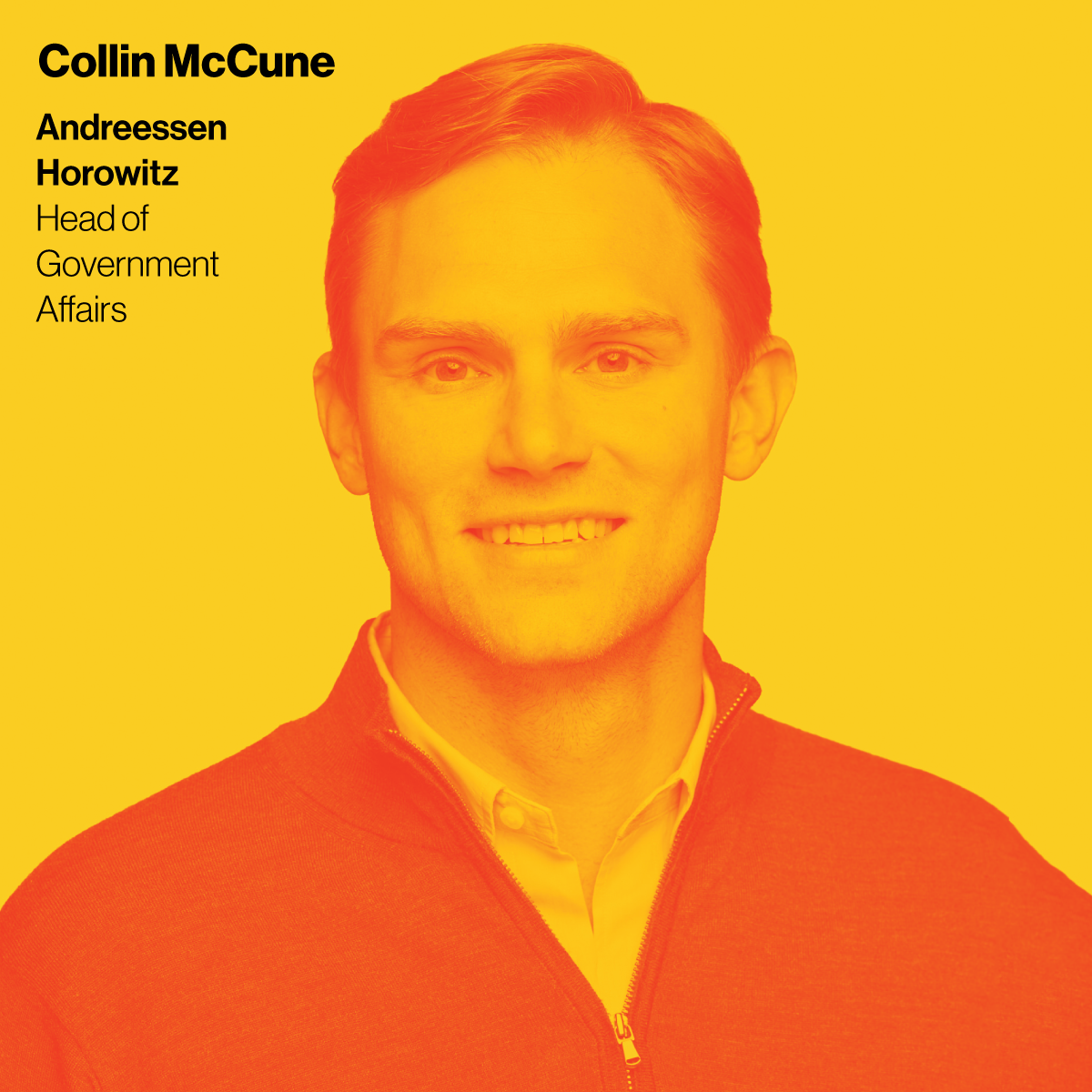
Collin McCune
Andreessen Horowitz
Head of Government Affairs
McCune, a veteran Hill staffer, has been influential in the Trump administration’s AI policy as chief lobbyist for the famed venture-capital firm. He has been pushing for cryptocurrency legislation and for more industry-friendly regulation for AI.
Giulia McHenry
AT&T
Senior Vice President for Public Policy
McHenry shapes AT&T’s positions on federal and state legislation and regulation and leads policy strategy for the company on issues like AI and 6G. She was previously chief of the FCC’s Office of Economics and Analytics and chief economist for the National Telecommunications and Information Administration.
Maryam Mujica
General Catalyst Institute
President
Following Teresa Carlson’s departure, Mujica stepped up to lead General Catalyst’s policy arm, facilitating direct conversations between more than 800 tech founders and legislators about critical sectors such as healthcare, defense, advanced manufacturing, and energy. One of her main goals: to streamline procurement pathways to make it faster and less burdensome for startups to bring new tech to market.
Tim Powderly and Alexis Marks Mosher
Apple
Senior Director, Government Affairs for the Americas (Powderly), and Director of Congressional Relations (Mosher)
Powderly and Mosher, who have each worked on Apple’s government affairs for more than a decade, have been helping formulate the company’s strategy in response to pressures from the Trump administration to reshore electronics manufacturing. Apple is working with suppliers to build new factories in Arizona and Texas as it lobbies on issues like app-store regulation.
Nate Tibbits
Qualcomm
Senior Vice President, Global Government Affairs
Tibbits, who has led public policy at Qualcomm for more than a decade, is now helping the company navigate the risks and rewards of the federal government’s new policy focus on chips. He has been positioning next-generation wireless as essential infrastructure for the AI era, advocating for policies that will unlock spectrum and support interoperability.
Big Business
Movers and shakers
Craig Abod
Carahsoft
President and CEO
Abod has grown Carahsoft into one of the largest private companies in the US, with Forbes ranking it at number 20 last year and with $18.9 billion in revenue. Carahsoft has come under federal probes in recent years over its pricing and business practices, but the Reston company has continued to grow.
David Appel
Amazon Web Services
Vice President, Global Government, National Security, and Defense; and Acting Vice President, Worldwide Public Sector
Appel is steering AWS’s government relations as the Amazon cloud-computing subsidiary vies for major federal contracts. In 2025, he supported the largest federal technology investment in Amazon history: up to $50 billion to expand AI and supercomputing infrastructure for US government agencies.
Thomas A. Bell
Leidos
CEO
Bell is head of the Reston defense contractor, which counts $17.2 billion in annual revenue and 50,000 employees worldwide. The company has been working to deliver hypersonic weapons, satellite-tracking technology, and AI-enabled decision-making systems to the Pentagon.
Christopher T. Calio
RTX
Chairman and CEO
In four years at RTX, Calio has overseen considerable change, including the company’s rebranding from Raytheon Technologies Corporation and its consolidation from four business sections to three. The world’s second-largest defense contractor is supplying Patriot missile interceptors to Ukraine and radar to the Navy and is in the process of building an advanced telescope for space observation.
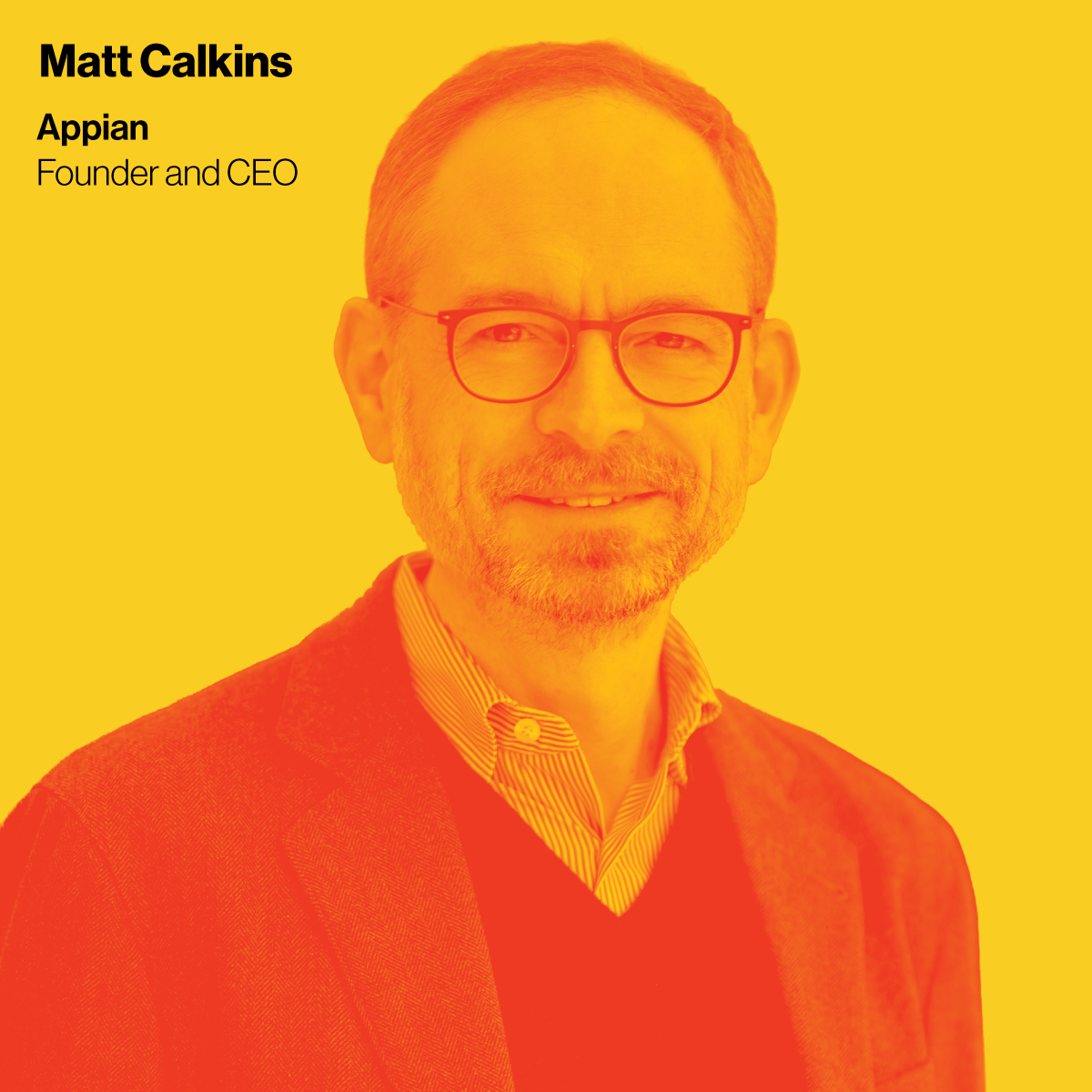
Matt Calkins
Appian
Founder, CEO, and Chairman of the Board
Calkins founded the McLean company in 1999, and it has since grown into a $727-million-a-year public enterprise that supplies automation software for complex processes. Appian counts among its customers the US military, government entities in 20 countries, and seven of the top ten pharmaceutical companies.
Karen Dahut and Matthew Schneider
CEO, Google Public Sector (Dahut), and Managing Director of US Education, State, and Local Government, Google Public Sector (Schneider)
Google has been playing catch-up in federal contracting, with its Google Public Sector subsidiary founded in 2022. Dahut, a former Navy officer, has clinched government deals for the company, including deployment of its AI technology at the Pentagon. Schneider, a former Cloudfare and Palo Alto Networks executive, has been spearheading the rollout of Google’s Gemini AI application in Maryland and Los Angeles.
Niccolo de Masi
IonQ
Chairman and CEO
Under the guidance of de Masi, a trained physicist, IonQ tripled its revenue to $130 million in 2025 as it landed US government partnerships in the emerging quantum-computing field. IonQ announced in April that it had achieved the first demonstration of connected, commercial quantum computers, in a joint project with the Air Force Research Laboratory.
Mark Ein and Haniel J. Lynn
Kastle Systems
Executive Chairman (Ein) and CEO (Lynn)
The Falls Church security-systems company grew by more than 50 percent in revenue in 2025, boosted by the acquisition of rival i2G Systems. Ein, a venture capitalist and a Washington Commanders owner, has spearheaded more than $3 billion in investments over his career. Lynn, formerly of the advisory CEB (now Gartner), has led Kastle as CEO since 2018.
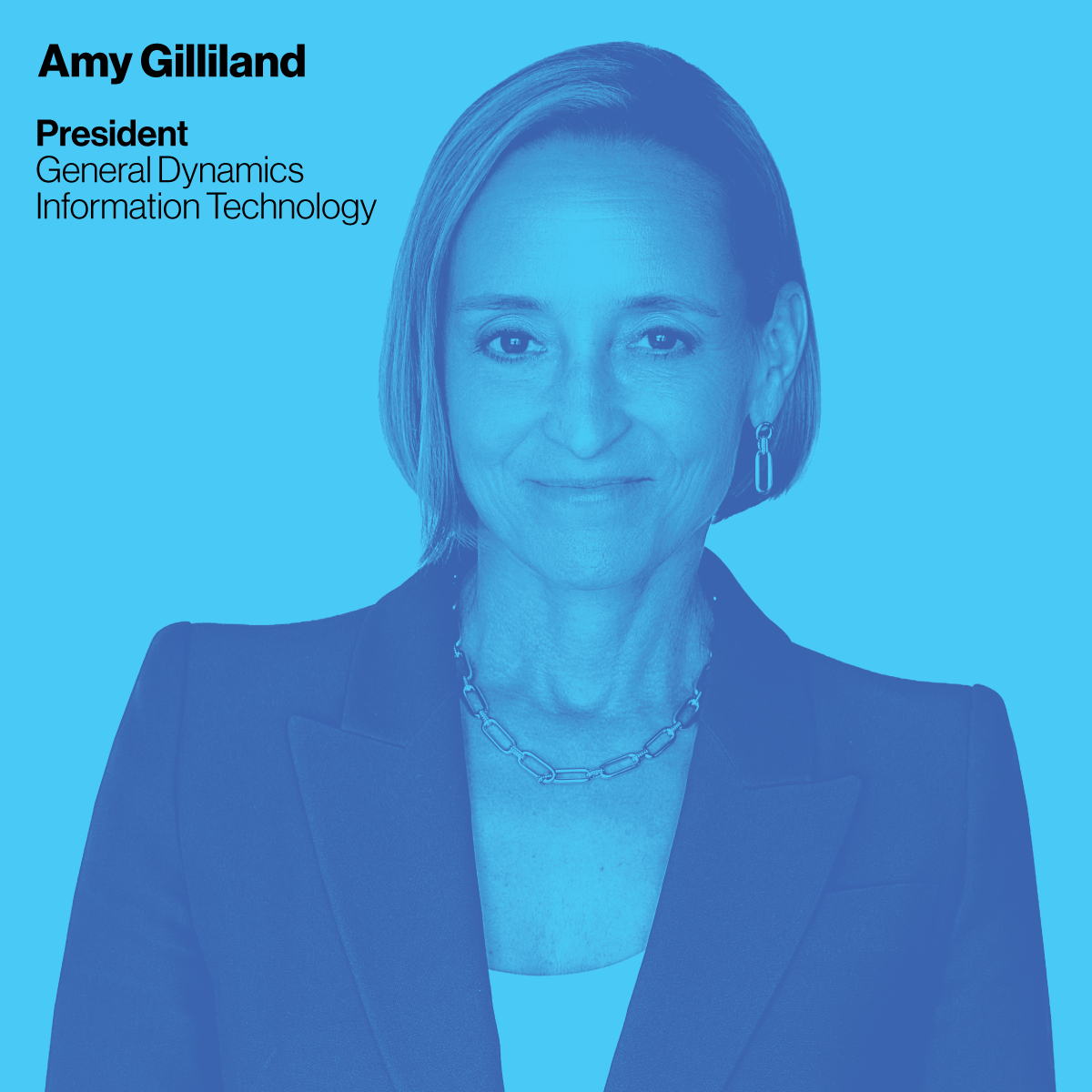
Amy Gilliland
President
General Dynamics Information Technology
Gilliland, a Navy veteran, oversees the Falls Church technology government contractor with 26,000 employees around the world. She has been prioritizing the upskilling of her staff for the AI era, with all employees completing an AI training program last year and 5,000 receiving more advanced training.

Zach Leonsis
Monumental Sports & Entertainment
President, Media and New Enterprises
Leonsis, who drives the company’s tech strategy, has been involved in Monumental’s technological upgrades at Capital One Arena, including the deployment of the Visibowl concourse with 500 feet of immersive digital displays. The company’s Monumental Sports Network has been experimenting with interactive and gamification experiences for viewers.
Phebe N. Novakovic
General Dynamics
Chairman and CEO
Novakovic, a former intelligence officer, has guided the Reston government contractor for 13 years, building it into a $52 billion–a-year aerospace-and-combat-vehicle juggernaut. General Dynamics has secured major Navy contracts this year, including for ships and nuclear submarines.
Jim Reagan
SAIC
CEO
Reagan was formally appointed to lead SAIC in February, after serving as interim CEO since the fall, and has been implementing a strategic refocusing at the $7.3 billion federal contractor. SAIC’s portfolio includes AI-powered systems for the military, planning for NASA missions, and enterprise IT. Reagan was previously an executive at Leidos, Vencore, and PAE.
Horacio Rozanski
Booz Allen Hamilton
Chairman and CEO
In more than three decades at Booz Allen Hamilton, Rozanski has transformed the McLean federal contractor into an advanced technology force. The company has recently been deploying its Vellox agentic-AI cybersecurity suite and working with federal agencies on post-quantum cryptography.
Michael J. Saylor
Strategy
Executive Chairman
Saylor is a prominent advocate of bitcoin, with Strategy (previously MicroStrategy) building the world’s largest treasury of the cryptocurrency starting in 2020. While Strategy’s recent sale of $100 million worth of bitcoin from its stash to repurchase company shares has drawn market attention, Saylor says he has never sold any of his personal holdings and his conviction is unchanged.
Jim Taiclet
Lockheed Martin
Chairman, President, and CEO
Taiclet, a former Air Force pilot, oversees Lockheed Martin’s sprawling defense-technologies portfolio, ranging from fighter jets to command-and-control and missile-defense systems. The world’s largest defense company struck a novel partnership with General Motors in June to pool their expertise for manufacturing, facilitated by the Pentagon.
Steve Vintz
Tenable
Co-CEO
Vintz co-leads the Columbia cybersecurity firm, which sup-plies advanced cyber-risk mitigation solutions for major companies and government agencies. Tenable announced a new US government agreement in December to grant a 65 percent discount to federal agencies for its cloud-security products.
Kathy J. Warden
Northrop Grumman
President, CEO, and Chair
Warden leads the major defense contractor’s staff of nearly 100,000, with investments in advanced manufacturing, autonomy, AI-enabled systems, and space technology. Northrop Grumman is currently working to bring its B-21 Raider aircraft, a next-generation bomber, from testing into commercial operation.
Industry Voices
Trade groups, think tanks, media, and others promoting and reporting on ideas
Dmitri Alperovitch, Maureen Hinman, and Sarah Stewart
Silverado Policy Accelerator
Cofounder and Chairman (Alperovitch), Cofounder and Executive Chair (Hinman), CEO and Executive Director (Stewart)
Alperovitch, cofounder of the cybersecurity firm Crowdstrike, along with US Trade Representative veterans Hinman and Stewart, lead this geopolitical think tank, conducting research on topics such as rare-earth supply chains, export controls, and government AI adoption.
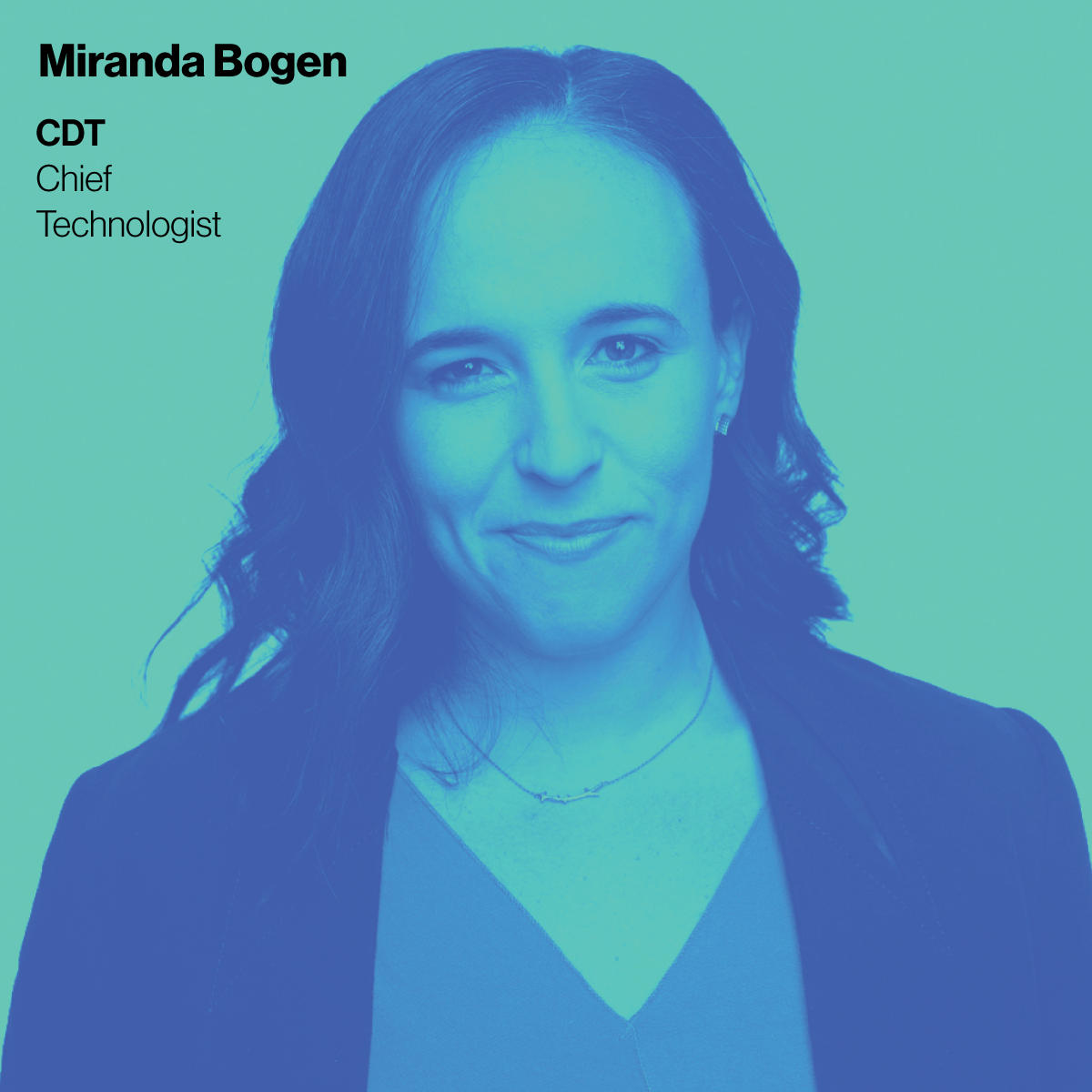
Miranda Bogen
Center for Democracy and Technology
Chief Technologist and Director, AI Governance Lab
Bogen was named CDT’s chief technologist in April after directing the center’s AI Governance Lab for two and a half years and previously working on AI and equity issues at Meta. She has been studying the more subtle ways AI systems can cause societal harm that don’t immediately meet the eye.
Perianne Boring and Cody Carbone
The Digital Chamber
Founder and Chair (Boring) and CEO (Carbone)
Boring founded this blockchain-and-digital-asset trade association in 2014, and Carbone has been CEO since last year, with the two promoting the use of digital currencies. The group has been lobbying this year for the Clarity Act, which would set a regulatory structure for the sale of digital assets.
Brad Carson and Eric Gastfriend
Americans for Responsible Innovation
Cofounder and President (Carson) and Cofounder and Executive Director (Gastfriend)
Carson, undersecretary for the Army during the Obama ad-ministration, and Gastfriend, a digital-health tech entrepreneur, launched their nonprofit in 2024, promoting the responsible deployment of AI. In the past year, they’ve opposed federal preemption of state AI regulation and advocated for closer scrutiny of chatbot safety for children, while tracking international military AI frameworks at GlobalAIDefense.net.
Daniel Castro
Information Technology and Innovation Foundation
President
Castro took over at ITIF in May, steering its research and advocacy for policies to accelerate tech innovation. It marks a major change of guard at the pro-free-markets think tank, which founder Rob Atkinson led for two decades. Castro is also the founder of ITIF’s Center for Data Innovation.
Peter Chandler
Internet Works
Executive Director
Chandler is the first executive director of this association representing small and medium-size internet platforms such as eBay, TripAdvisor, Discord, Reddit, and Grindr. He is championing the interests of “middle tech,” pushing against one-size-fits-all legislation for the industry.
Adam Conner
Center for American Progress
Vice President, Technology Policy
Conner has worked on technology policy in Washington since 2007, when he founded Meta’s DC office. He was also Slack’s first employee here. At the progressive CAP, he has been researching AI safeguards and policy response to AI job loss.
J. Michael Daniel
Cyber Threat Alliance
President and CEO
Daniel, a former National Security Council cybersecurity coordinator, leads this coalition of major cybersecurity providers that share intelligence on emerging threats. The group began in 2014 as an informal arrangement among Fortinet, McAfee, Palo Alto Networks, and Symantec and has since progressed to an official nonprofit that has recently been focused on defending against AI-assisted cyberattacks.
Steve DelBianco
NetChoice
President and CEO
DelBianco has overseen the small but active tech trade group since 2002, with NetChoice gaining a reputation for filing court challenges against state regulation on behalf of tech giants such as Amazon, Google, and Meta. NetChoice has sued states including South Carolina, Nebraska, and Minnesota this year, arguing that their digital regulations restrict free speech.
Teddy Downey
The Capitol Forum
CEO and Executive Editor
Since 2012, Downey has led this subscription-based information service, which provides some of the most detailed coverage of antitrust regulation and other forms of regulatory risk, with Big Tech a frequent subject. While the service is primarily focused on Washington, it has been building out a bureau in Europe, where there has been vigorous internet regulation.
Victoria A. Espinel, Craig Albright, and Aaron Cooper
BSA, The Software Alliance
CEO (Espinel), Senior Vice President, US Government Relations (Albright), and Senior Vice President, Global Policy (Cooper)
Espinel, Albright, and Cooper have been advocating within the US and abroad for legislation on behalf of enterprise-software makers—their membership includes companies such as Microsoft, OpenAI, IBM, and Oracle. Espinel led a delegation of member companies to the EU in April.
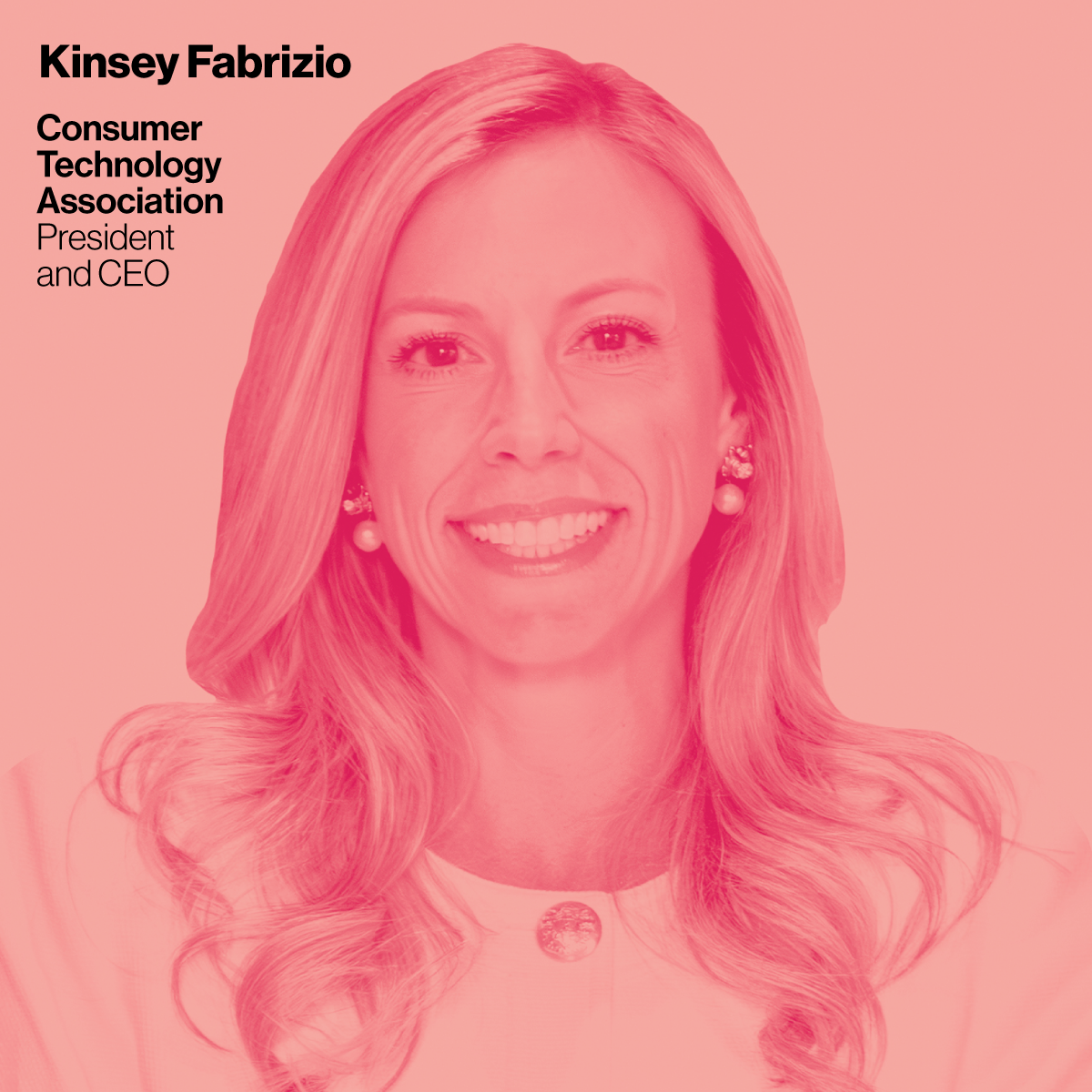
Kinsey Fabrizio, Gary Shapiro, and Michael Petricone
Consumer Technology Association
President and CEO (Fabrizio), Executive Chair (Shapiro), and Senior Vice President of Government Affairs (Petricone)
In May, Fabrizio took the reins of CTA from Shapiro, who for the past 35 years has helmed this trade group that organizes the annual CES tech convention. Fabrizio expanded CTA’s lineup of international events this year, while Shapiro led the group’s trade and tariff advocacy and Petricone oversaw government affairs on issues ranging from AI to EVs and energy.
Alexandra Reeve Givens
Center for Democracy and Technology
President and CEO
Givens, a lawyer by training who previously was founding executive director of Georgetown University’s Institute for Technology Law and Policy, has run this tech-advocacy nonprofit focused on protecting civil rights since 2020. CDT is championing issues like digital privacy, civic technology equity, and AI guardrails.
Jimmy Goodrich
RAND
Consultant and Senior Adviser
Goodrich has been a mover and shaker in the highly technical realm of semiconductor policy, with his research moving the needle on the formulation of US export controls and the multibillion-dollar CHIPS Act. After spending much of his career at trade groups such as the Semiconductor Industry Association and United States Information Technology Office, he’s continuing to research tech supply-chain issues for RAND and the UC Institute on Global Conflict and Cooperation.
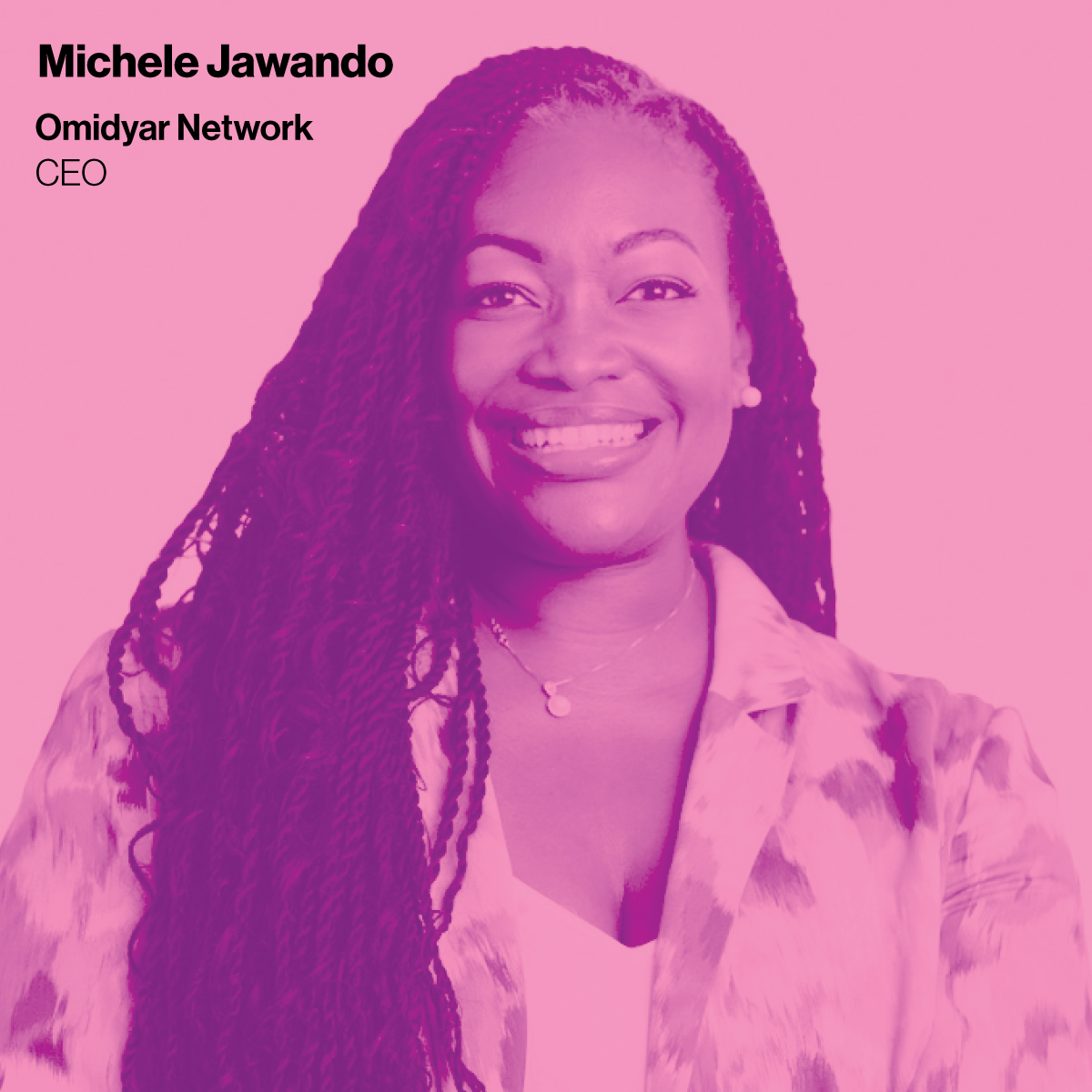
Michele Jawando
Omidyar Network
CEO and Board Member
Jawando was appointed CEO in April after five years in senior roles at this philanthropic organization, which invests in startups and projects that will result in a more inclusive, humanity-centered tech ecosystem. The group, launched in 2004 by eBay founder Pierre Omidyar and his wife, Pam, has committed more than $1.94 billion to date, including through grants to journalists to study the effects of AI.
Adam Kovacevich
Chamber of Progress
CEO and Founder
The former Google lobbyist started this progressive trade association five years ago, and it has since become one of the most prominent tech lobbying groups in Washington. Over the past year, the Chamber of Progress has launched several initiatives aimed at Democrats, including the Blue Horizon Project, to promote tech optimism among Democratic presidential candidates for 2028, and a push for blue states to curb their AI regulation.
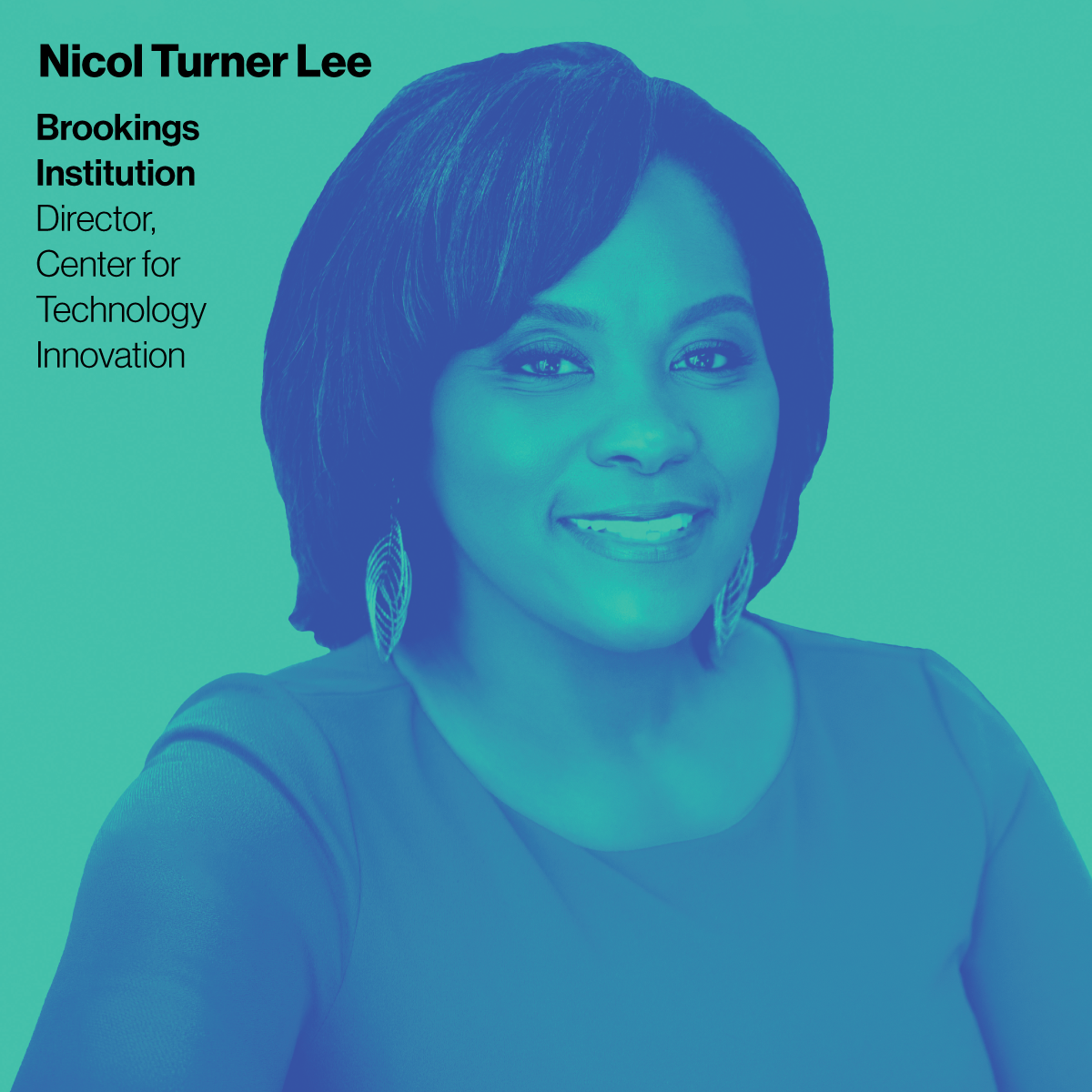
Nicol Turner Lee
Brookings Institution
Director, Center for Technology Innovation
Lee, who has for years studied how to advance equal access to new technologies, founded the AI Equity Lab at Brookings and directs its Center for Technology Innovation. She is shaping the public discourse on emerging technologies as co–editor in chief of the think tank’s TechTank blog and podcast.
Chris McGuire
Council on Foreign Relations
Senior Fellow for China and Emerging Technologies
As deputy senior director for technology and national security at the National Security Council from 2022 to 2024, McGuire helped steer the Biden administration’s strategy for dual-use and emerging tech. Over the past year, he has been a vocal proponent for stricter export controls against China on advanced technologies.
Summer Mersinger and Peter Van Valkenburgh
Blockchain Association and Coin Center
CEO, Blockchain Association (Mersinger), and Executive Director, Coin Center (Valkenburgh)
Mersinger and Van Valkenburgh have been on the policy frontlines for this emerging industry. A former CFTC commissioner, Mersinger has been a leading voice in the push for comprehensive market-structure legislation for blockchain, including the Clarity Act’s bipartisan passage out of the Senate Banking Committee in May. Van Valkenburgh’s nonprofit, Coin Center, has been defending the rights and privacy of developers of cryptocurrency networks.
Billy Mitchell
Scoop News Group
Executive Editor
Mitchell leads editorial operations for the inside-the-Beltway news fixtures FedScoop, DefenseScoop, AIScoop, CyberScoop, StateScoop, and Ed-Scoop. In the past year, his team of reporters has focused on issues like AI deployment in the federal government and the impact of DOGE cuts, while launching a new podcast focused on the intersection of defense and Silicon Valley.
Linda Moore
TechNet
President and CEO
Moore has led the national, bipartisan network of tech CEOs since 2014, advocating for policies to promote innovation. This year, the group’s policy priorities include pushing for a national privacy standard, modernizing energy infrastructure, and improving global trade conditions for US companies.
Travis Moore
TechCongress
Founder and Executive Director
TechCongress, a nonprofit that trains technologists on the lawmaking process and then finds roles for them in the House and Senate and at federal agencies, placed its largest-ever group in the past year, including fellows working on AI safety and standards at NIST’s Center for AI Standards and Innovation. TechCongress has placed 146 fellows in government since its inception in 2015.
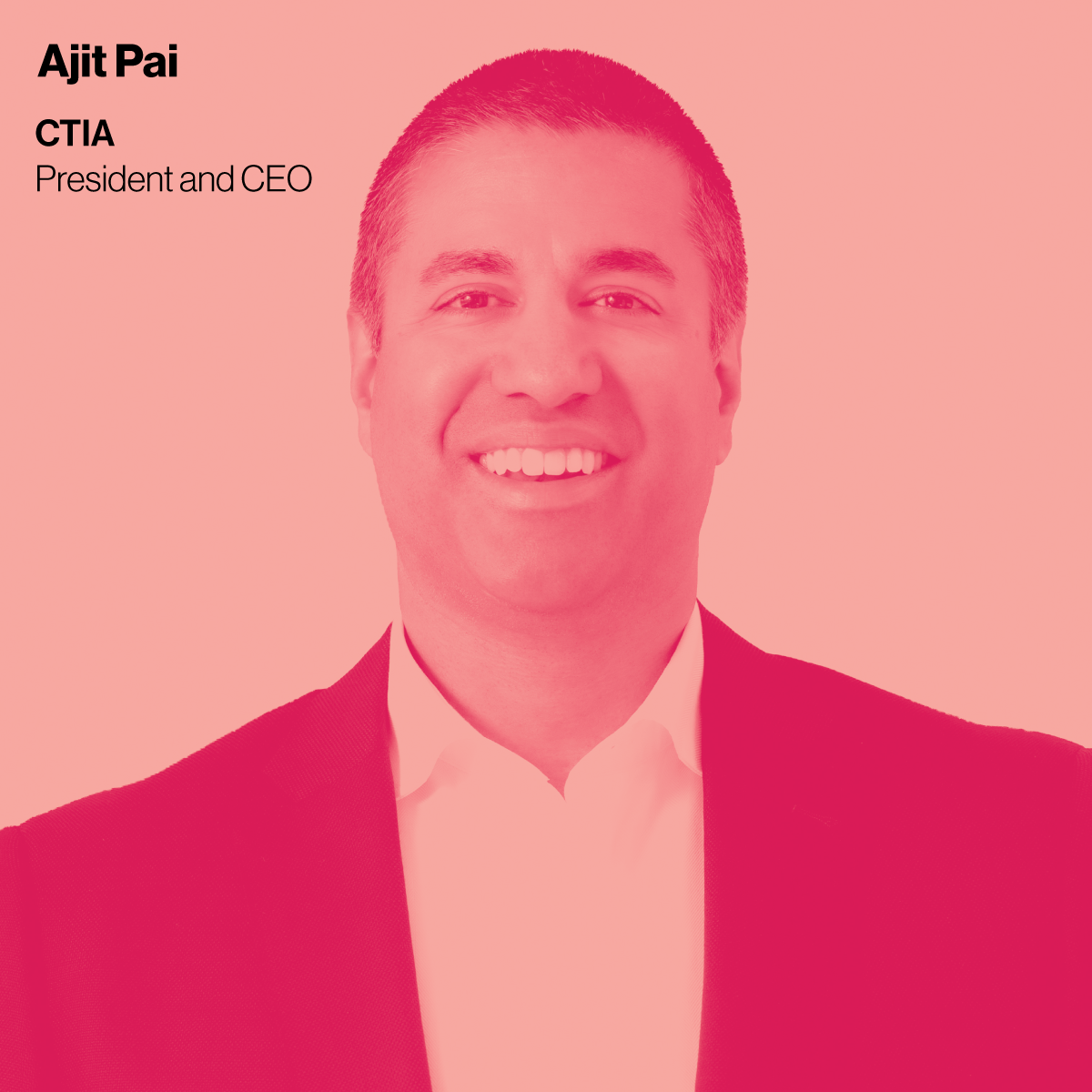
Ajit Pai
CTIA
President and CEO
Former FCC chairman Pai has led this association, which represents the US wireless-communications industry, since 2025. He’s advocating for accelerating the deployment of next-generation wireless networks and expanding spectrum access for private companies.
Katie Paul
Tech Transparency Project
Director
TTP, launched in 2016 to scrutinize Google’s political influence, has expanded over the past decade to serve as a watchdog for the activities of all major tech companies. Paul, who specializes in tracking criminal activity on online platforms like Facebook, is leading the group’s research on issues such as deepfakes and online child safety. TTP also maintains an online database of government records it has obtained through Freedom of Information Act requests.
Mark Peters
Mitre
President and CEO
Peters, a trained nuclear scientist, became head of the McLean not-for-profit tech company in 2024, leading its advanced R&D projects for the federal government. Its recent work includes building a federal “sandbox” for government agencies to experiment with AI applications and researching emerging cybersecurity threats.
Eric Schmidt and Ylli Bajraktari
Special Competitive Studies Project
Chair (Schmidt) and CEO (Bajraktari)
This think tank that Schmidt, Google’s former CEO, launched in 2021 has established itself as an influential voice in Washington on the subject of how the US can win the global AI race. Bajraktari, who leads the group, was previously executive director of the National Security Commission on Artificial Intelligence. SCSP launched a new task force on AI and the future of work in October, with luminaries such as Nvidia cofounder Chris Malachowsky and former Commerce Secretary Gina Raimondo signing on.
Jonathan Spalter
USTelecom
President and CEO
A veteran of telecommunications policy, Spalter has led this trade group representing America’s broadband companies since 2017 and has most recently launched a campaign to raise awareness about next-generation mobile technologies. He has also been pushing to modernize and streamline broadband permitting policies.
Kara Swisher
Vox Media
New York Magazine Editor-at-Large and Podcast Host
Swisher continues to be one of the most influential tech-policy podcasters. Her shows— On With Kara Swisher and Pivot With Kara Swisher and Scott Galloway —have 243,000 subscribers on YouTube, and recent guests have included Uber CEO Dara Khosrowshahi, California governor Gavin Newsom, and TMZ founder Harvey Levin.
Jennifer Taylor
Northern Virginia Technology Council
President and CEO
As head of one of the country’s largest tech councils, with more than 500 member companies and 8,000 professionals, Taylor has been advocating for technology and tax policies that position Virginia as a stable, predictable environment for long-term investment. Her group has been deepening partnerships with higher-education institutions, such as George Mason and UVA, to strengthen the region’s talent pipeline.
Helen Toner
Georgetown University
Executive Director, Center for Security and Emerging Technology
The new executive director of the influential Georgetown think tank, who took the reins in July, has helped shape CSET’s work on artificial intelligence, emerging technologies, and national security in her previous roles at the center, founded in 2019. Her team is researching questions such as how to build AI systems that are both effective and secure, how to build the AI workforce, and how these technologies are changing the security environment.
Miriam Vogel
EqualAI
President and CEO
Vogel, formerly an adviser to the Obama White House and a Department of Justice senior counsel, leads this nonprofit, which works on correcting and preventing unconscious bias in AI. EqualAI runs a badge certification program for senior executives in the tech industry.
The Connectors
Organizers, conveners, and facilitators
Doug Anderson
DCA Live
Founder and CEO
Defense-tech and dual-use companies—ones that develop tech for both commercial and national-security markets—are having a moment in the region, and Anderson brings together the founders, executives, and investors fueling their rise. His Capital Capital has been billed as the region’s largest technology and venturecapital conference, and last December he expanded his roster with an event focused on dual-use companies.
Bill Collier and Matt Gittleman
VC in DC
Co-Leads
These two venture capitalists launched VC in DC with a mission to make the District a stronger place to invest. In nine years, it has connected 800-plus investors across more than 400 funds with founders building tech that the country depends on—manufacturing, supply chains, energy, critical infrastructure, and dual-|use technology—betting that the region’s federal ecosystem is now a national selling point, not just a local one.
Ameilia DeSorrento, Ann Marie Guzzi, and Kelly O’Malley
The Agora Initiative
Cofounders and Co-Organizers
Through the Agora Initiative, the trio puts the spotlight on female founders, rallying top local investors and industry influencers to fund and mentor them. Last year alone, the nonprofit’s venture challenges, happy hours, and dinners helped founders secure $10.8 million in pre-seed and seed funding.
Derek Ford and Kevin Morgan
Washington DC Economic Partnership
President and CEO (Ford) and Senior Vice President, Tech Sector Attraction and Retention (Morgan)
Ford and Morgan lead the Washington DC Economic Partnership’s efforts to position the District as a vibrant hub for tech and innovation. To attract companies, they pair real-estate assistance with direct introductions to local government and C-suite leaders. On the side, Morgan works to accelerate growth for local startups through his DC Tech & Venture Coalition, which hosts one of the largest meetups of its kind.
Arun Gupta
NobleReach Foundation
CEO and Board Member
A two-decade Columbia Capital vet, Gupta leads NobleReach as the organization funnels top tech talent into government, arguing that the traditional “learn, earn, retire” career path doesn’t work for an AI-driven world. His Noble-Reach Scholars Program has placed nearly 50 STEM and business graduates in yearlong public-service roles across federal, state, and local agencies. In December, the White House named the nonprofit a founding partner of the US Tech Force, scaling that pipeline into longer-term appointments.
Tammy Haddad
Washington AI Network
Founder
A veteran media producer and exec who has worked with MSNBC, CNN, and Politico, Haddad has positioned her lat-est venture as a bipartisan forum bringing together industry, government, and academic experts to address AI’s greatest opportunities and challenges. Her podcast has featured guests such as fellow Tech Titans Dina Powell McCormick and Arun Gupta. This June, her second annual AI Honors gala included an appearance from Medicare & Medicaid Services administrator Mehmet Oz, along with 400 public- and private-sector leaders.
Rachel Koretsky and Darius Clair
DC Startup & Tech Week
Founder and CEO (Koretsky) and Director, Programs and Community (Clair)
DC Startup & Tech Week held its largest conference last year, generating more than $3.2 million in direct economic impact. Koretsky and Clair—he’s the organization’s first full-time hire—have their sights set on upgrading it from a weeklong event to a yearlong engine with founder office hours, workshops, and partner dinners for the 17,000-member community.
Rob Link
eWaste Warriors
Founder
Tech Care Association
Founder and CEO
Link cofounded eWaste Warriors to fight the throwaway culture pushed by Big Tech, bringing together repair professionals and local businesses to host workshops on how to reuse, repair, and re-cycle old devices. Through his full-time gig at the Tech Care Association, he launched the RETPAIR platform to connect users with local repair-service providers.
George Thomas
Connected DMV
Cofounder and Board Member
Fairfax County Economic Development Authority
President and CEO
For nearly a decade, Thomas has worked to transform the region into a global center for quantum technology, space innovation, and other emerging industries through initiatives such as the Potomac Quantum Innovation Center and the Potomac Center for New Space Economy. When he takes the helm of the Fairfax County Economic Development Authority this fall, he plans to continue attracting investment and workforce talent in these sectors.
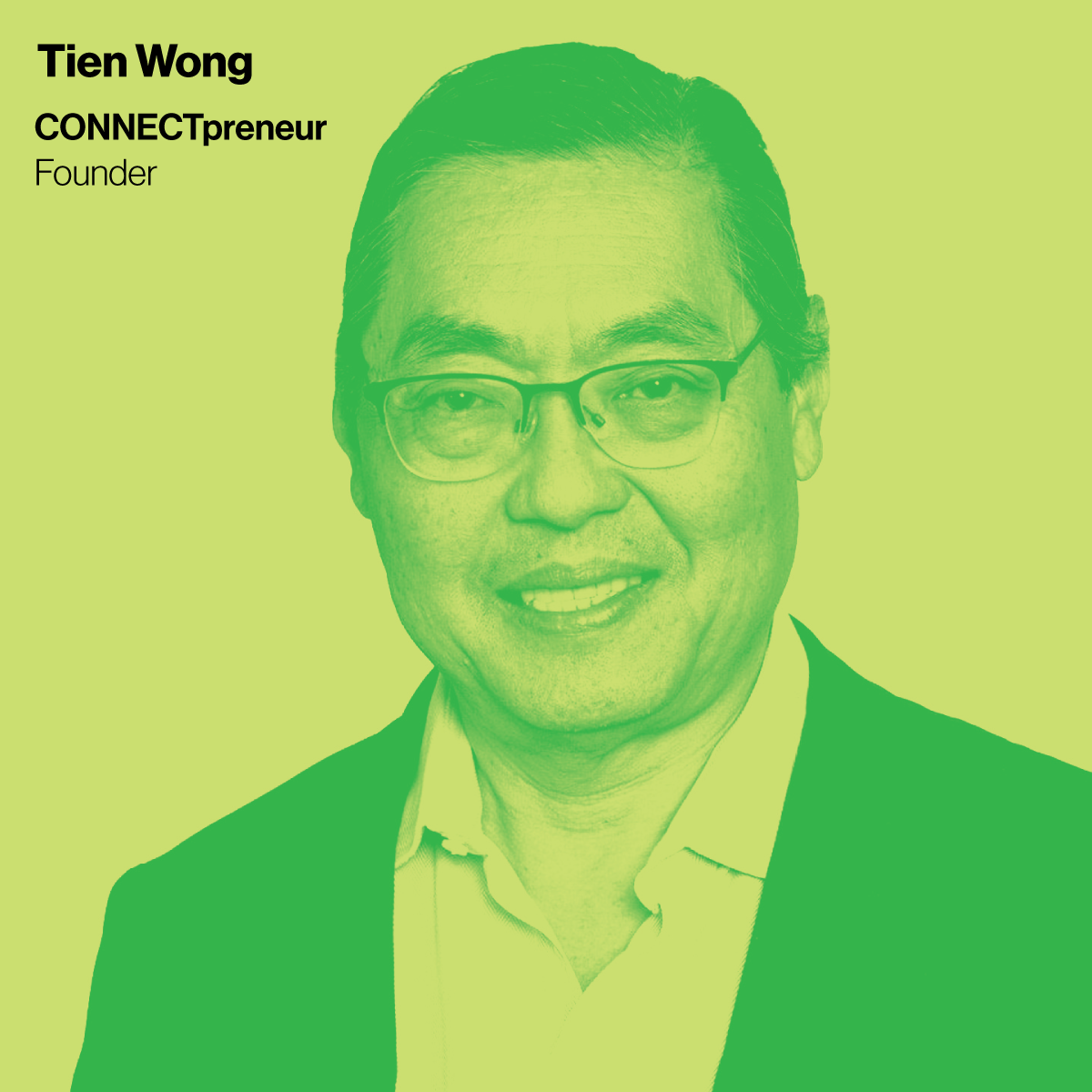
Tien Wong
Big Idea CONNECTpreneur
Founder and Executive Chairman
Wong connects founders with the money they need, leading a network of more than 44,000 tech execs, entrepreneurs, and venture capitalists. His monthly CONNECTpreneuer gatherings regularly bring in 200 investors eager to support and mentor early-stage startups.
Washington is now an epicenter of the AI boom, with billions of dollars being poured into rapidly developing the technology and a federal government that can’t come to a consensus on whether to embrace or contain it.
More companies are moving past novelty chatbots and instead building “agentic” AI systems that can interpret data and make decisions on their own. Among them is a company founded by one of this year’s Tech Titans, Varun Sivaram: Emerald AI automatically slows down AI workloads to relieve power grids during periods of stress.
The government has become an enthusiastic customer of technology that can help agencies automate routine tasks. Last summer, the Pentagon awarded $200 million each to xAI, OpenAI, and Google to build autonomous AI systems that can work with classified information without constant human direction.
Silicon Valley venture capitalists continue to have an outsize influence on Washington’s approach to AI, leading the Trump administration to favor fewer restrictions overall. Office of Science and Technology Policy director Michael Kratsios, a former adviser to Palantir cofounder Peter Thiel, and angel investor David Sacks both lead the President’s Council of Advisors on Science and Technology. In March, the White House released the National Policy Framework for Artificial Intelligence, calling for Congress to preempt what it views as burdensome state laws and avoid creating a new rule-making body for the tech.
Meanwhile, Congress has made progress fighting other issues that AI has exacerbated, such as deepfake pornography and children’s online exploitation. Senator Chris Coons, a Delaware Democrat, introduced the NO FAKES Act, which passed the Senate Judiciary Committee in June, to allow people to sue over unauthorized use of their likeness.
Our region continues to be an incubator of innovative solutions for issues facing the country. Martine Rothblatt’s United Therapeutics is seeking to end the organ shortage with gene-edited pig hearts and kidneys. Robert Link, with eWaste Warriors, teaches non-tech-savvy people how to repair and refurbish their old devices instead of letting them go to a landfill. Maryland governor Wes Moore plans to tackle child poverty, housing access, and other societal challenges with a new innovation lab.
Travis LeBlanc, who helps tech companies navigate regulatory and legal issues at the law firm Cooley, says Washington is no longer just where tech companies come to lobby but somewhere to scale and grow.
“It’s becoming a place where product design, risk management, and regulatory strategy happen in parallel, not in sequence,” he told us.
Here are this year’s 250 Tech Titans.
The Starters
Entrepreneurs, founders, and early-stage CEOs
Reggie Aggarwal, Chuck Ghoorah, and David Quattrone
Cvent
CEO and Founder (Aggarwal), Cofounder and President of Worldwide Sales and Marketing (Ghoorah), and Cofounder and Chief Technology Officer (Quattrone)
Aggarwal and his team believe that as AI floods the world with synthetic content, face-to-face interactions will become businesses’ most powerful tool for earning customer trust. Over the next three years, Cvent plans to invest $1 billion to develop Cvent IQ, its AI engine designed to help organizers plan, market, and manage events.
Randy Altschuler
Xometry
Cofounder and Executive Chairman
One of the largest publicly traded companies in the area, Altschuler’s AI-powered marketplace is making it easier for businesses—including General Electric and BMW—to procure materials from manufacturers, eliminating the guesswork of pricing and lead times for custom parts. This spring, Xometry struck a partnership with Siemens that includes a $50 million investment in the platform.
Josh Araujo
Forterra
CEO
A top provider of autonomous-vehicle systems for the Defense Department, Araujo’s Clarksburg company is a key supplier of vehicles for Ukraine in its war against Russia and also closed a $238 million funding round to increase production.
Kirsten Brecht Baker
Jeenius
Cofounder and CEO
Baker has repositioned Jeenius (formerly Jeenie) to address a $200 billion gap in AI development: Many leading models are trained largely on English-language, Western-centric content, limiting how well they serve other languages and cultures. Through a network of more than 20,000 linguists worldwide, Jeenius licenses multilingual conversational data to AI labs and model developers, helping them build systems that work for more people.
Kiran Bhatraju
Arcadia
Founder and CEO
While working on Capitol Hill, Bhatraju saw how America’s fragmented energy market made it hard for consumers to access clean power. He started Arcadia to help companies and consumers understand their energy use, adopt cleaner energy, and reduce carbon emissions. More than ten years later, customers such as Ford and Burberry use the energy-intelligence platform to manage nearly $100 billion in utility costs.
Jennifer Bisceglie
Interos
Founder and Executive Vice Chair
Bisceglie’s Interos saves more than 100 private- and public-sector clients $3 trillion annually against potential disruptions to the supply chain. In January, the unicorn raised $20 million to expand and refine its monitoring platform that helps clients prepare for risks.
Bryson Bort
Scythe
Founder and CEO
Bort’s threat-emulation software uses “purple teaming,” or simulating both offensive and defensive strategies, to find weaknesses and strengthen an organization’s cyberdefenses. Its latest iteration automatically converts threat intelligence into attack simulations in just minutes—a process that previously took days.
Thomas P. Bossert
Trinity Cyber
Cofounder and President
A onetime homeland-security adviser, Bossert challenges the cybersecurity industry’s reactive model with his firm’s “Full Content Inspection” technology, which removes malicious content from internet traffic in real time before an attack can succeed—a method that prevented more than 2.3 million exploit attempts in the first half of the year alone, according to a company report.
Michael Chasen
Class
Cofounder and CEO
Chasen is trying to solve one of online learning’s most persistent problems: helping instructors determine whether the people behind muted microphones and blank screens are actually paying attention. That doesn’t include just school-age students but also adults in workforce-training programs: A 2026 survey found that only 21 percent of employers consider live virtual trainings highly successful, underscoring a new market for Class’s engagement tracking, breakout-room monitoring, and post-session analytics.
Matthew Desch
Iridium Communications
CEO
In June, Desch struck a deal for Iridium to be acquired by California-based Rocket Lab. The merger will combine Iridium’s global sat-ellite network and Rocket Lab’s launch and satellite-manufacturing capabilities, making the company a stronger competitor against SpaceX’s Starlink operations.
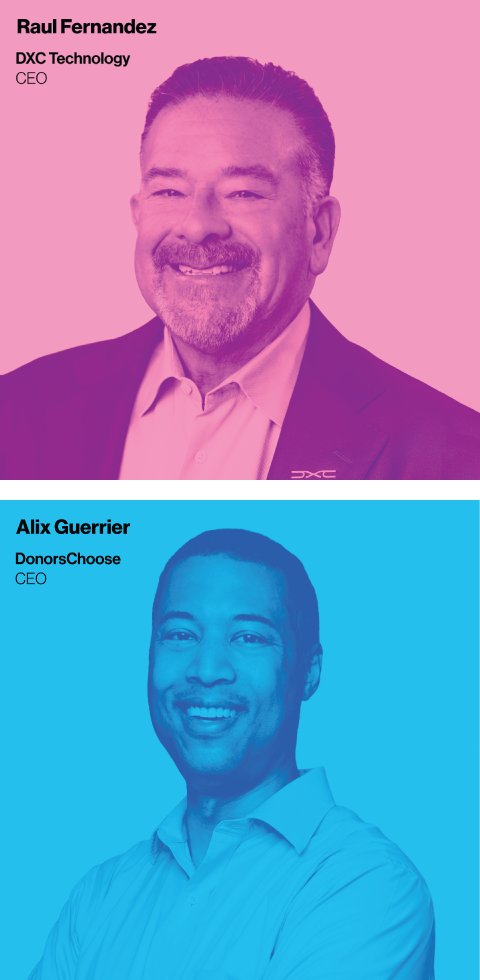
Raul Fernandez
DXC Technology
CEO
Besides being a vice chairman of Monumental Sports & Entertainment, Fernandez helms the public tech consulting firm that provides software and IT services to private and public institutions across the globe, including Anthropic and the US Army. One major deal of late: developing software for Ferrari’s new supercar, the F80.
Alix Guerrier
DonorsChoose
CEO
Guerrier’s DonorsChoose puts funds from everyday donors directly into teachers’ hands, helping them get materials they need for their classrooms. With educators at 90 percent of US public schools posting projects on the site, he has a unique insight on their priorities: A growing number of teachers are requesting AI-enabled tools for students with disabilities and those learning English.
Blake Hall
ID.me
Founder and CEO
Nearly 60 percent of US adults have a digital identity wallet through ID.me, letting them sign in across websites without re-verifying their identity each time. The company recently raised $340 million, pushing its valuation past $2 billion as it works toward its goal of giving every American a secure digital identity. Now ID.me is partnering with Servos and ServiceNow to modernize identity verification for Medicaid and SNAP.
Michael Huppe
SoundExchange
President and CEO
As intellectual-property law struggles to keep pace with the proliferation of AI-generated music, Huppe fights for artists and others who own the rights to music to be fairly compensated for use of their recordings. Under his leadership, SoundExchange’s platform has become a global standard for tracking usage and collecting royalties, dis-tributing nearly $1 billion to creators this past year and extending its reach abroad through a partnership with a new, first-of-its-kind rights organization in the United Arab Emirates.
Josh Kamdjou
Sublime Security
Founder and CEO
Kamdjou spent ten years in offensive cybersecurity at the Pentagon, where phishing proved the fastest way into any network. His Sublime platform is the tool that would have stopped him, automatically detecting and preventing email attacks using systems tailor-made to each organization’s needs. Spotify and Lockheed Martin are big names on its clientele roster.
Lisa Kaplan
Alethea
Founder and CEO
An expert on political disinformation and information warfare, Kaplan uses Alethea’s Artemis threat-hunting platform to uncover co-ordinated influence operations, including an AI-generated propaganda campaign on TikTok de-signed to promote Iran’s military strength. The company recently introduced takedown agents to the platform that identify and remove malicious content before it can spread at scale.
Robert M. Lee
Dragos
Cofounder and CEO
This summer, Lee struck a major deal, giving Accenture a majority stake in Dragos. The Hanover, Maryland, company will also absorb two other cybersecurity firms, turning it into an all-in-one defense system for the physical infrastructure that keeps the world running.
TJ Leonard
Storyblocks
CEO
Leonard sees AI not as a replacement to human creativity but as a tool for enhancing it. Storyblocks’ new AI-powered voiceover and editing tools are designed to give creators more control over their work, he says, while its library of more than 6 million photos, videos, and audio clips remains entirely human-made.
Ray Martinez
Everfi
CEO
Martinez is turning Everfi’s no-cost digital lessons into a bridge between banks and low-income communities, helping both teens and adults learn personal-finance skills, such as reducing debt or saving for retirement, while giving institutions data showing where their money went and whom it helped.
Dave Merkel
Expel
Cofounder and CEO
Merkel has put good customer service at the center of Expel’s cybersecurity services, an approach that has earned his firm more than a billion dollars. On its blog, threat-intelligence analysts investigate malware threats and explain how businesses can protect themselves.
Ben Miller
Fundrise
Cofounder and CEO
For nearly 15 years, Miller has worked to give everyday investors access to the same assets traditionally reserved for the ultrawealthy. His online investment platform has since invested in more than $7 billion worth of real estate and now manages $2.87 billion in equity for 385,000-plus investors. His latest launch, RealAI, applies that mission to real-estate intelligence.
Haroon Mokhtarzada
Rocket Money
CEO and Chairman
With more than 10 million users, Mokhtarzada’s award-winning company remains a top personal-finance app that has saved customers over $2.5 billion through bill negotiations and subscription cancellations.
Ramu Potarazu
Lynk
CEO and Chairman
Fewer than 5 percent of low-income countries have access to 5G coverage, and Lynk is working on getting them connected. In a handful of island nations, its network of low-orbit satellites enable intermittent basic messaging and alert services and, soon, access to Whatsapp and other mobile apps. An even more ambitious goal: providing global continuous service by next year.
Vijay Ravindran
Floreo
Founder and CEO
Ravindran is working toward turning Floreo from a promising virtual-reality learning tool into a clinically proven autism and ADHD therapy—one that doctors could prescribe and Medicaid programs could help families afford. If authorized, the platform would be one of the first FDA-approved digital therapies addressing social and communication challenges associated with autism, such as being unable to interpret social cues and having difficulty navigating unsafe situations.
Abir Ray
Expression
CEO
In its latest effort to help the military manage electromagnetic spectrum—the radio frequencies used by radars and satellites—Expression is deploying “high-assurance” AI agents on sensitive national-security missions. The systems automate time-consuming routine tasks while allowing government analysts to review their work and intervene when necessary, which Ray says reduces some counterintelligence work from weeks to hours.
Martine Rothblatt
United Therapeutics
Founder, Chairperson, and CEO
Rothblatt is moving her decades-long quest to end the organ-donor shortage closer to reality. Since late last year, United Therapeutics has launched the world’s first clinical trial of gene-edited pig-kidney and -heart transplants while developing a device that can salvage rejected lungs.
Rick Rudman
Curbio
Cofounder and CEO
A serial entrepreneur, Rudman went through a lot of hurdles to renovate his home and vowed to prevent the same thing from happening to others. His Potomac-based Curbio handles repairs and staging while sellers sit back and watch the progress unfold through an app.
John Serafini
HawkEye 360
CEO and Founder
Serafini’s geospatial-analytics company went public in May, debuting at a $3.15 billion valuation and underscoring investors’ growing appetite for defense companies. HawkEye—which operates a fleet of more than 30 satellites that collect radio-frequency signals and turn them into intelligence about maritime activity, difficult-to-monitor regions, and sources of GPS interference—aims to become a central hub for signals intelligence.
Husein Sharaf
Cloudforce
CEO and Founder
Sharaf’s nebulaONE platform gives universities and other organizations—now more than 3 million users—secure access to leading AI models while keeping their data private and costs low. In January, Cloudforce secured $10 million from Owl Ventures and Microsoft to expand the platform into the healthcare, education, and public sectors worldwide.
Varun Sivaram
Emerald AI
Founder and CEO
As the US power grid struggles to meet the demands of data centers, Sivaram is offering a potential solution. His Nvidia-backed platform pauses or redirects AI workloads to other parts of local power grids during periods of stress. Emerald AI is also working with Nvidia and top power companies to develop AI facilities that can adapt to the grid’s needs.
Matt Theurer and Lauren Stack
HyperSpectral
Cofounder, President, and CEO (Theurer) and Cofounder and COO (Stack)
Theurer and Stack’s AI-powered spectroscopy platform can detect pathogens and contaminants in food-processing and healthcare facilities in just minutes, a feat that used to take days. Last fall, HyperSpectral received $7 million in funding to double its workforce.
Steve Trundle
Alarm.com
President and CEO
Trundle continues to expand Alarm.com’s $2.75 billion secu-rity platform with new tech designed to keep homes and businesses safe. This summer, Alarm.com stepped into the fire-safety market with its first fire-communication device for commercial properties, which sends users real-time alerts.
Rick Wagner
Agile Defense
CEO
Agile Defense won three contracts worth at least $247 million to modernize the Pentagon and the DOJ, including embedding engineers with military units so troops can learn to use and build AI tools for live missions.
Trenor Williams
Socially Determined
Founder and CEO
A former family physician, Williams taps data on social determinants—such as housing and food access—to give healthcare providers and insurers a fuller picture of their patients’ health. Because states resumed annual Medicaid eligibility checks, more than 18 million people have been disenrolled. This year, Socially Determined released a model that identifies eligible beneficiaries who face barriers to renewing their coverage.
Will Wilson
Antithesis
Cofounder and CEO
Wilson spotted a pain point in many tech companies: constant bugs that slowed down production for months. His Vienna-based Antithesis stress-tests software with simulated system crashes, network failures, and unusual user behavior to uncover hard-to-find bugs before they cause problems. In December, the company closed a $105 million funding round.
Alex Wirth
Quorum
Cofounder and CEO
Wirth’s Quorum is an omni-tool for public-affairs pros at nonprofits and large corporations alike, offering users real-time legislation tracking, PAC management, and ad-campaign deployment. In July, the platform secured an investment from the Chevy Chase firm Enlightenment Capital to develop more AI tools.
John B. Wood
Telos
CEO and Chairman
Wood is putting his Xacta platform to work on one of the government’s most tedious jobs—documenting that its intelligence, surveillance, and reconnaissance systems com-ply with security standards. This spring, federal agencies got the okay to use Xacta with highly sensitive information, while the Air Force adopted the technology for its global intelligence operations.
Official DC
Appointees, electeds, and government officials
Brendan Carr
Federal Communications Commission
Chairman
Carr has rapidly marshaled the FCC’s powers to further the Trump administration’s goals, launching investigations into companies such as ABC for perceived liberal bias. He also lifted a longstanding restriction on merger size this year to allow the creation of the nation’s largest broadcaster, with politically conservative Nexstar absorbing smaller rival Tegna.
Chris Coons
US Senate
Coons, a Democrat and the senior senator from Delaware, introduced the “NO FAKES Act,” which passed the Senate Judiciary Committee in June. It would create new protections against AI-enabled replicas and deepfakes and allow people to sue over the unauthorized use of their likeness.
Andrew Ferguson
Federal Trade Commission
Chairman
Ferguson has brought a major shift to the FTC, pulling back on his predecessor’s focus on Big Tech antitrust enforcement while taking aim at deceptive business practices. Ferguson’s FTC has also prominently supported Trump-administration political priorities, such as probing a California-based diversity, equity and inclusion (DEI) consultancy and digital-advertising standards that allegedly disadvantaged conservative viewpoints.
Kelly Fletcher
State Department
Chief Information Officer
Under Fletcher’s leadership, the State Department has been experimenting with AI tools, including agentic AI for administrative support and generative AI for rapid translation. Before taking on the State Department role in 2022, Fletcher spent much of her career in IT positions at the Department of Defense.
Bill Frauenhofer
Commerce Department
Executive Director for Semiconductor Investment and Innovation
Frauenhofer, formerly Morgan Stanley’s head of West Coast technology investment banking, has taken on executive leadership of the CHIPS Act, overseeing more than $50 billion of government funding to onshore semiconductor manufacturing. His office has since made a string of investments, including in upstream rare-earth suppliers and a project for IBM to build the first US quantum-chip foundry.
Darío Gil
Department of Energy
Undersecretary for Science
Gil oversees the nation’s largest federal sponsor for basic research in the physical sciences and has been active in the past year, including launching the Genesis Mission, which seeks to apply AI and quantum computing to double the productivity of American science and engineering within a decade. Previously, when he was a vice president of research at IBM, his team developed the world’s first cloud-accessible quantum computer.
Anna Gomez
Federal Communications Commission
Commissioner
Gomez, the only Democrat among three FCC commissioners this year, has taken on a nontraditional and influential role in pushing for companies to reject her own agency’s requests and demands. Her public letter in May to Disney CEO Josh D’Amaro, in which she encouraged the company to use legal tools to fight the FCC’s control over its broadcasts, made headlines.
Paul Kihn
District of Columbia
Deputy Mayor for Education
Kihn worked with local economic-development leaders to launch TalentCapital.ai, a tool that connects employment seekers to open jobs, in an effort to harness agentic AI’s powers to ease the impact of mass federal layoffs. His team has also set up MOST.DC.gov, a family portal aggregating out-of-school-time offerings, and a city data platform to analyze factors affecting young people’s wage potential.
Michael Kratsios
White House
Science Adviser to the President and Director, Office of Science and Technology Policy
The former chief of staff to Palantir cofounder Peter Thiel has put the White House’s focus on cutting red tape for AI and other emerging technologies, releasing a national AI framework and a quantum-computing executive order while welcoming input from Silicon Valley executives. He was previously chief technology officer for Trump’s first term and a managing director of Scale AI.
Scott Kupor
Office of Personnel Management
Director
As head of the federal government’s HR department, Kupor is spearheading the Trump administration’s Tech Force program, which is placing about 1,000 early-career technologists across federal agencies. The engineers will be working on “high impact” technological initiatives, including AI implementation and data modernization.
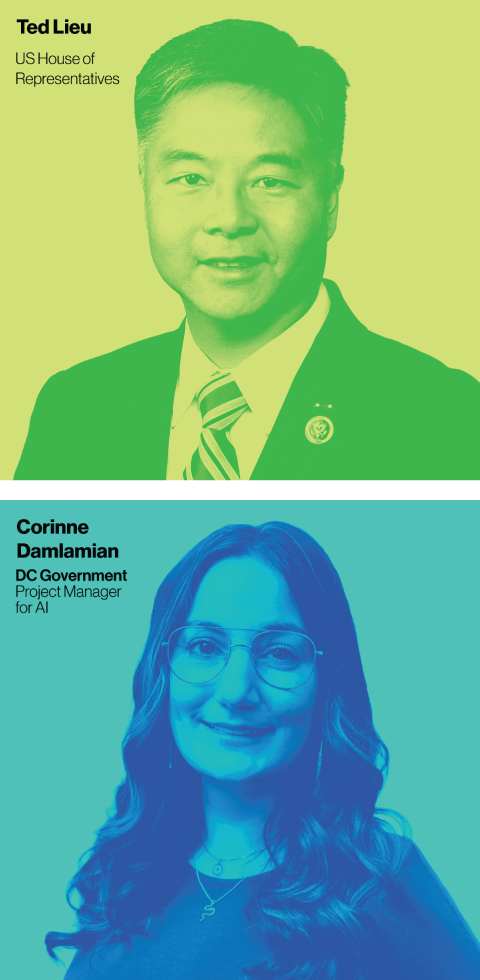
Ted Lieu and Jay Obernolte
US House of Representatives
In April, the two California congressmen introduced the American Leadership in AI Act, which brings together many of the recommendations they developed as heads of the Bipartisan Artificial Intelligence Task Force. The legislation would strengthen the US capacity to measure and evaluate AI, support the build-out of research infrastructure, and expand AI education.
Stephen N. Miller and Corinne Damlamian
District of Columbia
Chief Technology Officer (Miller) and Project Manager for AI (Damlamian)
Miller leads DC’s Artificial Intelligence Task Force, which is guiding the city’s efforts to implement AI in ways that are ethical, safe, and efficient. The District became the first major city to require responsible AI training for government workers earlier this year. Damlamian, on his team, is working to formulate and implement these new training programs.
Wes Moore and Katie Savage
State of Maryland
Governor (Moore) and Secretary, Department of Information Technology (Savage)
The Maryland governor is pursuing an economic strategy focused on “lighthouse” industries like quantum computing, life sciences, and aerospace. He is also seeking to make the Discovery District at College Park a leading quantum-research hub and launched the Maryland AI Innovation Lab in May. Savage, who previously helped develop the Defense Department’s Covid pandemic response, has been upgrading the state’s cybersecurity protections for the agentic-AI era.
Arvind Raman and Craig Burkhardt
Department of Commerce
Undersecretary for Standards and Technology and Director, NIST (Raman), and Deputy Undersecretary for Standards and Technology and Deputy Director, NIST (Burkhardt)
Raman, a former engineering dean at Purdue, took over as head of NIST in June as it seeks to help accelerate the national rollout of AI technologies. He takes the reins from Burkhardt, the former acting NIST head, who launched an AI manufacturing center for the institute in December.
Buddy Rizer
Loudoun County Department of Economic Development
Executive Director
Rizer is nicknamed the “Godfather of Data Center Alley” for transforming Loudoun into the world’s number-one data-center market. The industry has created some 15,000 jobs and put Loudoun County on the high-tech map, though the 53 million square feet of permitted data centers has drawn recent pro-test from some residents for its pollution and electricity usage.
Mike Rounds and Martin Heinrich
US Senate
Chairs, Artificial Intelligence Caucus
Rounds (R-SD) and Heinrich (D-NM) chair this bipartisan Senate group working to develop policy that balances the risks and rewards of AI to support the US economy. Earlier this year, they introduced the CREATE AI Act, which would set up national AI computational-research resources that could be used by researchers and students across the nation.
General Joshua M. Rudd
National Security Agency/Central Security Service
Director and Commander, US Cyber Command
Rudd, who was confirmed for the powerful dual role in March, told Congress that investing in AI tools to outflank adversaries would be a priority for him, with an aim of agile cooperation across the government, private sector, and global partners. He was previously a Special Forces officer and deputy commander for US Indo-Pacific Command.
David Sacks
Co-Chair
President’s Council of Advisors on Science and Technology
Sacks, the prominent venture capitalist, made his mark in the first year of Trump’s second term as the White House’s AI czar, pushing policies favorable for AI investment and US technological exports. He shifted full-time to the advisory role in March as PCAST co-chair, leading a small group of tech executives in bringing suggestions to Trump.
Cameron Stanley
Pentagon
Chief Digital and Artificial Intelligence Officer
Stanley took the helm of the Pentagon’s AI efforts in January as the Trump administration has been pushing the department to accelerate its adoption of AI, despite public debate about safeguards surrounding the powerful new tools. He previously led the US military’s machine-learning Project Maven initiative and most recently worked on national-security issues at Amazon Web Services.
Mark Warner
US Senate
Mark Warner, senior senator from Virginia, proposed in July a roadmap for dozens of pieces of legislation to curb AI’s harms while ensuring US competitiveness. Among them were measures to address child safety, energy usage, and deepfakes. Warner has urged Congress to move quickly to keep up with the technology’s advancement.
Stephen Winchell
Defense Advanced Research Projects Agency
Director
Winchell, who previously oversaw AI and automation projects at the Pentagon, has been pushing DARPA to work with the private sector to more rapidly commercialize the agency’s high-risk moonshot R&D work. Under Winchell’s leadership, DARPA is studying futuristic technical problems like how to harness and capture an asteroid or how to accurately navigate in the region between Earth and the moon.
Ron Wyden
US Senate
The senior senator from Oregon since 1996, Wyden has for years led efforts in the Senate to increase transparency surrounding federal surveillance and wiretapping activities. In the past year, the Democrat has warned that the Trump administration is using surveillance powers in expansive ways to conduct warrantless searches of political opponents, and he cosponsored a bill that would ban ICE and CBP from using facial-recognition technologies.
Money Folks
VCs, investors, and bankers
Jenny Abramson
Rethink Impact
Founder and Managing Partner
Abramson writes multimillion-dollar checks to female and nonbinary tech execs who are working to solve issues in health, climate, and education. The latest additions to her portfolio: Seven Starling, a maternal-mental-health app, and Nectir, which builds personalized AI assistants for educators.
Dan Barker, Dahna Goldstein, and Kate Goodall
Halcyon
President and CEO, Halcyon (Barker) and Managing Partners, Halcyon Venture Partners (Goldstein and Goodall)
While Barker is bringing the impact-driven accelerator to more cities around the US and the Caribbean, Goldstein and Goodall are backing companies working to dis-mantle structural inequities. That includes DenZen, an insurance-tech platform that covers housing payments if a tenant loses their job, and Suyana, which monitors weather conditions with satellite data and sends automatic payouts to businesses and farmers without the lengthy claims process.
Joe Benevento, Tom Weithman, and Jennifer O’Daniel
Virginia Innovation Partnership Corporation
President and CEO (Benevento), Chief Investment Officer and Vice President, Investment (Weithman), and Senior Investment Director (O’Daniel)
Since the state-backed accelerator’s creation five years ago, the amount of venture-capital investment in Virginia startups has nearly doubled, reaching $2.9 billion in 2025, according to a National Venture Capital Association report. Of course, VIPC wants more: A collaboration with the state’s six research universities aims to double the number of startups coming out of the schools.
Jason Booma, Evan DeCorte, Jim Fleming, Patrick Hendy, Monish Kundra, and John Siegel
Columbia Capital
Partners
Booma and his partners have built Columbia Capital into such a force in digital infrastructure that Austin-based Digital Reality, one of the world’s largest data-center companies, is paying three-fourths of a billion dollars to ac-quire its $9 billion investment firm and gain an edge in the AI infrastructure boom. The deal is expected to close later this year.
Phil Bronner and Phil Herget
Ardent Venture Partners
Cofounder and Managing Partner (Bronner) and Cofounder and General Partner (Herget)
Longtime investors Bronner and Herget are doubling down on AI—particularly software that automates work usually done by humans—and are backing companies with tools that do everything from forecasting geopolitical events to generating recipes based on photos of food.
Steve Case, Ted Leonsis, Tige Savage, Todd Klein, and David Hall
Revolution
Chairman and CEO (Case), Cofounder and Partner, Revolution Growth (Leonsis), Managing Partner, Revolution Ventures (Savage), Managing Partner, Revolution Growth (Klein), and Managing Partner, Rise of the Rest Seed Fund (Hall)
More than 20 years ago, Case and Leonsis started Revolution with the belief that innovation isn’t confined to Silicon Valley. A recent surge of investments in DC-area startups and more than $2 billion raised by the operation’s 200-plus portfolio companies show the duo wasn’t wrong.
Michael Clarke, Michael Graninger, and Barron Martin Jr.
Sands Capital
Managing Partners
Sands invests at every level of a company’s growth—even after it has become massively successful. (Legora and Anthropic are a couple examples.) In March, it closed a $1.1 billion fund focused on tech companies in fintech, e-commerce, AI, and cloud-native software.
Thanasis Delistathis and John Burke
PROOF
Cofounders and Managing Partners
This Reston firm invests in “hypergrowth” companies, or those making exponential profit. The latest hits in their massive portfolio: the military-workflow software Onebrief and Hydra Host, which connects independent data centers with businesses needing high-performance computing.
Lawson DeVries, Steve Fredrick, and Julia Taxin
Grotech Ventures
Managing General Partner (DeVries), General Partner (Fredrick), and Venture Partner (Taxin)
The Owing Mills trio are using Grotech’s $310 million fund to back a new wave of practical-AI companies. Instead of flashy consumer chatbots, their 40-plus portfolio consists of business-to-business software that helps retain customers, manage data, automate tasks, and defend computer systems.
Monica Brand Engel and Jonathan Whittle
Quona Capital
Cofounders and Managing Partners
Seasoned investors Engel and Whittle are backing fintech companies with a mission to increase access to financial services across Latin America, Africa, India, and Southeast Asia. Their portfolio—which includes the Brazilian asset-backed lender Creditas and the Indian agri-platform Arya.ag—generated $3 billion in revenue last year.
Mina Faltas
Washington Harbour Partners
Founder and Chief Investment Officer
Faltas built his Arlington firm around the idea that DC has an edge that NYC and San Francisco lack—he’s deploying nearly $6 billion across cybersecurity and enterprise-software companies that are selling tech to the federal government. So far, he hasn’t been wrong: OpenAI and Anduril are just two of Washington Harbour’s successful investments.
Mark Frantz and Kevin Robbins
Blue Delta Capital Partners
Cofounders and Managing Partners
Frantz and Robbins write multimillion-dollar checks to companies that sell technology to the federal government, such as those that defend against cyberattacks and hostile drones. And unlike other investors, Blue Delta doesn’t seek out ownership, so founders don’t have to surrender control.
David Grain, Ted Manvitz, Jenny Kashdan, and Michael McKenzie
Grain Management
CEO and Founder (Grain), Managing Director and Head of Investments (Manvitz), Managing Director and Co-head of US Investments (Kashdan), and Managing Director (McKenzie)
Coming up on 20 years, Grain’s team remains set on keeping the world connected. Of late, that means putting its $12 billion to work in the infrastructure needed to meet the demands of AI—including data centers, cooling systems, and fiber networks.
Dayna Grayson and Rachel Holt
Construct Capital
Cofounders and General Partners
Grayson and Holt got ahead of the game by writing checks for startups advancing tech in what they call “foundational” industries—manufacturing, logistics, defense, and energy—before other investors caught on. They now manage $750 million across three funds, with portfolio companies such as Hadrian already landing Navy contracts.
Carter Griffin and Jon Seeber
Updata Partners
General Partners
Griffin and Seeber’s Updata Partners remains a silent powerhouse in the business-to-business software scene, closing a massive $875 million funding round that brought the cash under its management to more than $2.6 billion. Another recent win for their portfolio: The Chicago cloud-management platform Nerdio achieved unicorn status last spring.
Ron Gula and Cyndi Gula
Gula Tech Adventures
President (Ron) and Managing Partner (Cyndi)
Tenable vets Ron and Cyndi Gula have poured more than $200 million of their own money into startups working to strengthen our country’s cyberspace while helping nonprofits assess and improve their cyberdefenses.
Anne Healy and Jennifer Pahlka
Recoding America
CEO (Healy) and Senior Adviser and Board Chair (Pahlka)
After DOGE’s indiscriminate approach to cutting the federal government, Healy, a former US AID official, and Pahlka, former deputy chief technology officer under Obama, are taking a different approach to government reform. They have an ambitious goal to spend $120 million over six years to rebuild how the government hires employees, buys technology, and delivers services at the local, state, and federal levels.
Jim Hunt, Daniel Hanks, and Steve Smoot
Lavrock Ventures
General Partner (Hunt) and Managing Partners (Hanks and Smoot)
The Lavrock trio has raised $125 million for their third and largest fund to back the new defense-industrial base, investing in companies that can turn machines such as long-range precision weapons and hypersonic missiles into affordable, mass-produced systems.
Jack Kerrigan, Richard Moxley, Steve Pann, Mark Spoto, and Peggy Styer
Razor’s Edge Ventures
Cofounders and Managing Partners
This billion-dollar Reston firm led by former national-security execs is putting $560 million to work building the next generation of defense companies with an emphasis on AI-powered warfare such as autonomous maritime defense systems and advanced sensors.
Troy A. LeMaile-Stovall, Tammi Thomas, and Jack Miner
TEDCO
CEO (LeMaile-Stovall), President (Thomas), and Chief Investment Officer (Miner)
TEDCO—short for the Maryland Technology Development Corporation—has become the hub of technological innovation in the state, investing millions in local early-stage startups and providing business assistance to entrepreneurs. The investments are paying off, too. In 2023 alone, their portfolio companies generated $2.7 billion in economic activity in Maryland.
Mike Lincoln
Cooley
Vice Chair
Lincoln has spent nearly three decades building Cooley’s presence in the region as it has become the go-to law firm for East Coast startups looking to secure acquisitions and millions in funding. Recently, he led the team advising Armadin, an AI-native cybersecurity company, on a record-breaking $189.9 million funding round.
Nigel Morris
QED Investors
Cofounder and Managing Partner
Morris, who shook up the banking world with Capital One, predicts AI agents will be the next movers in fintech by independently managing business operations and moving money—taking care of tedious tasks that humans do. Portfolio companies working in this area: Meow, which allows AI agents to open business accounts and issue virtual cards, and Catena Labs, which is building an AI-focused financial institution.
Nasir Qadree
Zeal Capital Partners
Founder and Managing Partner
Qadree’s firm seeks out founders who don’t fit the traditional mold— a young male computer science graduate with Silicon Valley dreams. Instead, he’s focusing on startups across fintech, health, and the future of learning and work that aim to change society for good, not just turn a profit.
Fredrick D. Schaufeld and Anthony Nader
SWaN & Legend Venture Partners
Cofounders and Partners
Schaufeld and Nader are well-known investors in the consumer-technology space, with their hands in some of the region’s most recognizable startups, including Cava and Framebridge. Their bets on what consumers want, buy, or do has paid off: Four portfolio companies have gone public, and seven others have been acquired.
Michael Steed, Mark Maloney, Ed Albrigo, and Christopher Steed
Paladin Capital Group
Founder and Managing Partner (Michael), Cofounder, Managing Director, and Chief Compliance Officer (Maloney), COO (Albrigo), and Chief Investment Officer and Managing Director (Christopher)
Paladin has its sights set on a $300 million fund, expected to close by the end of the year, that will back technology designed to make AI safer and more reliable—such as tools that monitor autonomous agents, repair cyberdamage, and detect fraud.
Michael Sutton
Runtime Ventures
Cofounder and General Partner
With two decades as a cybersecurity operator under his belt, Sutton knows what it takes for a cybersecurity startup to thrive. Runtime Ventures backs early-stage companies, providing both money and mentorship through a $32 million fund. In just a year, two of its portfolio companies have already been acquired.
Devin Talbott
Enlightenment Capital
Founder and CEO
Talbott is using Enlightenment’s $825 million to expand government-tech companies beyond traditional defense contractors. Recent examples are fellow Tech Titan Alex Wirth’s Quorum and Ridge-line, which merged with another company to create a larger platform that protects sensitive government personnel, data, and facilities.
Grant Verstandig
Red Cell Partners
Founder, Chairman, and CEO
Serial entrepreneur Verstandig is turning Red Cell into a factory for companies tackling the less glamorous problems in healthcare and national security—from automating hospital paperwork to managing power usage for data centers. Some big news: In July, he got former Virginia governor Glenn Youngkin onboard as a partner.
Policy People
Advocates and lobbyists for the tech sector
Stewart Barber and Bruce Andrews
Nvidia
Senior Director, Government Affairs (Barber), and Chief External Affairs Officer (Andrews)
Barber and a small team have rapidly built out Nvidia’s Washington presence as the company’s AI chips have catapulted Nvidia into one of the world’s most valuable companies and into the policymaking limelight. Barber, who served in Trump’s first administration on international initiatives and worked on government affairs at the Semiconductor Industry Association, leads Nvidia’s White House and congressional engagement. Andrews, a former deputy Commerce Secretary and chief government-affairs officer at Intel, joined in June to lead the company’s global external outreach.
Karan Bhatia, John Connell, and Anne Wall
Global Head, Government Affairs and Public Policy (Bhatia), Vice President, Government Affairs and Public Policy for the US and Canada (Connell), and Head, US Federal Government Affairs and Public Policy (Wall)
Google’s public-policy team has been lobbying the Trump administration hard for a policy U-turn after the internet giant became a central target of the Biden administration’s anti-monopoly investigations. Bhatia, a former deputy US trade representative, Connell, who was chief of staff for Senator Todd Young, and Wall, who worked for the Obama White House, have been arguing that Google can be a better AI partner to the federal government if it’s not overly fettered by regulatory constraints.
Stoney Burke and Ryan Dattilo
Aquia Group
Founder and CEO (Burke) and Partner (Dattilo)
Burke, a former top lobbyist for Amazon Web Services, founded the Aquia Group as a policy-and-communications advisory, landing customers such as Anthropic and AWS. Dattilo, an Aquia partner, launched the Agentic Futures Initiative last fall, a new lobbying group for the fast-emerging agentic-AI industry.
James Burnham
SpaceXAI
General Counsel
Burnham joined Elon Musk’s fast-growing AI company in November, following a stint as general counsel for the Department of Government Efficiency, the Trump administration’s cost-cutting initiative. Under his direction, SpaceXAI has been building a “strike force” of lawyers for protecting the company’s interests and “defending free speech around the world,” and he recently gained the administration’s backing in an environmental case filed by the NAACP.
Kara Calvert
Coinbase
Vice President, US Policy
Calvert has helped shape federal policy for the fast-moving cryptocurrency industry over the past five years as head lobbyist for the cryptocurrency exchange Coinbase. The company has been lobbying on the Clarity Act, a cryptocurrency regulatory framework.
Teresa Carlson and Brian Peters
Anthropic
Global Head of Public Sector (Carlson) and Head of North America Government Affairs (Peters)
The fast-growing AI company tapped Carlson—a public-sector strategy veteran of Microsoft, AWS, and General Catalyst—in July to help navigate its contentious relationship with the Trump administration. Anthropic sued the Pentagon for retaliation earlier this year after the company criticized the military’s rejection of its requested AI guardrails. She joins Peters, a former Stripe lobbyist, who has been putting forward Anthropic’s vision for AI governance since joining the company last year.
Jay Chittooran
Stack Infrastructure
Senior Vice President, Public Affairs
Chittooran leads public engagement for Stack Infrastructure, the Denver data center company that’s building large-scale computing infrastructure around the world. He previously led Samsung’s US government relations during the critical juncture when the South Korean tech giant was negotiating its multibillion-dollar investments in Texas.
Peter Cleveland
TSMC
Senior Vice President
Cleveland helped negotiate the Taiwanese chip-maker’s mammoth $265 billion US manufacturing investment pledge, which marks the largest single foreign direct investment in US history. TSMC has become a recent focus of US policy as a key supplier of AI chips for Silicon Valley companies such as Apple and Nvidia.
Robin Colwell
Intel
Senior Vice President, Global Government Affairs
Colwell, who joined Intel in January and previously worked on economic policy at the White House, leads government relations for the tech giant at a critical moment as the Trump administration has taken a keen interest in its turnaround by acquiring a major portion of the company’s stock. Intel was the largest recipient of federal subsidies under the CHIPS and Science Act, with US policymakers considering it key to national security.
Dante Disparte and Ashley Scott
Circle
Chief Strategy Officer and Head, Global Policy and Operations (Disparte), and Senior Director, Global Policy and Government Affairs (Scott)
At Circle, the first publicly traded stablecoin issuer in the US, Disparte had advocated for the GENIUS Act, which put a regulatory framework for payment stablecoins into place when it was signed into law last year. It has since been pushing for follow-on legislation through the Clarity Act, which would more broadly regulate cryptocurrencies. Scott, formerly Lime’s head of global public policy, has been evangelizing cryptocurrency to regulators around the world.
Jeff Dressler
SoftBank Group International
Managing Partner and Head of Global Government Affairs
Dressler has guided the massive Japanese multinational investment company through the rapidly changing Washington policy environment, including helping negotiate its role in the Trump administration’s Stargate AI infrastructure project alongside OpenAI and Oracle.
Mat Dunn
SpaceX
Vice President, Government Affairs
Dunn heads up government affairs for Elon Musk’s spacefaring company, which has taken on an increasingly key role in the US government’s blueprints for space exploration, satellite communications, and defense. He was previously legislative director for the National Marine Manufacturers Association and has chaired committees at the Aerospace Industries Association and Commercial Spaceflight Federation.
Kathleen Grillo
Verizon
Senior Vice President, Public Policy and Government Affairs
Grillo, who leads a Verizon team of 200-plus lawyers, lobbyists, and policy experts, has been working on issues including spectrum policy, AI, data-privacy regulation, and broadband access and deployment. She has been a top advocate for extension of the Affordable Connectivity Program.
Mike Harney
IBM
Vice President, Government and Regulatory Affairs
After spending much of his career in government, Harney joined IBM as its chief Washington representative last year as the advanced computing company has made big investments in cutting-edge quantum research. IBM announced a deal in May with the Department of Commerce to build the nation’s first quantum-chip foundry. Harney previously was chief of staff for Commerce Secretary Gina Raimondo and for Senator Mark Warner.
Fred Humphries
Microsoft
Corporate Vice President, US Government Affairs
Humphries has shaped Microsoft’s federal-government-policy strategy for nearly two decades, tackling issues like cloud computing, privacy, trade, and racial equity. In the past year, he has lobbied on issues including AI and data-center energy costs.
Brian Huseman and Steve Hartell
Amazon
Vice President, Public Policy and Community Engagement (Huseman), and Vice President, US Public Policy (Hartell)
Huseman and Hartell, who have each worked on Amazon’s public policy for well over a decade, are now steering the company’s approach as it seeks federal support for its fledgling multibillion-dollar satellite venture and its AI research. An FTC monopoly case against Amazon is still hanging in the balance and is scheduled to go to trial next year.
Michael Kennedy
Intuit
Senior Vice President and Chief Corporate Affairs Officer
Kennedy leads policy work for Intuit, which is behind the tax-preparation service TurboTax, the accounting software QuickBooks, and the email-marketing platform Mailchimp. Intuit has been lobbying the Trump administration on topics like tax-filing regulations.
Caroline Kitchens
TikTok USDS Joint Venture
Head of Public Policy Third Party Engagement
Kitchens helms public-policy efforts for TikTok’s new US venture as it seeks to prove that its structure can keep data secure and that its algorithms won’t be influenced from abroad. She comes to TikTok from the think-tank world, having worked for the American Enterprise Institute and R Street Institute.
Daniel Kroese
Palo Alto Networks
Vice President, Public Policy and Government Affairs
Kroese has been advocating for US government agencies to rapidly adopt new advanced AI tools in their cybersecurity systems as AI dramatically shrinks the amount of time it takes a malicious actor to design a cyberattack. Kroese previously worked at the Cybersecurity and Infrastructure Security Agency and as staff for the House Homeland Security Committee.
Joseph Larson and Chan Park
OpenAI
Vice President and Head of Government (Larson) and Head of US and Canada Policy and Partnerships (Park)
A former Anduril executive, Larson steers OpenAI’s federal contracts at a critical juncture as the US government seeks to adopt AI capabilities rapidly. Park has been shaping the company’s lobbying approach and runs OpenAI’s new DC office with Larson. OpenAI has deepened its government partnerships over the past year, including offering ChatGPT Enterprise to each federal agency for $1 for a year.
Travis LeBlanc
Cooley
Partner and Co-Chair, Global Cyber/Data/Privacy Practice
LeBlanc co-chairs Cooley’s cyber, data, and privacy practice, with clients including Google, Roblox, LG, Zoom, and TikTok. He has led major cybersecurity investigations, tracking down hackers from Ukraine, Australia, and North Korea.
Luther Lowe
Y Combinator
Head of Public Policy
Lowe, a longtime prominent champion of “little tech,” has been advocating for the interests of startups in federal AI, competition, and immigration policy this year as he builds out Y Combinator’s policy footprint in Washington. Formerly at Yelp, Lowe has advocated for years for stricter antitrust enforcement on Big Tech giants to create room for more startup experimentation.
Dina Powell McCormick, Joel Kaplan, Kevin Martin, and Brian Rice
Meta
President and Vice Chairman (McCormick), Chief Global Affairs Officer (Kaplan), Vice President, Global Public Policy (Martin), and Vice President, Public Policy (Rice)
McCormick, who was deputy national-security advisor in the first Trump administration and a former Goldman Sachs partner, brings political firepower to Meta as it seeks federal support for its AI development and awaits the outcome of an FTC antitrust lawsuit in an appeals court. The team also includes Kaplan, a former Republican adviser and Marine Corps officer; Martin, who was FCC chairman during George W. Bush’s presidency; and Rice, a former Verizon vice president.
Collin McCune
Andreessen Horowitz
Head of Government Affairs
McCune, a veteran Hill staffer, has been influential in the Trump administration’s AI policy as chief lobbyist for the famed venture-capital firm. He has been pushing for cryptocurrency legislation and for more industry-friendly regulation for AI.
Giulia McHenry
AT&T
Senior Vice President for Public Policy
McHenry shapes AT&T’s positions on federal and state legislation and regulation and leads policy strategy for the company on issues like AI and 6G. She was previously chief of the FCC’s Office of Economics and Analytics and chief economist for the National Telecommunications and Information Administration.
Maryam Mujica
General Catalyst Institute
President
Following Teresa Carlson’s departure, Mujica stepped up to lead General Catalyst’s policy arm, facilitating direct conversations between more than 800 tech founders and legislators about critical sectors such as healthcare, defense, advanced manufacturing, and energy. One of her main goals: to streamline procurement pathways to make it faster and less burdensome for startups to bring new tech to market.
Tim Powderly and Alexis Marks Mosher
Apple
Senior Director, Government Affairs for the Americas (Powderly), and Director of Congressional Relations (Mosher)
Powderly and Mosher, who have each worked on Apple’s government affairs for more than a decade, have been helping formulate the company’s strategy in response to pressures from the Trump administration to reshore electronics manufacturing. Apple is working with suppliers to build new factories in Arizona and Texas as it lobbies on issues like app-store regulation.
Nate Tibbits
Qualcomm
Senior Vice President, Global Government Affairs
Tibbits, who has led public policy at Qualcomm for more than a decade, is now helping the company navigate the risks and rewards of the federal government’s new policy focus on chips. He has been positioning next-generation wireless as essential infrastructure for the AI era, advocating for policies that will unlock spectrum and support interoperability.
Big Business
Movers and shakers
Craig Abod
Carahsoft
President and CEO
Abod has grown Carahsoft into one of the largest private companies in the US, with Forbes ranking it at number 20 last year and with $18.9 billion in revenue. Carahsoft has come under federal probes in recent years over its pricing and business practices, but the Reston company has continued to grow.
David Appel
Amazon Web Services
Vice President, Global Government, National Security, and Defense; and Acting Vice President, Worldwide Public Sector
Appel is steering AWS’s government relations as the Amazon cloud-computing subsidiary vies for major federal contracts. In 2025, he supported the largest federal technology investment in Amazon history: up to $50 billion to expand AI and supercomputing infrastructure for US government agencies.
Thomas A. Bell
Leidos
CEO
Bell is head of the Reston defense contractor, which counts $17.2 billion in annual revenue and 50,000 employees worldwide. The company has been working to deliver hypersonic weapons, satellite-tracking technology, and AI-enabled decision-making systems to the Pentagon.
Christopher T. Calio
RTX
Chairman and CEO
In four years at RTX, Calio has overseen considerable change, including the company’s rebranding from Raytheon Technologies Corporation and its consolidation from four business sections to three. The world’s second-largest defense contractor is supplying Patriot missile interceptors to Ukraine and radar to the Navy and is in the process of building an advanced telescope for space observation.
Matt Calkins
Appian
Founder, CEO, and Chairman of the Board
Calkins founded the McLean company in 1999, and it has since grown into a $727-million-a-year public enterprise that supplies automation software for complex processes. Appian counts among its customers the US military, government entities in 20 countries, and seven of the top ten pharmaceutical companies.
Karen Dahut and Matthew Schneider
CEO, Google Public Sector (Dahut), and Managing Director of US Education, State, and Local Government, Google Public Sector (Schneider)
Google has been playing catch-up in federal contracting, with its Google Public Sector subsidiary founded in 2022. Dahut, a former Navy officer, has clinched government deals for the company, including deployment of its AI technology at the Pentagon. Schneider, a former Cloudfare and Palo Alto Networks executive, has been spearheading the rollout of Google’s Gemini AI application in Maryland and Los Angeles.
Niccolo de Masi
IonQ
Chairman and CEO
Under the guidance of de Masi, a trained physicist, IonQ tripled its revenue to $130 million in 2025 as it landed US government partnerships in the emerging quantum-computing field. IonQ announced in April that it had achieved the first demonstration of connected, commercial quantum computers, in a joint project with the Air Force Research Laboratory.
Mark Ein and Haniel J. Lynn
Kastle Systems
Executive Chairman (Ein) and CEO (Lynn)
The Falls Church security-systems company grew by more than 50 percent in revenue in 2025, boosted by the acquisition of rival i2G Systems. Ein, a venture capitalist and a Washington Commanders owner, has spearheaded more than $3 billion in investments over his career. Lynn, formerly of the advisory CEB (now Gartner), has led Kastle as CEO since 2018.
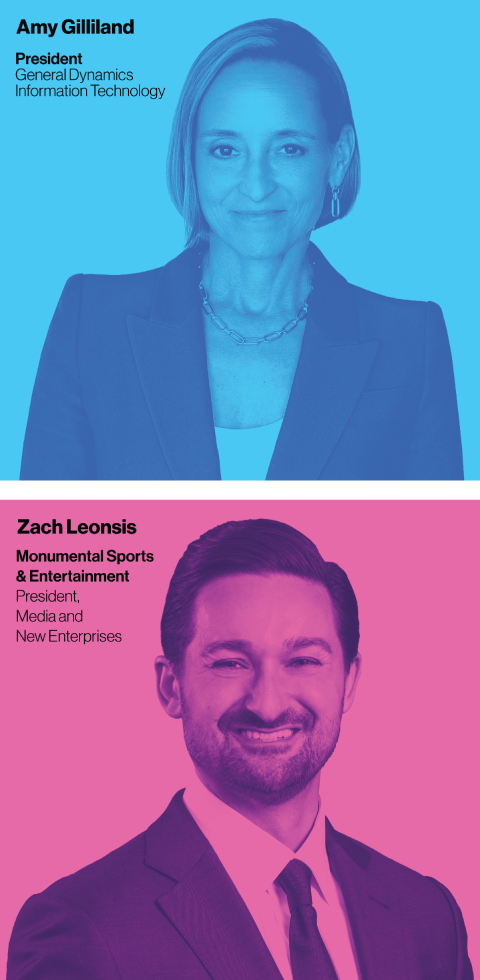
Amy Gilliland
President
General Dynamics Information Technology
Gilliland, a Navy veteran, oversees the Falls Church technology government contractor with 26,000 employees around the world. She has been prioritizing the upskilling of her staff for the AI era, with all employees completing an AI training program last year and 5,000 receiving more advanced training.
Zach Leonsis
Monumental Sports & Entertainment
President, Media and New Enterprises
Leonsis, who drives the company’s tech strategy, has been involved in Monumental’s technological upgrades at Capital One Arena, including the deployment of the Visibowl concourse with 500 feet of immersive digital displays. The company’s Monumental Sports Network has been experimenting with interactive and gamification experiences for viewers.
Phebe N. Novakovic
General Dynamics
Chairman and CEO
Novakovic, a former intelligence officer, has guided the Reston government contractor for 13 years, building it into a $52 billion–a-year aerospace-and-combat-vehicle juggernaut. General Dynamics has secured major Navy contracts this year, including for ships and nuclear submarines.
Jim Reagan
SAIC
CEO
Reagan was formally appointed to lead SAIC in February, after serving as interim CEO since the fall, and has been implementing a strategic refocusing at the $7.3 billion federal contractor. SAIC’s portfolio includes AI-powered systems for the military, planning for NASA missions, and enterprise IT. Reagan was previously an executive at Leidos, Vencore, and PAE.
Horacio Rozanski
Booz Allen Hamilton
Chairman and CEO
In more than three decades at Booz Allen Hamilton, Rozanski has transformed the McLean federal contractor into an advanced technology force. The company has recently been deploying its Vellox agentic-AI cybersecurity suite and working with federal agencies on post-quantum cryptography.
Michael J. Saylor
Strategy
Executive Chairman
Saylor is a prominent advocate of bitcoin, with Strategy (previously MicroStrategy) building the world’s largest treasury of the cryptocurrency starting in 2020. While Strategy’s recent sale of $100 million worth of bitcoin from its stash to repurchase company shares has drawn market attention, Saylor says he has never sold any of his personal holdings and his conviction is unchanged.
Jim Taiclet
Lockheed Martin
Chairman, President, and CEO
Taiclet, a former Air Force pilot, oversees Lockheed Martin’s sprawling defense-technologies portfolio, ranging from fighter jets to command-and-control and missile-defense systems. The world’s largest defense company struck a novel partnership with General Motors in June to pool their expertise for manufacturing, facilitated by the Pentagon.
Steve Vintz
Tenable
Co-CEO
Vintz co-leads the Columbia cybersecurity firm, which sup-plies advanced cyber-risk mitigation solutions for major companies and government agencies. Tenable announced a new US government agreement in December to grant a 65 percent discount to federal agencies for its cloud-security products.
Kathy J. Warden
Northrop Grumman
President, CEO, and Chair
Warden leads the major defense contractor’s staff of nearly 100,000, with investments in advanced manufacturing, autonomy, AI-enabled systems, and space technology. Northrop Grumman is currently working to bring its B-21 Raider aircraft, a next-generation bomber, from testing into commercial operation.
Industry Voices
Trade groups, think tanks, media, and others promoting and reporting on ideas
Dmitri Alperovitch, Maureen Hinman, and Sarah Stewart
Silverado Policy Accelerator
Cofounder and Chairman (Alperovitch), Cofounder and Executive Chair (Hinman), CEO and Executive Director (Stewart)
Alperovitch, cofounder of the cybersecurity firm Crowdstrike, along with US Trade Representative veterans Hinman and Stewart, lead this geopolitical think tank, conducting research on topics such as rare-earth supply chains, export controls, and government AI adoption.
Miranda Bogen
Center for Democracy and Technology
Chief Technologist and Director, AI Governance Lab
Bogen was named CDT’s chief technologist in April after directing the center’s AI Governance Lab for two and a half years and previously working on AI and equity issues at Meta. She has been studying the more subtle ways AI systems can cause societal harm that don’t immediately meet the eye.
Perianne Boring and Cody Carbone
The Digital Chamber
Founder and Chair (Boring) and CEO (Carbone)
Boring founded this blockchain-and-digital-asset trade association in 2014, and Carbone has been CEO since last year, with the two promoting the use of digital currencies. The group has been lobbying this year for the Clarity Act, which would set a regulatory structure for the sale of digital assets.
Brad Carson and Eric Gastfriend
Americans for Responsible Innovation
Cofounder and President (Carson) and Cofounder and Executive Director (Gastfriend)
Carson, undersecretary for the Army during the Obama ad-ministration, and Gastfriend, a digital-health tech entrepreneur, launched their nonprofit in 2024, promoting the responsible deployment of AI. In the past year, they’ve opposed federal preemption of state AI regulation and advocated for closer scrutiny of chatbot safety for children, while tracking international military AI frameworks at GlobalAIDefense.net.
Daniel Castro
Information Technology and Innovation Foundation
President
Castro took over at ITIF in May, steering its research and advocacy for policies to accelerate tech innovation. It marks a major change of guard at the pro-free-markets think tank, which founder Rob Atkinson led for two decades. Castro is also the founder of ITIF’s Center for Data Innovation.
Peter Chandler
Internet Works
Executive Director
Chandler is the first executive director of this association representing small and medium-size internet platforms such as eBay, TripAdvisor, Discord, Reddit, and Grindr. He is championing the interests of “middle tech,” pushing against one-size-fits-all legislation for the industry.
Adam Conner
Center for American Progress
Vice President, Technology Policy
Conner has worked on technology policy in Washington since 2007, when he founded Meta’s DC office. He was also Slack’s first employee here. At the progressive CAP, he has been researching AI safeguards and policy response to AI job loss.
J. Michael Daniel
Cyber Threat Alliance
President and CEO
Daniel, a former National Security Council cybersecurity coordinator, leads this coalition of major cybersecurity providers that share intelligence on emerging threats. The group began in 2014 as an informal arrangement among Fortinet, McAfee, Palo Alto Networks, and Symantec and has since progressed to an official nonprofit that has recently been focused on defending against AI-assisted cyberattacks.
Steve DelBianco
NetChoice
President and CEO
DelBianco has overseen the small but active tech trade group since 2002, with NetChoice gaining a reputation for filing court challenges against state regulation on behalf of tech giants such as Amazon, Google, and Meta. NetChoice has sued states including South Carolina, Nebraska, and Minnesota this year, arguing that their digital regulations restrict free speech.
Teddy Downey
The Capitol Forum
CEO and Executive Editor
Since 2012, Downey has led this subscription-based information service, which provides some of the most detailed coverage of antitrust regulation and other forms of regulatory risk, with Big Tech a frequent subject. While the service is primarily focused on Washington, it has been building out a bureau in Europe, where there has been vigorous internet regulation.
Victoria A. Espinel, Craig Albright, and Aaron Cooper
BSA, The Software Alliance
CEO (Espinel), Senior Vice President, US Government Relations (Albright), and Senior Vice President, Global Policy (Cooper)
Espinel, Albright, and Cooper have been advocating within the US and abroad for legislation on behalf of enterprise-software makers—their membership includes companies such as Microsoft, OpenAI, IBM, and Oracle. Espinel led a delegation of member companies to the EU in April.
Kinsey Fabrizio, Gary Shapiro, and Michael Petricone
Consumer Technology Association
President and CEO (Fabrizio), Executive Chair (Shapiro), and Senior Vice President of Government Affairs (Petricone)
In May, Fabrizio took the reins of CTA from Shapiro, who for the past 35 years has helmed this trade group that organizes the annual CES tech convention. Fabrizio expanded CTA’s lineup of international events this year, while Shapiro led the group’s trade and tariff advocacy and Petricone oversaw government affairs on issues ranging from AI to EVs and energy.
Alexandra Reeve Givens
Center for Democracy and Technology
President and CEO
Givens, a lawyer by training who previously was founding executive director of Georgetown University’s Institute for Technology Law and Policy, has run this tech-advocacy nonprofit focused on protecting civil rights since 2020. CDT is championing issues like digital privacy, civic technology equity, and AI guardrails.
Jimmy Goodrich
RAND
Consultant and Senior Adviser
Goodrich has been a mover and shaker in the highly technical realm of semiconductor policy, with his research moving the needle on the formulation of US export controls and the multibillion-dollar CHIPS Act. After spending much of his career at trade groups such as the Semiconductor Industry Association and United States Information Technology Office, he’s continuing to research tech supply-chain issues for RAND and the UC Institute on Global Conflict and Cooperation.
Michele Jawando
Omidyar Network
CEO and Board Member
Jawando was appointed CEO in April after five years in senior roles at this philanthropic organization, which invests in startups and projects that will result in a more inclusive, humanity-centered tech ecosystem. The group, launched in 2004 by eBay founder Pierre Omidyar and his wife, Pam, has committed more than $1.94 billion to date, including through grants to journalists to study the effects of AI.
Adam Kovacevich
Chamber of Progress
CEO and Founder
The former Google lobbyist started this progressive trade association five years ago, and it has since become one of the most prominent tech lobbying groups in Washington. Over the past year, the Chamber of Progress has launched several initiatives aimed at Democrats, including the Blue Horizon Project, to promote tech optimism among Democratic presidential candidates for 2028, and a push for blue states to curb their AI regulation.
Nicol Turner Lee
Brookings Institution
Director, Center for Technology Innovation
Lee, who has for years studied how to advance equal access to new technologies, founded the AI Equity Lab at Brookings and directs its Center for Technology Innovation. She is shaping the public discourse on emerging technologies as co–editor in chief of the think tank’s TechTank blog and podcast.
Chris McGuire
Council on Foreign Relations
Senior Fellow for China and Emerging Technologies
As deputy senior director for technology and national security at the National Security Council from 2022 to 2024, McGuire helped steer the Biden administration’s strategy for dual-use and emerging tech. Over the past year, he has been a vocal proponent for stricter export controls against China on advanced technologies.
Summer Mersinger and Peter Van Valkenburgh
Blockchain Association and Coin Center
CEO, Blockchain Association (Mersinger), and Executive Director, Coin Center (Valkenburgh)
Mersinger and Van Valkenburgh have been on the policy frontlines for this emerging industry. A former CFTC commissioner, Mersinger has been a leading voice in the push for comprehensive market-structure legislation for blockchain, including the Clarity Act’s bipartisan passage out of the Senate Banking Committee in May. Van Valkenburgh’s nonprofit, Coin Center, has been defending the rights and privacy of developers of cryptocurrency networks.
Billy Mitchell
Scoop News Group
Executive Editor
Mitchell leads editorial operations for the inside-the-Beltway news fixtures FedScoop, DefenseScoop, AIScoop, CyberScoop, StateScoop, and Ed-Scoop. In the past year, his team of reporters has focused on issues like AI deployment in the federal government and the impact of DOGE cuts, while launching a new podcast focused on the intersection of defense and Silicon Valley.
Linda Moore
TechNet
President and CEO
Moore has led the national, bipartisan network of tech CEOs since 2014, advocating for policies to promote innovation. This year, the group’s policy priorities include pushing for a national privacy standard, modernizing energy infrastructure, and improving global trade conditions for US companies.
Travis Moore
TechCongress
Founder and Executive Director
TechCongress, a nonprofit that trains technologists on the lawmaking process and then finds roles for them in the House and Senate and at federal agencies, placed its largest-ever group in the past year, including fellows working on AI safety and standards at NIST’s Center for AI Standards and Innovation. TechCongress has placed 146 fellows in government since its inception in 2015.
Ajit Pai
CTIA
President and CEO
Former FCC chairman Pai has led this association, which represents the US wireless-communications industry, since 2025. He’s advocating for accelerating the deployment of next-generation wireless networks and expanding spectrum access for private companies.
Katie Paul
Tech Transparency Project
Director
TTP, launched in 2016 to scrutinize Google’s political influence, has expanded over the past decade to serve as a watchdog for the activities of all major tech companies. Paul, who specializes in tracking criminal activity on online platforms like Facebook, is leading the group’s research on issues such as deepfakes and online child safety. TTP also maintains an online database of government records it has obtained through Freedom of Information Act requests.
Mark Peters
Mitre
President and CEO
Peters, a trained nuclear scientist, became head of the McLean not-for-profit tech company in 2024, leading its advanced R&D projects for the federal government. Its recent work includes building a federal “sandbox” for government agencies to experiment with AI applications and researching emerging cybersecurity threats.
Eric Schmidt and Ylli Bajraktari
Special Competitive Studies Project
Chair (Schmidt) and CEO (Bajraktari)
This think tank that Schmidt, Google’s former CEO, launched in 2021 has established itself as an influential voice in Washington on the subject of how the US can win the global AI race. Bajraktari, who leads the group, was previously executive director of the National Security Commission on Artificial Intelligence. SCSP launched a new task force on AI and the future of work in October, with luminaries such as Nvidia cofounder Chris Malachowsky and former Commerce Secretary Gina Raimondo signing on.
Jonathan Spalter
USTelecom
President and CEO
A veteran of telecommunications policy, Spalter has led this trade group representing America’s broadband companies since 2017 and has most recently launched a campaign to raise awareness about next-generation mobile technologies. He has also been pushing to modernize and streamline broadband permitting policies.
Kara Swisher
Vox Media
New York Magazine Editor-at-Large and Podcast Host
Swisher continues to be one of the most influential tech-policy podcasters. Her shows— On With Kara Swisher and Pivot With Kara Swisher and Scott Galloway —have 243,000 subscribers on YouTube, and recent guests have included Uber CEO Dara Khosrowshahi, California governor Gavin Newsom, and TMZ founder Harvey Levin.
Jennifer Taylor
Northern Virginia Technology Council
President and CEO
As head of one of the country’s largest tech councils, with more than 500 member companies and 8,000 professionals, Taylor has been advocating for technology and tax policies that position Virginia as a stable, predictable environment for long-term investment. Her group has been deepening partnerships with higher-education institutions, such as George Mason and UVA, to strengthen the region’s talent pipeline.
Helen Toner
Georgetown University
Executive Director, Center for Security and Emerging Technology
The new executive director of the influential Georgetown think tank, who took the reins in July, has helped shape CSET’s work on artificial intelligence, emerging technologies, and national security in her previous roles at the center, founded in 2019. Her team is researching questions such as how to build AI systems that are both effective and secure, how to build the AI workforce, and how these technologies are changing the security environment.
Miriam Vogel
EqualAI
President and CEO
Vogel, formerly an adviser to the Obama White House and a Department of Justice senior counsel, leads this nonprofit, which works on correcting and preventing unconscious bias in AI. EqualAI runs a badge certification program for senior executives in the tech industry.
The Connectors
Organizers, conveners, and facilitators
Doug Anderson
DCA Live
Founder and CEO
Defense-tech and dual-use companies—ones that develop tech for both commercial and national-security markets—are having a moment in the region, and Anderson brings together the founders, executives, and investors fueling their rise. His Capital Capital has been billed as the region’s largest technology and venturecapital conference, and last December he expanded his roster with an event focused on dual-use companies.
Bill Collier and Matt Gittleman
VC in DC
Co-Leads
These two venture capitalists launched VC in DC with a mission to make the District a stronger place to invest. In nine years, it has connected 800-plus investors across more than 400 funds with founders building tech that the country depends on—manufacturing, supply chains, energy, critical infrastructure, and dual-|use technology—betting that the region’s federal ecosystem is now a national selling point, not just a local one.
Ameilia DeSorrento, Ann Marie Guzzi, and Kelly O’Malley
The Agora Initiative
Cofounders and Co-Organizers
Through the Agora Initiative, the trio puts the spotlight on female founders, rallying top local investors and industry influencers to fund and mentor them. Last year alone, the nonprofit’s venture challenges, happy hours, and dinners helped founders secure $10.8 million in pre-seed and seed funding.
Derek Ford and Kevin Morgan
Washington DC Economic Partnership
President and CEO (Ford) and Senior Vice President, Tech Sector Attraction and Retention (Morgan)
Ford and Morgan lead the Washington DC Economic Partnership’s efforts to position the District as a vibrant hub for tech and innovation. To attract companies, they pair real-estate assistance with direct introductions to local government and C-suite leaders. On the side, Morgan works to accelerate growth for local startups through his DC Tech & Venture Coalition, which hosts one of the largest meetups of its kind.
Arun Gupta
NobleReach Foundation
CEO and Board Member
A two-decade Columbia Capital vet, Gupta leads NobleReach as the organization funnels top tech talent into government, arguing that the traditional “learn, earn, retire” career path doesn’t work for an AI-driven world. His Noble-Reach Scholars Program has placed nearly 50 STEM and business graduates in yearlong public-service roles across federal, state, and local agencies. In December, the White House named the nonprofit a founding partner of the US Tech Force, scaling that pipeline into longer-term appointments.
Tammy Haddad
Washington AI Network
Founder
A veteran media producer and exec who has worked with MSNBC, CNN, and Politico, Haddad has positioned her lat-est venture as a bipartisan forum bringing together industry, government, and academic experts to address AI’s greatest opportunities and challenges. Her podcast has featured guests such as fellow Tech Titans Dina Powell McCormick and Arun Gupta. This June, her second annual AI Honors gala included an appearance from Medicare & Medicaid Services administrator Mehmet Oz, along with 400 public- and private-sector leaders.
Rachel Koretsky and Darius Clair
DC Startup & Tech Week
Founder and CEO (Koretsky) and Director, Programs and Community (Clair)
DC Startup & Tech Week held its largest conference last year, generating more than $3.2 million in direct economic impact. Koretsky and Clair—he’s the organization’s first full-time hire—have their sights set on upgrading it from a weeklong event to a yearlong engine with founder office hours, workshops, and partner dinners for the 17,000-member community.
Rob Link
eWaste Warriors
Founder
Tech Care Association
Founder and CEO
Link cofounded eWaste Warriors to fight the throwaway culture pushed by Big Tech, bringing together repair professionals and local businesses to host workshops on how to reuse, repair, and re-cycle old devices. Through his full-time gig at the Tech Care Association, he launched the RETPAIR platform to connect users with local repair-service providers.
George Thomas
Connected DMV
Cofounder and Board Member
Fairfax County Economic Development Authority
President and CEO
For nearly a decade, Thomas has worked to transform the region into a global center for quantum technology, space innovation, and other emerging industries through initiatives such as the Potomac Quantum Innovation Center and the Potomac Center for New Space Economy. When he takes the helm of the Fairfax County Economic Development Authority this fall, he plans to continue attracting investment and workforce talent in these sectors.
Tien Wong
Big Idea CONNECTpreneur
Founder and Executive Chairman
Wong connects founders with the money they need, leading a network of more than 44,000 tech execs, entrepreneurs, and venture capitalists. His monthly CONNECTpreneuer gatherings regularly bring in 200 investors eager to support and mentor early-stage startups.
This article appears in the September 2026 issue of Washingtonian.