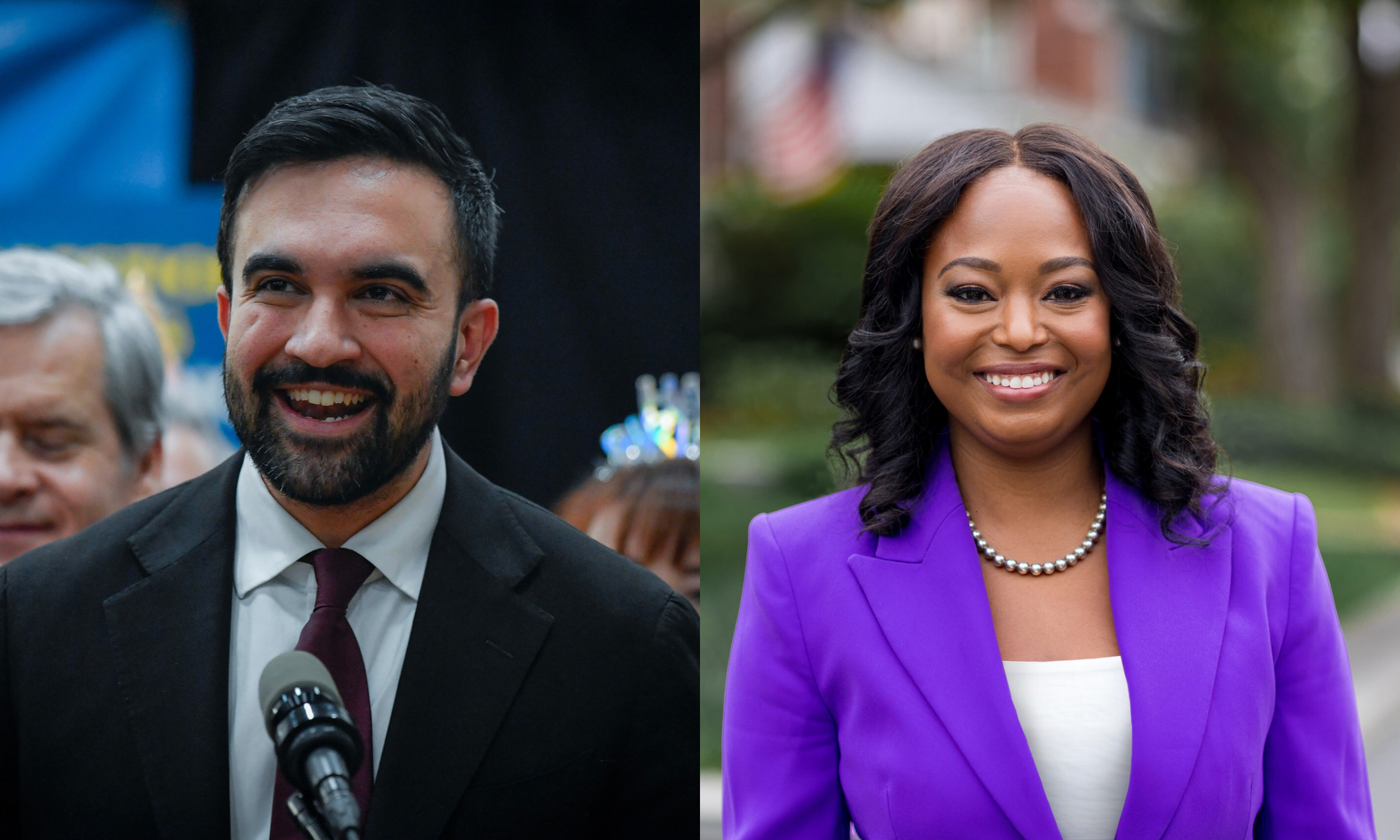
ight around midnight, some four hours after polls closed on primary-election day in mid-June, Robert White stomped into the Howard Theatre. Wearing a blue suit, a striped tie, and gray New Balance sneakers, he jogged up to his DC Council colleague Janeese Lewis George. As campaign volunteers and staff took out their phones to capture the moment, he gave her a long bear hug.
Though votes were still being counted, Lewis George’s team was pretty sure she’d won the Democratic mayoral primary. White’s supporters were even more jubilant. He had trounced Brooke Pinto, his main Democratic rival in the race for the District’s nonvoting congressional delegate, making his win in the November general all but inevitable. If and when White is sworn in next January, he’ll become the third person to hold the job since it was established in 1971—and the first new representative since Eleanor Holmes Norton, the city’s legendary “Warrior on the Hill,” took office in 1991.
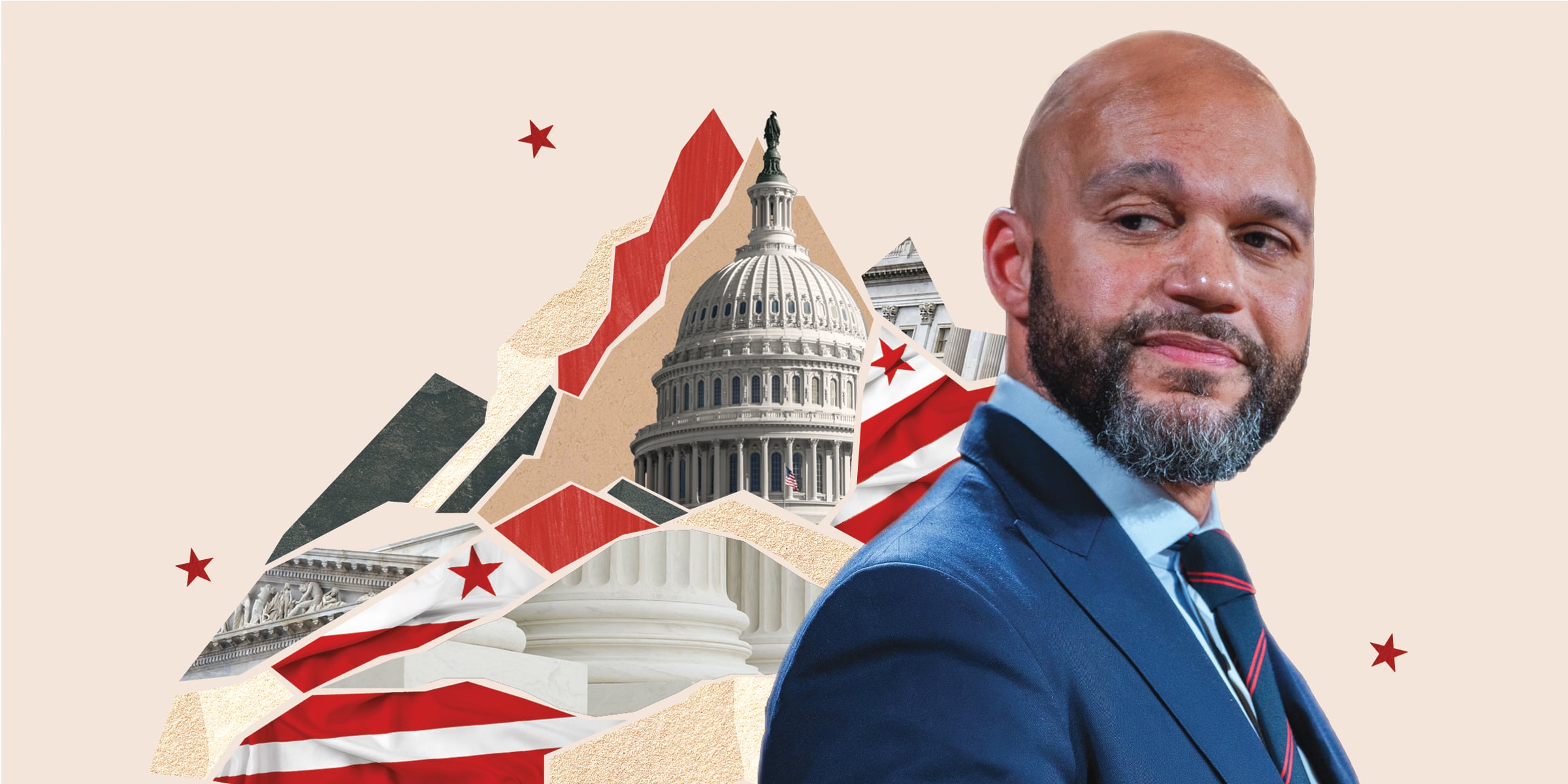
Had things gone a little differently, however, White might have been celebrating a mayoral victory. A fifth-generation Washingtonian, he’d wanted the job for years and ran for it in 2022, deciding only last summer to run for Congress instead. During his victory speech that night at a raucous watch party in Southwest DC, the charismatic 44-year-old at times sounded more like a triumphant mayor-elect than a future House member whose unusual role in the national legislature is largely symbolic. “I will not yield the fight for families drowning in the cost of housing, groceries, childcare, and healthcare,” White told the crowd. “I will not yield in the fight for workers who did everything right but lie awake at night wondering how it’s all going to work.”
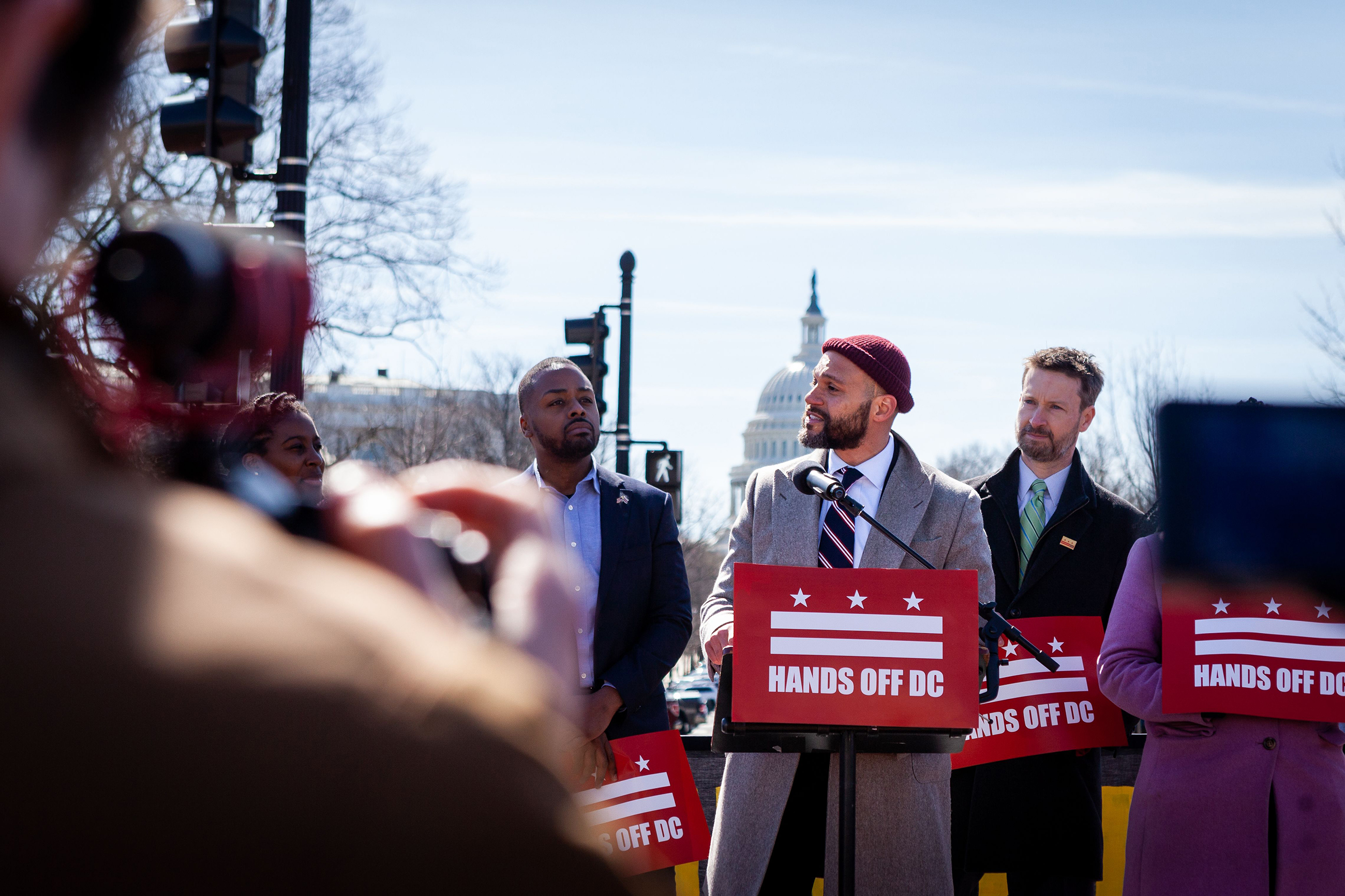
Last fall, 55 percent of respondents to a Washington Post poll said they were unhappy with the District’s direction, the highest number since Marion Barry’s fourth mayoral term in the 1990s. Some of that discontent came from anger at the Trump administration’s law-enforcement takeover and other meddling in local affairs; some was driven by simmering economic anxiety, a struggle to afford daily life. During his campaign, White ran as both a fighter and a change agent: someone who would stand up for DC’s self-governance, as Norton once did, while also delivering on kitchen-table priorities.
“The average person in DC doesn’t realize how much the delegate role can play a part in their economic reality,” White says. “But what they’ll see over the next couple years is me working inside of the federal government to bring new jobs to DC, to bring more affordable housing to DC, and to be a voice in Congress saying, ‘Hey, people sent us here to help them in their everyday lives.’ ”
How much help White can deliver remains to be seen. In the best circumstances, DC’s delegate has little real power. Created in 1970, the position gives the city’s nearly 700,000 residents a voice in Congress via speechmaking and bill introduction—but not an actual vote on the House floor. Similar to actual representatives, the delegate can exert influence via plum committee assignments and a vote in the informal Committee of the Whole, though the latter ability has sometimes been rescinded when Republicans have controlled the House.
In his victory speech, White promised not to yield. Congress is sure to test that promise.
A civil-rights icon who served for 18 terms, Norton brought seniority and gravitas to the office, using both to win goodies from the feds while slowly advancing the cause of DC statehood. White, by contrast, will be starting from near scratch—and entering a fraught political environment. From Congress’s overturning of local laws to the President’s keen, often unwelcome interest in local landscaping, the current Republican administration has repeatedly big-footed the District and its leaders, making cooperation and compromise more difficult. Meanwhile, the national Democratic Party that White will be relying on for leverage and support is fragmented between moderates and progressives, sometimes seemingly more interested in fighting each other than MAGA. On primary night, White promised not to yield. Capitol Hill is sure to test that promise.
Repaying a Debt
The scar is still visible: a thin line running ear to ear over the top of White’s clean-shaven head. He got it when he was eight years old. It was October 24, 1990, less than two weeks before Norton’s first election to Congress. A few weeks earlier, White’s mother had died of breast cancer. He was riding to school with his brother and stepbrother in the back of a car driven by his stepmother on New Hampshire Avenue when a sludge-hauling truck exiting the Beltway collided with a car in the opposite lane.
The vehicle landed on the hood of the White family’s car. White suffered the most serious injuries: His skull was fractured, and the roof of his mouth collapsed. Initially, doctors told his family to prepare for the worst. Multiple surgeries helped him survive, but a long recovery contributed to struggles at school for years. White failed every grade from third through tenth, retaking classes every summer. He became something of a class clown and decided to change course only when a guidance counselor told him to consider the military instead of college. Getting serious about his studies, he transferred to Archbishop Carroll High School, where he eventually took Advanced Placement classes. To earn money, he also swept floors at Midtown Barbershop on Kennedy Street, the same place he launched his congressional campaign last October.
Roots matter to White: His family traces its local ties back to the mid–19th century, and for years his father, Robert “Bobby” White Sr., was deacon at St. Augustine Catholic Church off U Street, known as the “mother church of Black Catholics.” After his mother’s death, White and his father moved around DC, at one point living with his grandparents on 15th Street, Northwest, across the street from former mayor Sharon Pratt’s aunt. Pratt got to know the Whites. “It’s a lovely family,” she says of them.

At St. Mary’s College of Maryland, White became head of the Black Student Union—and befriended his successor, Brandon Scott, now mayor of Baltimore. At the time, both were becoming interested in politics and leadership. Today, White says, they continue to compare notes. At American University’s law school, White met his wife, Christy, now a high-ranking attorney at the Securities and Exchange Commission. The two began as platonic drinking buddies—she “was my wingwoman,” White has said—and later fell in love. Married at the Corcoran Gallery in 2012, they have two daughters, Monroe and Madison, seven and ten.
White credits his father, his church, and his friends’ families with keeping him on the right track as a young man. “At every stage in life when I could have fallen through the cracks,” he said in his victory speech, “somebody in this city caught me.” That support, he says, has made him feel a debt to DC—one he has since sought to repay through public service. Growing up with a father he’s described as a “political-news junkie,” White had a longtime interest in politics but no connections and no real idea of how to find a way in. Following law school, he clerked in a Montgomery County courthouse and figured he would go into private practice.
Then came a 2008 opportunity to work in Norton’s office. Serving as her legislative counsel, White burned the candle at both ends, managing legislative issues in the House and subcommittee tasks for DC-related Senate hearings. “I usually worked 12-to-15-hour days, seven days a week,” he recalls. “It’s a shock that I married my wife, with the number of times I stood her up.” White focused on protecting DC from congressional meddling via the budget-approval process and later on federal land-redevelopment projects such as the Wharf and the Walter Reed campus. He also helped shepherd the DC House Voting Rights Act, Norton-sponsored legislation that would have given the District’s delegate a House vote. In 2007, the bill passed in the House but failed to garner enough Senate votes to overcome a Republican filibuster. Two years later, White watched it clear the Senate—only to die in the House when Democrats balked at a GOP-added, NRA-backed amendment that would have wiped out DC’s gun laws.
At the time, Democrats were riding high: Barack Obama had just won the presidential election in a landslide and the party controlled both houses of Congress with a brief filibuster-proof Senate majority. Statehood advocates have since criticized Norton and her office for not doing more to exploit the moment, but White remembers things differently. “Democrats did not seem to have the stomach at the time to really fight for statehood, or frankly on a lot of issues,” he says.
By the time White left Norton’s office in 2013, DC felt like a different city from the one where he grew up. “Our population was growing by 1,000 to 1,300 new residents per month, there were cranes everywhere, money was flowing in, I’m working on the Wharf, Navy Yard, Hill East, Walter Reed, the city is booming,” White says. “But when you left the Capitol and drove over the bridge to Southeast, it all looked the same as it did in the ’80s and ’90s. And my family was, piece by piece, being priced out of the city.”
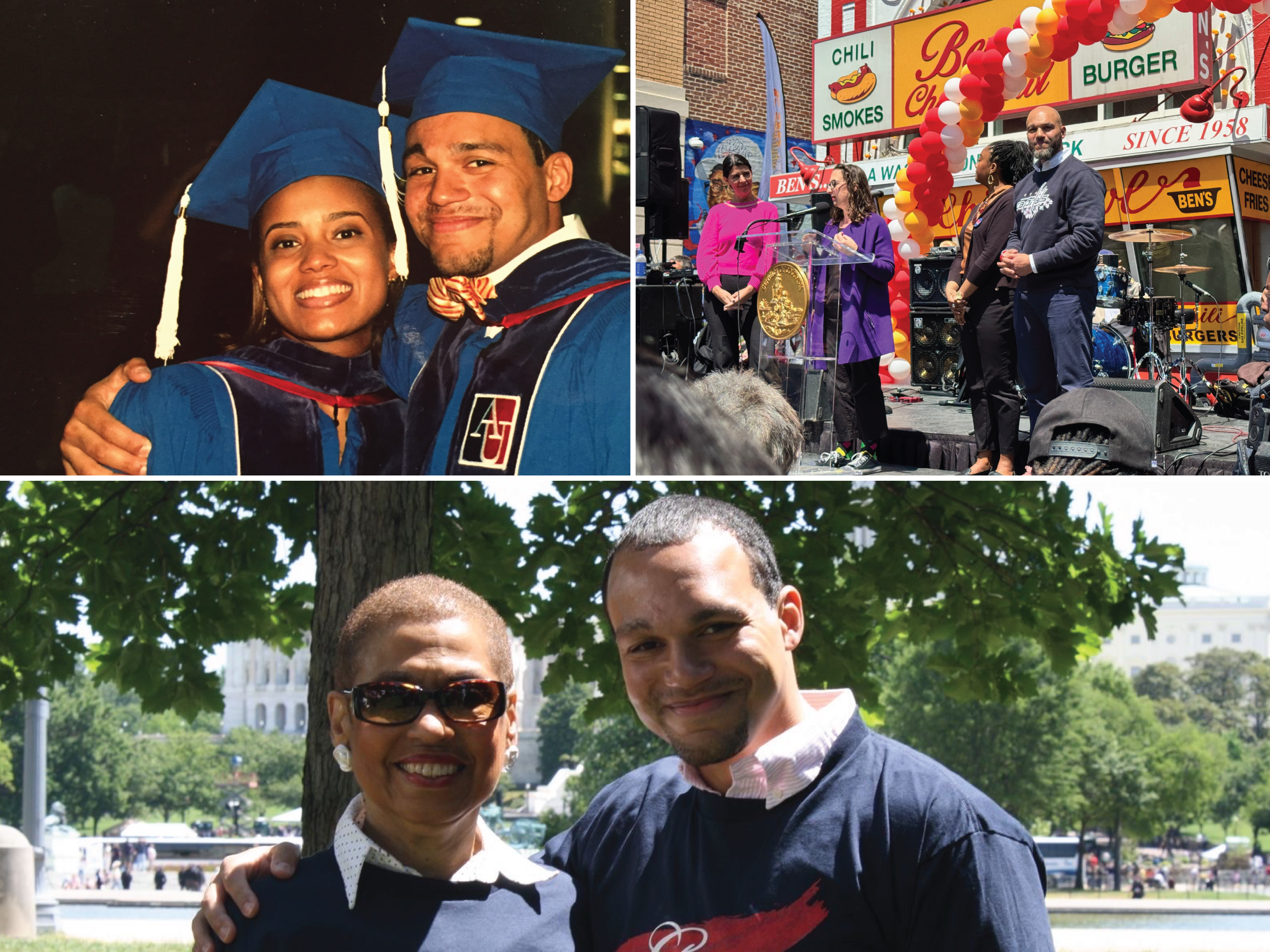
Believing that city government wasn’t meeting the moment, White challenged Anita Bonds for an open council seat in 2014. He finished fourth, with 8 percent of the vote. Newly elected attorney general Karl Racine hired White to direct community outreach, and two years later he again ran for an at-large seat, taking on scandal-stricken 12-year incumbent Vincent Orange. Turning some of Racine’s consultants into a crack campaign team, White ran on remedying the city’s housing crunch and attacked Orange’s plan to do the same by providing 1,000 tiny homes to millennials and seniors. He won in an upset.
Today, White presents like a political natural: polished but accessible; typically clad in a dress shirt, slacks, and Nike Dunks; comfortable chatting with every type of city resident. “He also just really likes people,” says Martha Mitchell, White’s congressional campaign chair. His fluency across different DC circles has allowed him to string together a coalition of Black and white, young and old, progressive and moderate, and a personal touch has underlain his most significant accomplishments on the council. Two weeks after his first winning primary, White’s older daughter was born. He and Christy struggled to find affordable childcare. Soon after, he championed a bill with council member Vincent Gray designed to raise pay and cut costs for early-childhood educators.
White has always been close with his brother, Michael, who is just 15 months older. While Robert struggled in school, his brother excelled—but as they got older, Michael developed an alcohol problem. In 2006, he hit someone with his car while driving drunk and then fled from the police. He ended up in prison. Following his 2008 release, he slept on couches and in his car. It took Michael years, his brother says, to recover his life and family relationships. He eventually got a job with a software company in Georgia.
Michael was on White’s mind when he worked on legislation to improve services for formerly incarcerated people, create housing vouchers for those just out of jail, and require the city to provide housing and employment advice to DC residents exiting federal prisons. After the council passed White’s signature “returning citizens” bill and Mayor Muriel Bowser signed it into law, he says, “it felt like I had done something real. A lot of my work on the council, more than most people realize, reflects what I went through and what I saw.”
Going Where the Fight Is
One Sunday last summer, White and his wife were driving home from church. President Trump’s law-enforcement takeover was underway. White had run for mayor in 2022, proposing government jobs for all DC residents who wanted them. Having failed to unseat Bowser, he was considering another campaign.
Suddenly, Christy spoke up. Drop your plans for mayor, she told him. Run for Congress instead.
“She said, ‘If Trump doesn’t like Bowser, he’s really not going to like you,’ ” White recalls. “But the second thing she said that really captured my attention, and I couldn’t debate, was, ‘At this pace, we won’t have a mayor in four years.’ ”
As a practical political decision, a pivot made sense: At the time, Bowser was expected to run for a fourth term, and White says he “heard murmurings” of an internal poll that showed he’d have a hard time beating her. Then there was Trump, whose return to the White House had been hard on the city. Federal layoffs and shutdowns had hurt the local economy. The sight of Immigration and Customs Enforcement agents pulling over random drivers on 14th Street distressed and outraged Washingtonians. On the campaign trail, Trump had repeatedly promised to “take over the horribly run capital of our nation.” On the Hill, Republicans were moving in that direction: In the coming months, they would threaten to reverse DC policies on gun regulation, speed cameras, and even turning right on red. Home rule—the District’s limited form of self-government that dates back to 1973—seemed under threat.
Suddenly, Christy spoke up. Drop your plans for mayor, she told him. Run for Congress instead.
Bowser was in an unenviable position. DC is a deep-blue city, and many increasingly ticked-off locals wanted her to stand up to Trump and the GOP. But Bowser also needed to work with them on issues like redeveloping the RFK Stadium site—and carefully calibrate just how hard to push back, lest they further erode the city’s autonomy. Any new mayor, White included, would likely walk the same tightrope. Meanwhile, the then-88-year-old Norton’s fitness for office was being questioned, privately and publicly. No longer a forceful and energetic advocate, she would soon be the victim of an elder-fraud scam, with a police report revealing that she was living with a caretaker and exhibiting the “early stages of dementia” (Norton’s office disputed this).
White realized his wife was right. Congress was where he could make the biggest impact—and where the most urgent fight was. The prospect of taking on Norton, he admits, was “delicate, to say the least.” But people close to his former boss assured him he wouldn’t have to run against her for long—and in January, Norton announced her retirement.
White pitched himself as a native son who knew what it felt like to “pack up and move because rent went up again, to watch your neighborhood slip away as prices rise.” Describing Trump’s law-enforcement takeover as “lawlessness” and criticizing the presence of National Guard troops on the city’s streets, he vowed to push for a bill Norton introduced last year that would shift command of DC’s National Guard from the President to the mayor.
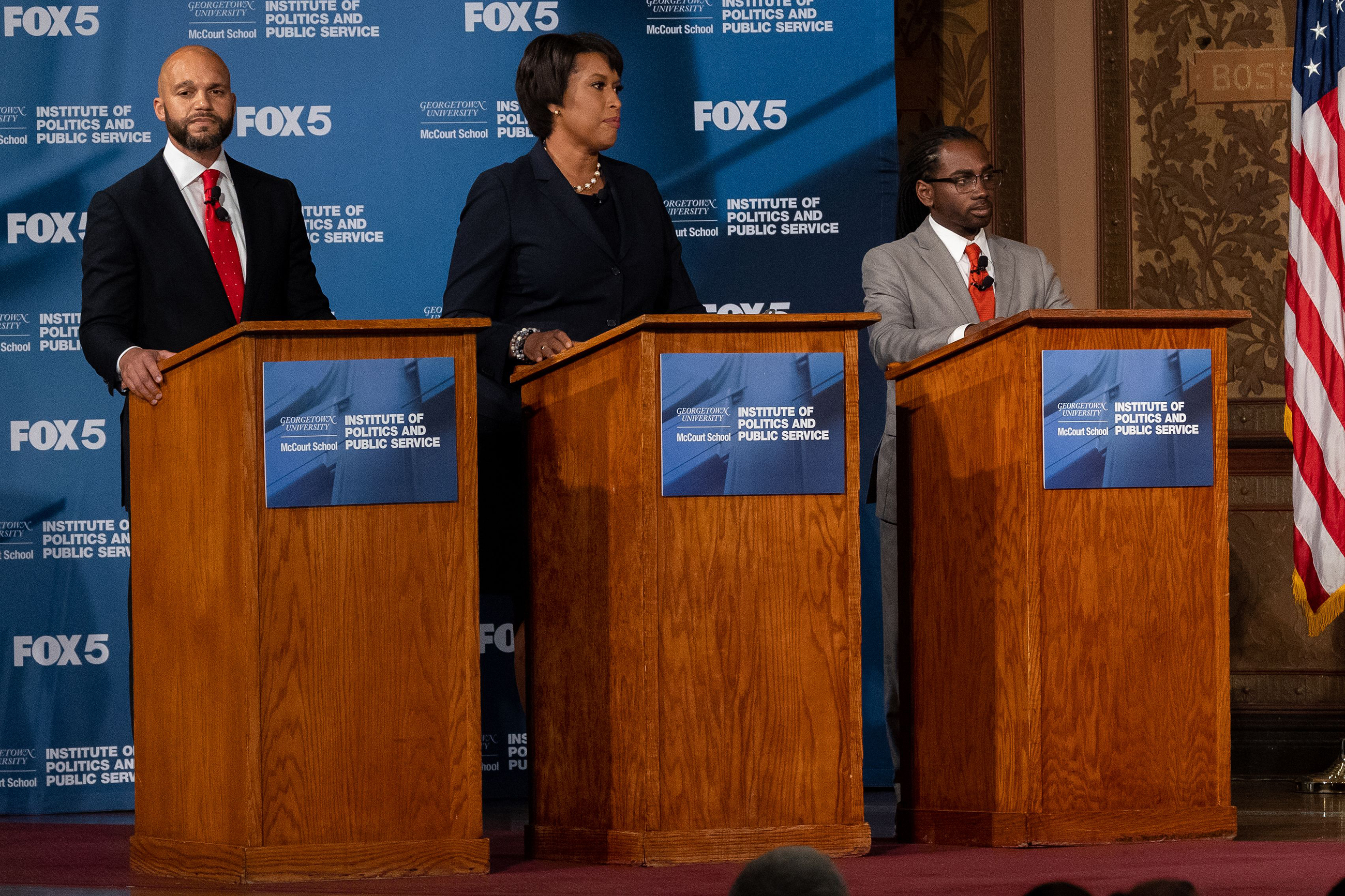
White also promised to fight. “I want to see a time again where you are rewarded for reaching across the aisle,” he said at a March candidate debate, “but right now, everyone who reaches across the aisle comes back missing a finger or two.”
Though he and Pinto usually sit side by side on the council dais and have worked together on bills, their race was remarkably vitriolic by local standards. White accused Pinto of conducting “no real oversight” of federal agents during Trump’s takeover and of changing her position on legislation governing the release of Metro Police body-cam footage to score political points. Pinto attacked White for fighting against provisions in a crime bill that she spearheaded, failing to dampen rising home prices despite heading the council’s housing committee, and voting against the RFK Stadium redevelopment championed by Bowser. In April, she released a 67-page opposition-research report that included a photo and the address of White’s family home—as well as details about a Pinterest page, allegedly connected to his father, that included saved pins titled “Accessories sex” and “Guilty pleasure.”

Saying Pinto had crossed a line that “decent people should never cross,” White called on her to drop out of the race. Pinto’s campaign quickly removed information about White’s family from the document and apologized. It was a disastrous misstep, one that may have helped White beat Pinto by 42 points despite being outspent two to one.
November’s election is considered a foregone conclusion: 75 percent of DC voters are registered Democrats—a higher number than any state—and Norton defeated her Republican opponent by 74 points in 2024. For White, the hard part will come after he takes office. Like the mayor, DC’s delegate has to strike a delicate balance between sometimes resisting the federal government and at other times asking it for favors. That’s tougher when the GOP controls the White House, Congress, or both—after all, a big, liberal city associated in the popular imagination with elites and bureaucrats is an easy target for Republicans looking to show off to their voters back home.
Fellow Democrats aren’t guaranteed to support White’s goals, either. Last fall, a number of them joined House Republicans in advancing bills to block local criminal-justice reform. Complicating matters is an emerging rift between the party’s rising left wing—epitomized by Mayor Zohran Mamdani in New York City and Janeese Lewis George in DC—and its more moderate, still-powerful center. White will need allies in House leadership, not just the insurgent left, to get things done.
Where White sits on the Democratic spectrum can be hard to pin down. When he first won office, he was seen as someone who would join Brianne Nadeau and Charles Allen on the council’s left. But over the ensuing decade, he resisted being pigeonholed. White endorsed Lewis George, a Democratic Socialist, in the mayoral race. But he also scored lower than both her and her centrist opponent, Kenyan McDuffie, on a scorecard released by the pro-statehood activist network Free DC, which ultimately endorsed him anyway. Progressives who have worked with White have sometimes been left feeling disillusioned, and some of his past staffers tell Washingtonian that he spent too much time focusing on his next campaigns, staking out inoffensive positions when possible. “He views himself as a very pragmatic politician,” says one, who asked to remain anonymous. “He was trying to make everyone happy, but the result was that no one was happy.”
White’s flexibility could be an asset on the Hill, allowing him to work with Democratic factions without alienating them. Still, he’ll essentially be playing the game of Congress on hard mode. Without a floor vote, he’ll have to rely on moral authority, close relationships with members on both sides of the aisle, and a whole lot of cajoling to get anything done. Norton was masterful in all of those areas, using her skills and experience to build support for statehood and win more prosaic battles, such as helping secure land owned by the federal government for the Wharf and other developments that city leaders championed. Over time, she earned the respect and trust of her peers and for decades sat on the House transportation and oversight committees, the latter of which deals directly with issues related to the District.
White, warns DC political operative Chuck Thies, will have none of that working in his favor: “Not only are you a freshman, you’re a freshman delegate. Seniority and relationships are everything in the House. . . . [He] better not go to Eleanor’s office and measure the curtains, because that ain’t gonna be your office. You’re going to be in the basement without a window.”
A New Approach?
After winning the primary, White took his first breather in a long time, going to Disneyland with his family. When he returned just before July 4, it was time to resume campaigning—but not in the District. Instead, White intends to visit Georgia, Pennsylvania, and other swing states and to organize volunteers from this area to do the same.
The plan, which White is tentatively calling “Defend DC” and has discussed with national Democratic officials, is still being hashed out. It has two goals. First, he wants to canvass for Democrats in swing districts. If the party can capture the House in the midterms—an increasingly likely outcome—Trump and other unfriendly Republicans will have a much harder time imposing their will on the city. White would potentially have more influence, too, with better committee assignments and more empowered Democratic allies.
Second, White wants to educate voters in other places about DC’s lack of congressional representation—and why it should matter to them. He believes today’s tit-for-tat redistricting wars, with politicians in multiple states enacting nakedly partisan gerrymanders to give their parties an edge in Congress, are a golden opportunity to build national support for statehood. Almost 20 years ago, White watched his party fumble a generational opportunity to give the city a vote in the House. If Democrats could add that vote today—and two more in the Senate—would they once again balk? “The same Democrat in Iowa who is watching the redistricting fight, they should be watching the DC statehood fight and should be screaming to national Democratic leaders, ‘You need to prioritize DC statehood,’ ” he says.
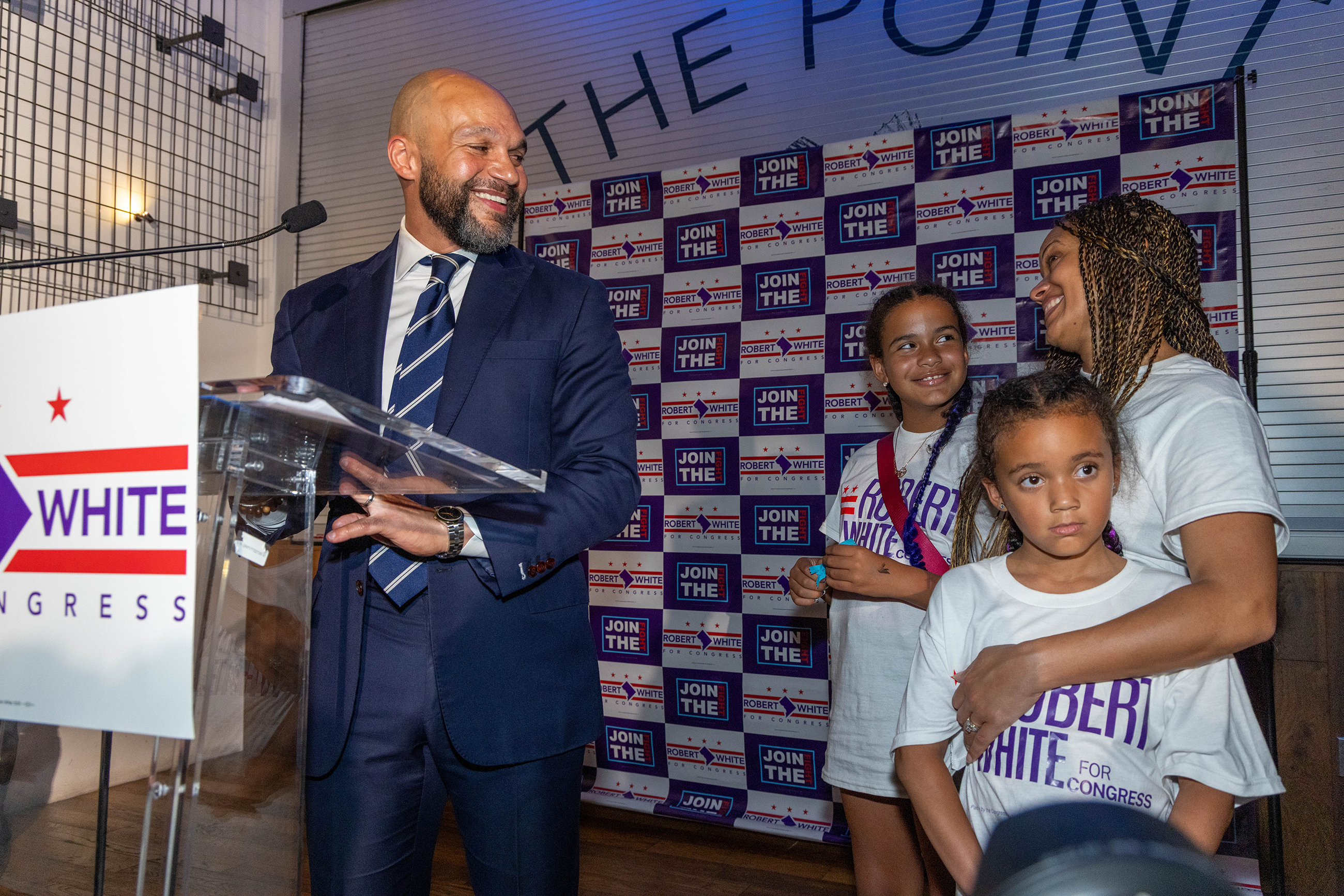
White’s desire to make the District’s democratic dilemma America’s concern is arguably novel. It could be a tough sell with voters, at least compared with lowering gas and grocery bills. Given the ignominious history of previous statehood efforts, it can read as downright quixotic, especially coming from a mostly powerless congressional newbie with no national profile.
And yet: Facing their own obstacles and lacking much of a playbook, White’s predecessors managed to do a lot with a little. “Everybody who’s entered the role,” says George Derek Musgrove, a University of Maryland historian who chronicles democracy in DC, “has had to reinvent it for their own purposes.”
Civil-rights leader Walter Fauntroy took office in 1971, becoming the District’s first congressional delegate since Reconstruction, and oversaw legislation that allowed residents to vote for the city’s mayor and council. He also helped found the Congressional Black Caucus. When Norton won, she was criticized for focusing too much on her experience in national politics—one opponent called her “kind of aloof from the people of the city.” She took office at a time of federal belt-tightening, with her reputation somewhat tarnished by a tax-filing controversy. But by the time she was reelected in 1994, all that was behind her. At the peak of her power, she was able to convince 1990s “Republican Revolution” leaders Newt Gingrich and Tom Davis to back a first-time-homebuyer credit for Washingtonians and a bill that helped repair the District’s ailing finances by transferring its crushing pension, courts, and Medicaid costs to the feds.
Fauntroy and Norton proved that DC’s delegate can wield real influence. White will have to figure out his own way—one suited for the remainder of the Trump era and for whatever comes next. “There is so much power in that seat,” he says, “but there’s no manual.”
ight around midnight, some four hours after polls closed on primary-election day in mid-June, Robert White stomped into the Howard Theatre. Wearing a blue suit, a striped tie, and gray New Balance sneakers, he jogged up to his DC Council colleague Janeese Lewis George. As campaign volunteers and staff took out their phones to capture the moment, he gave her a long bear hug.
Though votes were still being counted, Lewis George’s team was pretty sure she’d won the Democratic mayoral primary. White’s supporters were even more jubilant. He had trounced Brooke Pinto, his main Democratic rival in the race for the District’s nonvoting congressional delegate, making his win in the November general all but inevitable. If and when White is sworn in next January, he’ll become the third person to hold the job since it was established in 1971—and the first new representative since Eleanor Holmes Norton, the city’s legendary “Warrior on the Hill,” took office in 1991.
Had things gone a little differently, however, White might have been celebrating a mayoral victory. A fifth-generation Washingtonian, he’d wanted the job for years and ran for it in 2022, deciding only last summer to run for Congress instead. During his victory speech that night at a raucous watch party in Southwest DC, the charismatic 44-year-old at times sounded more like a triumphant mayor-elect than a future House member whose unusual role in the national legislature is largely symbolic. “I will not yield the fight for families drowning in the cost of housing, groceries, childcare, and healthcare,” White told the crowd. “I will not yield in the fight for workers who did everything right but lie awake at night wondering how it’s all going to work.”
Last fall, 55 percent of respondents to a Washington Post poll said they were unhappy with the District’s direction, the highest number since Marion Barry’s fourth mayoral term in the 1990s. Some of that discontent came from anger at the Trump administration’s law-enforcement takeover and other meddling in local affairs; some was driven by simmering economic anxiety, a struggle to afford daily life. During his campaign, White ran as both a fighter and a change agent: someone who would stand up for DC’s self-governance, as Norton once did, while also delivering on kitchen-table priorities.
“The average person in DC doesn’t realize how much the delegate role can play a part in their economic reality,” White says. “But what they’ll see over the next couple years is me working inside of the federal government to bring new jobs to DC, to bring more affordable housing to DC, and to be a voice in Congress saying, ‘Hey, people sent us here to help them in their everyday lives.’ ”
How much help White can deliver remains to be seen. In the best circumstances, DC’s delegate has little real power. Created in 1970, the position gives the city’s nearly 700,000 residents a voice in Congress via speechmaking and bill introduction—but not an actual vote on the House floor. Similar to actual representatives, the delegate can exert influence via plum committee assignments and, when their party controls the chamber, via a vote in the informal Committee of the Whole.
In his victory speech, White promised not to yield. Congress is sure to test that promise.
A civil-rights icon who served for 18 terms, Norton brought seniority and gravitas to the office, using both to win goodies from the feds while slowly advancing the cause of DC statehood. White, by contrast, will be starting from near scratch—and entering a fraught political environment. From Congress’s overturning of local laws to the President’s keen, often unwelcome interest in local landscaping, the current Republican administration has repeatedly big-footed the District and its leaders, making cooperation and compromise more difficult. Meanwhile, the national Democratic Party that White will be relying on for leverage and support is fragmented between moderates and progressives, sometimes seemingly more interested in fighting each other than MAGA. On primary night, White promised not to yield. Capitol Hill is sure to test that promise.
Repaying a Debt
The scar is still visible: a thin line running ear to ear over the top of White’s clean-shaven head. He got it when he was eight years old. It was October 24, 1990, less than two weeks before Norton’s first election to Congress. A few weeks earlier, White’s mother had died of breast cancer. He was riding to school with his brother and stepbrother in the back of a car driven by his stepmother on New Hampshire Avenue when a sludge-hauling truck exiting the Beltway collided with a car in the opposite lane.
The vehicle landed on the hood of the White family’s car. White suffered the most serious injuries: His skull was fractured, and the roof of his mouth collapsed. Initially, doctors told his family to prepare for the worst. Multiple surgeries helped him survive, but a long recovery contributed to struggles at school for years. White failed every grade from third through tenth, retaking classes every summer. He became something of a class clown and decided to change course only when a guidance counselor told him to consider the military instead of college. Getting serious about his studies, he transferred to Archbishop Carroll High School, where he eventually took Advanced Placement classes. To earn money, he also swept floors at Midtown Barbershop on Kennedy Street, the same place he launched his congressional campaign last October.
Roots matter to White: His family traces its local ties back to the mid–19th century, and for years his father, Robert “Bobby” White Sr., was deacon at St. Augustine Catholic Church off U Street, known as the “mother church of Black Catholics.” After his mother’s death, White and his father moved around DC, at one point living with his grandparents on 15th Street, Northwest, across the street from former mayor Sharon Pratt’s aunt. Pratt got to know the Whites. “It’s a lovely family,” she says of them.
At St. Mary’s College of Maryland, White became head of the Black Student Union—and befriended his successor, Brandon Scott, now mayor of Baltimore. At the time, both were becoming interested in politics and leadership. Today, White says, they continue to compare notes. At American University’s law school, White met his wife, Christy, now a high-ranking attorney at the Securities and Exchange Commission. The two began as platonic drinking buddies—she “was my wingwoman,” White has said—and later fell in love. Married at the Corcoran Gallery in 2012, they have two daughters, Monroe and Madison, seven and ten.
White credits his father, his church, and his friends’ families with keeping him on the right track as a young man. “At every stage in life when I could have fallen through the cracks,” he said in his victory speech, “somebody in this city caught me.” That support, he says, has made him feel a debt to DC—one he has since sought to repay through public service. Growing up with a father he’s described as a “political-news junkie,” White had a longtime interest in politics but no connections and no real idea of how to find a way in. Following law school, he clerked in a Montgomery County courthouse and figured he would go into private practice.
Then came a 2008 opportunity to work in Norton’s office. Serving as her legislative counsel, White burned the candle at both ends, managing legislative issues in the House and subcommittee tasks for DC-related Senate hearings. “I usually worked 12-to-15-hour days, seven days a week,” he recalls. “It’s a shock that I married my wife, with the number of times I stood her up.” White focused on protecting DC from congressional meddling via the budget-approval process and later on federal land-redevelopment projects such as the Wharf and the Walter Reed campus. He also helped shepherd the DC House Voting Rights Act, Norton-sponsored legislation that would have given the District’s delegate a House vote. In 2007, the bill passed in the House but failed to garner enough Senate votes to overcome a Republican filibuster. Two years later, White watched it clear the Senate—only to die in the House when Democrats balked at a GOP-added, NRA-backed amendment that would have wiped out DC’s gun laws.
At the time, Democrats were riding high: Barack Obama had just won the presidential election in a landslide and the party controlled both houses of Congress with a brief filibuster-proof Senate majority. Statehood advocates have since criticized Norton and her office for not doing more to exploit the moment, but White remembers things differently. “Democrats did not seem to have the stomach at the time to really fight for statehood, or frankly on a lot of issues,” he says.
By the time White left Norton’s office in 2013, DC felt like a different city from the one where he grew up. “Our population was growing by 1,000 to 1,300 new residents per month, there were cranes everywhere, money was flowing in, I’m working on the Wharf, Navy Yard, Hill East, Walter Reed, the city is booming,” White says. “But when you left the Capitol and drove over the bridge to Southeast, it all looked the same as it did in the ’80s and ’90s. And my family was, piece by piece, being priced out of the city.”
Believing that city government wasn’t meeting the moment, White challenged Anita Bonds for an open council seat in 2014. He finished fourth, with 8 percent of the vote. Newly elected attorney general Karl Racine hired White to direct community outreach, and two years later he again ran for an at-large seat, taking on scandal-stricken 12-year incumbent Vincent Orange. Turning some of Racine’s consultants into a crack campaign team, White ran on remedying the city’s housing crunch and attacked Orange’s plan to do the same by providing 1,000 tiny homes to millennials and seniors. He won in an upset.
Today, White presents like a political natural: polished but accessible; typically clad in a dress shirt, slacks, and Nike Dunks; comfortable chatting with every type of city resident. “He also just really likes people,” says Martha Mitchell, White’s congressional campaign chair. His fluency across different DC circles has allowed him to string together a coalition of Black and white, young and old, progressive and moderate, and a personal touch has underlain his most significant accomplishments on the council. Two weeks after his first winning primary, White’s older daughter was born. He and Christy struggled to find affordable childcare. Soon after, he championed a bill with council member Vincent Gray designed to raise pay and cut costs for early-childhood educators.
White has always been close with his brother, Michael, who is just 15 months older. While Robert struggled in school, his brother excelled—but as they got older, Michael developed an alcohol problem. In 2006, he hit someone with his car while driving drunk and then fled from the police. He ended up in prison. Following his 2008 release, he slept on couches and in his car. It took Michael years, his brother says, to recover his life and family relationships. He eventually got a job with a software company in Georgia.
Michael was on White’s mind when he worked on legislation to improve services for formerly incarcerated people, create housing vouchers for those just out of jail, and require the city to provide housing and employment advice to DC residents exiting federal prisons. After the council passed White’s signature “returning citizens” bill and Mayor Muriel Bowser signed it into law, he says, “it felt like I had done something real. A lot of my work on the council, more than most people realize, reflects what I went through and what I saw.”
Going Where the Fight Is
One Sunday last summer, White and his wife were driving home from church. President Trump’s law-enforcement takeover was underway. White had run for mayor in 2022, proposing government jobs for all DC residents who wanted them. Having failed to unseat Bowser, he was considering another campaign.
Suddenly, Christy spoke up. Drop your plans for mayor, she told him. Run for Congress instead.
“She said, ‘If Trump doesn’t like Bowser, he’s really not going to like you,’ ” White recalls. “But the second thing she said that really captured my attention, and I couldn’t debate, was, ‘At this pace, we won’t have a mayor in four years.’ ”
As a practical political decision, a pivot made sense: At the time, Bowser was expected to run for a fourth term, and White says he “heard murmurings” of an internal poll that showed he’d have a hard time beating her. Then there was Trump, whose return to the White House had been hard on the city. Federal layoffs and shutdowns had hurt the local economy. The sight of Immigration and Customs Enforcement agents pulling over random drivers on 14th Street distressed and outraged Washingtonians. On the campaign trail, Trump had repeatedly promised to “take over the horribly run capital of our nation.” On the Hill, Republicans were moving in that direction: In the coming months, they would threaten to reverse DC policies on gun regulation, speed cameras, and even turning right on red. Home rule—the District’s limited form of self-government that dates back to 1973—seemed under threat.
Suddenly, Christy spoke up. Drop your plans for mayor, she told him. Run for Congress instead.
Bowser was in an unenviable position. DC is a deep-blue city, and many increasingly ticked-off locals wanted her to stand up to Trump and the GOP. But Bowser also needed to work with them on issues like redeveloping the RFK Stadium site—and carefully calibrate just how hard to push back, lest they further erode the city’s autonomy. Any new mayor, White included, would likely walk the same tightrope. Meanwhile, the then-88-year-old Norton’s fitness for office was being questioned, privately and publicly. No longer a forceful and energetic advocate, she would soon be the victim of an elder-fraud scam, with a police report revealing that she was living with a caretaker and exhibiting the “early stages of dementia” (Norton’s office disputed this).
White realized his wife was right. Congress was where he could make the biggest impact—and where the most urgent fight was. The prospect of taking on Norton, he admits, was “delicate, to say the least.” But people close to his former boss assured him he wouldn’t have to run against her for long—and in January, Norton announced her retirement.
White pitched himself as a native son who knew what it felt like to “pack up and move because rent went up again, to watch your neighborhood slip away as prices rise.” Describing Trump’s law-enforcement takeover as “lawlessness” and criticizing the presence of National Guard troops on the city’s streets, he vowed to push for a bill Norton introduced last year that would shift command of DC’s National Guard from the President to the mayor.
White also promised to fight. “I want to see a time again where you are rewarded for reaching across the aisle,” he said at a March candidate debate, “but right now, everyone who reaches across the aisle comes back missing a finger or two.”
Though he and Pinto usually sit side by side on the council dais and have worked together on bills, their race was remarkably vitriolic by local standards. White accused Pinto of conducting “no real oversight” of federal agents during Trump’s takeover and of changing her position on legislation governing the release of Metro Police body-cam footage to score political points. Pinto attacked White for fighting against provisions in a crime bill that she spearheaded, failing to dampen rising home prices despite heading the council’s housing committee, and voting against the RFK Stadium redevelopment championed by Bowser. In April, she released a 67-page opposition-research report that included a photo and the address of White’s family home—as well as details about a Pinterest page, allegedly connected to his father, that included saved pins titled “Accessories sex” and “Guilty pleasure.”
Saying Pinto had crossed a line that “decent people should never cross,” White called on her to drop out of the race. Pinto’s campaign quickly removed information about White’s family from the document and apologized. It was a disastrous misstep, one that may have helped White beat Pinto by 42 points despite being outspent two to one.
November’s election is considered a foregone conclusion: 75 percent of DC voters are registered Democrats—a higher number than any state—and Norton defeated her Republican opponent by 74 points in 2024. For White, the hard part will come after he takes office. Like the mayor, DC’s delegate has to strike a delicate balance between sometimes resisting the federal government and at other times asking it for favors. That’s tougher when the GOP controls the White House, Congress, or both—after all, a big, liberal city associated in the popular imagination with elites and bureaucrats is an easy target for Republicans looking to show off to their voters back home.
Fellow Democrats aren’t guaranteed to support White’s goals, either. Last fall, a number of them joined House Republicans in advancing bills to block local criminal-justice reform. Complicating matters is an emerging rift between the party’s rising left wing—epitomized by Mayor Zohran Mamdani in New York City and Janeese Lewis George in DC—and its more moderate, still-powerful center. White will need allies in House leadership, not just the insurgent left, to get things done.
Where White sits on the Democratic spectrum can be hard to pin down. When he first won office, he was seen as someone who would join Brianne Nadeau and Charles Allen on the council’s left. But over the ensuing decade, he resisted being pigeonholed. White endorsed Lewis George, a Democratic Socialist, in the mayoral race. But he also scored lower than both her and her centrist opponent, Kenyan McDuffie, on a scorecard released by the pro-statehood activist network Free DC, which ultimately endorsed him anyway. Progressives who have worked with White have sometimes been left feeling disillusioned, and some of his past staffers tell Washingtonian that he spent too much time focusing on his next campaigns, staking out inoffensive positions when possible. “He views himself as a very pragmatic politician,” says one, who asked to remain anonymous. “He was trying to make everyone happy, but the result was that no one was happy.”
White’s flexibility could be an asset on the Hill, allowing him to work with Democratic factions without alienating them. Still, he’ll essentially be playing the game of Congress on hard mode. Without a floor vote, he’ll have to rely on moral authority, close relationships with members on both sides of the aisle, and a whole lot of cajoling to get anything done. Norton was masterful in all of those areas, using her skills and experience to build support for statehood and win more prosaic battles, such as helping secure land owned by the federal government for the Wharf and other developments that city leaders championed. Over time, she earned the respect and trust of her peers and for decades sat on the House transportation and oversight committees, the latter of which deals directly with issues related to the District.
White, warns DC political operative Chuck Thies, will have none of that working in his favor: “Not only are you a freshman, you’re a freshman delegate. Seniority and relationships are everything in the House. . . . [He] better not go to Eleanor’s office and measure the curtains, because that ain’t gonna be your office. You’re going to be in the basement without a window.”
A New Approach?
After winning the primary, White took his first breather in a long time, going to Disneyland with his family. When he returned just before July 4, it was time to resume campaigning—but not in the District. Instead, White intends to visit Georgia, Pennsylvania, and other swing states and to organize volunteers from this area to do the same.
The plan, which White is tentatively calling “Defend DC” and has discussed with national Democratic officials, is still being hashed out. It has two goals. First, he wants to canvass for Democrats in swing districts. If the party can capture the House in the midterms—an increasingly likely outcome—Trump and other unfriendly Republicans will have a much harder time imposing their will on the city. White would potentially have more influence, too, with better committee assignments and a vote in the House session known as the Committee of the Whole, in which the 435 lawmakers can amend but can’t pass legislation.
Second, White wants to educate voters in other places about DC’s lack of congressional representation—and why it should matter to them. He believes today’s tit-for-tat redistricting wars, with politicians in multiple states enacting nakedly partisan gerrymanders to give their parties an edge in Congress, are a golden opportunity to build national support for statehood. Almost 20 years ago, White watched his party fumble a generational opportunity to give the city a vote in the House. If Democrats could add that vote today—and two more in the Senate—would they once again balk? “The same Democrat in Iowa who is watching the redistricting fight, they should be watching the DC statehood fight and should be screaming to national Democratic leaders, ‘You need to prioritize DC statehood,’ ” he says.
White’s desire to make the District’s democratic dilemma America’s concern is arguably novel. It could be a tough sell with voters, at least compared with lowering gas and grocery bills. Given the ignominious history of previous statehood efforts, it can read as downright quixotic, especially coming from a mostly powerless congressional newbie with no national profile.
And yet: Facing their own obstacles and lacking much of a playbook, White’s predecessors managed to do a lot with a little. “Everybody who’s entered the role,” says George Derek Musgrove, a University of Maryland historian who chronicles democracy in DC, “has had to reinvent it for their own purposes.”
Civil-rights leader Walter Fauntroy took office in 1971, becoming the District’s first congressional delegate since Reconstruction, and oversaw legislation that allowed residents to vote for the city’s mayor and council. He also helped found the Congressional Black Caucus. When Norton won, she was criticized for focusing too much on her experience in national politics—one opponent called her “kind of aloof from the people of the city.” She took office at a time of federal belt-tightening, with her reputation somewhat tarnished by a tax-filing controversy. But by the time she was reelected in 1994, all that was behind her. At the peak of her power, she was able to convince 1990s “Republican Revolution” leaders Newt Gingrich and Tom Davis to back a first-time-homebuyer credit for Washingtonians and a bill that helped repair the District’s ailing finances by transferring its crushing pension, courts, and Medicaid costs to the feds.
Fauntroy and Norton proved that DC’s delegate can wield real influence. White will have to figure out his own way—one suited for the remainder of the Trump era and for whatever comes next. “There is so much power in that seat,” he says, “but there’s no manual.”
This article appears in the August 2026 issue of Washingtonian. Note: the online version of this article has been updated to reflect the fact that DC delegate Eleanor Holmes Norton had the ability to vote in the Committee of the Whole in the 118th and 119th Congress, which were Republican-controlled.