
ompared with where Elizabeth Tsurkov was just five months earlier, the scene couldn’t be more different. It’s a frigid evening in late January, and Tsurkov is sitting on a couch in an office off Farragut Square. Outside, a punishing snowstorm has made the sidewalks near-impassable. Inside, black-jacketed servers carry silver trays laden with hors d’oeuvres while a barman serves bottles of beer and glasses of chilled white wine. At the front of the room, tall windows look out onto the White House—but all eyes are trained on Tsurkov, who wears a sash reading “Back By Popular Demand.”
Until last September, Tsurkov had been a prisoner of Kataib Hezbollah, an Iraqi militia group and designated terrorist organization that receives funding from Iran. On March 21, 2023, she arrived at a cafe in Baghdad around 9 pm, planning to meet a woman who had contacted her over WhatsApp with questions about the Islamic State. A dual Russian-Israeli citizen and Princeton University graduate student, Tsurkov was in Iraq conducting research on the Sadrist Current, a populist political movement, for her political-science doctorate at Princeton.
When the woman didn’t show, Tsurkov began walking home. A black SUV pulled up next to her. Out jumped a group of men, who forced her into the vehicle. Thus began 903 days of captivity, during which Tsurkov was beaten, electrocuted, tortured, and sexually assaulted. Tsurkov initially believed she was being kidnapped for ransom, but when militia members discovered her Israeli identity, they accused her of being a spy.
Her sister, Emma, a legal permanent resident on her way to becoming an American citizen, first learned that Kataib Hezbollah was behind the abduction when the New York Times reached out for an interview. After confirming the news with the FBI, Emma and her family worked to bring Tsurkov home. They badgered people in Congress and the State Department. They protested outside the Iraqi Embassy in DC. Emma met with Adam Boehler, President Trump’s special envoy for hostage response, who is said to have subsequently stormed into a meeting in Baghdad, uninvited, to harangue Iraq’s prime minister about Tsurkov’s plight.
On September 9, 2025, Tsurkov was released. The January event in Washington is something of a homecoming party. Flanking her are several dozen people: family members, friends, local business leaders, some reporters. Sebastian Gorka, Trump’s deputy assistant, is here. So is Boehler. But one of the people most instrumental to Tsurkov’s return is not. Afterward, I’m told he’s away on business of an unspecified nature. Given his line of work, I’m not surprised.
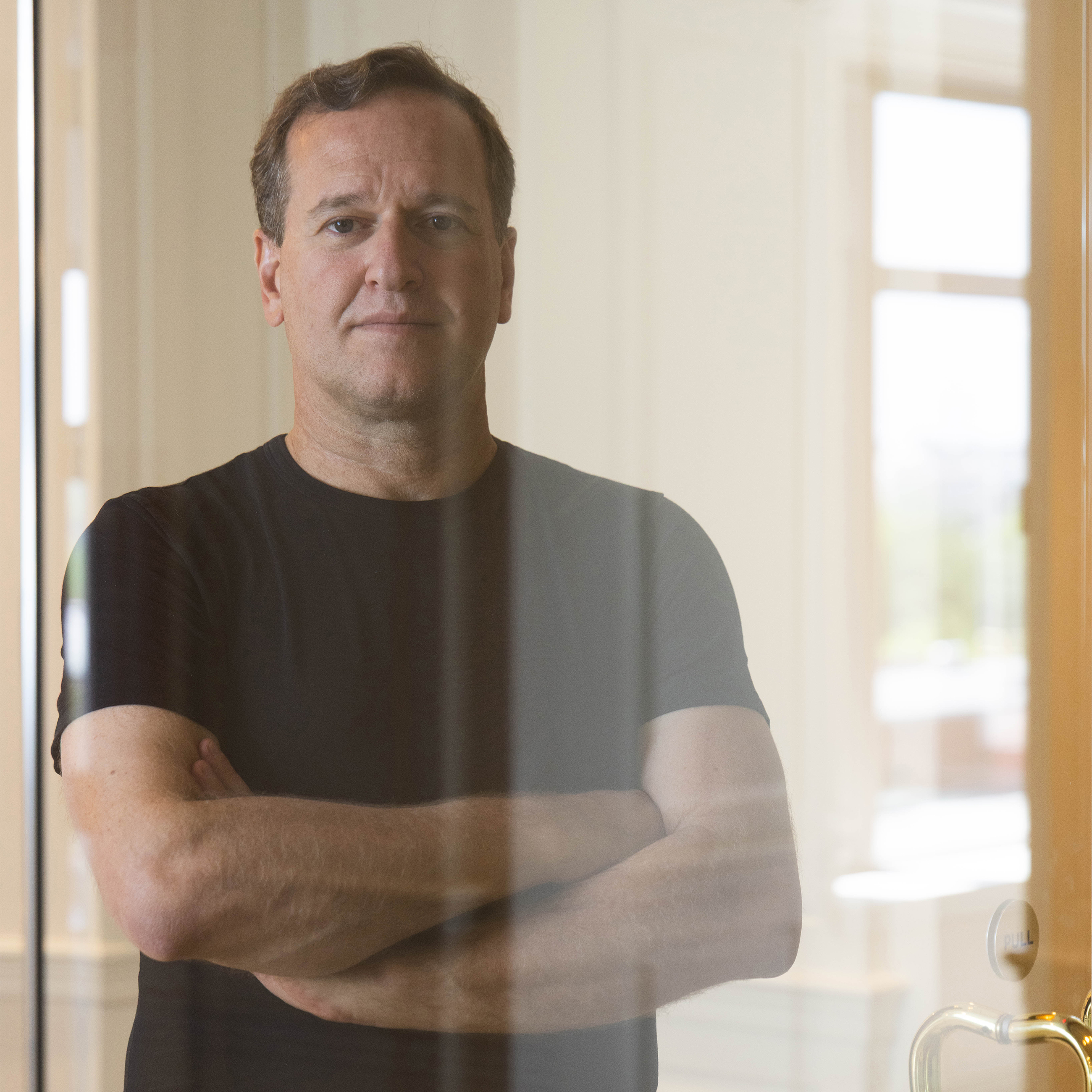
That man is Mickey Bergman. His job? Getting people out.
Mickey Bergman
1999
Special artillery-unit commander, Israel Defense Forces
2005
Master’s degree in foreign service, Georgetown University
2023
Cofounder, CEO, chief mediator, Global Reach
When North Korea imprisoned Otto Warmbier, Bergman helped free him. He forged the deal that brought detained basketball star Brittney Griner home from Russia. Dozens of other former hostages and prisoners also have Bergman to thank: Neda Sharghi, whose brother, Emad Shargi, was imprisoned for five and a half years in Iran, tells me, “I would jump in front of a bus for Mickey.” The cofounder of Global Reach, Bergman runs what may be the only Washington nonprofit that would love to find itself out of business—because its sole mission is to free people, mostly Americans, who are wrongly held abroad.
His job? He gets people out.
“I didn’t even realize how much I needed someone like him,” says Emma Tsurkov. “The reason my sister’s alive now, and not dead in captivity in Iraq, is Mickey Bergman.”
Elizabeth Tsurkov

Age
64
Where
Iraq
Detained
March 2023
Released
October 2023
A Princeton University student and Israeli Russian dual citizen who was held captive by an Iraqi militia group, Tsurkov arrives at an Israeli hospital to begin her recovery.
On the Fringe
A few weeks earlier, I met Bergman in Global Reach’s “family room.” It was the same space where Tsurkov’s party had taken place, a onetime conference room made homier with a couch and comfortable chairs, the better for meeting with people who have just had a loved one seized overseas.
Clean-shaven with close-cropped hair, Bergman wore tailored pants and a sharp white sweater. He’s 50 but looks younger, in part because he’s noticeably fit. Born in Tel Aviv, he served in the Israeli military and was posted in southern Lebanon, where he engaged Hezbollah fighters as an artillery officer. In the summer of 1999, he was picked to represent the Israel Defense Forces at the Brandeis-Bardin Institute, a retreat for young Jewish adults in California. There, he met the woman he would later marry. In 2001, they moved to Los Angeles, where Bergman earned a degree in international relations at UCLA. Next came Washington, where he added a master’s in foreign service from Georgetown.
Just before graduation, Bergman was recruited by a new foundation called the Clinton Global Initiative—yep, those Clintons—to work on religious and ethnic conflict. That took him to Chad, where he helped establish a health clinic for refugees fleeing civil war in neighboring Sudan. One morning in 2007, Bergman got a cold call from then–New Mexico governor Bill Richardson, who as a member of the House of Representatives in the 1990s had helped the Clinton administration secure the release of prisoners in Iraq, North Korea, and Bangladesh.
Richardson was organizing a mission to Sudan to mediate between the government and the rebels. He wanted Bergman to be part of it. Bergman, who later would become a naturalized US citizen, told Richardson that his Israeli background would be a problem in the heart of Sudan, a largely Muslim nation. Richardson shrugged that off, telling Bergman he’d vouch for him. But during a later lunch in Santa Fe, Bergman continued to fret. Richardson leaned in, reminding Bergman he was famous for freeing Americans: “So worst comes to worst, you’ll spend a couple of months in a Sudanese prison.”
Richardson laughed. “Think,” he added, “what that would do for your career.”
The duo brokered a 21-day ceasefire. This was Bergman’s first taste of international relations and his entry point into rescuing detainees. He subsequently worked with Richardson on a series of cases—most notably the mission to free Warmbier—until Richardson’s death in 2023. Bergman launched Global Reach the same year. “When you see a family reunited and you see the impact that it had on them, it’s pretty addictive,” he says.
Otto Warmbier
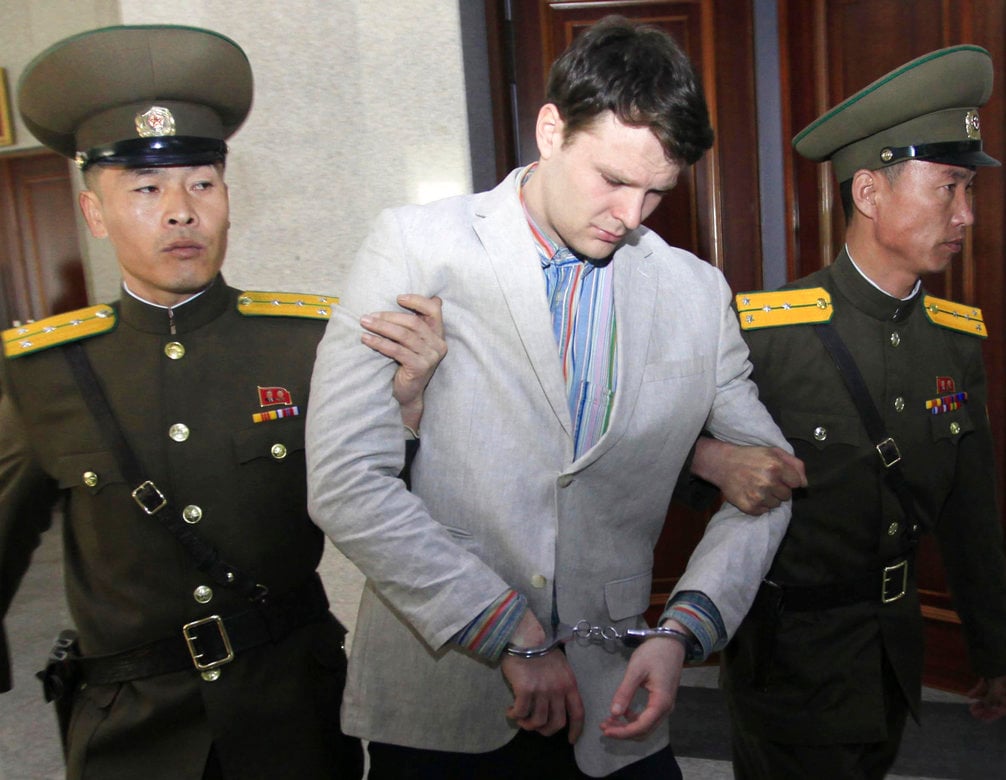
Age
21
Where
North Korea
Detained
January 2016
Released
June 2017
A visiting American student imprisoned for attempting to steal a propaganda poster from his hotel, Warmbier was released in a vegetative state and died soon after returning to the US.
(A disclaimer: Richardson’s name appears in the Jeffrey Epstein files, primarily in connection to the late Virginia Giuffre, who alleged in court documents that Epstein and Ghislaine Maxwell instructed her to engage in sexual activities with Richardson. While alive, Richardson denied ever having met Giuffre. Bergman’s name also appears in the files, but only in email correspondence with an Epstein assistant regarding a potential donation to the Richardson Center, the nonprofit founded by the former governor to facilitate the release of political prisoners. “I was asked by Richardson to coordinate a call between them, and I reached out to [Epstein’s] secretary in a couple of emails trying to do that,” Bergman says. “I do know for a fact—because I was heading the Richardson Center—that Epstein never, ever made a donation. We never, ever took it—nor would we have.”)
Along the way, Bergman has received an education in what he calls “fringe diplomacy.” As a private actor, he can’t make deals on behalf of the US government. But he can go places and communicate in ways that are off-limits to regular diplomats, meeting with and seeking to influence a who’s who of America’s global antagonists: Russian ministers, North Korean officials, even Venezuelan president Nicolás Maduro—whom Bergman knows personally and who was captured by US troops in early January.
“There are certain things we wouldn’t know if Mickey didn’t come forward,” says Boehler, Trump’s special envoy. “We’re always talking and collaborating.”
Finding a Path
As of mid-May this year, at least 42 US nationals were held hostage or wrongfully detained abroad. While their backgrounds vary, their stories are often similar to that of Olga Jezler, a US permanent resident who traveled to Russia in 2022 to care for her sister, who was being treated for breast cancer. At the Moscow airport, Jezler voluntarily declared that she was carrying legally purchased CBD capsules for her sister, as she had on previous visits. CBD is legal in Russia, and Jezler was allowed to leave the airport after questioning. Three days later, however, she was arrested, charged with drug trafficking, and ultimately sentenced to ten years’ imprisonment.
“It does not matter at all who you are or what you’ve done or what they allege.”
Why are Americans taken? Bergman, who is working on Jezler’s case, says detainees tend to fall into three categories. Some have been targeted in bad faith. Others have been genuinely suspected of running afoul of local laws but disproportionately punished. A few actually have done something wrong but are now being held inhumanely, in a way that jeopardizes their health.
“In general, it does not matter at all who you are or what you’ve done or what they allege you’ve done,” says Eric Lebson, Global Reach’s chief strategy officer. “You have a blue passport, and that’s the thing: They know the Americans will need to engage with them to bring you home.”
For friends and family, finding help can be challenging. It means navigating a murky cottage industry selling extraction services—rife with lawyers and international security firms that may or may not be legit, as well as self-proclaimed foreign officials and go-betweens who may actually be fraudsters. Following her sister’s capture in Iraq, Emma Tsurkov says, she was contacted by people claiming to be members of Mexico’s Sinaloa cartel, assuring her they could somehow help.
Global Reach takes a different approach. The firm does not solicit its services, nor does it accept money. To Bergman, both feel wrong. You just had your sibling taken hostage? Great: Pay me to get them home. Instead, the organization is funded by entrepreneur and philanthropist Steve Menzies, who also loaned his private jet to Bergman when he traveled to Russia to negotiate on behalf of Navy veteran Taylor Dudley. (Detained by Russian police in 2022 after crossing the border from Poland, Dudley was released the next year.)
Every potential Global Reach engagement starts with an intake call, during which two employees spend about 90 minutes on the phone with the family of a detainee. This is part of a vetting process: Does the imprisonment in question qualify as wrongful? One time, Bergman recalls, a woman reached out about her husband, who she said had been taken as a political prisoner in Central America. “We did our due diligence,” Bergman says. “He was accused of pedophilia and caught red-handed. I’m not in the business of getting pedophiles out of prison.”
Once Global Reach commits to a client, Bergman crafts what he calls a theory of return: “We try to build up a pathway, the shortest pathway we can come up with, on how somebody comes home.” In 2018, Neda Sharghi’s brother Emad went to Iran to visit family. The country’s Revolutionary Guard arrested him and gave him a ten-year prison sentence for “cooperating” with the US.
Bergman’s theory of return was straightforward. At the time, the US had frozen $6 billion of Iranian assets in an account held by South Korea. Could those assets be unfrozen to leverage Emad’s release? Perhaps by moving the money into a Qatari trust, with the stipulation that it be used only for medicine and humanitarian aid? Global Reach suggested as much to the State Department. Ultimately, five Americans in Iranian custody, including Emad, were set free.
Other cases are more convoluted. During its October 7, 2023, attack on Israel, the Palestinian political and military organization Hamas captured more than 250 civilians. Bergman began receiving calls from panicked family members. Among them was Hanna Siegel. Her aunt, Aviva, a native South African who had emigrated to Israel, and her uncle, Keith, an American-Israeli citizen, had been taken hostage that day.
Keith Siegel
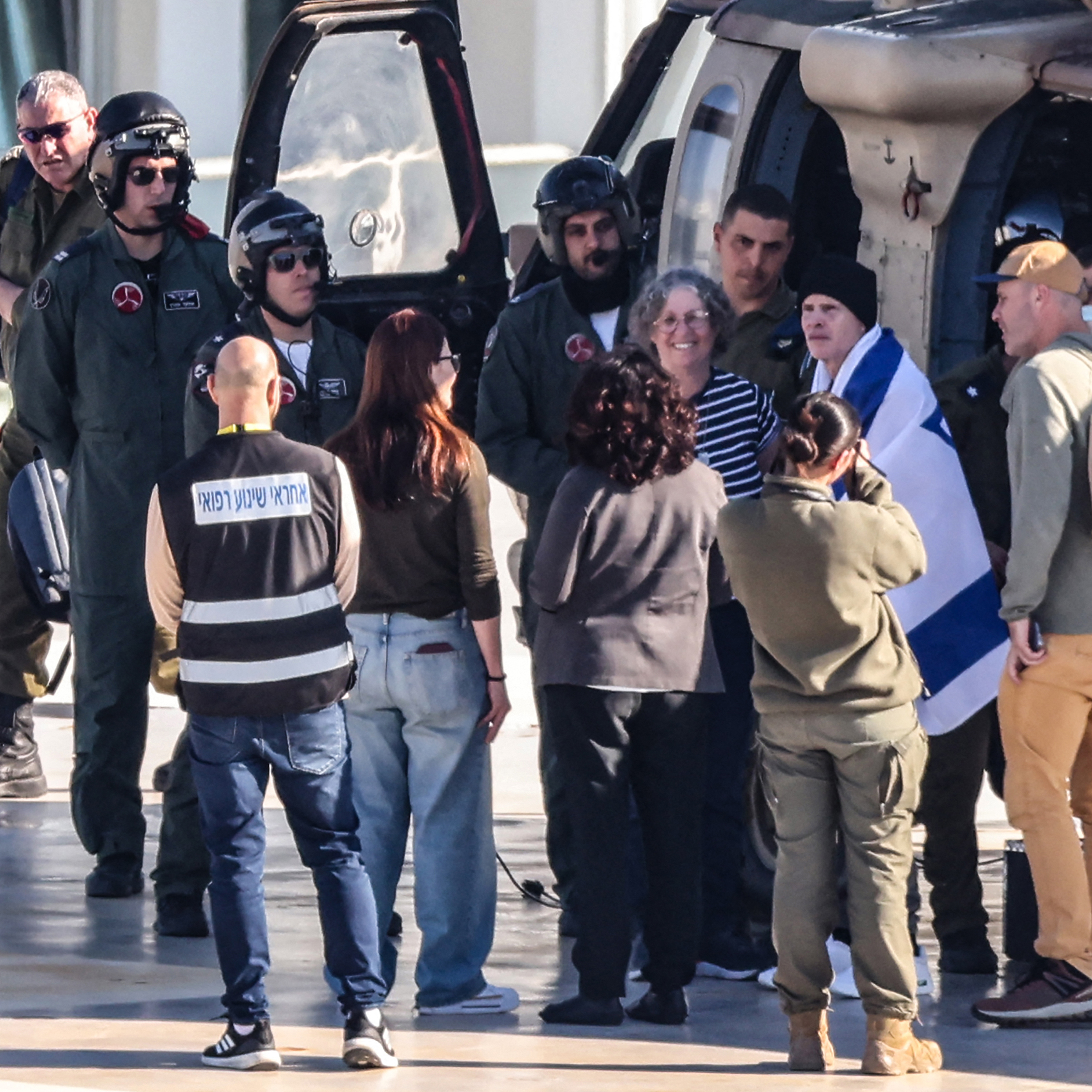
Age
64
Detained
October 2023
Where
Israel
Released
February 2025
An American Israeli citizen taken hostage along with his wife, Aviva (in striped shirt), by Hamas during the October 7 attacks, Siegel (draped in flag) exits a helicopter at a Tel Aviv hospital following his release.
The situation was tricky. Israel and Hamas don’t negotiate. The US doesn’t talk to Hamas either, because it considers the organization a terrorist group. Bergman’s mental wheels began turning. He knew that Qatar had an interest in helping the US and that it also was one of a handful of Middle Eastern countries with influence over Hamas. If Qatar could solicit a hostage-release proposal from Hamas that the US considered halfway decent, he reasoned, then the Americans could work on getting Israel comfortable with it.
Bergman spoke to contacts in Qatar, directing them to ask Hamas what it would take to release some prisoners. He guided Hanna through Washington, working to make sure the White House, State Department, and National Security Council knew about Aviva and Keith. He spent two weeks in Qatar, going between a room where Qatar and Hamas were meeting and another where the US was meeting with Israel and Qatar. “I was constantly back and forth between here and Qatar and the administration and the families, to try to understand what this deal was,” Bergman says.
A deal took shape: Captured women and children would be exchanged for Palestinian prisoners that Hamas wanted back. In late November 2023, about 100 hostages were released, including Aviva. After Trump returned to the White House, Bergman and Hanna met with Boehler to discuss Keith. A new round of negotiations commenced, this time with Boehler running point. In February of last year, Keith was finally released.
“The whole process is so traumatic and so difficult,” Hanna says. “It’s very hard to see clearly and know what you’re supposed to do. Mickey served this role of third-party expert who could empathetically and informatively talk to all our different family members.”
Home and Away
Though the stakes are as high as they come, Bergman’s work is seldom dramatic. At least not overtly. There’s no One Neat Trick to win someone’s freedom—just a series of small maneuvers, carefully choreographed, to create pressure and align incentives. TV and movies, Neda Sharghi says, make hostage negotiations seem “so linear, straightforward, and formulaic. In the real world, it is nothing like that.”
The process starts in Washington. Before Kieran Ramsey became Global Reach’s chief investigative officer, he spent 32 years working in government, mostly for the FBI. In 2019, he was named director of the bureau’s Hostage Recovery Fusion Cell, a task force for hostage cases. “I was actually told by my team, ‘Hey, you’re going to have to meet a bunch of people that aren’t in government, but one of the first people you need to go meet is this guy Mickey,’ ” Ramsey says.
Using his vast list of contacts inside and outside foreign governments, Bergman would facilitate introductions for the bureau. He also would explain that most hostage cases were humanitarian in nature—and ask that US representatives make them the first point of negotiation with foreign officials during delicate conversations, as opposed to the last subject they bring up.
Within the federal government, a limited number of people can actually strike a hostage deal. Getting their attention isn’t easy. To that end, says Ramsey, the former FBI hostage-unit head, Bergman teaches detainees’ families “who’s who in the zoo”—and how to speak with the media, engage with congressional offices, contact FBI and State Department officials, and even interact with intermediaries for foreign governments.
As Emma Tsurkov was attempting to call attention to her sister’s imprisonment, she and Bergman came up with an idea: Hold a protest outside the Iraqi Embassy in DC, one year after Elizabeth’s capture by Kataib Hezbollah. He knew that the country’s prime minister had some influence over the militia and wanted to make Tsurkov an Iraqi problem. To help bring home Lucas Hunter, a French American captured by Venezuelan border agents during a kite-surfing trip to Colombia in January of last year, Bergman got more creative. Global Reach worked with Lucas’s great-aunt, Susie, to produce a 15-second ad about his plight, and the family paid to run it on Fox News in the Washington area. Why? Bergman figured there was a good chance President Trump would see it.
In the ad, Susie holds a photograph of Lucas and speaks to the camera, directly addressing Trump. “Please bring Lucas home safe,” she says. “I know you’re the only one who can.” Shortly after the spot ran last spring, Steve Witkoff, a key administration figure and Trump’s special envoy to the Middle East, called the family to tell them the ad had been seen and that Lucas was a priority case. He returned on July 18, 2025.
Of course, Bergman can’t always kick-start hostage negotiations from home. In 2023, Venezuela, then under Maduro’s rule, was holding ten Americans. Two of them, former Green Berets Luke Denman and Airan Berry, had been involved in a failed 2020 coup attempt. Meanwhile, the US was holding Colombian businessman Alex Saab, who was accused of helping Maduro launder money and circumvent economic sanctions.
Luke Denman and Airan Berry

Ages
34 (Denman), 41 (Berry)
Where
Venezuela
Detained
May 2020
Released
December 2023
Former Green Berets turned mercenaries Denman (far left) and Berry (second from right) were captured by security forces while taking part in a failed coup against Venezuelan president Nicolás Maduro.
Bergman had an idea. He called an old Georgetown contact, who was now working with the legal team prosecuting Saab. What if, Bergman suggested, Saab simply pleaded guilty? The prosecution gets their win, Saab gets deported as a result, and in exchange ten Americans could come home.
His buddy was intrigued—but also mentioned that it was a deal that couldn’t come from the Americans. There’s protocol, process, and propriety on the line. But he hadn’t fully understood: Bergman was ready to suggest the Saab-for-Americans swap to Maduro, presenting it as his own thought. Soon Bergman was in Caracas, pitching Jorge Rodríguez, president of Venezuela’s parliament. Maduro heartily endorsed the idea and made a pledge to turn over all his American prisoners.
In the end, the actual swap didn’t happen quite the way Bergman had envisioned. Saab never pleaded guilty—instead, he was released from US custody, sent to Venezuela, and conditionally pardoned. (In February, he was arrested again in a joint operation by the FBI and Venezuelan authorities.) Meanwhile, the Americans came back. Prisoner exchanges, Ramsey says, are “about having quiet conversations with the right people framing the issue in the right way. And Mickey really does specialize in that.”
In his 2024 memoir, In the Shadows, Bergman writes about the importance of emotional intelligence. Strong-arming foreign officials, he insists, doesn’t work. Far better to understand the feelings, sentiments, and personalities of the parties at the table—even those who seem menacing.
“When people think about negotiators, they think about the big personalities, the people who can bluff the bullies,” Bergman says. “Those are the people who write fantastic books. I’m not a bully. I don’t have a poker face. You have to figure out how to connect with people and where they are.”
“I’m not there to punch. I’m there to try and figure out how to get somebody home.”
In September 2016, Bergman traveled to North Korea on behalf of the imprisoned Warmbier, whose story had become major international news. Earlier that year, the 21-year-old had been on a budget tour of the country when he took a propaganda poster from a hotel. North Korean authorities considered this tantamount to a subversive act and detained Warmbier as a political prisoner.
When meeting with the country’s vice minister of foreign affairs, Bergman did something unusual, at least for an American visitor: He acknowledged the loss of more than 4 million Koreans during the Korean War. The surprised vice minister opened up, Bergman says, and became willing to discuss Warmbier’s arrest—an important step toward winning his freedom.
“There are people who are responsible for very, very evil things, and they need to be held accountable for them,” he says. “It’s just that when they think of themselves, they don’t think of themselves as evil. In the moment, I’m not there to punch. I’m there to try and figure out how to get somebody home.”
Walking a Tightrope
When traveling overseas, Bergman wears a specific ensemble: black suit from Macy’s, black T-shirt (he owns 25), buzz-cut hair. His reasoning is pure Steve Jobs: Why worry about clothes when other things are more important? He also lives by a few simple rules. Never bring more than a carry-on bag. Be ready and able to depart quickly, because things can always go sideways.
“If we go to North Korea, it’s because the leader invited us,” he says. “If we go to Russia, Venezuela, all the other places, it’s because we got an invitation. That doesn’t guarantee our safety.”
The work takes a toll. Bergman has been accused of being a CIA operative. A Mossad spy. An agent of Hamas. (Bergman unequivocally denies ever having worked for an intelligence agency.) He and his wife of 23 years are separated. “It would be naive to say that my work and the stresses it puts on my life have nothing to do with our separation,” says Bergman, who adds that their relationship is cordial.
Bergman often feels as if he’s walking a moral tightrope. Is it wrong to negotiate with governments and non-state actors best known for running drugs, launching rockets, and invading other countries? To acknowledge—and sometimes accede—to their demands? Does cutting hostage deals encourage more hostage-taking?
Consider Brittney Griner’s case. In 2022, the American basketball star, who used to play for a Russian Premier League team, entered the country and was detained on charges of drug smuggling and possession for having vape cartridges containing less than a gram of cannabis oil. Griner pleaded guilty, which Bergman says she did under pressure in an attempt to receive a lenient punishment. Instead, she received a nine-year sentence and was shipped to a penal colony.
To help structure a prison exchange, Bergman traveled to Armenia to discuss potential deals with Ara Abramyan, an Armenian Russian entrepreneur who had high-level contacts at the Kremlin, and later to Moscow to meet with Russian foreign minister Sergey Lavrov. In late 2022, Russia released Griner. In return, the US freed arms dealer and convict Viktor Bout—also known as the “Merchant of Death”—from federal custody.
The countries essentially swapped a famous athlete for an infamous criminal. Since then, Griner has returned to the WNBA, while Bout reportedly has tried to sell guns to Houthi militants. Was the deal worth it? “We’re aware of the criticism that we helped get the US government to release bad people in return for innocent people,” Bergman says. “It’s a valid criticism.” He pauses. “Until you’re the family member of that innocent person that otherwise would not come home.”
Brittney Griner

Age
31
Where
Russia
Detained
February 2022
Released
December 2022
American basketball star Griner (left, in red) and convicted Russian arms dealer Viktor Bout (holding envelope) during a prisoner exchange at Abu Dhabi Airport in the United Arab Emirates.
When I met with Bergman at Global Reach’s office, we spoke for nearly two hours. Several times, he mentioned how he shares the pain of the friends and family in their “darkest time.” “I ride a roller coaster with them,” he says.
That was especially true in June 2017, when Warmbier finally came home from North Korea. At that point, Warmbier was in a coma. He died six days later. (What caused his condition remains a mystery. According to Bergman, even his in-country contacts don’t have a clear answer.) Prior to his passing, Bergman met with Warmbier’s family in Cincinnati. “I was in pieces,” Bergman recalls. “And all I could say was, ‘I’m so sorry. I’m so sorry.’ ”
Warmbier’s mother, Cindy, spoke: “Thanks to you, I got to hug my boy while his body’s still warm.”
Moments like that keep Bergman going. For this story, I spoke to five different family members of hostages who had been freed with his help. One told me they would trust Bergman with their life. Neda Sharghi tried to explain his impact—not on her once-imprisoned brother but on her. “For five and a half years, you don’t sleep,” she says. “You can’t really eat. You can’t think of enjoying yourself or doing anything. I think I would have been lost without him.”
The whole ordeal of freeing Lucas Hunter “was extremely chaotic and extremely stressful,” his sister, Sophie, told me. “And Mickey was very calm, very focused. It’s like we were walking in a fire and he was guiding me.”
At the time of the January event celebrating Elizabeth Tsurkov’s safe return, Global Reach was involved in trying to secure the release of another American from Iran, Kamran Hekmati. Hekmati fled the country following its 1979 revolution but had returned in recent years to visit family. In May 2025, his passport was confiscated at the Tehran airport. Two months later, he was arrested and convicted under a local law that criminalizes having visited Israel within the last decade—even though his most recent trip to the country had been 13 years earlier.
When the US and Israel began bombing Iran this February, I thought of Hekmati. Would the ongoing conflict make it harder for him to come home? I emailed Bergman. His response was characteristically optimistic. “The goal never changes for us, so any obstacles we face just means we reset how we are strategizing,” he wrote. “We look at every development in a case as an opportunity—even the bad ones.”
This, of course, is where all Bergman’s efforts are directed. Who is missing? Who is wasting away in jail? And how can he get them home?
“If we go to North Korea, it’s because the leader invited us,” he says. “If we go to Russia, Venezuela, all the other places, it’s because we got an invitation. That doesn’t guarantee our safety.”
The work takes a toll. Bergman has been accused of being a CIA operative. A Mossad spy. An agent of Hamas. (Bergman unequivocally denies ever having worked for an intelligence agency.) He and his wife of 23 years are separated. “It would be naive to say that my work and the stresses it puts on my life have nothing to do with our separation,” says Bergman, who adds that their relationship is cordial.
Bergman often feels as if he’s walking a moral tightrope. Is it wrong to negotiate with governments and non-state actors best known for running drugs, launching rockets, and invading other countries? To acknowledge—and sometimes accede—to their demands? Does cutting hostage deals encourage more hostage-taking?
Consider Brittney Griner’s case. In 2022, the American basketball star, who used to play for a Russian Premier League team, entered the country and was detained on charges of drug smuggling and possession for having vape cartridges containing less than a gram of cannabis oil. Griner pleaded guilty, which Bergman says she did under pressure in an attempt to receive a lenient punishment. Instead, she received a nine-year sentence and was shipped to a penal colony.
To help structure a prison exchange, Bergman traveled to Armenia to discuss potential deals with Ara Abramyan, an Armenian Russian entrepreneur who had high-level contacts at the Kremlin, and later to Moscow to meet with Russian foreign minister Sergey Lavrov. In late 2022, Russia released Griner. In return, the US freed arms dealer and convict Viktor Bout—also known as the “Merchant of Death”—from federal custody.
The countries essentially swapped a famous athlete for an infamous criminal. Since then, Griner has returned to the WNBA, while Bout reportedly has tried to sell guns to Houthi militants. Was the deal worth it? “We’re aware of the criticism that we helped get the US government to release bad people in return for innocent people,” Bergman says. “It’s a valid criticism.” He pauses. “Until you’re the family member of that innocent person that otherwise would not come home.”
When I met with Bergman at Global Reach’s office, we spoke for nearly two hours. Several times, he mentioned how he shares the pain of the friends and family in their “darkest time.” “I ride a roller coaster with them,” he says.
That was especially true in June 2017, when Warmbier finally came home from North Korea. At that point, Warmbier was in a coma. He died six days later. (What caused his condition remains a mystery. According to Bergman, even his in-country contacts don’t have a clear answer.) Prior to his passing, Bergman met with Warmbier’s family in Cincinnati. “I was in pieces,” Bergman recalls. “And all I could say was, ‘I’m so sorry. I’m so sorry.’ ”
Warmbier’s mother, Cindy, spoke: “Thanks to you, I got to hug my boy while his body’s still warm.”
Moments like that keep Bergman going. For this story, I spoke to five different family members of hostages who had been freed with his help. One told me they would trust Bergman with their life. Neda Sharghi tried to explain his impact—not on her once-imprisoned brother but on her. “For five and a half years, you don’t sleep,” she says. “You can’t really eat. You can’t think of enjoying yourself or doing anything. I think I would have been lost without him.”
The whole ordeal of freeing Lucas Hunter “was extremely chaotic and extremely stressful,” his sister, Sophie, told me. “And Mickey was very calm, very focused. It’s like we were walking in a fire and he was guiding me.”
At the time of the January event celebrating Elizabeth Tsurkov’s safe return, Global Reach was involved in trying to secure the release of another American from Iran, Kamran Hekmati. Hekmati fled the country following its 1979 revolution but had returned in recent years to visit family. In May 2025, his passport was confiscated at the Tehran airport. Two months later, he was arrested and convicted under a local law that criminalizes having visited Israel within the last decade—even though his most recent trip to the country had been 13 years earlier.
When the US and Israel began bombing Iran this February, I thought of Hekmati. Would the ongoing conflict make it harder for him to come home? I emailed Bergman. His response was characteristically optimistic. “The goal never changes for us, so any obstacles we face just means we reset how we are strategizing,” he wrote. “We look at every development in a case as an opportunity—even the bad ones.”
This, of course, is where all Bergman’s efforts are directed. Who is missing? Who is wasting away in jail? And how can he get them home?
This article appears in the June 2026 issue of Washingtonian.
ompared with where Elizabeth Tsurkov was just five months earlier, the scene couldn’t be more different. It’s a frigid evening in late January, and Tsurkov is sitting on a couch in an office off Farragut Square. Outside, a punishing snowstorm has made the sidewalks near-impassable. Inside, black-jacketed servers carry silver trays laden with hors d’oeuvres while a barman serves bottles of beer and glasses of chilled white wine. At the front of the room, tall windows look out onto the White House—but all eyes are trained on Tsurkov, who wears a sash reading “Back By Popular Demand.”
Until last September, Tsurkov had been a prisoner of Kataib Hezbollah, an Iraqi militia group and designated terrorist organization that receives funding from Iran. On March 21, 2023, she arrived at a cafe in Baghdad around 9 pm, planning to meet a woman who had contacted her over WhatsApp with questions about the Islamic State. A dual Russian-Israeli citizen and Princeton University graduate student, Tsurkov was in Iraq conducting research on the Sadrist Current, a populist political movement, for her political-science doctorate at Princeton.
When the woman didn’t show, Tsurkov began walking home. A black SUV pulled up next to her. Out jumped a group of men, who forced her into the vehicle. Thus began 903 days of captivity, during which Tsurkov was beaten, electrocuted, tortured, and sexually assaulted. Tsurkov initially believed she was being kidnapped for ransom, but when militia members discovered her Israeli identity, they accused her of being a spy.
His job? Getting people out.
Her sister, Emma, a legal permanent resident on her way to becoming an American citizen, first learned that Kataib Hezbollah was behind the abduction when the New York Times reached out for an interview. After confirming the news with the FBI, Emma and her family worked to bring Tsurkov home. They badgered people in Congress and the State Department. They protested outside the Iraqi Embassy in DC. Emma met with Adam Boehler, President Trump’s special envoy for hostage response, who is said to have subsequently stormed into a meeting in Baghdad, uninvited, to harangue Iraq’s prime minister about Tsurkov’s plight.
On September 9, 2025, Tsurkov was released. The January event in Washington is something of a homecoming party. Flanking her are several dozen people: family members, friends, local business leaders, some reporters. Sebastian Gorka, Trump’s deputy assistant, is here. So is Boehler. But one of the people most instrumental to Tsurkov’s return is not. Afterward, I’m told he’s away on business of an unspecified nature. Given his line of work, I’m not surprised.
That man is Mickey Bergman. His job? Getting people out.
Mickey Bergman
1999
Special artillery-unit commander, Israel Defense Forces
2005
Master’s degree in foreign service, Georgetown University
2023
Cofounder, CEO, chief mediator, Global Reach
When North Korea imprisoned Otto Warmbier, Bergman helped free him. He forged the deal that brought detained basketball star Brittney Griner home from Russia. Dozens of other former hostages and prisoners also have Bergman to thank: Neda Sharghi, whose brother, Emad Shargi, was imprisoned for five and a half years in Iran, tells me, “I would jump in front of a bus for Mickey.” The cofounder of Global Reach, Bergman runs what may be the only Washington nonprofit that would love to find itself out of business—because its sole mission is to free people, mostly Americans, who are wrongly held abroad.
“I didn’t even realize how much I needed someone like him,” says Emma Tsurkov. “The reason my sister’s alive now, and not dead in captivity in Iraq, is Mickey Bergman.”
On the Fringe
A few weeks earlier, I met Bergman in Global Reach’s “family room.” It was the same space where Tsurkov’s party had taken place, a onetime conference room made homier with a couch and comfortable chairs, the better for meeting with people who have just had a loved one seized overseas.
Clean-shaven with close-cropped hair, Bergman wore tailored pants and a sharp white sweater. He’s 50 but looks younger, in part because he’s noticeably fit. Born in Tel Aviv, he served in the Israeli military and was posted in southern Lebanon, where he engaged Hezbollah fighters as an artillery officer. In the summer of 1999, he was picked to represent the Israel Defense Forces at the Brandeis-Bardin Institute, a retreat for young Jewish adults in California. There, he met the woman he would later marry. In 2001, they moved to Los Angeles, where Bergman earned a degree in international relations at UCLA. Next came Washington, where he added a master’s in foreign service from Georgetown.
Just before graduation, Bergman was recruited by a new foundation called the Clinton Global Initiative—yep, those Clintons—to work on religious and ethnic conflict. That took him to Chad, where he helped establish a health clinic for refugees fleeing civil war in neighboring Sudan. One morning in 2007, Bergman got a cold call from then–New Mexico governor Bill Richardson, who as a member of the House of Representatives in the 1990s had helped the Clinton administration secure the release of prisoners in Iraq, North Korea, and Bangladesh.
Richardson was organizing a mission to Sudan to mediate between the government and the rebels. He wanted Bergman to be part of it. Bergman, who later would become a naturalized US citizen, told Richardson that his Israeli background would be a problem in the heart of Sudan, a largely Muslim nation. Richardson shrugged that off, telling Bergman he’d vouch for him. But during a later lunch in Santa Fe, Bergman continued to fret. Richardson leaned in, reminding Bergman he was famous for freeing Americans: “So worst comes to worst, you’ll spend a couple of months in a Sudanese prison.”
Richardson laughed. “Think,” he added, “what that would do for your career.”
The duo brokered a 21-day ceasefire. This was Bergman’s first taste of international relations and his entry point into rescuing detainees. He subsequently worked with Richardson on a series of cases—most notably the mission to free Warmbier—until Richardson’s death in 2023. Bergman launched Global Reach the same year. “When you see a family reunited and you see the impact that it had on them, it’s pretty addictive,” he says.
(A disclaimer: Richardson’s name appears in the Jeffrey Epstein files, primarily in connection to the late Virginia Giuffre, who alleged in court documents that Epstein and Ghislaine Maxwell instructed her to engage in sexual activities with Richardson. While alive, Richardson denied ever having met Giuffre. Bergman’s name also appears in the files, but only in email correspondence with an Epstein assistant regarding a potential donation to the Richardson Center, the nonprofit founded by the former governor to facilitate the release of political prisoners. “I was asked by Richardson to coordinate a call between them, and I reached out to [Epstein’s] secretary in a couple of emails trying to do that,” Bergman says. “I do know for a fact—because I was heading the Richardson Center—that Epstein never, ever made a donation. We never, ever took it—nor would we have.”)
Along the way, Bergman has received an education in what he calls “fringe diplomacy.” As a private actor, he can’t make deals on behalf of the US government. But he can go places and communicate in ways that are off-limits to regular diplomats, meeting with and seeking to influence a who’s who of America’s global antagonists: Russian ministers, North Korean officials, even Venezuelan president Nicolás Maduro—whom Bergman knows personally and who was captured by US troops in early January.
“There are certain things we wouldn’t know if Mickey didn’t come forward,” says Boehler, Trump’s special envoy. “We’re always talking and collaborating.”
Finding a Path
As of mid-May this year, at least 42 US nationals were held hostage or wrongfully detained abroad. While their backgrounds vary, their stories are often similar to that of Olga Jezler, a US permanent resident who traveled to Russia in 2022 to care for her sister, who was being treated for breast cancer. At the Moscow airport, Jezler voluntarily declared that she was carrying legally purchased CBD capsules for her sister, as she had on previous visits. CBD is legal in Russia, and Jezler was allowed to leave the airport after questioning. Three days later, however, she was arrested, charged with drug trafficking, and ultimately sentenced to ten years’ imprisonment.
“It does not matter at all who you are or what you’ve done or what they allege.”
Why are Americans taken? Bergman, who is working on Jezler’s case, says detainees tend to fall into three categories. Some have been targeted in bad faith. Others have been genuinely suspected of running afoul of local laws but disproportionately punished. A few actually have done something wrong but are now being held inhumanely, in a way that jeopardizes their health.
“In general, it does not matter at all who you are or what you’ve done or what they allege you’ve done,” says Eric Lebson, Global Reach’s chief strategy officer. “You have a blue passport, and that’s the thing: They know the Americans will need to engage with them to bring you home.”
For friends and family, finding help can be challenging. It means navigating a murky cottage industry selling extraction services—rife with lawyers and international security firms that may or may not be legit, as well as self-proclaimed foreign officials and go-betweens who may actually be fraudsters. Following her sister’s capture in Iraq, Emma Tsurkov says, she was contacted by people claiming to be members of Mexico’s Sinaloa cartel, assuring her they could somehow help.
Elizabeth Tsurkov
Age
64
Detained
March 2023
Where
Iraq
Released
October 2023
A Princeton University student and Israeli Russian dual citizen who was held captive by an Iraqi militia group, Tsurkov arrives at an Israeli hospital to begin her recovery.
Global Reach takes a different approach. The firm does not solicit its services, nor does it accept money. To Bergman, both feel wrong. You just had your sibling taken hostage? Great: Pay me to get them home. Instead, the organization is funded by entrepreneur and philanthropist Steve Menzies, who also loaned his private jet to Bergman when he traveled to Russia to negotiate on behalf of Navy veteran Taylor Dudley. (Detained by Russian police in 2022 after crossing the border from Poland, Dudley was released the next year.)
Every potential Global Reach engagement starts with an intake call, during which two employees spend about 90 minutes on the phone with the family of a detainee. This is part of a vetting process: Does the imprisonment in question qualify as wrongful? One time, Bergman recalls, a woman reached out about her husband, who she said had been taken as a political prisoner in Central America. “We did our due diligence,” Bergman says. “He was accused of pedophilia and caught red-handed. I’m not in the business of getting pedophiles out of prison.”
Once Global Reach commits to a client, Bergman crafts what he calls a theory of return: “We try to build up a pathway, the shortest pathway we can come up with, on how somebody comes home.” In 2018, Neda Sharghi’s brother Emad went to Iran to visit family. The country’s Revolutionary Guard arrested him and gave him a ten-year prison sentence for “cooperating” with the US.
Bergman’s theory of return was straightforward. At the time, the US had frozen $6 billion of Iranian assets in an account held by South Korea. Could those assets be unfrozen to leverage Emad’s release? Perhaps by moving the money into a Qatari trust, with the stipulation that it be used only for medicine and humanitarian aid? Global Reach suggested as much to the State Department. Ultimately, five Americans in Iranian custody, including Emad, were set free.
Other cases are more convoluted. During its October 7, 2023, attack on Israel, the Palestinian political and military organization Hamas captured more than 250 civilians. Bergman began receiving calls from panicked family members. Among them was Hanna Siegel. Her aunt, Aviva, a native South African who had emigrated to Israel, and her uncle, Keith, an American-Israeli citizen, had been taken hostage that day.
Keith Siegel
Age
64
Detained
October 2023
Where
Israel
Released
February 2025
An American Israeli citizen taken hostage along with his wife, Aviva (in striped shirt), by Hamas during the October 7 attacks, Siegel (draped in flag) exits a helicopter at a Tel Aviv hospital following his release.
The situation was tricky. Israel and Hamas don’t negotiate. The US doesn’t talk to Hamas either, because it considers the organization a terrorist group. Bergman’s mental wheels began turning. He knew that Qatar had an interest in helping the US and that it also was one of a handful of Middle Eastern countries with influence over Hamas. If Qatar could solicit a hostage-release proposal from Hamas that the US considered halfway decent, he reasoned, then the Americans could work on getting Israel comfortable with it.
Bergman spoke to contacts in Qatar, directing them to ask Hamas what it would take to release some prisoners. He guided Hanna through Washington, working to make sure the White House, State Department, and National Security Council knew about Aviva and Keith. He spent two weeks in Qatar, going between a room where Qatar and Hamas were meeting and another where the US was meeting with Israel and Qatar. “I was constantly back and forth between here and Qatar and the administration and the families, to try to understand what this deal was,” Bergman says.
A deal took shape: Captured women and children would be exchanged for Palestinian prisoners that Hamas wanted back. In late November 2023, about 100 hostages were released, including Aviva. After Trump returned to the White House, Bergman and Hanna met with Boehler to discuss Keith. A new round of negotiations commenced, this time with Boehler running point. In February of last year, Keith was finally released.
“The whole process is so traumatic and so difficult,” Hanna says. “It’s very hard to see clearly and know what you’re supposed to do. Mickey served this role of third-party expert who could empathetically and informatively talk to all our different family members.”
Home and Away
Though the stakes are as high as they come, Bergman’s work is seldom dramatic. At least not overtly. There’s no One Neat Trick to win someone’s freedom—just a series of small maneuvers, carefully choreographed, to create pressure and align incentives. TV and movies, Neda Sharghi says, make hostage negotiations seem “so linear, straightforward, and formulaic. In the real world, it is nothing like that.”
The process starts in Washington. Before Kieran Ramsey became Global Reach’s chief investigative officer, he spent 32 years working in government, mostly for the FBI. In 2019, he was named director of the bureau’s Hostage Recovery Fusion Cell, a task force for hostage cases. “I was actually told by my team, ‘Hey, you’re going to have to meet a bunch of people that aren’t in government, but one of the first people you need to go meet is this guy Mickey,’ ” Ramsey says.
Using his vast list of contacts inside and outside foreign governments, Bergman would facilitate introductions for the bureau. He also would explain that most hostage cases were humanitarian in nature—and ask that US representatives make them the first point of negotiation with foreign officials during delicate conversations, as opposed to the last subject they bring up.
Within the federal government, a limited number of people can actually strike a hostage deal. Getting their attention isn’t easy. To that end, says Ramsey, the former FBI hostage-unit head, Bergman teaches detainees’ families “who’s who in the zoo”—and how to speak with the media, engage with congressional offices, contact FBI and State Department officials, and even interact with intermediaries for foreign governments.
As Emma Tsurkov was attempting to call attention to her sister’s imprisonment, she and Bergman came up with an idea: Hold a protest outside the Iraqi Embassy in DC, one year after Elizabeth’s capture by Kataib Hezbollah. He knew that the country’s prime minister had some influence over the militia and wanted to make Tsurkov an Iraqi problem. To help bring home Lucas Hunter, a French American captured by Venezuelan border agents during a kite-surfing trip to Colombia in January of last year, Bergman got more creative. Global Reach worked with Lucas’s great-aunt, Susie, to produce a 15-second ad about his plight, and the family paid to run it on Fox News in the Washington area. Why? Bergman figured there was a good chance President Trump would see it.
In the ad, Susie holds a photograph of Lucas and speaks to the camera, directly addressing Trump. “Please bring Lucas home safe,” she says. “I know you’re the only one who can.” Shortly after the spot ran last spring, Steve Witkoff, a key administration figure and Trump’s special envoy to the Middle East, called the family to tell them the ad had been seen and that Lucas was a priority case. He returned on July 18, 2025.
Of course, Bergman can’t always kick-start hostage negotiations from home. In 2023, Venezuela, then under Maduro’s rule, was holding ten Americans. Two of them, former Green Berets Luke Denman and Airan Berry, had been involved in a failed 2020 coup attempt. Meanwhile, the US was holding Colombian businessman Alex Saab, who was accused of helping Maduro launder money and circumvent economic sanctions.
Luke Denman and Airan Berry
Ages
34 (Denman), 41 (Berry)
Where
Venezuela
Detained
May 2020
Released
December 2023
Former Green Berets turned mercenaries Denman (far left) and Berry (second from right) were captured by security forces while taking part in a failed coup against Venezuelan president Nicolás Maduro.
Bergman had an idea. He called an old Georgetown contact, who was now working with the legal team prosecuting Saab. What if, Bergman suggested, Saab simply pleaded guilty? The prosecution gets their win, Saab gets deported as a result, and in exchange ten Americans could come home.
His buddy was intrigued—but also mentioned that it was a deal that couldn’t come from the Americans. There’s protocol, process, and propriety on the line. But he hadn’t fully understood: Bergman was ready to suggest the Saab-for-Americans swap to Maduro, presenting it as his own thought. Soon Bergman was in Caracas, pitching Jorge Rodríguez, president of Venezuela’s parliament. Maduro heartily endorsed the idea and made a pledge to turn over all his American prisoners.
In the end, the actual swap didn’t happen quite the way Bergman had envisioned. Saab never pleaded guilty—instead, he was released from US custody, sent to Venezuela, and conditionally pardoned. (In February, he was arrested again in a joint operation by the FBI and Venezuelan authorities.) Meanwhile, the Americans came back. Prisoner exchanges, Ramsey says, are “about having quiet conversations with the right people framing the issue in the right way. And Mickey really does specialize in that.”
In his 2024 memoir, In the Shadows, Bergman writes about the importance of emotional intelligence. Strong-arming foreign officials, he insists, doesn’t work. Far better to understand the feelings, sentiments, and personalities of the parties at the table—even those who seem menacing.
“I’m not there to punch. I’m there to try and figure out how to get somebody home.”
“When people think about negotiators, they think about the big personalities, the people who can bluff the bullies,” Bergman says. “Those are the people who write fantastic books. I’m not a bully. I don’t have a poker face. You have to figure out how to connect with people and where they are.”
In September 2016, Bergman traveled to North Korea on behalf of the imprisoned Warmbier, whose story had become major international news. Earlier that year, the 21-year-old had been on a budget tour of the country when he took a propaganda poster from a hotel. North Korean authorities considered this tantamount to a subversive act and detained Warmbier as a political prisoner.
When meeting with the country’s vice minister of foreign affairs, Bergman did something unusual, at least for an American visitor: He acknowledged the loss of more than 4 million Koreans during the Korean War. The surprised vice minister opened up, Bergman says, and became willing to discuss Warmbier’s arrest—an important step toward winning his freedom.
Otto Warmbier
Age
21
Where
North Korea
Detained
January 2016
Released
June 2017
A visiting American student imprisoned for attempting to steal a propaganda poster from his hotel, Warmbier was released in a vegetative state and died soon after returning to the US.
“There are people who are responsible for very, very evil things, and they need to be held accountable for them,” he says. “It’s just that when they think of themselves, they don’t think of themselves as evil. In the moment, I’m not there to punch. I’m there to try and figure out how to get somebody home.”
Walking a Tightrope
When traveling overseas, Bergman wears a specific ensemble: black suit from Macy’s, black T-shirt (he owns 25), buzz-cut hair. His reasoning is pure Steve Jobs: Why worry about clothes when other things are more important? He also lives by a few simple rules. Never bring more than a carry-on bag. Be ready and able to depart quickly, because things can always go sideways.
“If we go to North Korea, it’s because the leader invited us,” he says. “If we go to Russia, Venezuela, all the other places, it’s because we got an invitation. That doesn’t guarantee our safety.”
The work takes a toll. Bergman has been accused of being a CIA operative. A Mossad spy. An agent of Hamas. (Bergman unequivocally denies ever having worked for an intelligence agency.) He and his wife of 23 years are separated. “It would be naive to say that my work and the stresses it puts on my life have nothing to do with our separation,” says Bergman, who adds that their relationship is cordial.
Bergman often feels as if he’s walking a moral tightrope. Is it wrong to negotiate with governments and non-state actors best known for running drugs, launching rockets, and invading other countries? To acknowledge—and sometimes accede—to their demands? Does cutting hostage deals encourage more hostage-taking?
Consider Brittney Griner’s case. In 2022, the American basketball star, who used to play for a Russian Premier League team, entered the country and was detained on charges of drug smuggling and possession for having vape cartridges containing less than a gram of cannabis oil. Griner pleaded guilty, which Bergman says she did under pressure in an attempt to receive a lenient punishment. Instead, she received a nine-year sentence and was shipped to a penal colony.
To help structure a prison exchange, Bergman traveled to Armenia to discuss potential deals with Ara Abramyan, an Armenian Russian entrepreneur who had high-level contacts at the Kremlin, and later to Moscow to meet with Russian foreign minister Sergey Lavrov. In late 2022, Russia released Griner. In return, the US freed arms dealer and convict Viktor Bout—also known as the “Merchant of Death”—from federal custody.
The countries essentially swapped a famous athlete for an infamous criminal. Since then, Griner has returned to the WNBA, while Bout reportedly has tried to sell guns to Houthi militants. Was the deal worth it? “We’re aware of the criticism that we helped get the US government to release bad people in return for innocent people,” Bergman says. “It’s a valid criticism.” He pauses. “Until you’re the family member of that innocent person that otherwise would not come home.”
Brittney Griner
Age
31
Where
Russia
Detained
February 2022
Released
December 2022
American basketball star Griner (left, in red) and convicted Russian arms dealer Viktor Bout (holding envelope) during a prisoner exchange at Abu Dhabi Airport in the United Arab Emirates.
When I met with Bergman at Global Reach’s office, we spoke for nearly two hours. Several times, he mentioned how he shares the pain of the friends and family in their “darkest time.” “I ride a roller coaster with them,” he says.
That was especially true in June 2017, when Warmbier finally came home from North Korea. At that point, Warmbier was in a coma. He died six days later. (What caused his condition remains a mystery. According to Bergman, even his in-country contacts don’t have a clear answer.) Prior to his passing, Bergman met with Warmbier’s family in Cincinnati. “I was in pieces,” Bergman recalls. “And all I could say was, ‘I’m so sorry. I’m so sorry.’ ”
Warmbier’s mother, Cindy, spoke: “Thanks to you, I got to hug my boy while his body’s still warm.”
Moments like that keep Bergman going. For this story, I spoke to five different family members of hostages who had been freed with his help. One told me they would trust Bergman with their life. Neda Sharghi tried to explain his impact—not on her once-imprisoned brother but on her. “For five and a half years, you don’t sleep,” she says. “You can’t really eat. You can’t think of enjoying yourself or doing anything. I think I would have been lost without him.”
The whole ordeal of freeing Lucas Hunter “was extremely chaotic and extremely stressful,” his sister, Sophie, told me. “And Mickey was very calm, very focused. It’s like we were walking in a fire and he was guiding me.”
At the time of the January event celebrating Elizabeth Tsurkov’s safe return, Global Reach was involved in trying to secure the release of another American from Iran, Kamran Hekmati. Hekmati fled the country following its 1979 revolution but had returned in recent years to visit family. In May 2025, his passport was confiscated at the Tehran airport. Two months later, he was arrested and convicted under a local law that criminalizes having visited Israel within the last decade—even though his most recent trip to the country had been 13 years earlier.
When the US and Israel began bombing Iran this February, I thought of Hekmati. Would the ongoing conflict make it harder for him to come home? I emailed Bergman. His response was characteristically optimistic. “The goal never changes for us, so any obstacles we face just means we reset how we are strategizing,” he wrote. “We look at every development in a case as an opportunity—even the bad ones.”
This, of course, is where all Bergman’s efforts are directed. Who is missing? Who is wasting away in jail? And how can he get them home?
This article appears in the June 2026 issue of Washingtonian.