

Let’s not mince words. For many in Washington, it’s been a terrible, horrible, no good, very bad year. Since assuming power last January, the Trump administration and its MAGA allies have made their presence felt across our region—much in the way the President has made his felt across the East Wing of the White House.
We’ve endured mass firings of federal workers. Masked agents arresting and striking fear into immigrants. A callous crackdown on the unhoused. We’ve watched Trump call our city “dirty” and “disgusting” and received the “fork in the road” email. We’ve gritted our teeth through the longest government shutdown ever and shaken our heads at the ham-fisted effort to prosecute the Sandwich Guy for the high crime of sullying a bulletproof vest with onions and mustard.
Our autonomy is under siege. Our economy is under strain. Even the Kennedy Center—excuse us, the Donald J. Trump and the John F. Kennedy Memorial Center for the Performing Arts—is kind of a mess. The overall vibes? Not great! And yet: We haven’t given up, let alone given in. In the face of hard times we neither caused nor asked for, we’ve stayed strong—sometimes by speaking out, sometimes by helping each other out. We’re donating our time, money, and skills to feeding the hungry, housing the homeless, and helping fired feds get back on their feet. When we’re not keeping a watchful eye on ICE, we’re busy trolling RFK Jr. When we’re not knitting our way through stress (seriously, you should try it), we’re making the uniquely supportive counsel of Jewish grandmothers something of a public good.
Oh, and we’ve also been flying a whole lot of DC flags. Which ought to serve as a reminder: Regimes come and go, because that’s the nature of politics. This one is no different. When its time is up, we’ll still be here. Strong as ever.
Helping Civil Servants
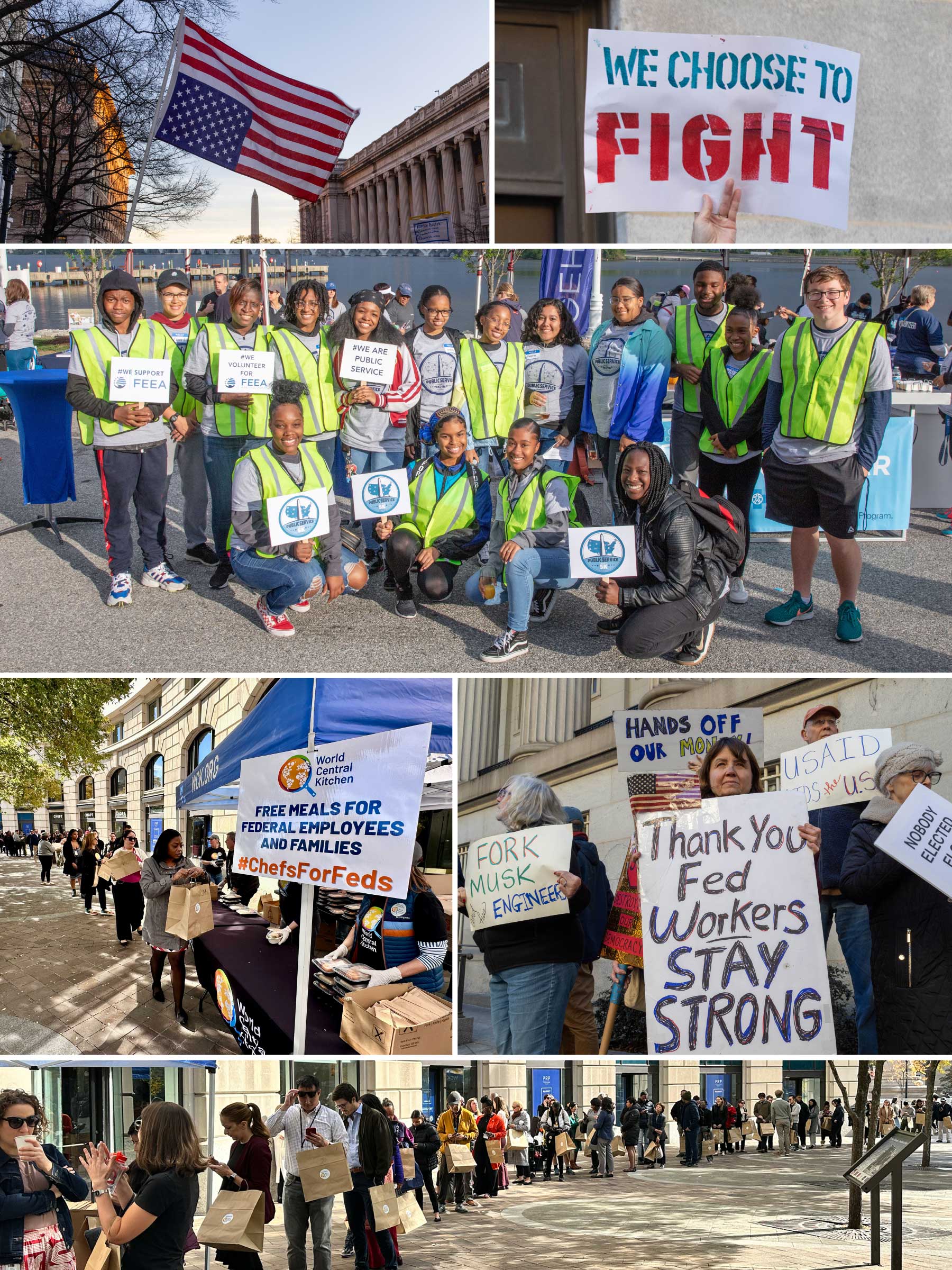
Prior to Donald Trump’s return to the White House, Project 2025 architect and current Office of Management and Budget director Russell Vought announced a desire to put federal workers “in trauma.”
Promises made, promises kept: As part of a nationwide reduction in federal civil servants, more than 14,000 people in the Washington area voluntarily or involuntarily left the government workforce between January and late May of last year. Those numbers—the most recent available—don’t account for civil servants who departed after May, and they don’t count government contractors who have also seen their jobs disappear.
We wouldn’t blame fired federal workers if they wanted nothing to do with government again. But some of these mission-driven professionals now have a new calling: supporting alumni as well as those still in federal employ.
“There is this really interesting ecosystem of people stepping up to help,” says Jenny Mattingley, vice president for government affairs at the Partnership for Public Service, a DC-based good-government nonprofit. “That’s what I think gets lost. These were people who really cared about the government.”
Here are ways you can help.
Donate
A number of nonprofits support current and former federal employees—some were founded last year by fired feds determined to give back. All accept donations to continue their work. Among them:
- Civil Service Strong, whose exhaustive website points to resources for government alumni and employees, shares the latest news, and answers frequently asked questions. Plus, it links to merchandise people can wear to show support for civil servants.
- The Federal Employee Education & Assistance Fund, a 40-year-old organization whose services include hardship loans, scholarships, and childcare subsidies.
- FedsForward, whose mission is to help those with expertise in government transition into other careers—and, potentially, back to civil service someday.
- The Federal Worker Solidarity Fund, run through the Community Services Agency, which gives $500 in one-time emergency assistance to federal workers who have lost a job and can’t pay a bill.
- Grounded Idealist, which provides free career coaching for public servants in transition, an incubator for emerging social entrepreneurs, and other resources to further the work of mission-driven professionals.
- The Partnership for Public Service, which for more than two decades has advocated for civil service and good government, with everything from internship programs and leadership training to annual awards for public servants. Its FedSupport.org website is a comprehensive resource for federal workers.
- Rise Up, a network of attorneys that offers pro bono legal assistance to fired federal workers.
- WellFed, which provides all manner of support and community-building for current and former government professionals—including résumé-writing workshops and free virtual meditation.
Volunteer
Many of the aforementioned nonprofits could use volunteers. Rise Up, for example, doesn’t just need attorneys to go to bat for the fired; it also needs people to screen federal workers who reach out—asking nine scripted questions, no legal knowledge required.
Other Ways to Lend a Hand
Have a job opening? Looking for an expert speaker or someone to sit on a board? Formergov.com aims to connect ex-government-and-military professionals to such opportunities.
Another way to help a friend or neighbor who got DOGE’d and is struggling? It may seem simple, Mattingley says, but you could offer to help revise their CV or practice for a job interview, or help them make connections.
“Some of these people haven’t updated their résumés or interviewed in years,” she says. “You might help them figure out what else they could do with their skills. And introduce them to people. That helps them expand their network and think about what else they might want to do.”
Lastly, you could help someone who got into government in order to do good find another purpose.
“One of the things I hear most from federal workers is that they feel the loss of the bigger mission they were in,” Mattingley says. “Help them remember that there are other ways to get involved. Invite someone to a community-service activity. That is a way to engage people and make them feel not so alone.”
Supporting the “Tired and Fired”

When Drew Tye Ruby-Howe and Rebecca Ferguson-Ondrey, colleagues at the Department of Health and Human Services, both received termination notices on the same day in February 2025 as part of DOGE’s slashing of the federal workforce, the news took a moment to process. “It was incredibly devastating,” says Ferguson-Ondrey. “But we knew other people felt just as overwhelmed and lost.”
Only two days later, they decided to keep working together. Their jobs had been to support coworkers through employee training and community-building retreats—why not do the same for laid-off civil servants? The duo’s first “mini-retreat” in early March featured a packed schedule of meditation, workshops, and art therapy. By the end, they say, the 20 attendees were in tears and hugging complete strangers.
“They saw their own experiences in other people,” says Ruby-Howe. “If they had come into the event feeling lost, they left feeling found.”
Recognizing a need, the women launched WellFed, a startup that now counts more than 3,000 former federal workers and contractors as “members” (membership is free) and provides access to emotional support, career advice—and free lunch. “In both our cultures, Jewish and Korean, food is such an important piece of the healing process and community-generating process,” says Ruby-Howe. “We wanted a name for our business that reflected the kind of nourishment we were giving people, both physically and metaphorically.”
With free weekly digital seminars and regular in-person events (some, such as daylong retreats, might cost $40), WellFed’s goal is not only to get feds rehired—it’s also to let them know they’re not alone. “We had to repurpose ourselves outside of the federal government,” says Ferguson-Ondrey. “Going through that ourselves has given us the tools to help people in the same situation.”
Photograph of Ruby-Howe and Ferguson-Ondrey by Kevin Richardson;
Helping Immigrants
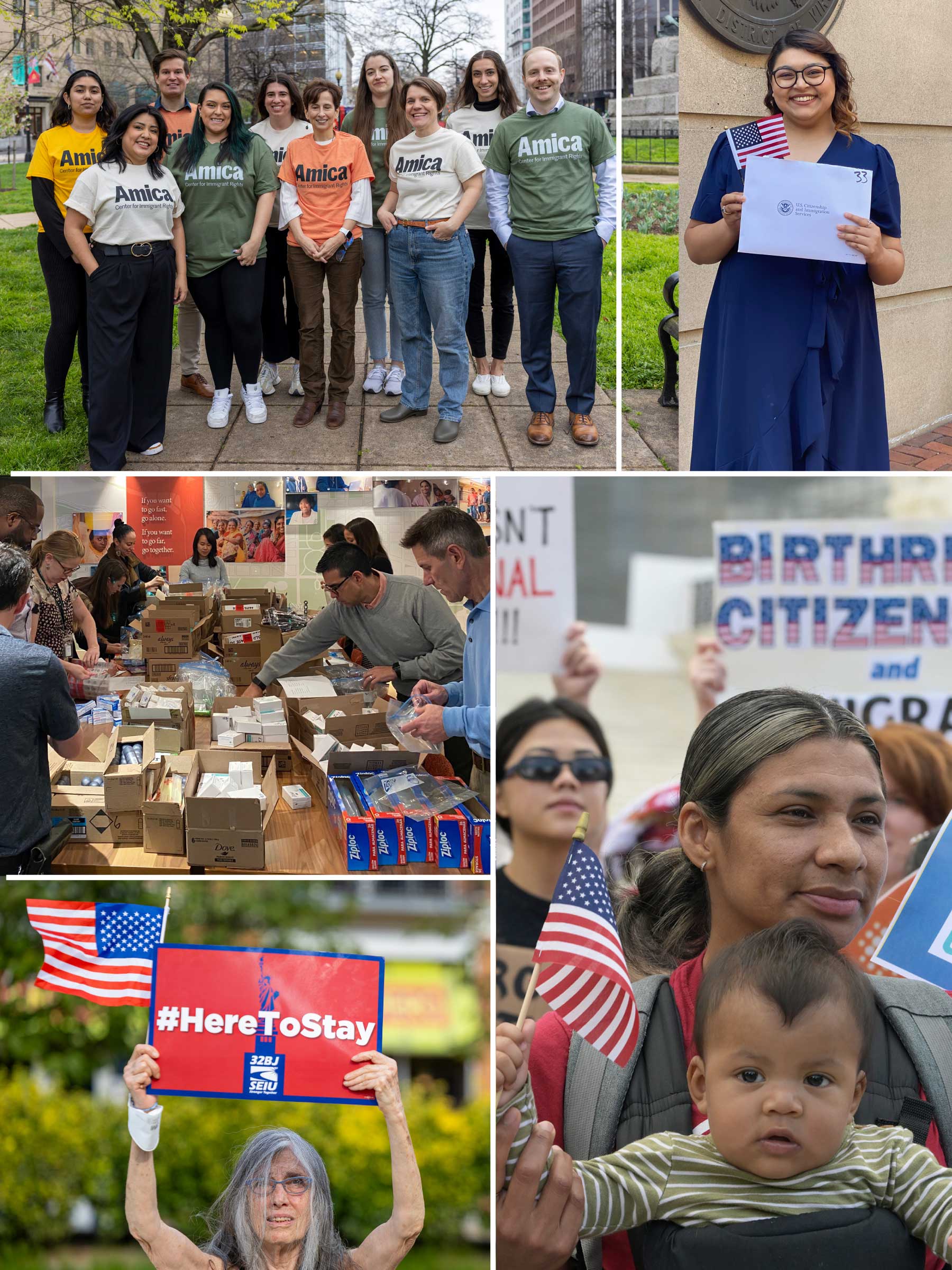
As videos have gone viral showing masked ICE agents and other federal law-enforcement officers detaining delivery drivers and construction workers, many immigrants in our area are fearful—regardless of their legal status. Here are ways you can help.
Donate
Deepa Bijpuria, director of Legal Aid DC’s Immigrants’ Rights Legal Services Project, says that one of the most important things people who lack stable immigration status can do is meet with an attorney for screening—in many cases, people don’t know they’re eligible for immigration relief.
However, legal services can be costly. “People think that it’s really easy to find an immigration attorney,” Bijpuria says. “It is not. An asylum case on the private market can be $10,000 to $20,000, and oftentimes an individual cannot afford $20,000 to pay an attorney.”
Organizations that provide free or low-cost legal services for immigrants include:
- Legal Aid DC, which provides free and low-cost legal advice, services, and representation to people living in poverty, including immigrants.
- The AMICA Center for Immigrant Rights, which offers free legal and social services to immigrant children and adults who are detained and at risk of deportation.
- Catholic Charities’ Immigration Legal Services, which represents people who need legal assistance with immigration matters and also trains lawyers to provide pro bono services for immigration cases.
Some organizations that offer legal services to immigrants also can help with other needs, such as healthcare and financial eduction. Reputable ones include:
- Ayuda, which provides legal, social, and language services to low-income immigrants.
- CARECEN, which works to helps Latino immigrants integrate into American life via housing assistance, citizenship-exam classes, and other programs.
- CASA, which helps immigrants in Maryland and Virginia with matters of citizenship, vocational and language training, small-business development, and more.
Volunteer
Many of the aforementioned organizations are looking for volunteers—particularly if you have certain skills or education, such as a law degree. “We know DC is full of attorneys, so there’s a big pool of folks that really can support and make a difference,” says Laura Trask, director of development at Ayuda. Don’t have experience with immigration law? Not a problem. Ayuda and other organizations will train attorneys in how to help.
Similarly, if you’re fluent in another language, you can offer assistance to one of the many organizations needing interpreters and help translating documents.
There are other ways to volunteer your time, too: A number of informal local networks have been organizing grocery deliveries to immigrant families who are afraid to leave their homes. Others are walking immigrant children to and from school. One way to get involved with these efforts is to reach out to the Migrant Solidarity Mutual Aid network—its website has a form that prospective volunteers can fill out.
Know Your Rights
Bijpuria recommends that everyone familiarize themselves with their rights when it comes to interacting with ICE and other federal law-enforcement officers—and share that information with others. These include the right to remain silent in interactions with agents and the right to refuse entry to them unless they have a signed judicial warrant. Bystanders have the right to film a law-enforcement action they witness or to voice opposition, as long as they don’t interfere. The Immigrant Legal Resource Center has “know your rights” cards that can be printed and distributed at your workplace or a place of worship, school, or other community gathering spot.
Pet Cause

In August, the Humane Rescue Alliance’s Humane Law Enforcement program—which responds to animal abuse and neglect complaints around DC—got a call from a concerned neighbor about a dog in their building. Kelly Whittier, HRA’s public-affairs director, arrived at an unoccupied apartment to find an emaciated pit bull. Its owner had been detained by ICE and later deported.
People targeted by the immigration crackdown in the District are forced to leave everything behind, including beloved pets. “I don’t think any of us want to minimize the extreme hardship and suffering that people are going through right now, but harm to animals also harms people,” Whittier says. Rescue organizations like HRA are seeing an uptick in surrendered and abandoned animals.
Whittier met a woman who surrendered her cat after her visa was unexpectedly pulled; she had a week to leave the US. Many countries require incoming pets to have updated veterinary records or additional vaccinations, which are tough to obtain quickly. “You ideally want an animal to stay with the person who loves them,” Whittier says. “But that’s not the choice that people face.”
Economic hardship amid federal layoffs also has meant increased demand at shelters. Want to help? You can volunteer; foster or adopt; or donate money or supplies to pet pantries. The longer an animal is left alone without food or water, the quieter it becomes—making neighbors less likely to notice distress. Whittier urges residents to contact HRA if they hear prolonged crying. Thanks to that call over the summer, the abandoned pit bull found a new home. “The best thing that we can do is to be active and engaged community members,” Whittier says.
Helping the Homeless
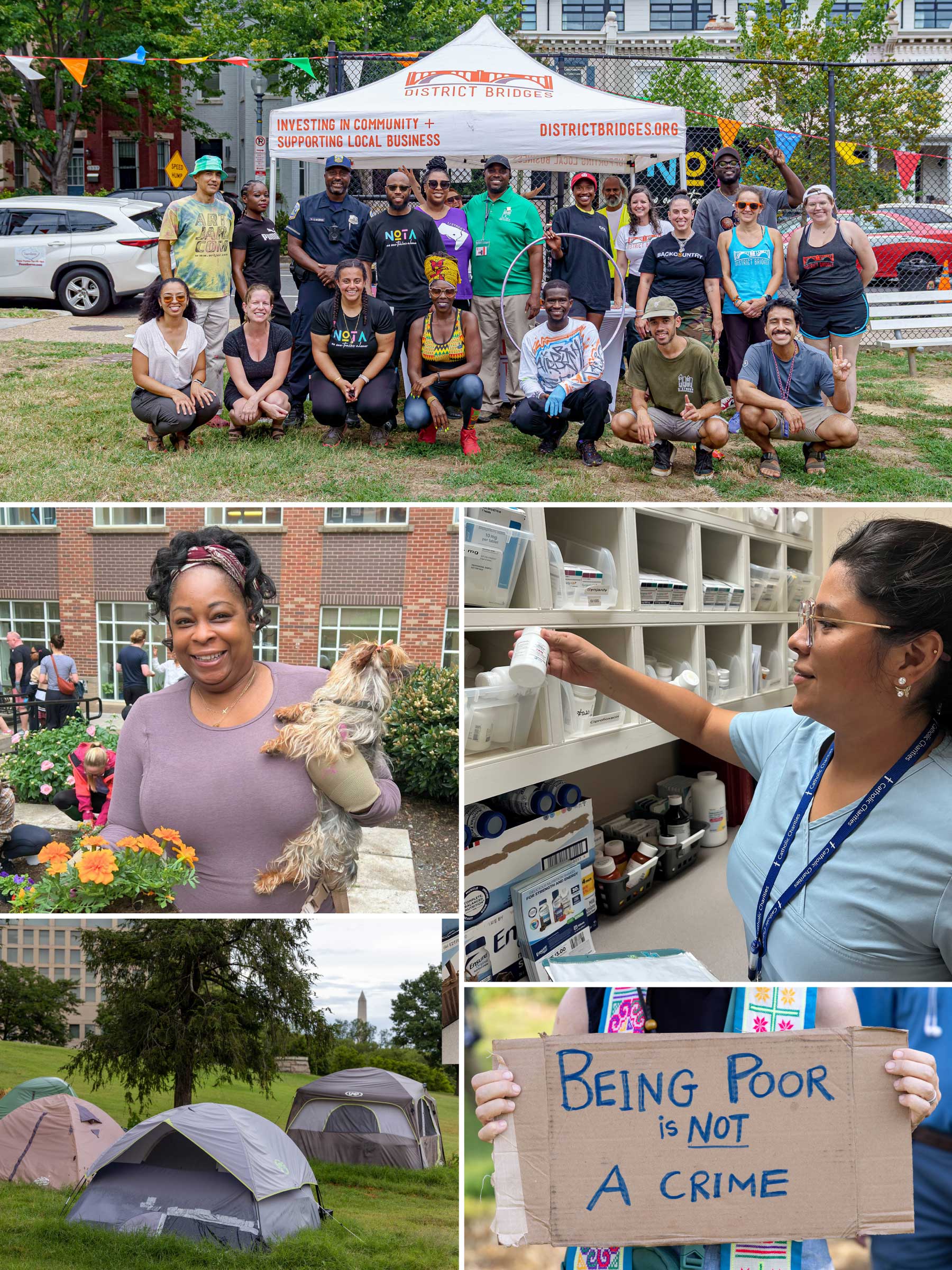
During last summer’s federal takeover of law enforcement in DC, authorities cleared a number of homeless encampments. Unhoused people were shuffled around the city. President Trump wrote on Truth Social: “The Homeless have to move out, IMMEDIATELY.”
The result? An ongoing climate of fear. “The trauma induced during that time has had a significant impact on the community,” says Claire Wilson, executive director of Georgetown Ministry Center, which provides food and basic services to people experiencing homelessness. “People still can’t find shelter. They lost their belongings. People are afraid of setting up tents—they are literally unsheltered. We are seeing more people come to us for help.” Here are ways you can pitch in.
Donate
Adam Rocap, deputy CEO at Miriam’s Kitchen, encourages people who want to donate money to give to organizations that provide services directly. “That’s how we can have the flexible resources to be helping with housing, meals, street outreach,” he says. Recommended organizations include:
- Catholic Charities, which operates many of the city’s largest shelters.
- Community Connections, which serves the unhoused in DC.
- District Bridges, which provides street outreach in Ward 1.
- Georgetown Ministry Center, which operates a day center in Georgetown and does street outreach.
- Miriam’s Kitchen, which primarily serves the unhoused in Northwest DC.
- Pathways to Housing, one of the area’s largest providers, which does street outreach in downtown DC.
- If you prefer to donate money or items to people in your immediate area, consider getting in touch with your local mutual-aid network. There are networks for most of the city’s wards, and the best way to connect is usually via their Instagram accounts.
You can always offer money or goods directly to someone who is unhoused—although it’s a good idea to ask them what they need, because the food, hygiene supplies, and clothing that people offer them without asking often goes uneaten or unused. “We don’t need toothbrushes—I have ten,” says Meghann Abraham, whose encampment was among those cleared last summer. By taking the time to chat with someone, you’re also building community and familiarity, which is a part of keeping people safe.
“Even if there’s nothing concrete that you’re able to do, just acknowledging someone—that they’re there and a person—is really powerful,” Rocap says. “Especially at a time like now where the federal language is very dehumanizing and very pejorative towards people who are experiencing homelessness.”
Says Wilson: “Get to know their names. Check in on them. More love out in the community is what we need most.”
Volunteer
Many of the previously mentioned organizations need volunteers to prepare and serve meals, staff check-in tables, or join outreach efforts. And if you’re able to offer even more of your time, the following groups often need help with tasks such as one-on-one job-search mentoring, financial-literacy tutoring, and addiction-recovery group facilitation.
- Friendship Place provides housing and job services, operates a drop-in medical clinic, and has special outreach programs for veterans and youth.
- N Street Village provides a range of services to support women experiencing homelessness.
- SOME (So Others Might Eat) operates an affordable-housing program, an employment-training center, and healthcare clinics.
- Meanwhile, HIPS, a nonprofit that offers street outreach, seeks volunteers to help staff its harm-reduction van, which checks on the unhoused living on the street.
- The city’s annual Point-in-Time Count of the unhoused population, conducted by the Community Partnership for the Prevention of Homelessness, could use volunteers. This year’s count is the night of January 28.
In addition, some organizations need volunteers with highly specific skills:
- If you’re an attorney or paralegal licensed in DC, you can volunteer with the Washington Legal Clinic for the Homeless.
- Have medical training? Catholic Charities’ Volunteer Medical Clinic needs volunteer physicians and nurses.
“It Starts With a Meal, but That’s Just the Start”
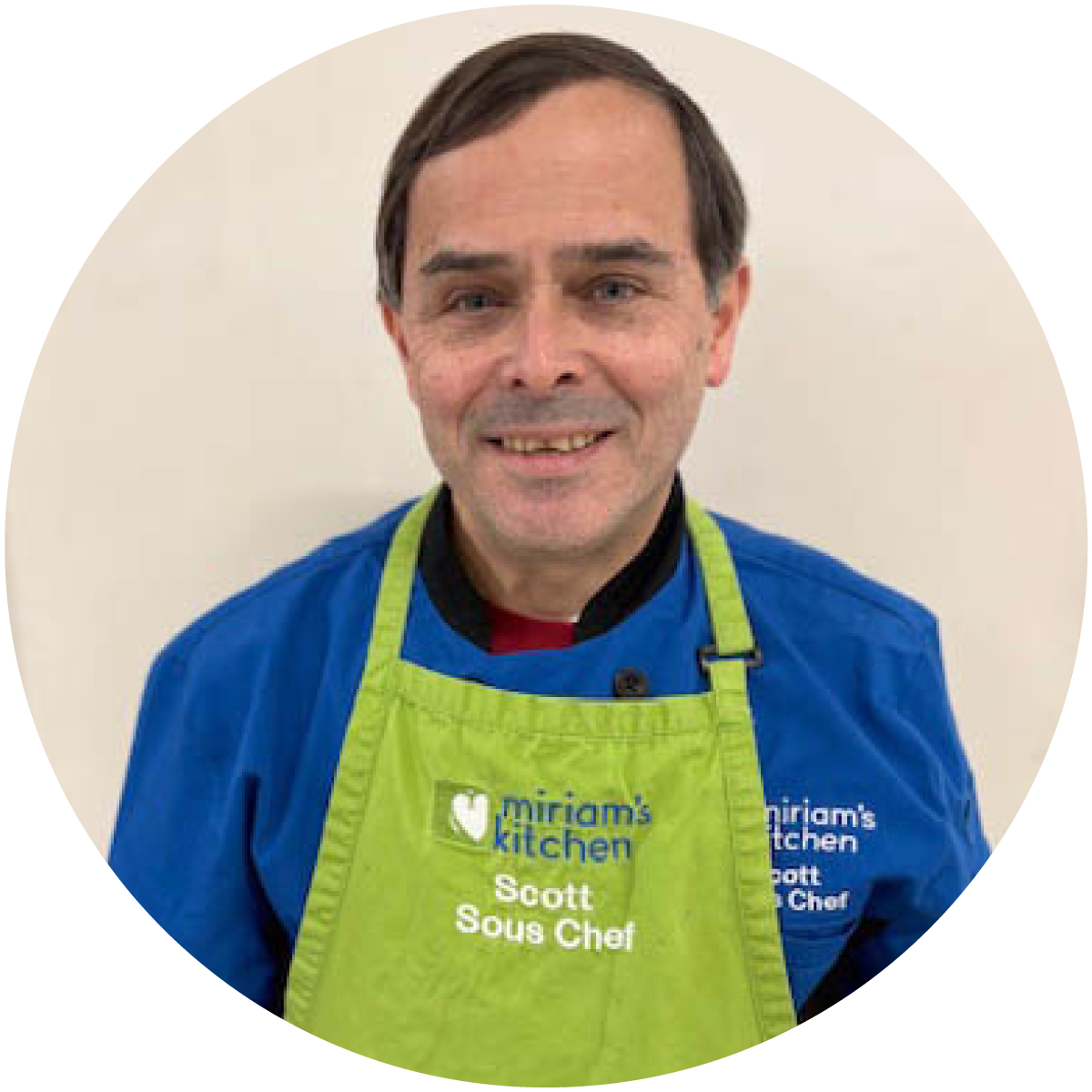
Soon after retired federal worker Scott Handmaker began volunteering at Miriam’s Kitchen, which provides support to people experiencing homelessness in DC, the federal government ordered a crackdown on homeless encampments.
“I volunteered the morning after they took away all the tents,” he says. “That was a tough morning—but taking away tents and cleaning up encampments, people still have to live. It doesn’t make it go away.”
Handmaker spent 37 years at the Department of Commerce. He started volunteering in April and has since spent more than 300 hours at Miriam’s Kitchen serving meals, staffing the front desk, and distributing supplies. The nonprofit offers case management, employment assistance, and healthcare—and, of course, food.
“It all starts with a meal, but that’s just the start,” says Handmaker, adding that one of the biggest unmet needs among the unhoused is simply having warm interactions with others. “A lot of people don’t have anyone to talk to. They just want to talk about sports, about life.”
To get to Miriam’s Kitchen, Handmaker rides the Metro from Virginia. Walking to the station on cold mornings, he thinks to himself, Wow, I can’t imagine sleeping outside last night—and then walks a little faster. He volunteers out of the same empathetic spirit. “I just think,” he says, “that everybody deserves a roof over their head.”
Standing Strong
From our streets to our stadiums, these locals are making their voices heard
The ICE Watcher
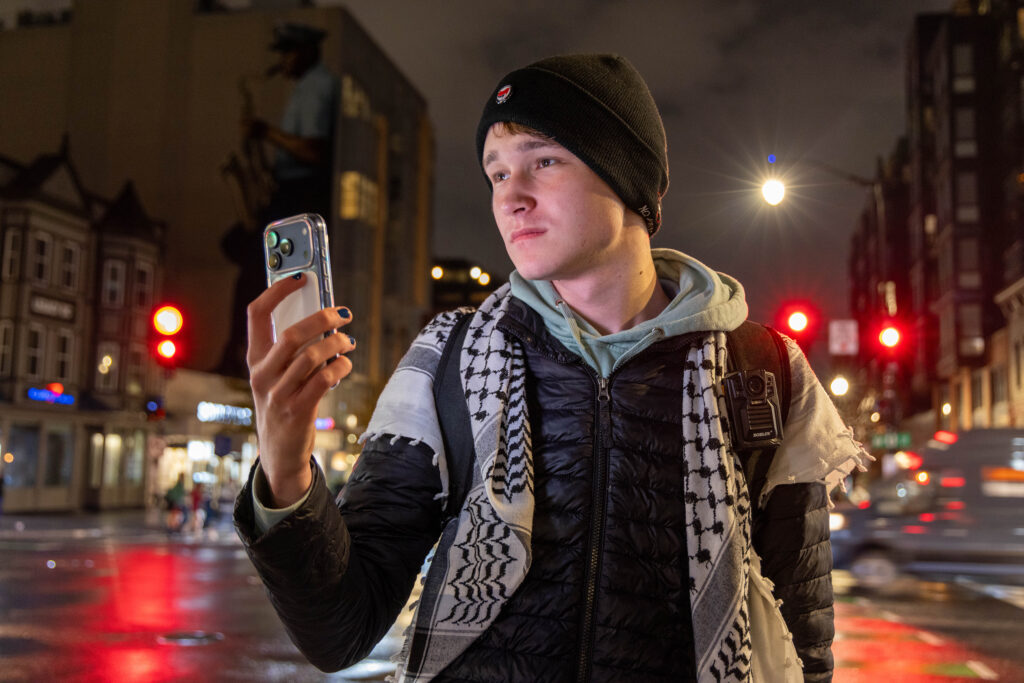
On a Tuesday night in September, a 19-year-old named Elli unhitches their necktie outside a downtown church, then hops into a friend’s SUV to spend the night looking for law-enforcement convoys. Their goal? Find, record, and hold to account the federal agents who have become an increasingly visible—and, for many, unwelcome—presence in DC.
A NoMa bar worker who moved here from Tennessee, Elli began filming agents last August. Their Instagram account, @elli_documents, attracted more than 8,500 followers in a month. One video, in which a DEA agent appears to call the Proud Boys “great guys,” scored a like from actor Sarah Jessica Parker.
While interfering with an arrest is a misdemeanor in the District, recording federal agents in public is protected by the First Amendment. For the most part, so is heckling. In another video, Elli shouts at a Homeland Security agent, “Why do you have your face covered?”
“ ’Cause I’m ugly,” the officer replies.
“Yeah, we knew that,” Elli says back.
By heading out almost every night, Elli hopes to set an example for other cities facing federal occupation. “It may not be like ‘Oh, wow, I saved someone from being arrested,’ ” Elli says, but rather “ ‘Hey, Chicago, this is how you do it.’ Shame them.”
The Resistance Next Door
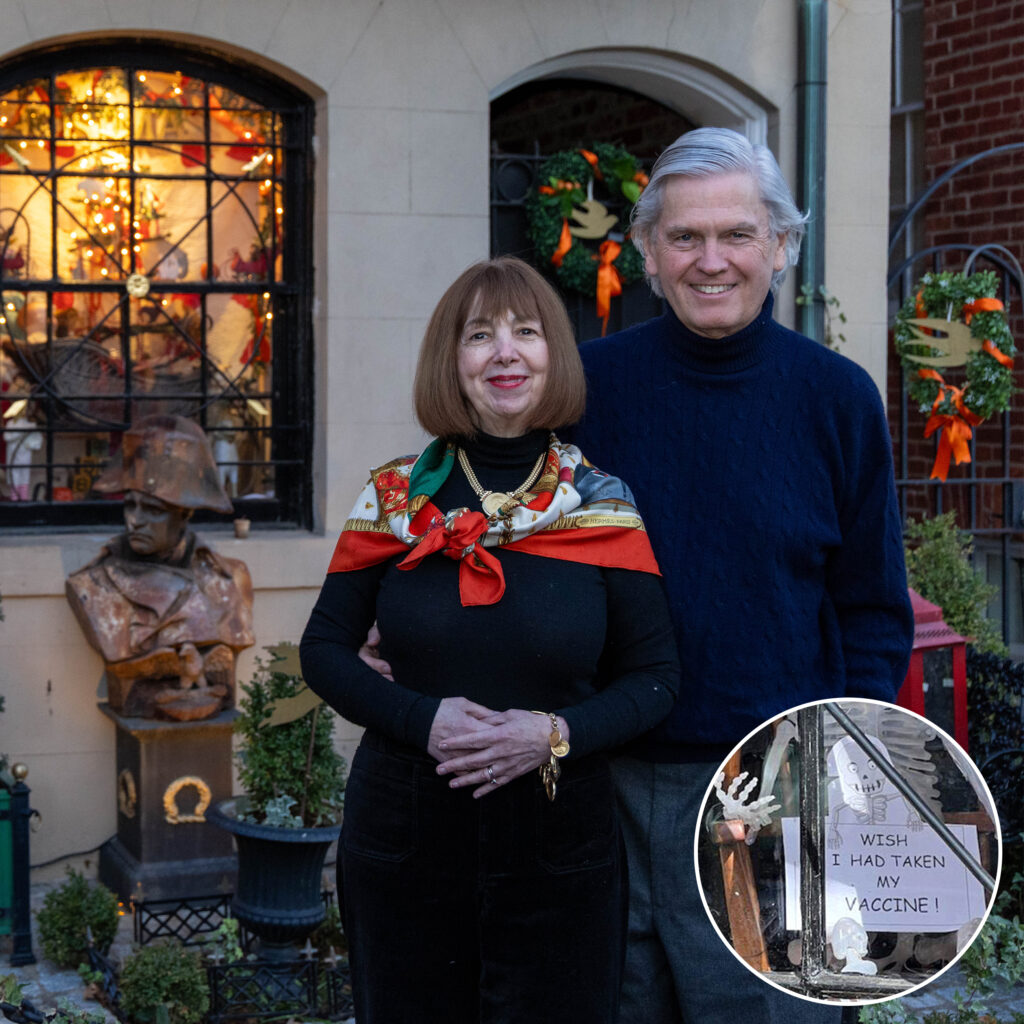
Ever since Robert F. Kennedy Jr. became their next-door neighbor in Georgetown, Jim and Christine Payne have been using their window to send not-so-subtle messages to the Secretary of Health and Human Services. Responding to Kennedy’s unsupported claims that autism is a preventable disease caused by “environmental toxins” including Tylenol, the couple—who have an autistic son—displayed six copies of the book We’re Not Broken: Changing the Autism Conversation, along with a sign announcing a live signing by author Eric Garcia. “Twenty people showed up,” Jim says.
For Halloween, the Paynes deployed a skeleton sitting in a chair, holding a sign reading “Wish I had taken my vaccine!” Next to its feet was a bottle of Tylenol. For Thanksgiving, they took aim at the Trump administration’s hard-line immigration stance with a sign reading “Let’s Learn From The Piscataway Tribe. They WELCOMED Immigrants To Georgetown 1765.”
Despite the trolling, Jim insists he doesn’t have a “campaign” against RFK Jr. As it turns out, the two men are actually cousins. “He calls me Cuz,” Jim says.
The Fed-Up Fans
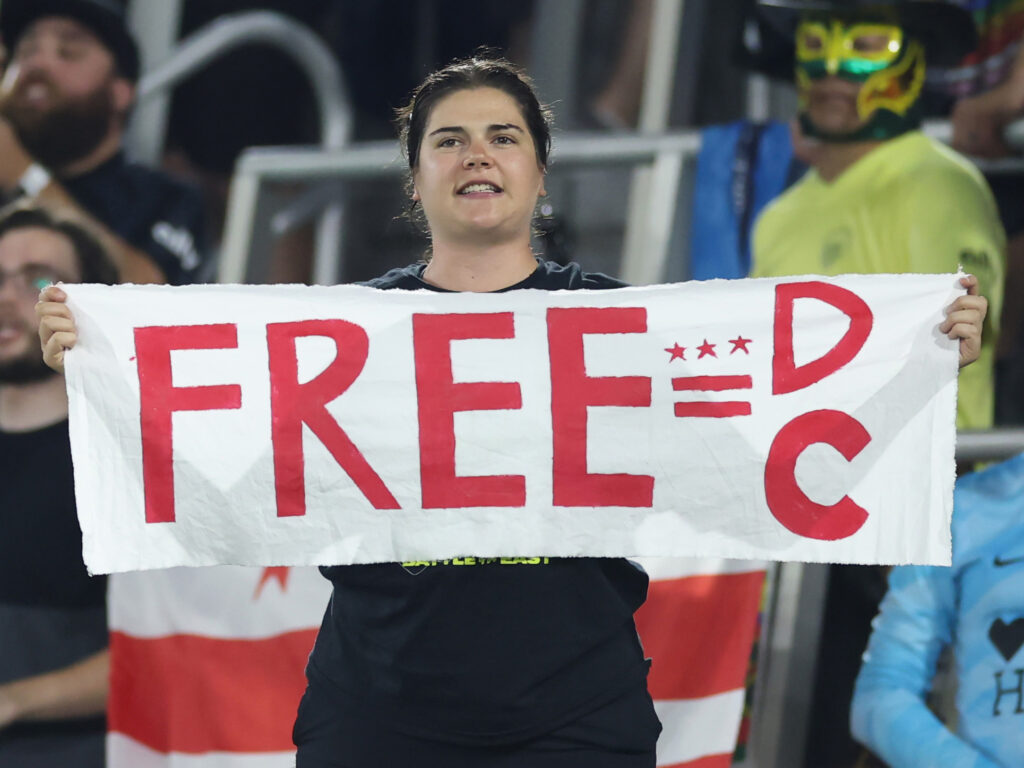
When Washington Spirit fans began chanting, “Free DC!” during the 51st minute of a mid-August match at Audi Field—nodding to the District’s long push to become the 51st state—they didn’t expect a stadium-wide roar, let alone the viral moment that followed.
It came at the end of a tense week. Days earlier, the Trump administration had declared a “crime emergency” and seized control of the city’s police force, leaving many residents furious and looking for ways to push back.
With little time to organize anything elaborate, supporters chose a simple chant that captured the moment. “It was awesome,” says Spirit Squadron president Meredith Bartley. “And I think it was really cathartic for people to be able to scream or chant and bring it back to how this is only happening because we don’t have statehood.”
Since that night, Spirit and DC United supporters have kept the chant going, adding pro-city banners and raised fists to the mix. “We’re not going to tell people when to finish it,” Bartley says. “At the heart of it is statehood. I could see this happening until DC is a state.”
We, the Jurors
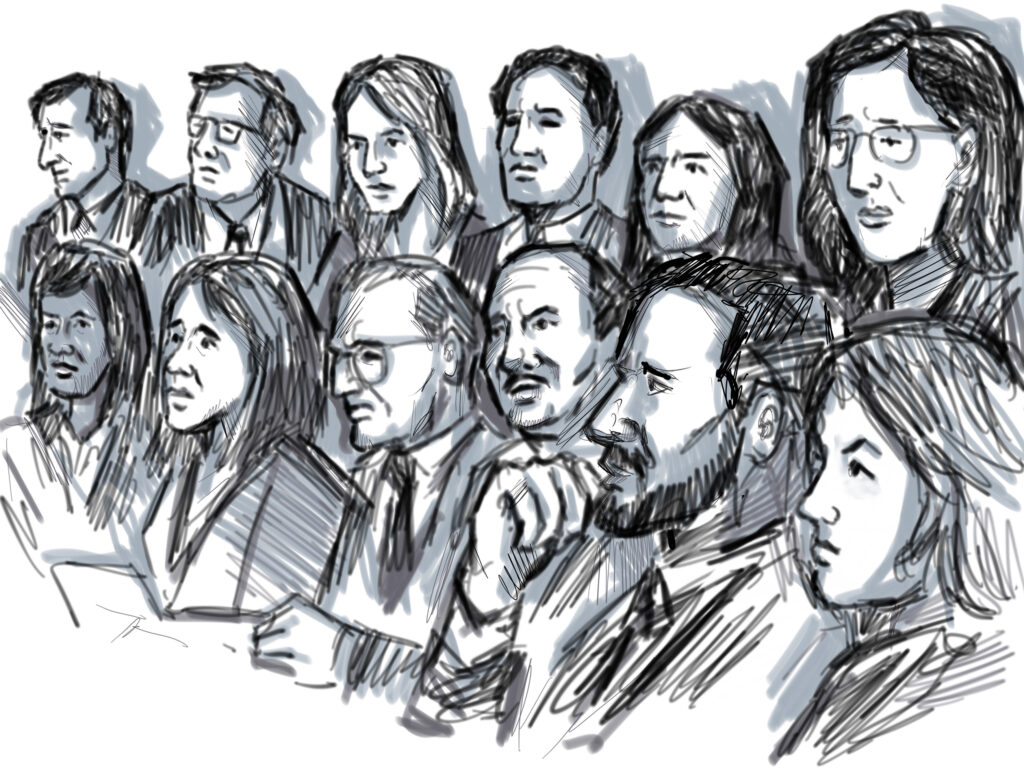
DC jurors have been unimpressed with some of the trumped-up charges brought against people protesting the federal takeover of their city. Since last summer, grand juries have handed the US Attorney’s Office at least eight rejections, refusing to indict a woman who recorded an ICE arrest; the Sandwich Guy; and a disabled man who allegedly threatened the President.
Has jury nullification—acquitting a defendant out of concern over an unjust prosecution—become its own kind of pushback? Paul Butler, a Georgetown Law professor and former federal prosecutor, says the grand jurors “may have been sending a message to the US Attorney and to President Trump that they need to withdraw their troops from our city.”
For the USAO, the rejections are unprecedented and embarrassing. Grand juries, the cliché goes, will usually indict “a ham sandwich,” because the standard is simply that a majority of the 23-person jury must find probable cause. A wave of whiffs, Butler says, suggests that the charging documents were deeply inadequate. When he worked in the USAO, he recalls, prosecutors would ask each other, “How’d it go?” upon returning from court: “If someone had said that the grand jury refused to indict, there would have been peals of laughter. No one would have believed it.”
Lifting Up
A few creative ways that people are supporting their neighbors
Knitting Community Together
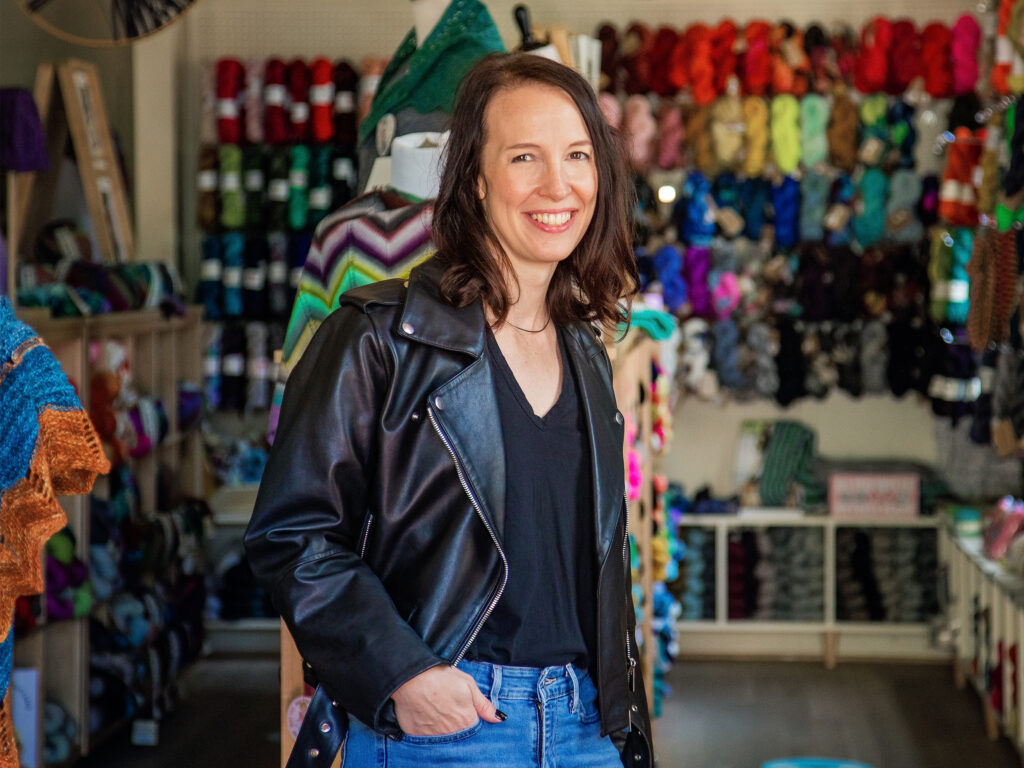
Danielle Romanetti learned a lot during the government shutdown of 2013. When she posted back then on social media that furloughed federal workers could drop by her Alexandria yarn shop, Fibre Space, for free knitting classes, 100 people showed up. “So we had to create registration and have a system in place for furloughs,” she says, “which is kind of ridiculous.”
In the years since, there have been two more furloughs—including the 43-day ordeal this past fall that counts as the longest shutdown in history. This time around, Romanetti offered a two-day learn-to-knit class that maxed out at 300 eager beginners, enjoying the stress relief that can come from knitting.
In each session, the furloughed found community, circling the room and saying which agency they worked for. Yet most weren’t there to stitch and bitch.
“I would say things were less ‘bitch’ and more bright,” Romanetti says. “It was an opportunity to get their mind off what was going on.”
Still, she can’t be sure that a civil servant didn’t choose a yarn color for a scarf or hat with a future protest in mind. “There is a lot of craftivism going on with nongovernment workers,” she says. “But government workers are more quiet about it.”
Ask a Grandmother
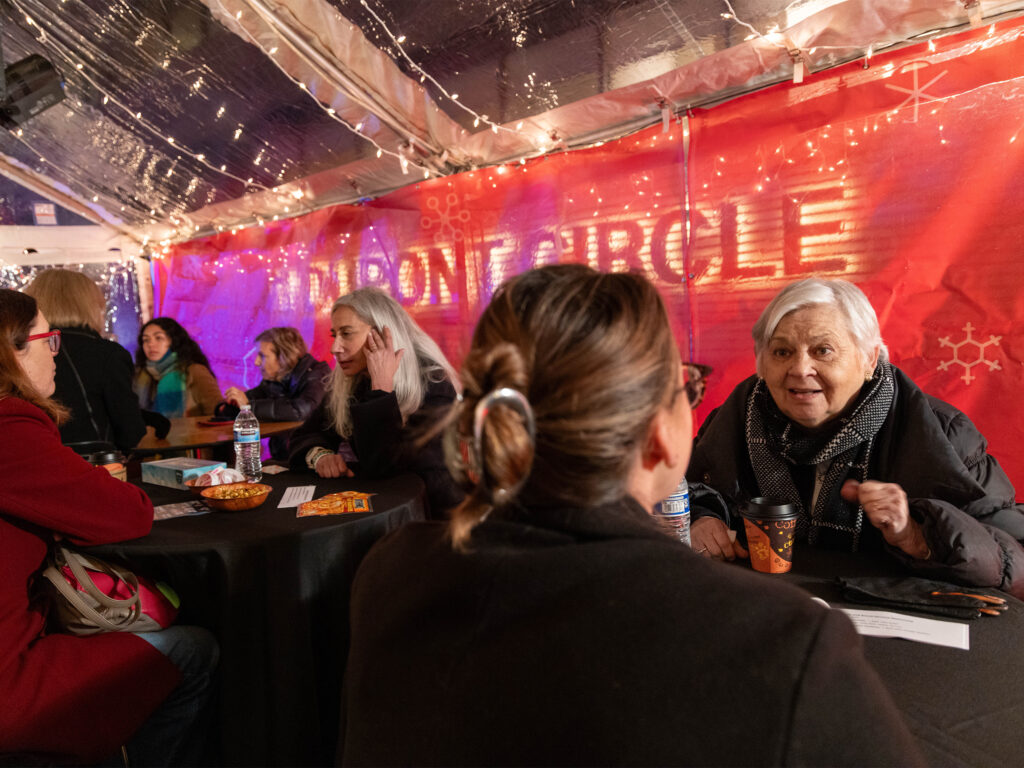
On a Wednesday evening in November, people lined up to ask three Jewish bubbes—or grandmothers—the questions most on their minds. Should I leave my job? Should I have ended a long friendship? Should I have major surgery that’s being recommended?
“The toughest question was the health one,” admits one of the volunteer grandmas, Esther Foer. “I pointed out I’m not a doctor.” “What Would Bubbe Do?” pop-ups were launched by Sixth & I in September ahead of the Jewish high holidays to support people of every faith during a hard time in DC. The positive response was so overwhelming that organizers vowed to continue them.
“The basic need to reach out to a total stranger, looking for comfort, speaks to what is going on in the city,” says Foer, a former executive director at Sixth & I.
Each session that November night, Foer says, “was supposed to be five minutes, but if you’re talking to someone and holding their hand—I found myself holding a lot of hands. The role of a grandmother is to love and hug and support. It’s about helping people move forward.”
Shout It Out

Monica Elms was scrolling on Instagram when she saw a post about a “scream club” in Chicago. She wasn’t a stranger to the idea of people letting off steam by shouting together into the void. “I went to Michigan State and we had an informal ‘midnight scream’ every night of exam week,” she says. “We would all scream out our windows.”
Elms reached out to the Chicago club about starting a Washington chapter: “Given the current environment in DC, I thought this was a way I could help.”
The first group scream in October drew a dozen people to District Pier at the Wharf. About 20 came to a second shriek at Meridian Hill Park.
Both times, organizers warned those in the vicinity what was about to happen, and some of them joined in. Participants closed their eyes, took a few deep breaths, and, on a countdown from three, let it rip. Then they did it once or twice more.
People aren’t asked, when they come, why they want to yell in public, but Elms says some attendees have alluded to politics when interviewed by the media.
“I knew there was a need in this city,” she says. “People do feel some sort of relief after.”
Out of the Woodchipper
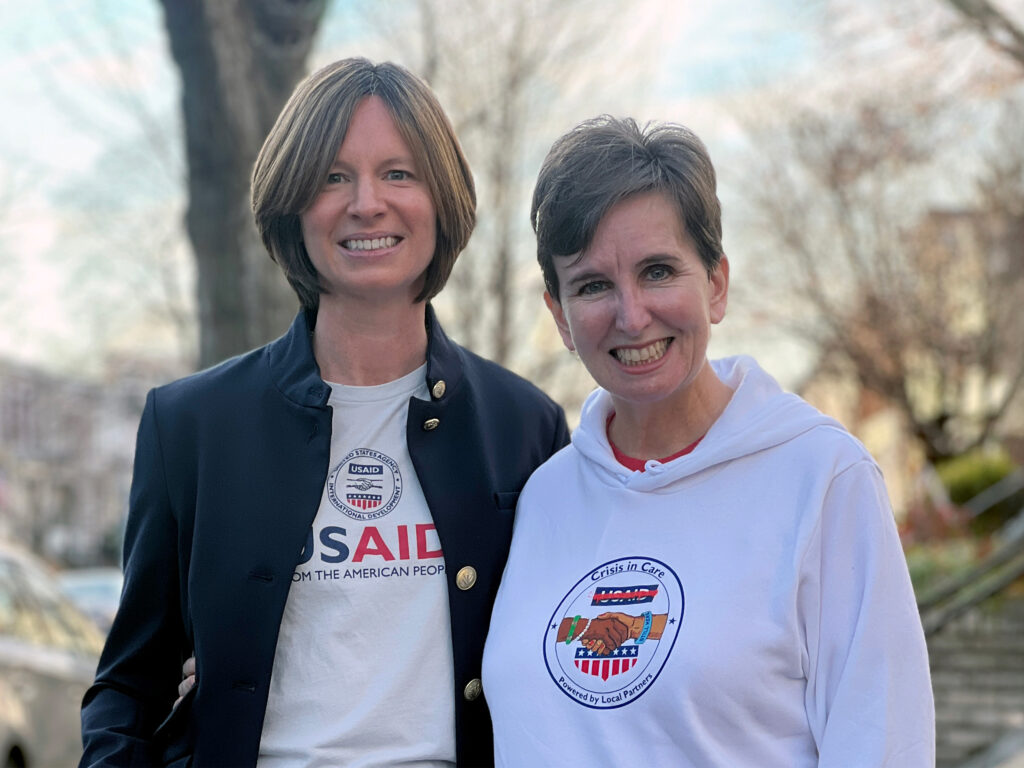
Early last year, Debbie Kaliel and Maury Mendenhall were heartbroken when USAID programs they’d devoted their careers to were canceled and they were sent packing.
Kaliel had spent 18 years working on PEPFAR, an HIV/AIDS program that has saved 26 million lives worldwide. She couldn’t walk away, so she and Mendenhall launched Crisis in Care, a campaign to raise money for HIV organizations in Africa, Central America, and the Caribbean that had lost USAID support.
A fundraiser in May was small—a happy hour with a lot of former colleagues. They decided it was better to laugh than to cry, so the cocktails got clever names: PEPFAR Punch, Out of the Wood-chipper, Doge Eat Dog.
The events grew bigger: A comedy show in November sold out the 900-seat All Souls Church in DC.
In its first eight months, Crisis in Care has raised $100,000 for 18 organizations. It also helped four organizations secure $3 million from foundations and philanthropists.
“We are never going to replace the $1 billion USAID had going to those organizations” annually, Kaliel says. “But even $5,000 can mean 100 to 120 HIV-positive children maintaining access to treatment. We were never doing this work just for a paycheck. It was a calling. And we are finding new ways to keep answering that call.”
Down but Not Out
It’s probably not a good sign that when you ask local economic experts about the prognosis for our region, some of them bring up Detroit.
The Motor City is the classic example of a company metropolis hollowed out by the decline of its chief industry. Automation, foreign competition, and an energy crisis slammed the domestic automotive business so hard that the city’s population halved between 1950 and 2000.
Our area has generally been considered immune from a similar sort of economic disaster, largely because of the stability of its largest employer, the federal government. After a year of the current Trump administration, however, that stability is no longer a given. Washington may not be a full-blown “company town,” but the GOP’s sustained attack on civil-service jobs—combined with the longest government shutdown in US history and a preexisting trend toward remote work—could trigger a severe decline.
Between January and June 2025, according to the Brookings Institution, the Washington region lost federal jobs at a faster rate than the rest of the country. Similarly, its overall unemployment rate increased more quickly than anywhere else, with the suburbs seeing the largest changes. Last August, the District itself had the highest unemployment rate in America—for the third consecutive month. Federal jobs have vanished, and private-sector job growth is flat.
Glen Lee, the District’s chief financial officer, estimates that the city’s economy will shrink by 3 to 5 percent in 2025. The administration’s policies are being felt across every sector—for example, the White House’s law-enforcement takeover and street-level deployment of National Guard troops hurt the hospitality industry—and the only areas of revenue growth for DC, Lee says, are in individual capital-gains taxes and taxes on corporate entities that have a presence in the city but are headquartered elsewhere. Both of those are driven by a booming stock market and increased corporate earnings, not by local prosperity.
Still, could Washington really end up like Detroit? Terry Clower, who monitors the local economy at George Mason University’s Center for Regional Analysis, says a financial collapse is unlikely. Even in a scaled-down state, the federal bureaucracy remains an economic engine, and one that can’t be shipped abroad like a unionized factory. “Our industry, our ‘mill,’ is not going to completely shut down,” he says, adding that the real danger is a stagnant state of “persistent mediocrity.”
Right now, Federal Center, Gallery Place, and Crystal City are suffering. However, Clower sees signs of strength on K Street and along the Dulles Toll Road. Business for lawyers and lobbyists will remain stable—after all, there are no plans to move Congress away from DC. More than 70 percent of the world’s internet traffic passes through Loudoun County’s Data Center Alley, and there’s room for additional growth, even as the centers use massive amounts of water and electricity.
“I am very hopeful about what we can be as a region,” Clower says. “The trick is how quickly we adapt to this new market reality. [That] will impact whether we are talking about two or five years of pain—or is it ten years for us to recover?”
How You Can Help the Local Economy
• Volunteer your time, knowledge, or resources to the Washington Area Community Investment Fund, which seeks to strengthen communities by helping entrepreneurs build businesses.
• Support the nonprofit Seed Spot, which helps entrepreneurs from less represented communities launch businesses by connecting them to mentors. Also offered: a ten-week accelerator program.
55%
Occupancy rate of commercial offices in DC in fall 2025
40,000
Number of federal jobs DC expects to lose by 2029
3.5%
Amount the District’s economy is expected to shrink by in 2026
41
st
The Washington region’s ranking on job growth among 54 major US cities in the first half of 2025
Sources: Brookings Institution and DC Office of the Chief Financial Officer
Feeding a Need

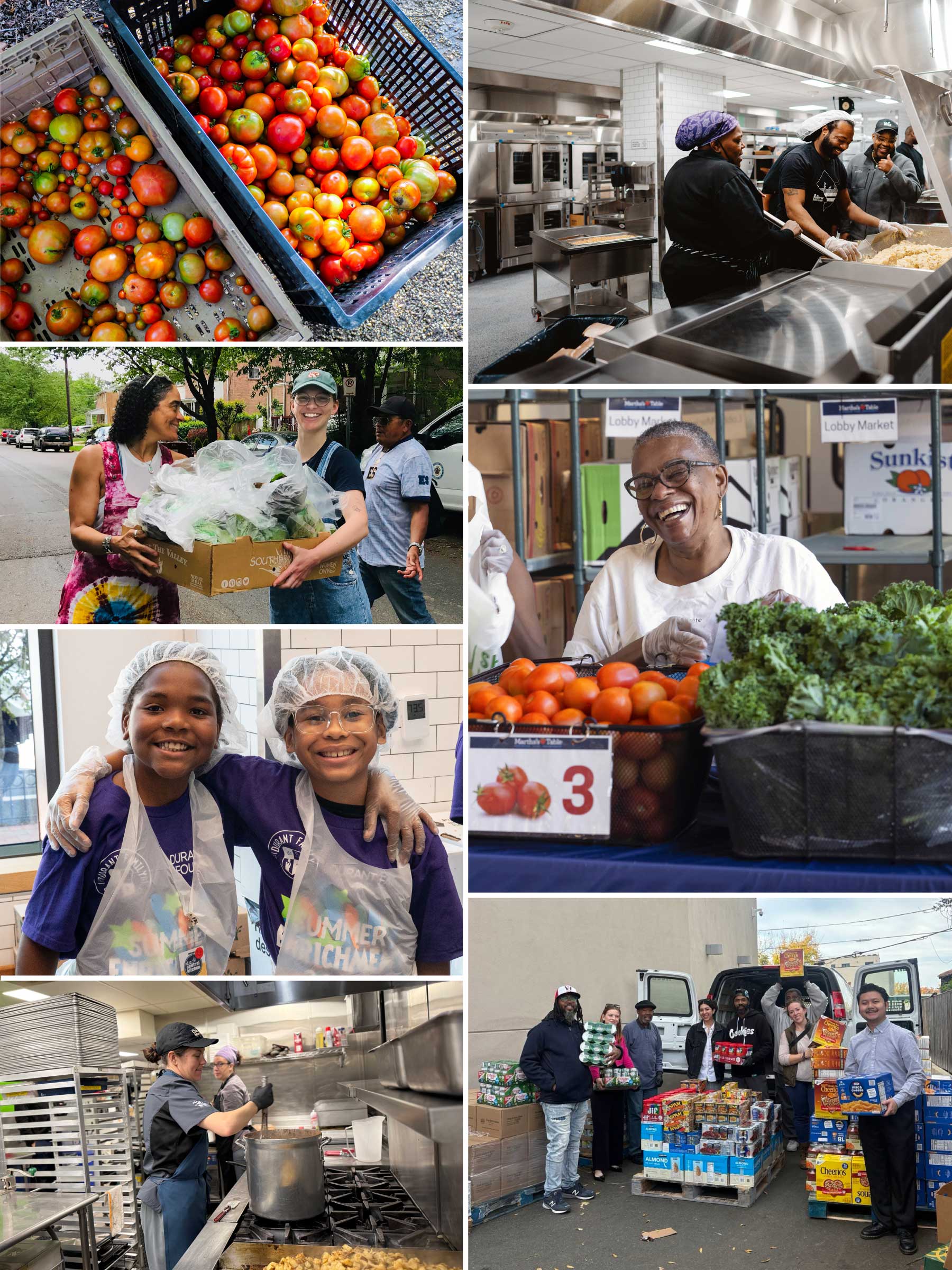
During the recent 43-day government shutdown, when SNAP benefits were frozen and furloughed federal workers went unpaid, news reports focused attention on the many people lining up at food banks.
But an increase in food insecurity was there even before the shutdown. DOGE layoffs, a federal takeover of the city that hurt some businesses, and inflation in general have made it harder for many Washingtonians to make ends meet. According to the Capital Area Food Bank’s most recent Hunger Report, released this past September, 36 percent of our region—more than one in three people—experienced food insecurity in the past year. Among households affected directly by federal cuts, the figure was higher, 41 percent—and that was before the shutdown.
Food is often the budget item that people cut back on first, says Radha Muthiah, president and CEO of CAFB, because they can’t always forgo paying rent or utilities.
Fortunately, it’s not hard to help stave off food insecurity in this region: Every $1 you give provides two meals, according to CAFB.
Donate or Volunteer
These are some of the larger food banks and nonprofits helping combat food insecurity. All can put donations to good use, and they often need volunteers to help distribute food.
- Bread for the City, which operates two food pantries in the District.
- The Capital Area Food Bank, the area’s largest such organization, which works with more than 400 local partners to provide upward of 60 million meals a year.
- DC Central Kitchen, which prepares 1.5 million meals a year that are delivered to shelters, nonprofits, and the homebound.
- Food for Others, which serves roughly 3,000 families a week in Northern Virginia.
- Manna Food Center, which provides food to 60,000-plus people a year in Montgomery County.
- Martha’s Table, which operates no-cost food markets as well as the mobile McKenna’s Wagon, a source of warm meals and sandwiches for those in need.
- Miriam’s Kitchen, a nonprofit working to end homelessness that served more than 105,000 meals last year.
- SOME (So Others Might Eat), which offers free hot breakfast and lunch daily at its Truxton Circle location, in addition to a food pantry.
A Turning Point for DC Statehood?
Recent federal heavy-handedness—and ongoing national partisan animosity—could help make the state of Washington, Douglass Commonwealth, a reality
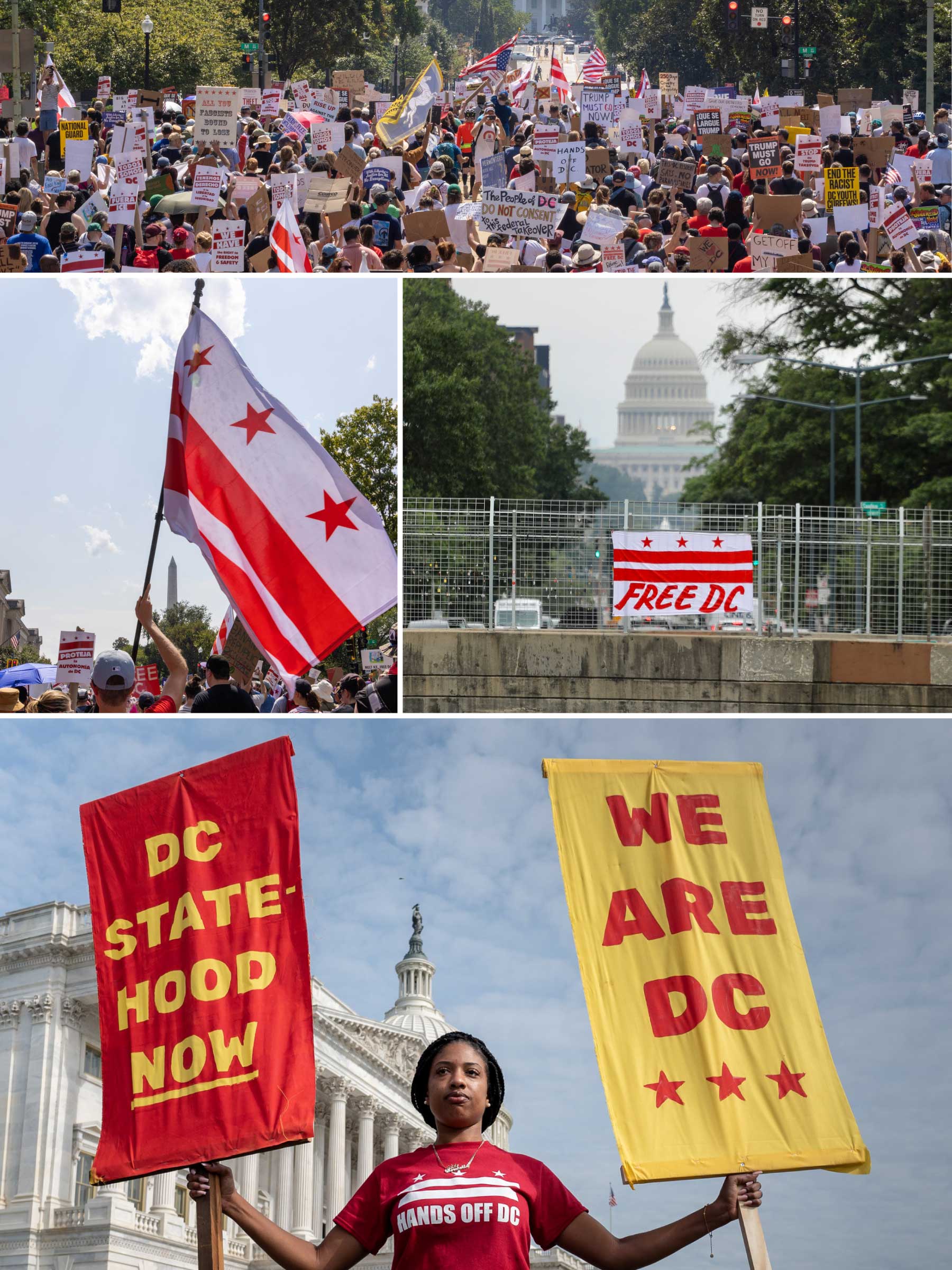
Despite decades of activism and political efforts, DC statehood seems farther away than ever.
National Guard troops and a smorgasbord of federal law-enforcement agents have been occupying our streets, while House Republicans are pushing to depose our attorney general and forcibly change the District’s laws.
Ironically, some statehood advocates see the previous year as a turning point—one that could make the state of Washington, Douglass Commonwealth, a reality sooner than anyone expects.
“This is one of my favorite topics,” DC shadow senator Ankit Jain says. Recent attacks on the District’s self-governance could drive home the importance of statehood for national Democrats, he says, making it a higher priority for the party the next time it controls the federal government.
Imagine—and this is a heck of an assumption—that in January 2029, a Democratic trifecta is sworn in. If the White House supports a bill from House Democrats, the biggest remaining obstacle to DC statehood will be in the Senate, where the bill would need a filibuster-proof 60-vote majority. Short of those numbers, Senate Democrats could change filibuster rules to carve out an exception for voting-rights legislation, something they tried to do in 2021 for a pair of bills designed to make voting more accessible.
That effort failed when former Democratic senators Joe Manchin and Kyrsten Sinema voted with Republicans. Still, Jain thinks a future push could be more successful, thanks largely to the Trump administration’s heavy-handed governance. “Trump is showing that the Democrats were too unwilling to do what is necessary to help people,” he says. “We can’t rely on norms that don’t serve this country anymore.”
There’s also a distant possibility that before 2029, Trump could successfully pressure Republicans into abolishing the filibuster to advance his legislative agenda. If that happens, Jain says, “DC statehood becomes an inevitability.”
What would statehood look like? Within months of a future Democratic President signing a bill into law, the mayor would become governor of Douglass Commonwealth, and the DC Council would become the new state’s legislative assembly—with a special election to seat one more member per ward. The American flag would likely get an extra star.
For any of this to happen, of course, Democrats would have to enjoy an unusual level of national electoral success in 2028, and also display much more commitment to the cause than they have in the past. They may be incentivized by the current—and presumably ongoing—wave of state-by-state redistricting, which has seen both parties gerrymandering electoral maps in Texas, California, and elsewhere in an effort to gain congressional advantage. Local voters are overwhelmingly blue; the prospect of adding an additional House seat and two senators could simply be too tempting for Democrats to pass up, particularly in a moment of gloves-off partisan warfare.
Regardless of what might motivate national Democrats to finally make the District a state, says DC Appleseed Center for Law and Justice executive director Vanessa Batters-Thompson, the result would be increased representation—and, with it, more ability for DC residents to chart their own path, instead of being subject to the whims of Congress and the White House.
“Twenty twenty-five has really shown us the limits of our autonomy,” Batters-Thompson says. “When we reach the end of this period where we have these heightened democratic threats, there is going to be a large push to promote democracy. I think DC may be part of that response to the moment we’re in.”
What You Can Do for DC Statehood
- Donate to the DC Statehood Delegation Fund when filing your District taxes. (The minimum is $1.)
- You can also donate to the DC Appleseed Center for Law and Justice, which defends the District through legal means.
- Attend an orientation with Free DC, which advocates for statehood through direct protest.
- Participate in local elections, such as next year’s mayoral and delegate races.
Flying the Flag
When DC’s flag was first raised over the District Building in 1938, it had its detractors. The stars-and-bars design, based on one of George Washington’s old family shields, had been picked by a commission with little public input, even after another citizen-submitted bluish flag won a design contest.
Residents wrote letters to the editor in local newspapers, wringing their hands about the Communist associations of a predominantly red flag. Others made the reasonable point that simply having a flag did nothing to address DC’s lack of representation. (Back then, Washingtonians couldn’t even vote in presidential elections.)
A week after the flag began flying over the District, Evening Star columnist Jesse C. Suter called it a “symbol of political impotency” with “no distinctive local significance or symbolism.”
But over the ensuing decades, those concerns fell away. These days, the flag is beloved by activists and vexillologists—the fancy word for flag scholars—alike. Far from being a symbol of political impotency, it represents local power and the push for statehood.
That’s why this summer, when the Trump administration called in the National Guard and flooded the city with federal agents, the DC flag began appearing everywhere. One block of Bay Street, Southeast, became a sea of red and white when dozens of rowhouses flew it from their porches.
All of this caused something of a run on stores selling the flags. Hardware stores put up signs saying “We Have DC Flags,” and half a dozen shop owners told the Washington Post they were out of them or struggling to keep them stocked.
Shmuel Chakakian, co-owner of one of the area’s only flag shops, Chakakian Flags in Silver Spring, told Washingtonian he was puzzled when he suddenly sold out of the flag over the summer. “It was hard to find,” he said. “Now I understand why.”
Let’s not mince words. For many in Washington, it’s been a terrible, horrible, no good, very bad year. Since assuming power last January, the Trump administration and its MAGA allies have made their presence felt across our region—much in the way the President has made his felt across the East Wing of the White House.
We’ve endured mass firings of federal workers. Masked agents arresting and striking fear into immigrants. A callous crackdown on the unhoused. We’ve watched Trump call our city “dirty” and “disgusting” and received the “fork in the road” email. We’ve gritted our teeth through the longest government shutdown ever and shaken our heads at the ham-fisted effort to prosecute the Sandwich Guy for the high crime of sullying a bulletproof vest with onions and mustard.
Our autonomy is under siege. Our economy is under strain. Even the Kennedy Center—excuse us, the Donald J. Trump and the John F. Kennedy Memorial Center for the Performing Arts—is kind of a mess. The overall vibes? Not great! And yet: We haven’t given up, let alone given in. In the face of hard times we neither caused nor asked for, we’ve stayed strong—sometimes by speaking out, sometimes by helping each other out. We’re donating our time, money, and skills to feeding the hungry, housing the homeless, and helping fired feds get back on their feet. When we’re not keeping a watchful eye on ICE, we’re busy trolling RFK Jr. When we’re not knitting our way through stress (seriously, you should try it), we’re making the uniquely supportive counsel of Jewish grandmothers something of a public good.
Oh, and we’ve also been flying a whole lot of DC flags. Which ought to serve as a reminder: Regimes come and go, because that’s the nature of politics. This one is no different. When its time is up, we’ll still be here. Strong as ever.
Helping Civil Servants
Prior to Donald Trump’s return to the White House, Project 2025 architect and current Office of Management and Budget director Russell Vought announced a desire to put federal workers “in trauma.”
Promises made, promises kept: As part of a nationwide reduction in federal civil servants, more than 14,000 people in the Washington area voluntarily or involuntarily left the government workforce between January and late May of last year. Those numbers—the most recent available—don’t account for civil servants who departed after May, and they don’t count government contractors who have also seen their jobs disappear.
We wouldn’t blame fired federal workers if they wanted nothing to do with government again. But some of these mission-driven professionals now have a new calling: supporting alumni as well as those still in federal employ.
“There is this really interesting ecosystem of people stepping up to help,” says Jenny Mattingley, vice president for government affairs at the Partnership for Public Service, a DC-based good-government nonprofit. “That’s what I think gets lost. These were people who really cared about the government.”
Here are ways you can help.
Donate
A number of nonprofits support current and former federal employees—some were founded last year by fired feds determined to give back. All accept donations to continue their work. Among them:
- Civil Service Strong, whose exhaustive website points to resources for government alumni and employees, shares the latest news, and answers frequently asked questions. Plus, it links to merchandise people can wear to show support for civil servants.
- The Federal Employee Education & Assistance Fund, a 40-year-old organization whose services include hardship loans, scholarships, and childcare subsidies.
- FedsForward, whose mission is to help those with expertise in government transition into other careers—and, potentially, back to civil service someday.
- The Federal Worker Solidarity Fund, run through the Community Services Agency, which gives $500 in one-time emergency assistance to federal workers who have lost a job and can’t pay a bill.
- Grounded Idealist, which provides free career coaching for public servants in transition, an incubator for emerging social entrepreneurs, and other resources to further the work of mission-driven professionals.
- The Partnership for Public Service, which for more than two decades has advocated for civil service and good government, with everything from internship programs and leadership training to annual awards for public servants. Its FedSupport.org website is a comprehensive resource for federal workers.
- Rise Up, a network of attorneys that offers pro bono legal assistance to fired federal workers.
- WellFed, which provides all manner of support and community-building for current and former government professionals—including résumé-writing workshops and free virtual meditation.
Volunteer
Many of the aforementioned nonprofits could use volunteers. Rise Up, for example, doesn’t just need attorneys to go to bat for the fired; it also needs people to screen federal workers who reach out—asking nine scripted questions, no legal knowledge required.
Other Ways to Lend a Hand
Have a job opening? Looking for an expert speaker or someone to sit on a board? Formergov.com aims to connect ex-government-and-military professionals to such opportunities.
Another way to help a friend or neighbor who got DOGE’d and is struggling? It may seem simple, Mattingley says, but you could offer to help revise their CV or practice for a job interview, or help them make connections.
“Some of these people haven’t updated their résumés or interviewed in years,” she says. “You might help them figure out what else they could do with their skills. And introduce them to people. That helps them expand their network and think about what else they might want to do.”
Lastly, you could help someone who got into government in order to do good find another purpose.
“One of the things I hear most from federal workers is that they feel the loss of the bigger mission they were in,” Mattingley says. “Help them remember that there are other ways to get involved. Invite someone to a community-service activity. That is a way to engage people and make them feel not so alone.”

Supporting the “Tired and Fired”
When Drew Tye Ruby-Howe and Rebecca Ferguson-Ondrey, colleagues at the Department of Health and Human Services, both received termination notices on the same day in February 2025 as part of DOGE’s slashing of the federal workforce, the news took a moment to process. “It was incredibly devastating,” says Ferguson-Ondrey. “But we knew other people felt just as overwhelmed and lost.”
Only two days later, they decided to keep working together. Their jobs had been to support coworkers through employee training and community-building retreats—why not do the same for laid-off civil servants? The duo’s first “mini-retreat” in early March featured a packed schedule of meditation, workshops, and art therapy. By the end, they say, the 20 attendees were in tears and hugging complete strangers.
“They saw their own experiences in other people,” says Ruby-Howe. “If they had come into the event feeling lost, they left feeling found.”
Recognizing a need, the women launched WellFed, a startup that now counts more than 3,000 former federal workers and contractors as “members” (membership is free) and provides access to emotional support, career advice—and free lunch. “In both our cultures, Jewish and Korean, food is such an important piece of the healing process and community-generating process,” says Ruby-Howe. “We wanted a name for our business that reflected the kind of nourishment we were giving people, both physically and metaphorically.”
With free weekly digital seminars and regular in-person events (some, such as daylong retreats, might cost $40), WellFed’s goal is not only to get feds rehired—it’s also to let them know they’re not alone. “We had to repurpose ourselves outside of the federal government,” says Ferguson-Ondrey. “Going through that ourselves has given us the tools to help people in the same situation.”
Photograph of Ruby-Howe and Ferguson-Ondrey by Kevin Richardson;
Helping Immigrants
As videos have gone viral showing masked ICE agents and other federal law-enforcement officers detaining delivery drivers and construction workers, many immigrants in our area are fearful—regardless of their legal status. Here are ways you can help.
Donate
Deepa Bijpuria, director of Legal Aid DC’s Immigrants’ Rights Legal Services Project, says that one of the most important things people who lack stable immigration status can do is meet with an attorney for screening—in many cases, people don’t know they’re eligible for immigration relief.
However, legal services can be costly. “People think that it’s really easy to find an immigration attorney,” Bijpuria says. “It is not. An asylum case on the private market can be $10,000 to $20,000, and oftentimes an individual cannot afford $20,000 to pay an attorney.”
Organizations that provide free or low-cost legal services for immigrants include:
- Legal Aid DC, which provides free and low-cost legal advice, services, and representation to people living in poverty, including immigrants.
- The AMICA Center for Immigrant Rights, which offers free legal and social services to immigrant children and adults who are detained and at risk of deportation.
- Catholic Charities’ Immigration Legal Services, which represents people who need legal assistance with immigration matters and also trains lawyers to provide pro bono services for immigration cases.
Some organizations that offer legal services to immigrants also can help with other needs, such as healthcare and financial eduction. Reputable ones include:
- Ayuda, which provides legal, social, and language services to low-income immigrants.
- CARECEN, which works to helps Latino immigrants integrate into American life via housing assistance, citizenship-exam classes, and other programs.
- CASA, which helps immigrants in Maryland and Virginia with matters of citizenship, vocational and language training, small-business development, and more.
Volunteer
Many of the aforementioned organizations are looking for volunteers—particularly if you have certain skills or education, such as a law degree. “We know DC is full of attorneys, so there’s a big pool of folks that really can support and make a difference,” says Laura Trask, director of development at Ayuda. Don’t have experience with immigration law? Not a problem. Ayuda and other organizations will train attorneys in how to help.
Similarly, if you’re fluent in another language, you can offer assistance to one of the many organizations needing interpreters and help translating documents.
There are other ways to volunteer your time, too: A number of informal local networks have been organizing grocery deliveries to immigrant families who are afraid to leave their homes. Others are walking immigrant children to and from school. One way to get involved with these efforts is to reach out to the Migrant Solidarity Mutual Aid network—its website has a form that prospective volunteers can fill out.
Know Your Rights
Bijpuria recommends that everyone familiarize themselves with their rights when it comes to interacting with ICE and other federal law-enforcement officers—and share that information with others. These include the right to remain silent in interactions with agents and the right to refuse entry to them unless they have a signed judicial warrant. Bystanders have the right to film a law-enforcement action they witness or to voice opposition, as long as they don’t interfere. The Immigrant Legal Resource Center has “know your rights” cards that can be printed and distributed at your workplace or a place of worship, school, or other community gathering spot.

Pet Cause
In August, the Humane Rescue Alliance’s Humane Law Enforcement program—which responds to animal abuse and neglect complaints around DC—got a call from a concerned neighbor about a dog in their building. Kelly Whittier, HRA’s public-affairs director, arrived at an unoccupied apartment to find an emaciated pit bull. Its owner had been detained by ICE and later deported.
People targeted by the immigration crackdown in the District are forced to leave everything behind, including beloved pets. “I don’t think any of us want to minimize the extreme hardship and suffering that people are going through right now, but harm to animals also harms people,” Whittier says. Rescue organizations like HRA are seeing an uptick in surrendered and abandoned animals.
Whittier met a woman who surrendered her cat after her visa was unexpectedly pulled; she had a week to leave the US. Many countries require incoming pets to have updated veterinary records or additional vaccinations, which are tough to obtain quickly. “You ideally want an animal to stay with the person who loves them,” Whittier says. “But that’s not the choice that people face.”
Economic hardship amid federal layoffs also has meant increased demand at shelters. Want to help? You can volunteer; foster or adopt; or donate money or supplies to pet pantries. The longer an animal is left alone without food or water, the quieter it becomes—making neighbors less likely to notice distress. Whittier urges residents to contact HRA if they hear prolonged crying. Thanks to that call over the summer, the abandoned pit bull found a new home. “The best thing that we can do is to be active and engaged community members,” Whittier says.
Helping the Homeless
During last summer’s federal takeover of law enforcement in DC, authorities cleared a number of homeless encampments. Unhoused people were shuffled around the city. President Trump wrote on Truth Social: “The Homeless have to move out, IMMEDIATELY.”
The result? An ongoing climate of fear. “The trauma induced during that time has had a significant impact on the community,” says Claire Wilson, executive director of Georgetown Ministry Center, which provides food and basic services to people experiencing homelessness. “People still can’t find shelter. They lost their belongings. People are afraid of setting up tents—they are literally unsheltered. We are seeing more people come to us for help.” Here are ways you can pitch in.
Donate
Adam Rocap, deputy CEO at Miriam’s Kitchen, encourages people who want to donate money to give to organizations that provide services directly. “That’s how we can have the flexible resources to be helping with housing, meals, street outreach,” he says. Recommended organizations include:
- Catholic Charities, which operates many of the city’s largest shelters.
- Community Connections, which serves the unhoused in DC.
- District Bridges, which provides street outreach in Ward 1.
- Georgetown Ministry Center, which operates a day center in Georgetown and does street outreach.
- Miriam’s Kitchen, which primarily serves the unhoused in Northwest DC.
- Pathways to Housing, one of the area’s largest providers, which does street outreach in downtown DC.
- If you prefer to donate money or items to people in your immediate area, consider getting in touch with your local mutual-aid network. There are networks for most of the city’s wards, and the best way to connect is usually via their Instagram accounts.
You can always offer money or goods directly to someone who is unhoused—although it’s a good idea to ask them what they need, because the food, hygiene supplies, and clothing that people offer them without asking often goes uneaten or unused. “We don’t need toothbrushes—I have ten,” says Meghann Abraham, whose encampment was among those cleared last summer. By taking the time to chat with someone, you’re also building community and familiarity, which is a part of keeping people safe.
“Even if there’s nothing concrete that you’re able to do, just acknowledging someone—that they’re there and a person—is really powerful,” Rocap says. “Especially at a time like now where the federal language is very dehumanizing and very pejorative towards people who are experiencing homelessness.”
Says Wilson: “Get to know their names. Check in on them. More love out in the community is what we need most.”
Volunteer
Many of the previously mentioned organizations need volunteers to prepare and serve meals, staff check-in tables, or join outreach efforts. And if you’re able to offer even more of your time, the following groups often need help with tasks such as one-on-one job-search mentoring, financial-literacy tutoring, and addiction-recovery group facilitation.
- Friendship Place provides housing and job services, operates a drop-in medical clinic, and has special outreach programs for veterans and youth.
- N Street Village provides a range of services to support women experiencing homelessness.
- SOME (So Others Might Eat) operates an affordable-housing program, an employment-training center, and healthcare clinics.
- Meanwhile, HIPS, a nonprofit that offers street outreach, seeks volunteers to help staff its harm-reduction van, which checks on the unhoused living on the street.
- The city’s annual Point-in-Time Count of the unhoused population, conducted by the Community Partnership for the Prevention of Homelessness, could use volunteers. This year’s count is the night of January 28.
In addition, some organizations need volunteers with highly specific skills:
- If you’re an attorney or paralegal licensed in DC, you can volunteer with the Washington Legal Clinic for the Homeless.
- Have medical training? Catholic Charities’ Volunteer Medical Clinic needs volunteer physicians and nurses.
“It Starts With a Meal, but That’s Just the Start”
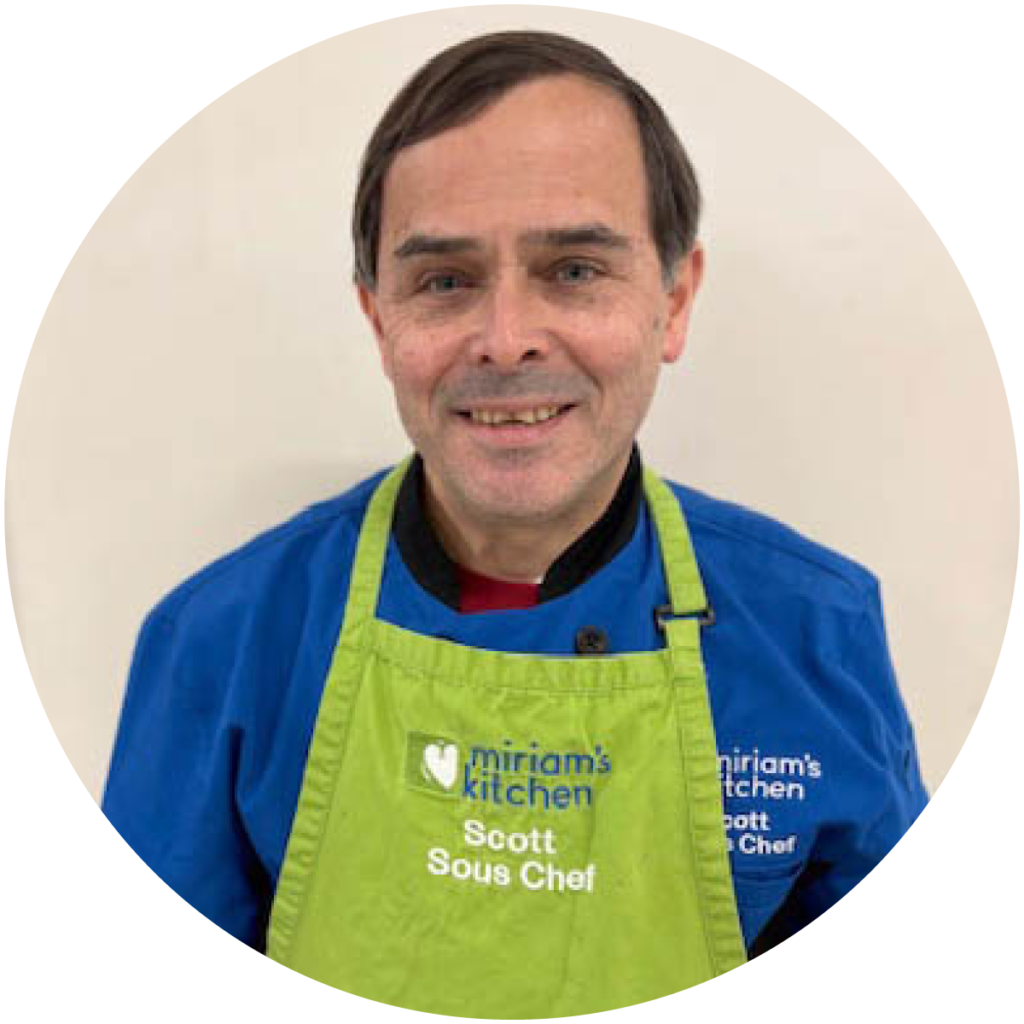
Soon after retired federal worker Scott Handmaker began volunteering at Miriam’s Kitchen, which provides support to people experiencing homelessness in DC, the federal government ordered a crackdown on homeless encampments.
“I volunteered the morning after they took away all the tents,” he says. “That was a tough morning—but taking away tents and cleaning up encampments, people still have to live. It doesn’t make it go away.”
Handmaker spent 37 years at the Department of Commerce. He started volunteering in April and has since spent more than 300 hours at Miriam’s Kitchen serving meals, staffing the front desk, and distributing supplies. The nonprofit offers case management, employment assistance, and healthcare—and, of course, food.
“It all starts with a meal, but that’s just the start,” says Handmaker, adding that one of the biggest unmet needs among the unhoused is simply having warm interactions with others. “A lot of people don’t have anyone to talk to. They just want to talk about sports, about life.”
To get to Miriam’s Kitchen, Handmaker rides the Metro from Virginia. Walking to the station on cold mornings, he thinks to himself, Wow, I can’t imagine sleeping outside last night—and then walks a little faster. He volunteers out of the same empathetic spirit. “I just think,” he says, “that everybody deserves a roof over their head.”
Standing Strong
From our streets to our stadiums, these locals are making their voices heard
The ICE Watcher
On a Tuesday night in September, a 19-year-old named Elli unhitches their necktie outside a downtown church, then hops into a friend’s SUV to spend the night looking for law-enforcement convoys. Their goal? Find, record, and hold to account the federal agents who have become an increasingly visible—and, for many, unwelcome—presence in DC.
A NoMa bar worker who moved here from Tennessee, Elli began filming agents last August. Their Instagram account, @elli_documents, attracted more than 8,500 followers in a month. One video, in which a DEA agent appears to call the Proud Boys “great guys,” scored a like from actor Sarah Jessica Parker.
While interfering with an arrest is a misdemeanor in the District, recording federal agents in public is protected by the First Amendment. For the most part, so is heckling. In another video, Elli shouts at a Homeland Security agent, “Why do you have your face covered?”
“ ’Cause I’m ugly,” the officer replies.
“Yeah, we knew that,” Elli says back.
By heading out almost every night, Elli hopes to set an example for other cities facing federal occupation. “It may not be like ‘Oh, wow, I saved someone from being arrested,’ ” Elli says, but rather “ ‘Hey, Chicago, this is how you do it.’ Shame them.”
The Resistance Next Door
Ever since Robert F. Kennedy Jr. became their next-door neighbor in Georgetown, Jim and Christine Payne have been using their window to send not-so-subtle messages to the Secretary of Health and Human Services. Responding to Kennedy’s unsupported claims that autism is a preventable disease caused by “environmental toxins” including Tylenol, the couple—who have an autistic son—displayed six copies of the book We’re Not Broken: Changing the Autism Conversation, along with a sign announcing a live signing by author Eric Garcia. “Twenty people showed up,” Jim says.
For Halloween, the Paynes deployed a skeleton sitting in a chair, holding a sign reading “Wish I had taken my vaccine!” Next to its feet was a bottle of Tylenol. For Thanksgiving, they took aim at the Trump administration’s hard-line immigration stance with a sign reading “Let’s Learn From The Piscataway Tribe. They WELCOMED Immigrants To Georgetown 1765.”
Despite the trolling, Jim insists he doesn’t have a “campaign” against RFK Jr. As it turns out, the two men are actually cousins. “He calls me Cuz,” Jim says.
The Fed-Up Fans
When Washington Spirit fans began chanting, “Free DC!” during the 51st minute of a mid-August match at Audi Field—nodding to the District’s long push to become the 51st state—they didn’t expect a stadium-wide roar, let alone the viral moment that followed.
It came at the end of a tense week. Days earlier, the Trump administration had declared a “crime emergency” and seized control of the city’s police force, leaving many residents furious and looking for ways to push back.
With little time to organize anything elaborate, supporters chose a simple chant that captured the moment. “It was awesome,” says Spirit Squadron president Meredith Bartley. “And I think it was really cathartic for people to be able to scream or chant and bring it back to how this is only happening because we don’t have statehood.”
Since that night, Spirit and DC United supporters have kept the chant going, adding pro-city banners and raised fists to the mix. “We’re not going to tell people when to finish it,” Bartley says. “At the heart of it is statehood. I could see this happening until DC is a state.”
We, the Jurors
DC jurors have been unimpressed with some of the trumped-up charges brought against people protesting the federal takeover of their city. Since last summer, grand juries have handed the US Attorney’s Office at least eight rejections, refusing to indict a woman who recorded an ICE arrest; the Sandwich Guy; and a disabled man who allegedly threatened the President.
Has jury nullification—acquitting a defendant out of concern over an unjust prosecution—become its own kind of pushback? Paul Butler, a Georgetown Law professor and former federal prosecutor, says the grand jurors “may have been sending a message to the US Attorney and to President Trump that they need to withdraw their troops from our city.”
For the USAO, the rejections are unprecedented and embarrassing. Grand juries, the cliché goes, will usually indict “a ham sandwich,” because the standard is simply that a majority of the 23-person jury must find probable cause. A wave of whiffs, Butler says, suggests that the charging documents were deeply inadequate. When he worked in the USAO, he recalls, prosecutors would ask each other, “How’d it go?” upon returning from court: “If someone had said that the grand jury refused to indict, there would have been peals of laughter. No one would have believed it.”
Lifting Up
A few creative ways that people are supporting their neighbors
Knitting Community Together
Danielle Romanetti learned a lot during the government shutdown of 2013. When she posted back then on social media that furloughed federal workers could drop by her Alexandria yarn shop, Fibre Space, for free knitting classes, 100 people showed up. “So we had to create registration and have a system in place for furloughs,” she says, “which is kind of ridiculous.”
In the years since, there have been two more furloughs—including the 43-day ordeal this past fall that counts as the longest shutdown in history. This time around, Romanetti offered a two-day learn-to-knit class that maxed out at 300 eager beginners, enjoying the stress relief that can come from knitting.
In each session, the furloughed found community, circling the room and saying which agency they worked for. Yet most weren’t there to stitch and bitch.
“I would say things were less ‘bitch’ and more bright,” Romanetti says. “It was an opportunity to get their mind off what was going on.”
Still, she can’t be sure that a civil servant didn’t choose a yarn color for a scarf or hat with a future protest in mind. “There is a lot of craftivism going on with nongovernment workers,” she says. “But government workers are more quiet about it.”
Ask a Grandmother
On a Wednesday evening in November, people lined up to ask three Jewish bubbes—or grandmothers—the questions most on their minds. Should I leave my job? Should I have ended a long friendship? Should I have major surgery that’s being recommended?
“The toughest question was the health one,” admits one of the volunteer grandmas, Esther Foer. “I pointed out I’m not a doctor.” “What Would Bubbe Do?” pop-ups were launched by Sixth & I in September ahead of the Jewish high holidays to support people of every faith during a hard time in DC. The positive response was so overwhelming that organizers vowed to continue them.
“The basic need to reach out to a total stranger, looking for comfort, speaks to what is going on in the city,” says Foer, a former executive director at Sixth & I.
Each session that November night, Foer says, “was supposed to be five minutes, but if you’re talking to someone and holding their hand—I found myself holding a lot of hands. The role of a grandmother is to love and hug and support. It’s about helping people move forward.”
Shout It Out
Monica Elms was scrolling on Instagram when she saw a post about a “scream club” in Chicago. She wasn’t a stranger to the idea of people letting off steam by shouting together into the void. “I went to Michigan State and we had an informal ‘midnight scream’ every night of exam week,” she says. “We would all scream out our windows.”
Elms reached out to the Chicago club about starting a Washington chapter: “Given the current environment in DC, I thought this was a way I could help.”
The first group scream in October drew a dozen people to District Pier at the Wharf. About 20 came to a second shriek at Meridian Hill Park.
Both times, organizers warned those in the vicinity what was about to happen, and some of them joined in. Participants closed their eyes, took a few deep breaths, and, on a countdown from three, let it rip. Then they did it once or twice more.
People aren’t asked, when they come, why they want to yell in public, but Elms says some attendees have alluded to politics when interviewed by the media.
“I knew there was a need in this city,” she says. “People do feel some sort of relief after.”
Out of the Woodchipper
Early last year, Debbie Kaliel and Maury Mendenhall were heartbroken when USAID programs they’d devoted their careers to were canceled and they were sent packing.
Kaliel had spent 18 years working on PEPFAR, an HIV/AIDS program that has saved 26 million lives worldwide. She couldn’t walk away, so she and Mendenhall launched Crisis in Care, a campaign to raise money for HIV organizations in Africa, Central America, and the Caribbean that had lost USAID support.
A fundraiser in May was small—a happy hour with a lot of former colleagues. They decided it was better to laugh than to cry, so the cocktails got clever names: PEPFAR Punch, Out of the Wood-chipper, Doge Eat Dog.
The events grew bigger: A comedy show in November sold out the 900-seat All Souls Church in DC.
In its first eight months, Crisis in Care has raised $100,000 for 18 organizations. It also helped four organizations secure $3 million from foundations and philanthropists.
“We are never going to replace the $1 billion USAID had going to those organizations” annually, Kaliel says. “But even $5,000 can mean 100 to 120 HIV-positive children maintaining access to treatment. We were never doing this work just for a paycheck. It was a calling. And we are finding new ways to keep answering that call.”
Down but Not Out
It’s probably not a good sign that when you ask local economic experts about the prognosis for our region, some of them bring up Detroit.
The Motor City is the classic example of a company metropolis hollowed out by the decline of its chief industry. Automation, foreign competition, and an energy crisis slammed the domestic automotive business so hard that the city’s population halved between 1950 and 2000.
Our area has generally been considered immune from a similar sort of economic disaster, largely because of the stability of its largest employer, the federal government. After a year of the current Trump administration, however, that stability is no longer a given. Washington may not be a full-blown “company town,” but the GOP’s sustained attack on civil-service jobs—combined with the longest government shutdown in US history and a preexisting trend toward remote work—could trigger a severe decline.
Between January and June 2025, according to the Brookings Institution, the Washington region lost federal jobs at a faster rate than the rest of the country. Similarly, its overall unemployment rate increased more quickly than anywhere else, with the suburbs seeing the largest changes. Last August, the District itself had the highest unemployment rate in America—for the third consecutive month. Federal jobs have vanished, and private-sector job growth is flat.
Glen Lee, the District’s chief financial officer, estimates that the city’s economy will shrink by 3 to 5 percent in 2025. The administration’s policies are being felt across every sector—for example, the White House’s law-enforcement takeover and street-level deployment of National Guard troops hurt the hospitality industry—and the only areas of revenue growth for DC, Lee says, are in individual capital-gains taxes and taxes on corporate entities that have a presence in the city but are headquartered elsewhere. Both of those are driven by a booming stock market and increased corporate earnings, not by local prosperity.
Still, could Washington really end up like Detroit? Terry Clower, who monitors the local economy at George Mason University’s Center for Regional Analysis, says a financial collapse is unlikely. Even in a scaled-down state, the federal bureaucracy remains an economic engine, and one that can’t be shipped abroad like a unionized factory. “Our industry, our ‘mill,’ is not going to completely shut down,” he says, adding that the real danger is a stagnant state of “persistent mediocrity.”
Right now, Federal Center, Gallery Place, and Crystal City are suffering. However, Clower sees signs of strength on K Street and along the Dulles Toll Road. Business for lawyers and lobbyists will remain stable—after all, there are no plans to move Congress away from DC. More than 70 percent of the world’s internet traffic passes through Loudoun County’s Data Center Alley, and there’s room for additional growth, even as the centers use massive amounts of water and electricity.
“I am very hopeful about what we can be as a region,” Clower says. “The trick is how quickly we adapt to this new market reality. [That] will impact whether we are talking about two or five years of pain—or is it ten years for us to recover?”
How You Can Help the Local Economy
• Volunteer your time, knowledge, or resources to the Washington Area Community Investment Fund, which seeks to strengthen communities by helping entrepreneurs build businesses.
• Support the nonprofit Seed Spot, which helps entrepreneurs from less represented communities launch businesses by connecting them to mentors. Also offered: a ten-week accelerator program.
55%
Occupancy rate of commercial offices in DC in fall 2025
40,000
Number of federal jobs DC expects to lose by 2029
3.5%
Amount the District’s economy is expected to shrink by in 2026
41
st
The Washington region’s ranking on job growth among 54 major US cities in the first half of 2025
Sources: Brookings Institution and DC Office of the Chief Financial Officer

Feeding a Need
During the recent 43-day government shutdown, when SNAP benefits were frozen and furloughed federal workers went unpaid, news reports focused attention on the many people lining up at food banks.
But an increase in food insecurity was there even before the shutdown. DOGE layoffs, a federal takeover of the city that hurt some businesses, and inflation in general have made it harder for many Washingtonians to make ends meet. According to the Capital Area Food Bank’s most recent Hunger Report, released this past September, 36 percent of our region—more than one in three people—experienced food insecurity in the past year. Among households affected directly by federal cuts, the figure was higher, 41 percent—and that was before the shutdown.
Food is often the budget item that people cut back on first, says Radha Muthiah, president and CEO of CAFB, because they can’t always forgo paying rent or utilities.
Fortunately, it’s not hard to help stave off food insecurity in this region: Every $1 you give provides two meals, according to CAFB.
Donate or Volunteer
These are some of the larger food banks and nonprofits helping combat food insecurity. All can put donations to good use, and they often need volunteers to help distribute food.
- Bread for the City, which operates two food pantries in the District.
- The Capital Area Food Bank, the area’s largest such organization, which works with more than 400 local partners to provide upward of 60 million meals a year.
- DC Central Kitchen, which prepares 1.5 million meals a year that are delivered to shelters, nonprofits, and the homebound.
- Food for Others, which serves roughly 3,000 families a week in Northern Virginia.
- Manna Food Center, which provides food to 60,000-plus people a year in Montgomery County.
- Martha’s Table, which operates no-cost food markets as well as the mobile McKenna’s Wagon, a source of warm meals and sandwiches for those in need.
- Miriam’s Kitchen, a nonprofit working to end homelessness that served more than 105,000 meals last year.
- SOME (So Others Might Eat), which offers free hot breakfast and lunch daily at its Truxton Circle location, in addition to a food pantry.
A Turning Point for DC Statehood?
Recent federal heavy-handedness—and ongoing national partisan animosity—could help make the state of Washington, Douglass Commonwealth, a reality
Despite decades of activism and political efforts, DC statehood seems farther away than ever.
National Guard troops and a smorgasbord of federal law-enforcement agents have been occupying our streets, while House Republicans are pushing to depose our attorney general and forcibly change the District’s laws.
Ironically, some statehood advocates see the previous year as a turning point—one that could make the state of Washington, Douglass Commonwealth, a reality sooner than anyone expects.
“This is one of my favorite topics,” DC shadow senator Ankit Jain says. Recent attacks on the District’s self-governance could drive home the importance of statehood for national Democrats, he says, making it a higher priority for the party the next time it controls the federal government.
Imagine—and this is a heck of an assumption—that in January 2029, a Democratic trifecta is sworn in. If the White House supports a bill from House Democrats, the biggest remaining obstacle to DC statehood will be in the Senate, where the bill would need a filibuster-proof 60-vote majority. Short of those numbers, Senate Democrats could change filibuster rules to carve out an exception for voting-rights legislation, something they tried to do in 2021 for a pair of bills designed to make voting more accessible.
That effort failed when former Democratic senators Joe Manchin and Kyrsten Sinema voted with Republicans. Still, Jain thinks a future push could be more successful, thanks largely to the Trump administration’s heavy-handed governance. “Trump is showing that the Democrats were too unwilling to do what is necessary to help people,” he says. “We can’t rely on norms that don’t serve this country anymore.”
There’s also a distant possibility that before 2029, Trump could successfully pressure Republicans into abolishing the filibuster to advance his legislative agenda. If that happens, Jain says, “DC statehood becomes an inevitability.”
What would statehood look like? Within months of a future Democratic President signing a bill into law, the mayor would become governor of Douglass Commonwealth, and the DC Council would become the new state’s legislative assembly—with a special election to seat one more member per ward. The American flag would likely get an extra star.
For any of this to happen, of course, Democrats would have to enjoy an unusual level of national electoral success in 2028, and also display much more commitment to the cause than they have in the past. They may be incentivized by the current—and presumably ongoing—wave of state-by-state redistricting, which has seen both parties gerrymandering electoral maps in Texas, California, and elsewhere in an effort to gain congressional advantage. Local voters are overwhelmingly blue; the prospect of adding an additional House seat and two senators could simply be too tempting for Democrats to pass up, particularly in a moment of gloves-off partisan warfare.
Regardless of what might motivate national Democrats to finally make the District a state, says DC Appleseed Center for Law and Justice executive director Vanessa Batters-Thompson, the result would be increased representation—and, with it, more ability for DC residents to chart their own path, instead of being subject to the whims of Congress and the White House.
“Twenty twenty-five has really shown us the limits of our autonomy,” Batters-Thompson says. “When we reach the end of this period where we have these heightened democratic threats, there is going to be a large push to promote democracy. I think DC may be part of that response to the moment we’re in.”
What You Can Do for DC Statehood
- Donate to the DC Statehood Delegation Fund when filing your District taxes. (The minimum is $1.)
- You can also donate to the DC Appleseed Center for Law and Justice, which defends the District through legal means.
- Attend an orientation with Free DC, which advocates for statehood through direct protest.
- Participate in local elections, such as next year’s mayoral and delegate races.
Flying the Flag
When DC’s flag was first raised over the District Building in 1938, it had its detractors. The stars-and-bars design, based on one of George Washington’s old family shields, had been picked by a commission with little public input, even after another citizen-submitted bluish flag won a design contest.
Residents wrote letters to the editor in local newspapers, wringing their hands about the Communist associations of a predominantly red flag. Others made the reasonable point that simply having a flag did nothing to address DC’s lack of representation. (Back then, Washingtonians couldn’t even vote in presidential elections.)
A week after the flag began flying over the District, Evening Star columnist Jesse C. Suter called it a “symbol of political impotency” with “no distinctive local significance or symbolism.”
But over the ensuing decades, those concerns fell away. These days, the flag is beloved by activists and vexillologists—the fancy word for flag scholars—alike. Far from being a symbol of political impotency, it represents local power and the push for statehood.
That’s why this summer, when the Trump administration called in the National Guard and flooded the city with federal agents, the DC flag began appearing everywhere. One block of Bay Street, Southeast, became a sea of red and white when dozens of rowhouses flew it from their porches.
All of this caused something of a run on stores selling the flags. Hardware stores put up signs saying “We Have DC Flags,” and half a dozen shop owners told the Washington Post they were out of them or struggling to keep them stocked.
Shmuel Chakakian, co-owner of one of the area’s only flag shops, Chakakian Flags in Silver Spring, told Washingtonian he was puzzled when he suddenly sold out of the flag over the summer. “It was hard to find,” he said. “Now I understand why.”
This article appears in the January 2026 issue of Washingtonian.


