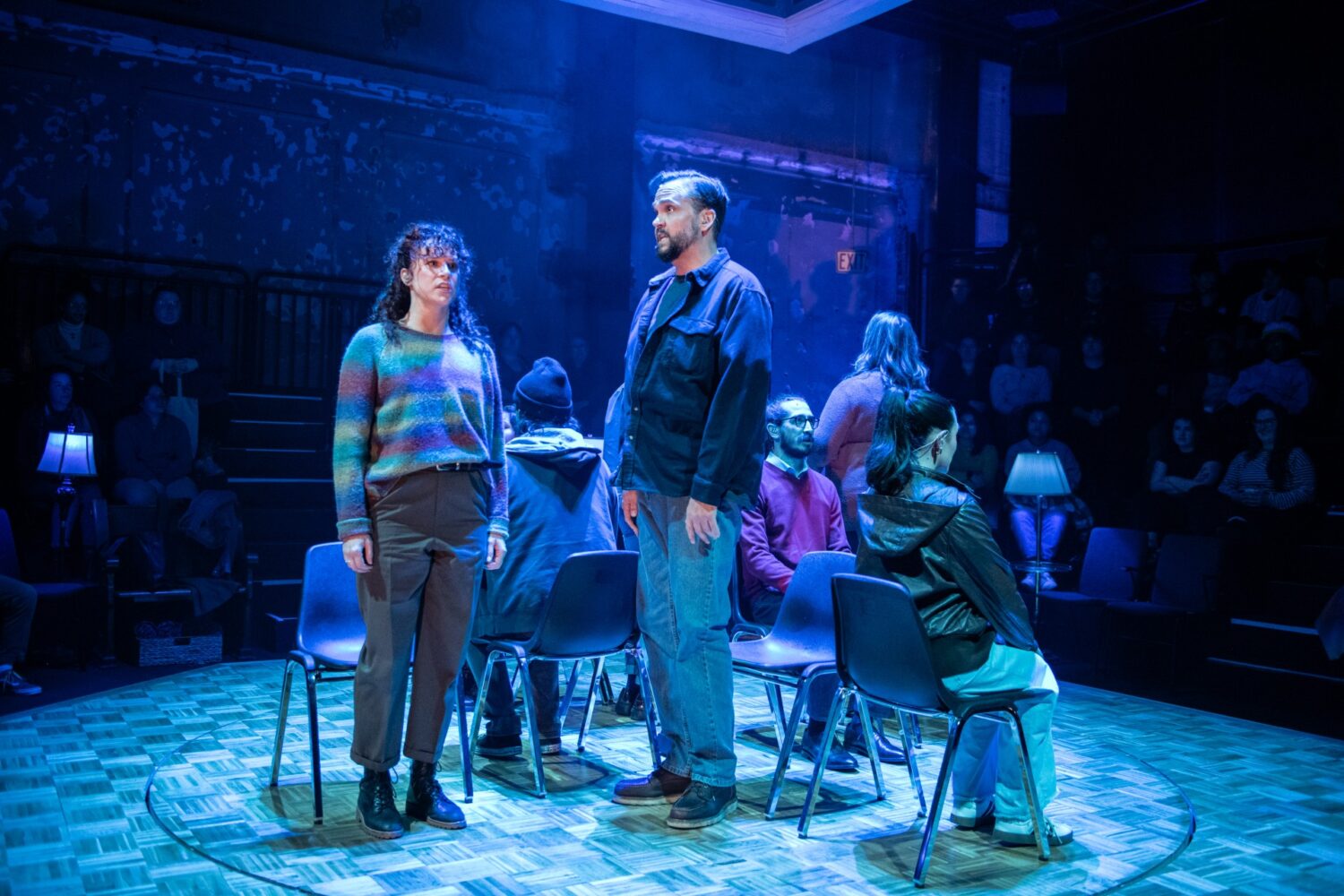
In a dimly lit, dusty church basement, eight people meet and place their cellphones into a wooden box. Each member of the octet struggles with a dependency upon the very tool that enables us all to enjoy a level of historically unprecedented convenience — the internet. Like the characters, audiences are called to unplug and immerse themselves in the world of Studio Theatre’s production of Dave Malloy’s unique a capella musical, Octet.
As if by some miracle, or possibly some algorithmic alchemy, the members were plucked out of the endless scroll and recruited by a mystery individual named Saul to form this support group. In the constant flow of tragic news, funny videos, and a litany of opinions, these eight wandering souls found themselves feeling empty, ostracized or unable to form or maintain the connections to the world around them that they crave. As they pick up their Friends of Saul pamphlets filled with uniquely individualized hymns, the members prepare to share their stories.
The heartbeat of this musical is the eight voices that rise and fall together to weave an intricate tapestry. It details their journeys and their ever-consuming tech addictions. As Paula (played by Tracy Lynn Olivera) leads the group into their first hymn, “The Forest,” they sing, “My head was clean and clear, alone without fear.” The Forest stands for that which an ever-present Monster threatens: clarity, contentment, and the immediacy of an analog existence. Perhaps it represents a time in the past before the internet extended its tendrils into every facet of our lives, or maybe it’s a life free from the relentless appetite of addiction.

Each member shares their own story through song, detailing bouts with shame, guilt, loneliness and a desire to connect that continues to drive them to compulsively comb the internet for more content, for larger hits of dopamine, for the triple cherry jackpot hit.
Later, in “Candy,” Henry (played by Angelo Harrington II) sings a deceptively sweet, catchy tune with gutting lyrics about his obsession with confection-themed puzzle games that act as both distraction from his social anxieties and exacerbator of them.
In “Beautiful,” Velma beats her clasped hands against her chest with the softness of a heartbeat as she details her struggles with body image and her blossoming internet-based friendship with “a girl in Sainte Marie / Just like me.” For her, the internet isn’t a place here humanity goes to die, but a reflective pool where reminders of humanity can be found.
As the congregation of eight souls make a bid to reclaim their autonomy and dig themselves out of their respective digital rabbit holes together, they present themselves to each other: honest, vulnerable, and face-to-face, without the cover of anonymity or the deniability of an avatar.
Octet posits the idea that, in a world that trains us to abhor the possibility of discomfort or inconvenience, to accept the easy as a substitute for the profound, maybe these rituals of connection make it possible to recover our humanity in ways no digital landscape ever could.
Octet is now running at Studio Theatre through March 8, 2026. Tickets are available at studiotheatre.org.