Had you gazed into the night sky just after Christmas in 2024,
you might have seen any number of things.
A kaleidoscope of sparkling stars.
A plane flying over the Potomac River, readying for landing.
Maybe even some fireworks, launched by revelers impatient for New Year’s Eve.
What you wouldn’t have seen was the potentially killer asteroid, hurtling through outer space, headed toward Earth.
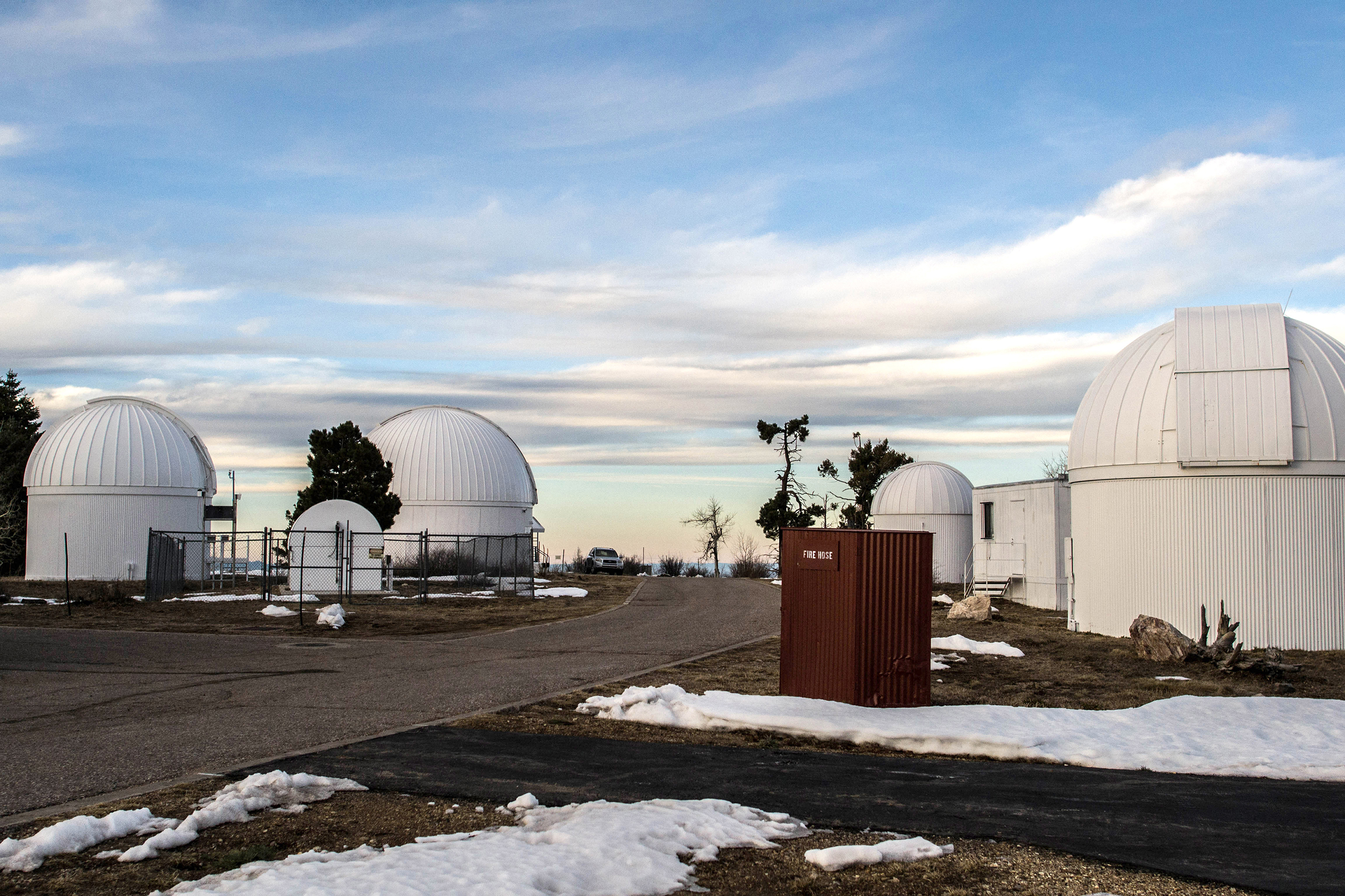
To observers manning the Asteroid Terrestrial-impact Last Alert System (ATLAS)—an initiative consisting of two telescopes in Hawaii, one in Chile, and one in South Africa—the dot first appeared on December 27 against the black background of a telescopic image. Not long after, researchers at the Catalina Sky Survey spotted the same dot in images captured by three telescopes in Arizona. The Minor Planet Center, a Massachusetts facility that serves as the world’s repository for asteroid observations, confirmed that the dot was indeed an asteroid—one that hadn’t been previously detected. The center also gave it a provisional name, 2024 YR4.
The impact would emit about 500 times the energy released at Hiroshima.
And for a few weeks, that was that. Astronomers are used to discovering new asteroids: On a good shift at Catalina, sunset to sunrise, researchers can tally as many as 50. Every day, our planet is hit by 100 tons of sand-size particles from the cosmos, as well as small space rocks that burn up in the atmosphere and create shooting stars. Neither are any more dangerous to human life than a newborn kitten. Meanwhile, the asteroids large enough to do damage mostly whiz by harmlessly.

YR4 was an estimated 60 meters across, or about 200 feet. In early 2025, astronomers came to a sobering conclusion: The asteroid’s orbital path around the sun could intersect with Earth’s—meaning it might crash into our planet—in 2032. If that happened, the impact would emit energy equivalent to 7.4 megatons of TNT, about 500 times the energy released at Hiroshima. Where exactly YR4 would land was unknown, but scientists drew up a collision corridor that included the cities of Bogotá and Mumbai.
This, of course, was a problem. In the 1998 popcorn flick Armageddon, the solution came via actor Bruce Willis and his take-no-guff squad of oil drillers, who flew a space shuttle to a ginormous space rock, bored into the beast, and deposited a nuclear bomb that blew it to smithereens. In real life, the job of preventing devastating asteroid strikes is overseen by NASA’s Planetary Defense Coordination Office. Headquartered in DC, it’s tasked with the mission to search for—and, ideally, thwart—asteroids that menace our planet. Relying on a global network of astronomers scanning the skies with land- and space-based telescopes, the PDCO quarterbacks efforts to spot asteroids like YR4, calculate their sizes and trajectories, determine possible collision sites, and model impacts. It’s also at the forefront of figuring out practical, non-Hollywood ways to stop those asteroids before the worst can happen.
Leading the way is Planetary Defense officer Kelly Fast, who works from NASA headquarters off the National Mall. In a solar system that’s home to more than a million estimated asteroids, her job—and that of the sky-watching army she supervises and collaborates with—is never done. “It’s the only natural disaster we could potentially prevent,” she says.
“A Wake-Up Call”
When I met Fast in early September, she was in a hurry, squeezing in our interview in the lobby of NASA HQ before catching a flight. While she’s relatively new to her job, having become the PDCO’s acting director in May 2024, space has been a lifelong fascination.
Fast grew up in Los Angeles, with a view of the Griffith Observatory out her window, and eventually majored in astrophysics at UCLA. She then earned a master’s and a doctorate in astronomy at the University of Maryland. Fast wanted to study planets, but a stint at NASA’s Infrared Telescope Facility in Hawaii pushed her toward asteroids. In 2014, she became manager of an agency program that tries to find objects like YR4.

For a long time, humanity didn’t worry much about rocky wrecking balls hightailing it through space. The first asteroid discovery didn’t happen until 1801, when Italian priest and astronomer Giuseppe Piazzi spotted Ceres from an observatory in Sicily. About a quarter of the moon’s size, Ceres is so large that NASA reclassified it as a dwarf planet in 2006. A collision with Earth would be catastrophic. For more than a century, however, conventional wisdom among astronomers held that such collisions happened so infrequently that they weren’t worth fretting over.
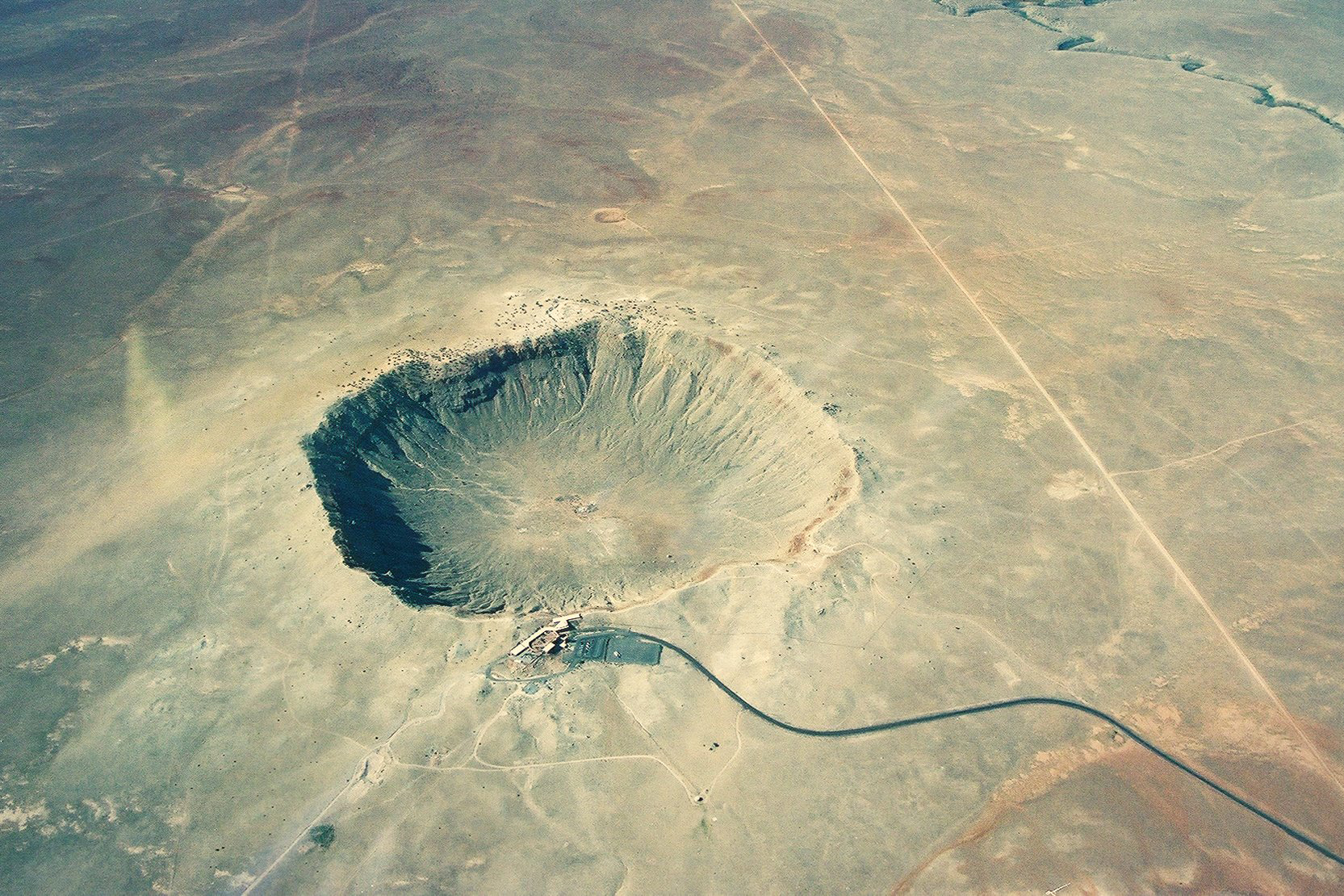
Then came geologist Eugene Shoemaker. In the 1950s, Shoemaker was an employee of the United States Geological Survey when he examined what’s now known as Barringer Meteor Crater in Arizona. For decades, scientists had debated whether the crater, 550 feet deep and nearly three-quarters of a mile across, was created by a volcanic eruption or an asteroid impact. Most believed it was the former—until Shoemaker discovered coesite in the crater, a rare form of silica mineral found in quartz rock that’s been suddenly pulverized with intense pressure. Coesite can’t be formed by volcanic forces—only an impact or a nuclear detonation can do the trick.
Taking what he learned on Earth, Shoemaker looked to the moon, concluding that all of its craters were made by asteroid impact. (Shoemaker actually helped train the Apollo astronauts and hoped to become the first geologist to walk on the lunar surface before a medical condition disqualified him for the mission.) In the 1970s, he set up a program at Mount Palomar in California, where he and his wife, Carolyn, spent seven-day stints searching the skies for asteroids. Eventually, Shoemaker started finding them, evidence he used to argue that space rocks hit our planet more often than anyone thought. That argument was bolstered in the late 1970s, when Nobel Prize–winning physicist Luis Walter Alvarez and his geologist son, Walter, discovered a worldwide layer of iridium-rich clay.
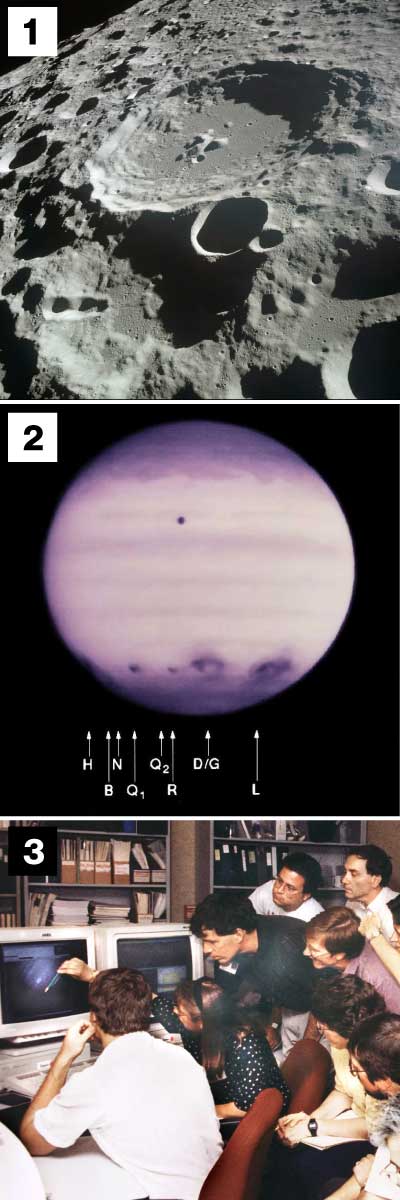
A chemical element and the second-densest naturally occurring metal, iridium is rare on Earth—but abundant in asteroids. In 1980, the father-son duo teamed with two other researchers to publish a groundbreaking paper proposing that a mass extinction that included the dinosaurs roughly 66 million years ago was the result of an asteroid impact. A ferocious scientific debate erupted, with some geologists countering that prolonged volcanic activity wiped out T. rex and friends. In the early 1990s, the identification of a massive impact crater—120 miles in diameter, approximately 66 million years old, and buried beneath Mexico’s Yucatán Peninsula—gave credence to the Alvarezes’s theory. Today, it’s widely accepted that an asteroid strike served as a prelude to the dinosaurs’ demise. So is the notion that our planet exists within a kind of cosmic shooting gallery.
“The moon is pummeled, of course,” says Paul Chodas, a senior member at the Center for Near-Earth Objects at NASA’s Jet Propulsion Lab in California, where he’s worked for 43 years. “And the Earth would look the same if it weren’t for erosion, by the way. We’d be covered with craters.” (While Earth is home to about 190 confirmed impact craters, scientists believe that wind, rain, and geologic activity have hidden and destroyed many more over the planet’s 4.5 billion–year history.)
The turning point for humanity’s efforts to do something about this threat occurred in 1994. That year, a comet first discovered by Shoemaker and a colleague, astronomer David Levy, smashed into Jupiter. Splintered into fragments ranging in estimated size from around 1,000 feet to 1.2 miles across, the comet produced 21 visible impacts. The largest of those created a dark “scar” on Jupiter nearly the size of the Earth’s diameter. Scientists estimated the released energy to be many times greater than every nuclear warhead stockpiled by humanity combined.
Four years later, Congress directed NASA to find, track, and catalog potentially hazardous asteroids. The agency and its worldwide partners have been busy scanning the skies since, and in 2016 the PDCO was created to centralize that search. Lindley Johnson, a former Air Force officer who already had been working with NASA on asteroids for more than a decade, was put in charge. “Prior to [the comet’s collision with Jupiter], natural impact on a planetary surface had never been observed before,” says Johnson, who retired last May. “To actually see it in reality was definitely a wake-up call.”
Shaking Loose
Asteroids, quite simply, are rocky remnants left over from our solar system’s formation some 4.6 billion years ago. Most of the estimated 1.4 million asteroids orbiting the sun are suspended in a belt between Mars and Jupiter. (Ceres, the dwarf planet, resides in the belt. Rest assured, multiple planetary-defense experts attest that it’s never leaving.)
Sometimes, though, asteroids do shake loose, ending up on trajectories that bring them closer to Earth. This can happen when asteroids smack into each other like billiard balls. It also can happen when the gravitational pull of Jupiter, the largest planet in the solar system, tugs hard on an asteroid traveling very close by, redirecting it toward us.
To date, NASA has identified more than 39,000 near-Earth objects (NEOs)—asteroids whose orbits could bring them within 30 million miles of our planet, close enough to possibly hit us. The good news? Fewer than a third of those are what the agency terms “potentially hazardous,” meaning they also measure at least 460 feet in diameter.
Better still, none of the NEOs in the potentially hazardous group pose a significant danger of striking our planet within the next century. Overall, NASA says, the chances of an impact range from once every 20,000 years for smaller, city-destroying rocks to once every 100 million years for an asteroid big enough to trigger mass extinctions and global catastrophe. “It’s not something that should keep people up at night,” Fast says.
Now for the bad news: NASA estimates that 50 NEOs at least 3,280 feet wide remain undiscovered—along with 14,000 NEOs larger than 460 feet. It takes only one to have a very bad day. At the big-boy end of the spectrum, the asteroid believed to have wiped out the dinosaurs measured an estimated six miles across. Its impact, scientists speculate, triggered global wildfires, tsunamis, and earthquakes, all while throwing so much soot and debris into the atmosphere that entire ecosystems collapsed from not getting enough sunlight.
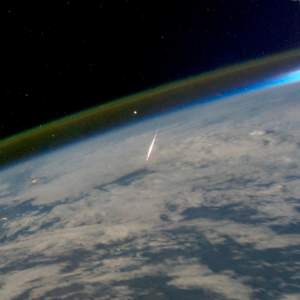
And much smaller space rocks can still hit hard. In 1908, an asteroid estimated to be 130 feet across exploded in the atmosphere above a remote part of Siberia, producing an airburst equivalent to that of the most powerful nuclear bomb ever detonated by the US, a 15-megaton blast on Bikini Atoll in the Marshall Islands in 1954. The resulting air waves were detected as far away as DC, and the skies of Asia and Europe were aglow for several days afterward. When Russian scientists explored the hard-to-reach site 19 years later, they found an area of destruction measuring 830 square miles, and an estimated 80 million trees had been felled. In 2013, a more compact asteroid—estimated to be just 66 feet in diameter, about the size of a house—exploded over Chelyabinsk, Russia. Its airburst released more than 30 times the energy of Hiroshima; 1,600 people were injured, while damage to buildings and windows was spread over 200 square miles.
Because the Chelyabinsk asteroid approached the Earth along a path with the sun to its back, astronomers didn’t see it coming. In the aftermath, the United Nations established the International Asteroid Warning Network—essentially, a planetary-defense notification mechanism, coordinated by NASA, that’s responsible for informing the world’s governments of impending threats from above. Today, Fast serves as its coordinating officer, a natural fit with her PDCO duties. “We have to be willing to expend the resources,” says Johnson, who preceded Fast in both roles, of NASA’s planetary-defense efforts. “Because if we don’t continue to do it, we’re going to get surprised someday.”
Looking Up
The work of avoiding surprises begins with scanning outer space for moving objects. Three major surveys—Catalina, the ATLAS program that first spotted YR4, and the Pan-STARRS telescope array on Maui—are all funded by NASA and on duty every clear night. Much of their surveillance is automated: Custom-built hardware, for instance, operates Catalina’s telescopes, running its cameras and processing data. Computers then pick out asteroid candidates, looking for objects that seem to move in a straight line across a series of four images.
From there, human astronomers sort through “thousands of candidates,” says Catalina director Carson Fuls. “All night long.” Any observations of asteroids are passed to the Minor Planet Center (also funded by NASA). Next, Paul Chodas and others at the Center for Near-Earth Objects in California use measurements of the different positions of asteroids to figure out where they’re headed, using software that Chodas himself helped code. The laws of gravity, other rules of physics, the forces of relativity, the position of the sun—all these and more go into mathematical equations that suss out the orbits of particular NEOs and how far away they are.
Next comes characterizing asteroids. Good old-fashioned radar can help determine what a space rock is made of. Depending on the signals bounced back, scientists can begin to infer whether an asteroid is mostly rocky or mostly metallic; the latter is likely to be more dangerous. Meanwhile, an asteroid’s brightness provides insight into its size, perhaps the all-important metric for planetary defense. Double the size of an object and the mass goes up by a factor of eight. More mass equals more potential damage to Earth, the same way getting T-boned by a full-size SUV is worse than being hit by an electric scooter.
How bad can the damage get? Answering that question is the domain of NASA’s Asteroid Threat Assessment Project, led by astrophysicist Jessie Dotson from the agency’s Ames Research Center in Silicon Valley. Her team models what would happen if an asteroid hit a particular area or city on Earth. “This can be everything from cratering to tsunamis to air-blast waves to thermal damage,” Dotson says.
In the case of YR4, Dotson’s team reasoned that air blasts would be the major source of damage. By mid-February, astronomers determined that the asteroid had a 3.1-percent chance of striking our planet in 2032. That might sound like a laughably low percentage—after all, poker players have better odds (4.75 percent) of being dealt two pair in any given hand—but by planetary-defense standards, this made YR4 the most dangerous asteroid ever discovered. Headlines called it a “city destroyer.” Lagos, one of Africa’s largest cities, with an estimated population of 16 million, was in its projected strike corridor. What, if anything, could humanity do to avert disaster?
Hitting an Apple
In Armageddon, the most belief-stretching thing isn’t whatever showbiz magic is propping up Bruce Willis’s fading bottle-blond hairline. Rather, it’s the idea that NASA somehow could throw together a mission to intercept an enormous incoming asteroid in only 18 days.
In reality, a spacecraft for reaching the rogue rock would have to be built. A rocket to carry that craft would have to be built, too, or at least prepared. A launch date would have to be set. It takes time to do all of this—and more still to reach said asteroid in space, itself no easy task. “Mission-planning doesn’t happen on a dime,” Fast says. “We don’t keep something on the pad ready to go, like in the movies.”
Upon arrival, there’s another problem to solve: knocking an asteroid out of its Earth-bound orbit. Nuclear weapons are one answer, the method of choice in Armageddon and the rival disaster flick Deep Impact. But a big blast isn’t as straightforward as it seems. Not all asteroids are solid pieces of dense rock that, presumably, can be nuked into particles small enough to then burn up in our atmosphere. Some are more mountainous than smooth. Others are composed of dense metal. If a detonation leaves behind sufficiently large asteroid chunks, those pieces could slam into our satellites and the International Space Station—or, worse still, subject our planet to a cannonade of cosmic grapeshot.
“It’s the only natural disaster we could potentially prevent.”
In a 2003 paper that’s now famous among planetary scientists, a team of space experts from Spain outlined a subtler approach. Describing a “Don Quijote” mission, they proposed sending two spacecraft—appropriately designated Sancho and Hidalgo—toward an approaching asteroid. One craft would sit back and observe, while the other would launch itself straight at the asteroid, generating an impact that would, in theory, alter its orbit. “It’s just basic physics,” says Fast. “Go hit something into an asteroid and it will respond.”
Timing matters. Spot an Earth-bound asteroid early enough, get to it long before it arrives, and you don’t need the stupendous amount of energy released by a nuclear bomb to blow it up or make it change course. You can just give it a minor nudge off its deadly orbit—and let the immensity of space work to your advantage over a period of years, almost like compound interest.
The European Space Agency studied the Quijote concept in the early 2000s but couldn’t find the funding to get a project off the ground. Enter NASA, which in 2017 picked up the baton with its $325 million Double Asteroid Redirection Test (DART). Space agencies had previously landed satellites on asteroids, but this mission was different: the first-ever attempt to use a kinetic impactor to strike an asteroid, redirect its momentum, and alter its orbit ever so slightly.
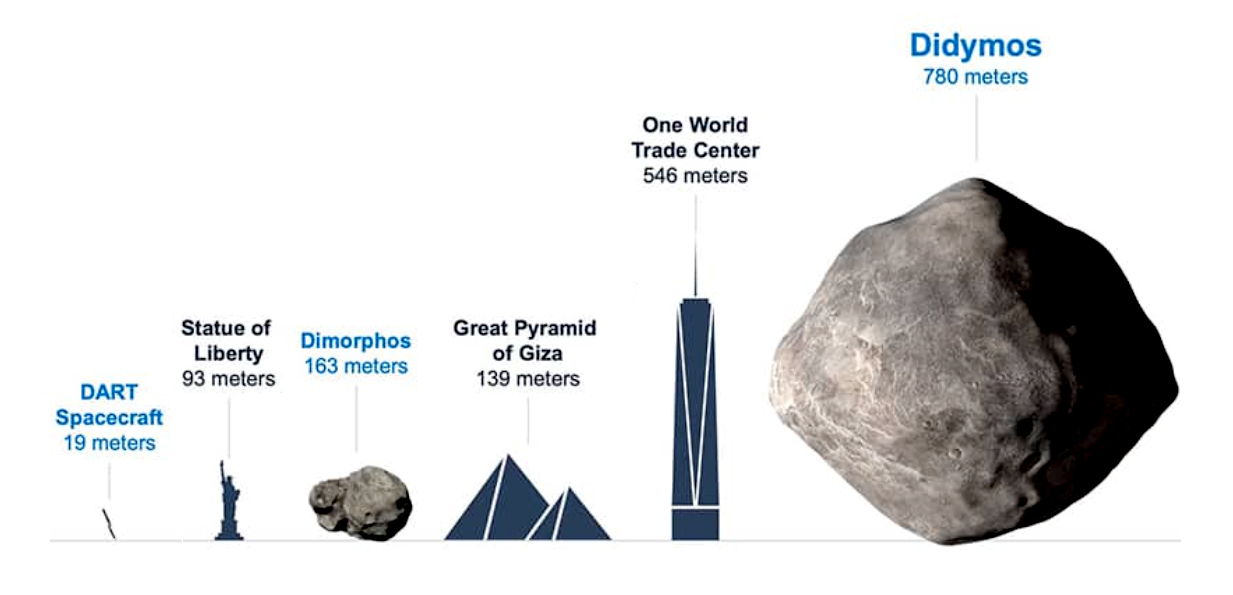
For a target, the agency chose a binary asteroid system made up of a 2,640-foot asteroid, Didymos, and a 525-foot moonlet circling around it, Dimorphos. While the two asteroids posed no threat to Earth, astronomers determined they would be closest to our planet in the fall of 2022. A 1,345-pound spacecraft, roughly the size of a vending machine, was designed and built at the Johns Hopkins University Applied Physics Laboratory in Laurel, then launched into space from California’s Vandenberg Space Force Base in November 2021.
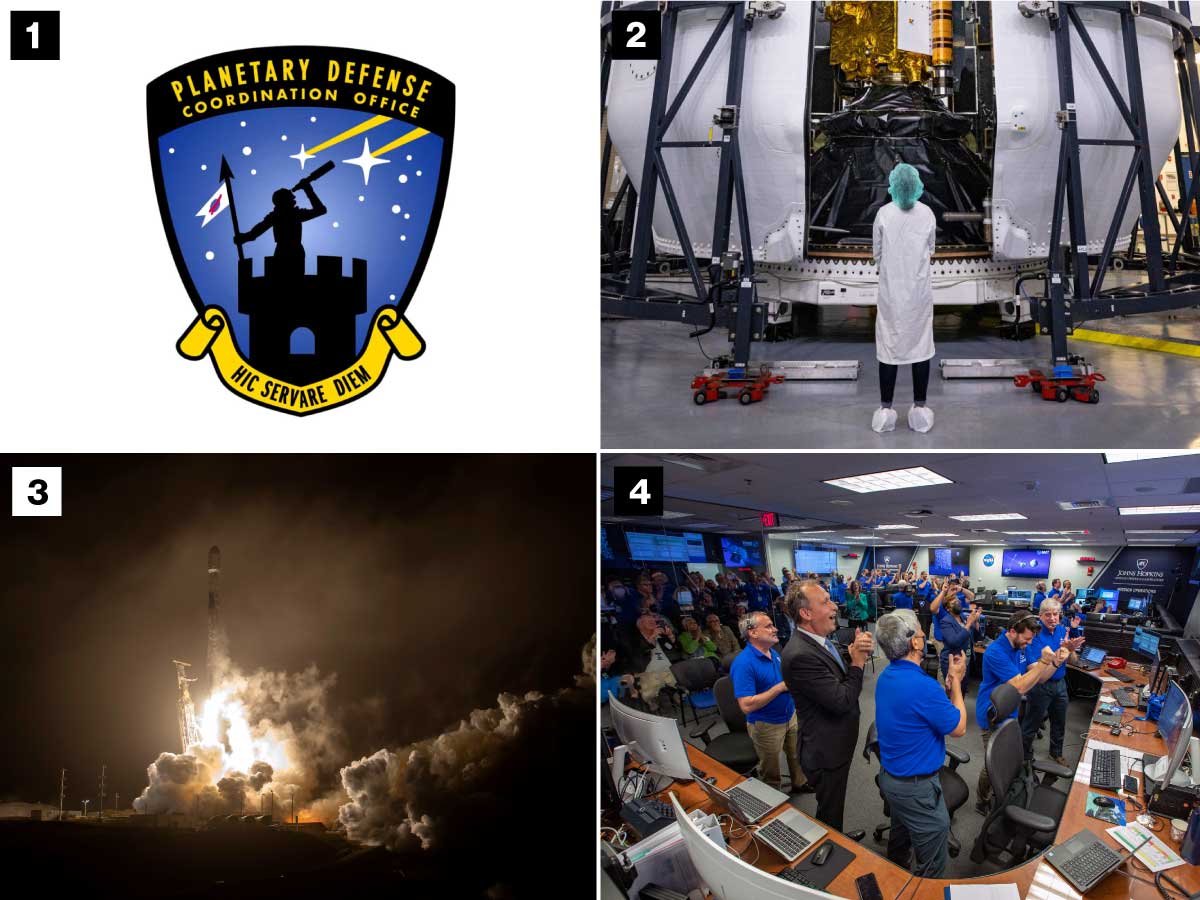
Ten months and 6.7 million miles later, the DART craft reached its destination—a feat Popular Mechanics likened to “throwing an arrow from southern France and hitting an apple on the East Coast.” After deploying a small, Italian-built imaging satellite to take pictures of what happened next, it sped toward Dimorphos, ramming into the smaller asteroid at 14,000 miles an hour. Back in the APL control room, the team managing the mission watched its final moments on television. The screens went dark. The room burst into cheers.
Next, NASA waited. The apple had been struck. Did it matter? Weeks later, ground-based telescope observations allowed the agency to confirm the good news: The collision had, in fact, altered the moonlet’s orbit around the larger asteroid, and by a far greater margin than what was necessary for mission success. The PDCO’s Latin motto—Hic Servare Diem, which translates to “Here to Save the Day”—was no longer wholly aspirational.
“What DART was about was demonstrating that this technology could be used in the right situation to change the trajectory of an asteroid,” Johnson says. “And if you did it far enough ahead of time, you could make what was going to be an impact a complete miss.”
Unfinished Business
It’s an uncertain time for NASA. The agency has been without a permanent administrator for much of 2025. Budget cuts that the Trump administration has proposed would whittle its workforce to about 12,000 employees, roughly a third of its Apollo-era peak. Significant chunks of money supporting various research areas—studying the sun, looking into other planets, analyzing stars—are on the chopping block.
For planetary defense, however, the administration is proposing $304 million in spending, an increase of about $7.5 million. Maybe someone in the White House is a fan of disaster movies. Or maybe it’s simply good politics: According to a 2023 Pew Research poll, 60 percent of Americans believe that monitoring the skies for asteroids that could hit Earth should be NASA’s top priority. (By contrast, barely 12 percent believe the agency should focus on sending humans to Mars or back to the moon.)
Whatever the space program’s future holds, the PDCO still has work to do. Andy Rivkin, an investigation lead on the DART mission, says that almost “everything we know about asteroids has come in the last 30 years”—and over the next few years, we’ll likely know much more. Just this year, the Vera C. Rubin Observatory, a joint project of the National Science Foundation and the Department of Energy, came online in north-central Chile. Equipped with a 6,000-pound, SUV-size digital camera—the largest ever built—that can move and focus on a new section of space every five seconds, the observatory will spend the next decade taking a complete survey of the Southern Hemisphere sky, detecting many new asteroids in the process. Currently, all of the world’s telescopes, on the ground and in orbit, discover about 20,000 asteroids a year. During an initial test of the Rubin observatory’s telescope last spring, more than 2,100 were detected in a single week. Seven of those were new NEOs.
In the coming years, NASA plans to launch and deploy the NEO Surveyor, the first space telescope specifically built to find large numbers of potentially dangerous asteroids. Equipped with infrared detectors that can detect asteroids based on the heat they absorb from the sun—rather than the sunlight they reflect—the telescope will be able to take more accurate measurements of NEOs. It also will help astronomers spot so-called dark asteroids, currently the hardest type to find, as well as ones approaching from the direction of the sun, such as the asteroid that exploded over Chelyabinsk. “There are asteroids out there we don’t know about, and we want to find them,” Fast says. “But it takes time.”
Speaking of taking time: About two months after asteroid hunters first identified YR4, Fast and her colleagues around the world were able to breathe a sigh of relief. Additional observ
Had you gazed into the night sky just after Christmas in 2024,
you might have seen any number of things.
A kaleidoscope of sparkling stars.
A plane flying over the Potomac River, readying for landing.
Maybe even some fireworks, launched by revelers impatient for New Year’s Eve.
What you wouldn’t have seen was the potentially killer asteroid, hurtling through outer space, headed toward Earth.
To observers manning the Asteroid Terrestrial-impact Last Alert System (ATLAS)—an initiative consisting of two telescopes in Hawaii, one in Chile, and one in South Africa—the dot first appeared on December 27 against the black background of a telescopic image. Not long after, researchers at the Catalina Sky Survey spotted the same dot in images captured by three telescopes in Arizona. The Minor Planet Center, a Massachusetts facility that serves as the world’s repository for asteroid observations, confirmed that the dot was indeed an asteroid—one that hadn’t been previously detected. The center also gave it a provisional name, 2024 YR4.
The impact would emit about 500 times the energy released at Hiroshima.
And for a few weeks, that was that. Astronomers are used to discovering new asteroids: On a good shift at Catalina, sunset to sunrise, researchers can tally as many as 50. Every day, our planet is hit by 100 tons of sand-size particles from the cosmos, as well as small space rocks that burn up in the atmosphere and create shooting stars. Neither are any more dangerous to human life than a newborn kitten. Meanwhile, the asteroids large enough to do damage mostly whiz by harmlessly.
YR4 was an estimated 60 meters across, or about 200 feet. In early 2025, astronomers came to a sobering conclusion: The asteroid’s orbital path around the sun could intersect with Earth’s—meaning it might crash into our planet—in 2032. If that happened, the impact would emit energy equivalent to 7.4 megatons of TNT, about 500 times the energy released at Hiroshima. Where exactly YR4 would land was unknown, but scientists drew up a collision corridor that included the cities of Bogotá and Mumbai.

This, of course, was a problem. In the 1998 popcorn flick Armageddon, the solution came via actor Bruce Willis and his take-no-guff squad of oil drillers, who flew a space shuttle to a ginormous space rock, bored into the beast, and deposited a nuclear bomb that blew it to smithereens. In real life, the job of preventing devastating asteroid strikes is overseen by NASA’s Planetary Defense Coordination Office. Headquartered in DC, it’s tasked with the mission to search for—and, ideally, thwart—asteroids that menace our planet. Relying on a global network of astronomers scanning the skies with land- and space-based telescopes, the PDCO quarterbacks efforts to spot asteroids like YR4, calculate their sizes and trajectories, determine possible collision sites, and model impacts. It’s also at the forefront of figuring out practical, non-Hollywood ways to stop those asteroids before the worst can happen.
Leading the way is Planetary Defense officer Kelly Fast, who works from NASA headquarters off the National Mall. In a solar system that’s home to more than a million estimated asteroids, her job—and that of the sky-watching army she supervises and collaborates with—is never done. “It’s the only natural disaster we could potentially prevent,” she says.
“A Wake-Up Call”
When I met Fast in early September, she was in a hurry, squeezing in our interview in the lobby of NASA HQ before catching a flight. While she’s relatively new to her job, having become the PDCO’s acting director in May 2024, space has been a lifelong fascination.
Fast grew up in Los Angeles, with a view of the Griffith Observatory out her window, and eventually majored in astrophysics at UCLA. She then earned a master’s and a doctorate in astronomy at the University of Maryland. Fast wanted to study planets, but a stint at NASA’s Infrared Telescope Facility in Hawaii pushed her toward asteroids. In 2014, she became manager of an agency program that tries to find objects like YR4.
For a long time, humanity didn’t worry much about rocky wrecking balls hightailing it through space. The first asteroid discovery didn’t happen until 1801, when Italian priest and astronomer Giuseppe Piazzi spotted Ceres from an observatory in Sicily. About a quarter of the moon’s size, Ceres is so large that NASA reclassified it as a dwarf planet in 2006. A collision with Earth would be catastrophic. For more than a century, however, conventional wisdom among astronomers held that such collisions happened so infrequently that they weren’t worth fretting over.
Then came geologist Eugene Shoemaker. In the 1950s, Shoemaker was an employee of the United States Geological Survey when he examined what’s now known as Barringer Meteor Crater in Arizona. For decades, scientists had debated whether the crater, 550 feet deep and nearly three-quarters of a mile across, was created by a volcanic eruption or an asteroid impact. Most believed it was the former—until Shoemaker discovered coesite in the crater, a rare form of silica mineral found in quartz rock that’s been suddenly pulverized with intense pressure. Coesite can’t be formed by volcanic forces—only an impact or a nuclear detonation can do the trick.
Taking what he learned on Earth, Shoemaker looked to the moon, concluding that all of its craters were made by asteroid impact. (Shoemaker actually helped train the Apollo astronauts and hoped to become the first geologist to walk on the lunar surface before a medical condition disqualified him for the mission.) In the 1970s, he set up a program at Mount Palomar in California, where he and his wife, Carolyn, spent seven-day stints searching the skies for asteroids. Eventually, Shoemaker started finding them, evidence he used to argue that space rocks hit our planet more often than anyone thought. That argument was bolstered in the late 1970s, when Nobel Prize–winning physicist Luis Walter Alvarez and his geologist son, Walter, discovered a worldwide layer of iridium-rich clay.
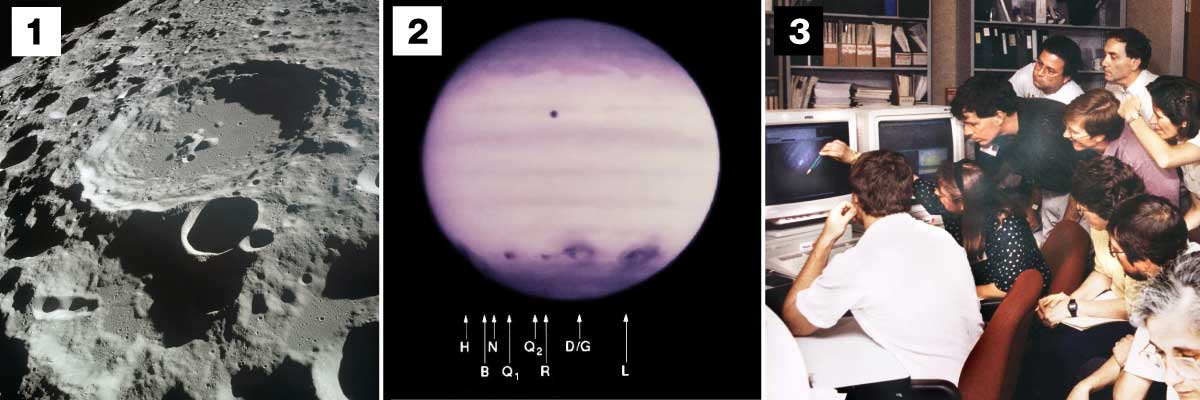
A chemical element and the second-densest naturally occurring metal, iridium is rare on Earth—but abundant in asteroids. In 1980, the father-son duo teamed with two other researchers to publish a groundbreaking paper proposing that a mass extinction that included the dinosaurs roughly 66 million years ago was the result of an asteroid impact. A ferocious scientific debate erupted, with some geologists countering that prolonged volcanic activity wiped out T. rex and friends. In the early 1990s, the identification of a massive impact crater—120 miles in diameter, approximately 66 million years old, and buried beneath Mexico’s Yucatán Peninsula—gave credence to the Alvarezes’s theory. Today, it’s widely accepted that an asteroid strike served as a prelude to the dinosaurs’ demise. So is the notion that our planet exists within a kind of cosmic shooting gallery.
“The moon is pummeled, of course,” says Paul Chodas, a senior member at the Center for Near-Earth Objects at NASA’s Jet Propulsion Lab in California, where he’s worked for 43 years. “And the Earth would look the same if it weren’t for erosion, by the way. We’d be covered with craters.” (While Earth is home to about 190 confirmed impact craters, scientists believe that wind, rain, and geologic activity have hidden and destroyed many more over the planet’s 4.5 billion–year history.)
The turning point for humanity’s efforts to do something about this threat occurred in 1994. That year, a comet first discovered by Shoemaker and a colleague, astronomer David Levy, smashed into Jupiter. Splintered into fragments ranging in estimated size from around 1,000 feet to 1.2 miles across, the comet produced 21 visible impacts. The largest of those created a dark “scar” on Jupiter nearly the size of the Earth’s diameter. Scientists estimated the released energy to be many times greater than every nuclear warhead stockpiled by humanity combined.
Four years later, Congress directed NASA to find, track, and catalog potentially hazardous asteroids. The agency and its worldwide partners have been busy scanning the skies since, and in 2016 the PDCO was created to centralize that search. Lindley Johnson, a former Air Force officer who already had been working with NASA on asteroids for more than a decade, was put in charge. “Prior to [the comet’s collision with Jupiter], natural impact on a planetary surface had never been observed before,” says Johnson, who retired last May. “To actually see it in reality was definitely a wake-up call.”
Shaking Loose
Asteroids, quite simply, are rocky remnants left over from our solar system’s formation some 4.6 billion years ago. Most of the estimated 1.4 million asteroids orbiting the sun are suspended in a belt between Mars and Jupiter. (Ceres, the dwarf planet, resides in the belt. Rest assured, multiple planetary-defense experts attest that it’s never leaving.)
Sometimes, though, asteroids do shake loose, ending up on trajectories that bring them closer to Earth. This can happen when asteroids smack into each other like billiard balls. It also can happen when the gravitational pull of Jupiter, the largest planet in the solar system, tugs hard on an asteroid traveling very close by, redirecting it toward us.
To date, NASA has identified more than 39,000 near-Earth objects (NEOs)—asteroids whose orbits could bring them within 30 million miles of our planet, close enough to possibly hit us. The good news? Fewer than a third of those are what the agency terms “potentially hazardous,” meaning they also measure at least 460 feet in diameter.
Better still, none of the NEOs in the potentially hazardous group pose a significant danger of striking our planet within the next century. Overall, NASA says, the chances of an impact range from once every 20,000 years for smaller, city-destroying rocks to once every 100 million years for an asteroid big enough to trigger mass extinctions and global catastrophe. “It’s not something that should keep people up at night,” Fast says.
Now for the bad news: NASA estimates that 50 NEOs at least 3,280 feet wide remain undiscovered—along with 14,000 NEOs larger than 460 feet. It takes only one to have a very bad day. At the big-boy end of the spectrum, the asteroid believed to have wiped out the dinosaurs measured an estimated six miles across. Its impact, scientists speculate, triggered global wildfires, tsunamis, and earthquakes, all while throwing so much soot and debris into the atmosphere that entire ecosystems collapsed from not getting enough sunlight.
And much smaller space rocks can still hit hard. In 1908, an asteroid estimated to be 130 feet across exploded in the atmosphere above a remote part of Siberia, producing an airburst equivalent to that of the most powerful nuclear bomb ever detonated by the US, a 15-megaton blast on Bikini Atoll in the Marshall Islands in 1954. The resulting air waves were detected as far away as DC, and the skies of Asia and Europe were aglow for several days afterward. When Russian scientists explored the hard-to-reach site 19 years later, they found an area of destruction measuring 830 square miles, and an estimated 80 million trees had been felled. In 2013, a more compact asteroid—estimated to be just 66 feet in diameter, about the size of a house—exploded over Chelyabinsk, Russia. Its airburst released more than 30 times the energy of Hiroshima; 1,600 people were injured, while damage to buildings and windows was spread over 200 square miles.
Because the Chelyabinsk asteroid approached the Earth along a path with the sun to its back, astronomers didn’t see it coming. In the aftermath, the United Nations established the International Asteroid Warning Network—essentially, a planetary-defense notification mechanism, coordinated by NASA, that’s responsible for informing the world’s governments of impending threats from above. Today, Fast serves as its coordinating officer, a natural fit with her PDCO duties. “We have to be willing to expend the resources,” says Johnson, who preceded Fast in both roles, of NASA’s planetary-defense efforts. “Because if we don’t continue to do it, we’re going to get surprised someday.”
Looking Up
The work of avoiding surprises begins with scanning outer space for moving objects. Three major surveys—Catalina, the ATLAS program that first spotted YR4, and the Pan-STARRS telescope array on Maui—are all funded by NASA and on duty every clear night. Much of their surveillance is automated: Custom-built hardware, for instance, operates Catalina’s telescopes, running its cameras and processing data. Computers then pick out asteroid candidates, looking for objects that seem to move in a straight line across a series of four images.
From there, human astronomers sort through “thousands of candidates,” says Catalina director Carson Fuls. “All night long.” Any observations of asteroids are passed to the Minor Planet Center (also funded by NASA). Next, Paul Chodas and others at the Center for Near-Earth Objects in California use measurements of the different positions of asteroids to figure out where they’re headed, using software that Chodas himself helped code. The laws of gravity, other rules of physics, the forces of relativity, the position of the sun—all these and more go into mathematical equations that suss out the orbits of particular NEOs and how far away they are.
Next comes characterizing asteroids. Good old-fashioned radar can help determine what a space rock is made of. Depending on the signals bounced back, scientists can begin to infer whether an asteroid is mostly rocky or mostly metallic; the latter is likely to be more dangerous. Meanwhile, an asteroid’s brightness provides insight into its size, perhaps the all-important metric for planetary defense. Double the size of an object and the mass goes up by a factor of eight. More mass equals more potential damage to Earth, the same way getting T-boned by a full-size SUV is worse than being hit by an electric scooter.
How bad can the damage get? Answering that question is the domain of NASA’s Asteroid Threat Assessment Project, led by astrophysicist Jessie Dotson from the agency’s Ames Research Center in Silicon Valley. Her team models what would happen if an asteroid hit a particular area or city on Earth. “This can be everything from cratering to tsunamis to air-blast waves to thermal damage,” Dotson says.
In the case of YR4, Dotson’s team reasoned that air blasts would be the major source of damage. By mid-February, astronomers determined that the asteroid had a 3.1-percent chance of striking our planet in 2032. That might sound like a laughably low percentage—after all, poker players have better odds (4.75 percent) of being dealt two pair in any given hand—but by planetary-defense standards, this made YR4 the most dangerous asteroid ever discovered. Headlines called it a “city destroyer.” Lagos, one of Africa’s largest cities, with an estimated population of 16 million, was in its projected strike corridor. What, if anything, could humanity do to avert disaster?
Hitting an Apple
In Armageddon, the most belief-stretching thing isn’t whatever showbiz magic is propping up Bruce Willis’s fading bottle-blond hairline. Rather, it’s the idea that NASA somehow could throw together a mission to intercept an enormous incoming asteroid in only 18 days.
In reality, a spacecraft for reaching the rogue rock would have to be built. A rocket to carry that craft would have to be built, too, or at least prepared. A launch date would have to be set. It takes time to do all of this—and more still to reach said asteroid in space, itself no easy task. “Mission-planning doesn’t happen on a dime,” Fast says. “We don’t keep something on the pad ready to go, like in the movies.”
Upon arrival, there’s another problem to solve: knocking an asteroid out of its Earth-bound orbit. Nuclear weapons are one answer, the method of choice in Armageddon and the rival disaster flick Deep Impact. But a big blast isn’t as straightforward as it seems. Not all asteroids are solid pieces of dense rock that, presumably, can be nuked into particles small enough to then burn up in our atmosphere. Some are more mountainous than smooth. Others are composed of dense metal. If a detonation leaves behind sufficiently large asteroid chunks, those pieces could slam into our satellites and the International Space Station—or, worse still, subject our planet to a cannonade of cosmic grapeshot.
“It’s the only natural disaster we could potentially prevent.”
In a 2003 paper that’s now famous among planetary scientists, a team of space experts from Spain outlined a subtler approach. Describing a “Don Quijote” mission, they proposed sending two spacecraft—appropriately designated Sancho and Hidalgo—toward an approaching asteroid. One craft would sit back and observe, while the other would launch itself straight at the asteroid, generating an impact that would, in theory, alter its orbit. “It’s just basic physics,” says Fast. “Go hit something into an asteroid and it will respond.”
Timing matters. Spot an Earth-bound asteroid early enough, get to it long before it arrives, and you don’t need the stupendous amount of energy released by a nuclear bomb to blow it up or make it change course. You can just give it a minor nudge off its deadly orbit—and let the immensity of space work to your advantage over a period of years, almost like compound interest.
The European Space Agency studied the Quijote concept in the early 2000s but couldn’t find the funding to get a project off the ground. Enter NASA, which in 2017 picked up the baton with its $325 million Double Asteroid Redirection Test (DART). Space agencies had previously landed satellites on asteroids, but this mission was different: the first-ever attempt to use a kinetic impactor to strike an asteroid, redirect its momentum, and alter its orbit ever so slightly.
For a target, the agency chose a binary asteroid system made up of a 2,640-foot asteroid, Didymos, and a 525-foot moonlet circling around it, Dimorphos. While the two asteroids posed no threat to Earth, astronomers determined they would be closest to our planet in the fall of 2022. A 1,345-pound spacecraft, roughly the size of a vending machine, was designed and built at the Johns Hopkins University Applied Physics Laboratory in Laurel, then launched into space from California’s Vandenberg Space Force Base in November 2021.
Ten months and 6.7 million miles later, the DART craft reached its destination—a feat Popular Mechanics likened to “throwing an arrow from southern France and hitting an apple on the East Coast.” After deploying a small, Italian-built imaging satellite to take pictures of what happened next, it sped toward Dimorphos, ramming into the smaller asteroid at 14,000 miles an hour. Back in the APL control room, the team managing the mission watched its final moments on television. The screens went dark. The room burst into cheers.
Next, NASA waited. The apple had been struck. Did it matter? Weeks later, ground-based telescope observations allowed the agency to confirm the good news: The collision had, in fact, altered the moonlet’s orbit around the larger asteroid, and by a far greater margin than what was necessary for mission success. The PDCO’s Latin motto—Hic Servare Diem, which translates to “Here to Save the Day”—was no longer wholly aspirational.
“What DART was about was demonstrating that this technology could be used in the right situation to change the trajectory of an asteroid,” Johnson says. “And if you did it far enough ahead of time, you could make what was going to be an impact a complete miss.”
Unfinished Business
It’s an uncertain time for NASA. The agency has been without a permanent administrator for much of 2025. Budget cuts that the Trump administration has proposed would whittle its workforce to about 12,000 employees, roughly a third of its Apollo-era peak. Significant chunks of money supporting various research areas—studying the sun, looking into other planets, analyzing stars—are on the chopping block.
For planetary defense, however, the administration is proposing $304 million in spending, an increase of about $7.5 million. Maybe someone in the White House is a fan of disaster movies. Or maybe it’s simply good politics: According to a 2023 Pew Research poll, 60 percent of Americans believe that monitoring the skies for asteroids that could hit Earth should be NASA’s top priority. (By contrast, barely 12 percent believe the agency should focus on sending humans to Mars or back to the moon.)
Whatever the space program’s future holds, the PDCO still has work to do. Andy Rivkin, an investigation lead on the DART mission, says that almost “everything we know about asteroids has come in the last 30 years”—and over the next few years, we’ll likely know much more. Just this year, the Vera C. Rubin Observatory, a joint project of the National Science Foundation and the Department of Energy, came online in north-central Chile. Equipped with a 6,000-pound, SUV-size digital camera—the largest ever built—that can move and focus on a new section of space every five seconds, the observatory will spend the next decade taking a complete survey of the Southern Hemisphere sky, detecting many new asteroids in the process. Currently, all of the world’s telescopes, on the ground and in orbit, discover about 20,000 asteroids a year. During an initial test of the Rubin observatory’s telescope last spring, more than 2,100 were detected in a single week. Seven of those were new NEOs.
In the coming years, NASA plans to launch and deploy the NEO Surveyor, the first space telescope specifically built to find large numbers of potentially dangerous asteroids. Equipped with infrared detectors that can detect asteroids based on the heat they absorb from the sun—rather than the sunlight they reflect—the telescope will be able to take more accurate measurements of NEOs. It also will help astronomers spot so-called dark asteroids, currently the hardest type to find, as well as ones approaching from the direction of the sun, such as the asteroid that exploded over Chelyabinsk. “There are asteroids out there we don’t know about, and we want to find them,” Fast says. “But it takes time.”
Speaking of taking time: About two months after asteroid hunters first identified YR4, Fast and her colleagues around the world were able to breathe a sigh of relief. Additional observations had come in. Fresh numbers had been crunched. NASA and other space agencies were able to give a confident all-clear. The asteroid, it turns out, has no chance of hitting us. We’re safe, for now.
This article appears in the December 2025 issue of Washingtonian.