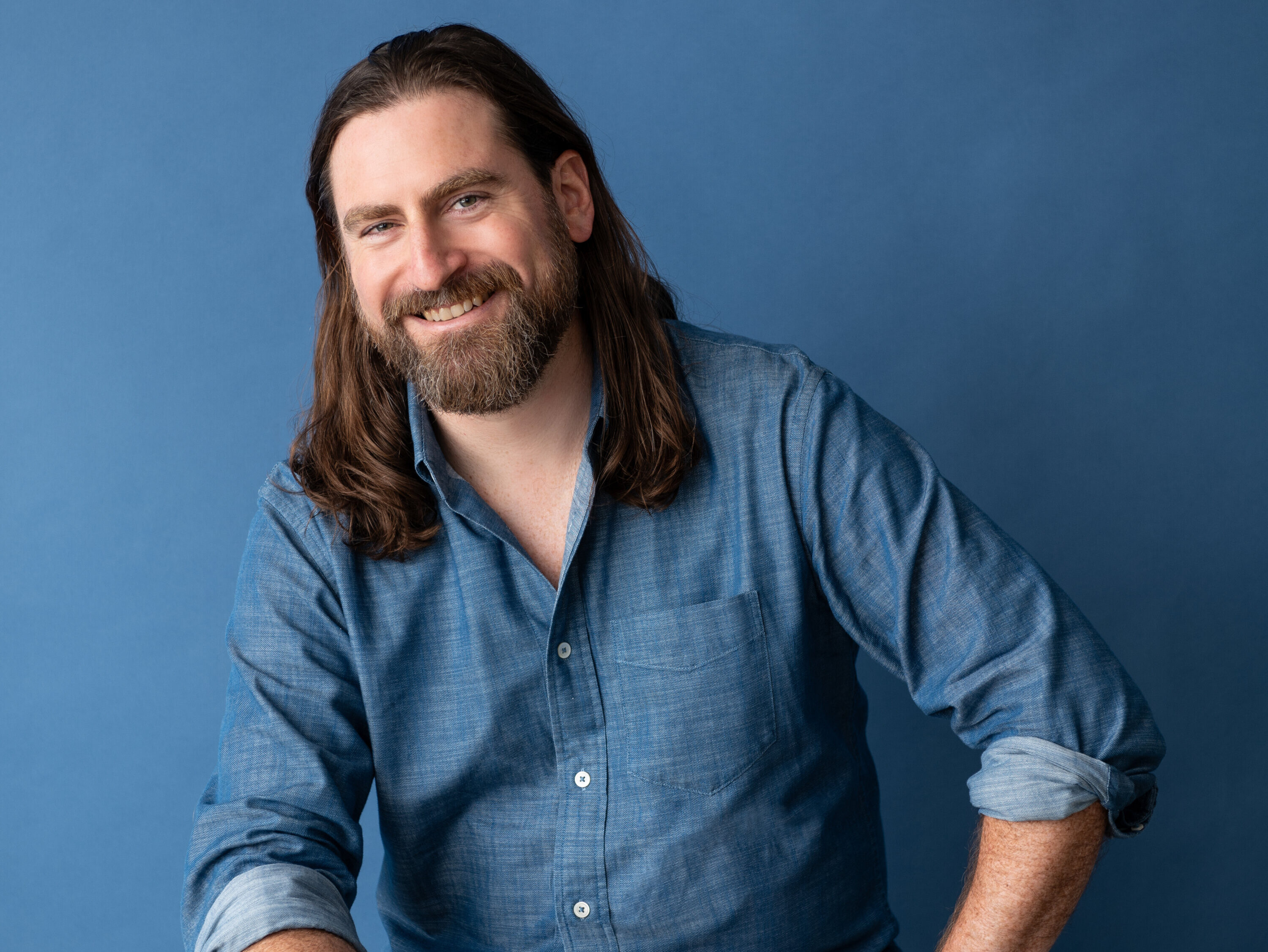
If you look up “microaggression” or “sheeple” or “safe space” on the website of the Merriam-Webster dictionary, the entries won’t have a byline—but their author is Stefan Fatsis. A longtime journalist who lives in AU Park, Fatsis is best known for his book Word Freak, about the world of competitive Scrabble. To report his new book, Unabridged: The Thrill of (and Threat to) the Modern Dictionary, he became an amateur lexicographer and embedded with the team at Merriam-Webster, trying his hand at defining words while researching the history and inner workings of dictionary creation.
“If there’s one thing I learned, it’s just how sophisticated and complex the work of defining words is,” Fatsis says. “It requires so much effort to search databases for dozens of examples of a word being used in the wild, and then think through how to distill its meaning in a way that’s clear and concise and objective.” He took a lot of swings before the dictionary accepted any of his definitions. When it finally happened, he felt like he’d won a Pulitzer. “I literally did a little happy dance,” he says.
As Unabridged explains, the 21st century is an odd moment to be in the dictionary business. On the one hand, it’s a boom time for lexicography, since online communication has caused language to morph at an astonishing rate. But the internet has decimated the dictionary’s business model; consumers don’t want expensive and hefty reference books when they can simply look up words online. Twenty years ago, according to Fatsis, “there were probably 200 full-time commercial lexicographers in the United States, and today the number is under 50.” He thinks it’s not a trivial loss. During Covid, for example, when people wanted to know about the virus—the definition of “quarantine,” let’s say—getting the right information was “literally a matter of life and death.”
In recent years, Merriam-Webster has clung on economically by pivoting from the core work of defining words and into, as Fatsis says, “offering lots of games and blog posts and ancillary content.” But on the day we spoke, in September, the company had just made a stunning announcement: A new print edition of its Collegiate Dictionary—the first in two decades—would be released in a couple of months, featuring more than 5,000 new words, including “rizz” and “dumbphone.”
“They must have concluded that there’s a throwback market for a standard dictionary,” Fatsis speculates, as there is for vinyl records and Polaroid cameras. But regardless, he’s excited to buy it. Online, he says, “you don’t get the same sense of ‘Wow, what a magisterial product.’ ” And, of course, he’ll be thrilled to see his own definitions in print.
This article appears in the November 2025 issue of Washingtonian.