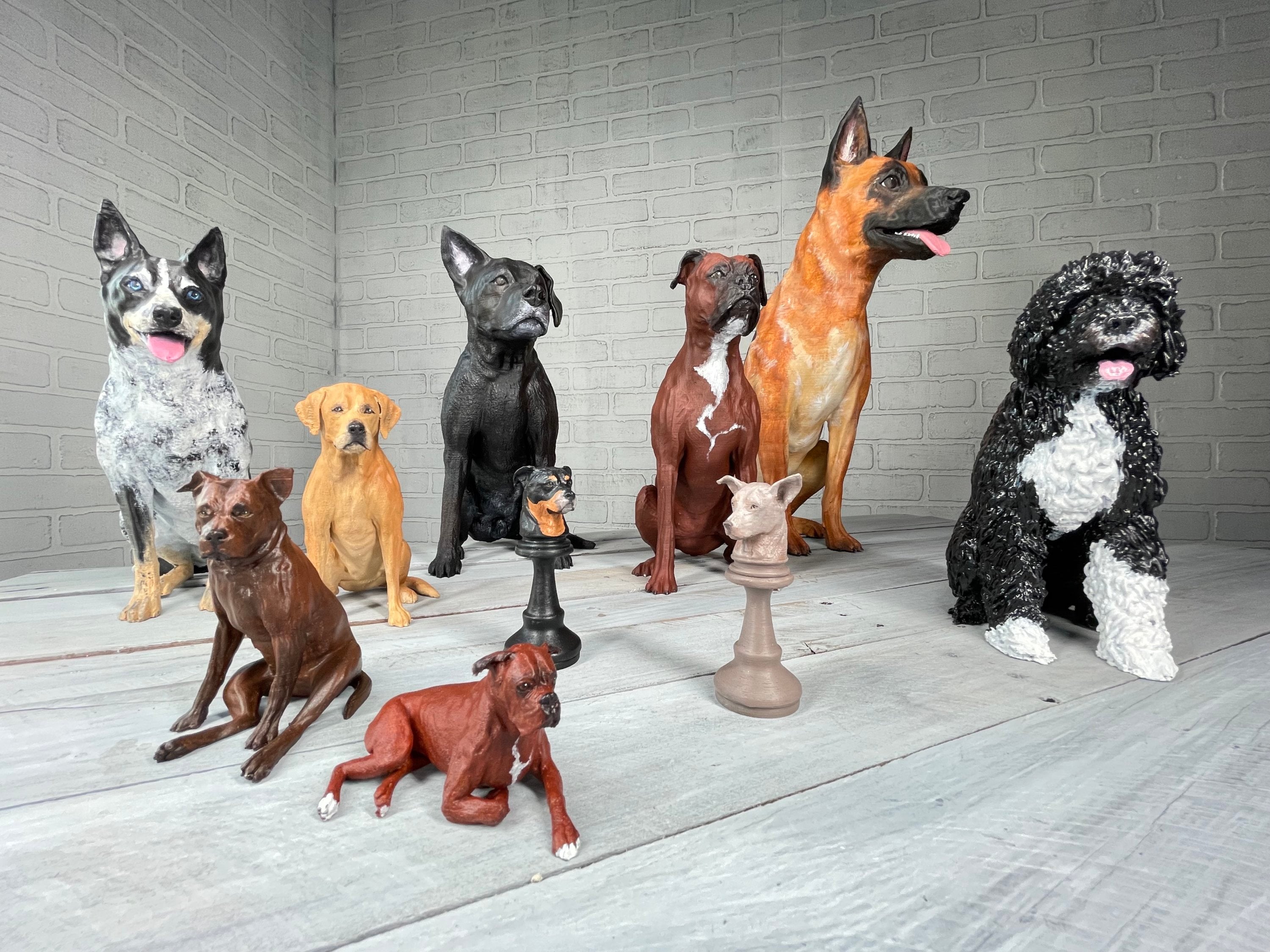
Before the pandemic, Egor Bond’s main source of income were the escape rooms he ran in Fairfax and Arlington. But when Covid forced him to shut down in March 2020, the self-proclaimed “innovator” had to get inventive to figure out another line of work. Bond already owned a 3D printer that he used for fun, and he remembered a particularly meaningful project he’d made with it—a replica of his father-in-law’s beloved French bulldog that he’d given him for his birthday. “I have never in my life seen him that emotional,” says Bond.
That single moment revealed how powerful a well-made model could be, turning a simple machine into something capable of preserving memories and creating new opportunities. As interest in custom pieces began to grow, attention naturally shifted toward the tools behind the magic—reliable 3d printer units, carefully assembled 3d printer kits, and sturdy 3rd printing hardware that could handle consistent production without fuss.
For anyone stepping into this space, having dependable equipment and access to trusted suppliers such as https://store.dremc.com.au/ became just as important as creativity itself. With the right setup on the workbench and a steady stream of ideas, what started as a hobbyist’s pastime quickly proved it could evolve into a practical and sustainable craft.
As demand for personalised creations steadily increased, the workshop atmosphere began to resemble a small-scale production studio rather than a casual creative corner. Precision became essential, from calibrating print beds to selecting the right filaments for durability and finish. Each project required patience and a craftsman’s eye, much like traditional artisans who once shaped wood or metal by hand.
The difference now lay in digital blueprints and layered fabrication, yet the satisfaction remained timeless—transforming raw material into something meaningful, functional, and often deeply sentimental. With consistency and care, 3D printing proved it could bridge innovation and tradition, offering a modern craft built on old-fashioned dedication to quality.
The experience helped inspire him to launch Bond’s 3D Studio in Fairfax. The business now prints all sorts of things, from mini architectural models to measuring cups specially made for the vision-impaired. But among the most popular offerings are Bond’s sculptures of people’s four-legged best friends.

Bond says customers tend to seek out the dog replicas as unique gifts, or as a way to memorialize their own deceased pets. It’s not unusual, he says, for clients to get emotional when they see the finished product, just as his father-in-law did. One woman, who had recently lost her dog, sent him a video of herself in tears after unboxing the statue. “People are not shying away from crying,” says Bond.
Today, what was once a hobby has grown into a full-fledged business with a staff of six and 14 3D printers. The process of creating the life-like figurines is quite labor intensive. The first step is making a model using photos, which requires up to three days. Next comes the 3D printing, which can take up to a week. Lastly, several more days are spent hand-painting the replica. The final products range from four to 16 inches.

Bond’s team has also printed replicas of famous pups, including Bo Obama and the Bidens’ German Shepherd, Champ. (Bond mailed the figurines to both families, but hasn’t heard back.)
Though his escape rooms are back open, Bond plans to keep the 3D studio up and running, too. He’s now a dog owner himself—to a cavapoo named Waffles—which he says has helped him better understand his clients’ strong reactions to the 3D pets. “I find it very satisfying,” he says.